COVID in Children: Symptoms, Causes, Treatment and Recovery — What Parents Need to Know

Updated: 2 days ago
Medically reviewed by Dr. Baraa Alnahhal, MD · Last reviewed: September 2026
Quick Answer
COVID-19 usually causes mild symptoms in children — most commonly fever and cough. Most kids recover within one to two weeks with at-home care: fluids, rest, fever management, and a humidifier. But COVID symptoms resemble the flu and RSV, so call your pediatrician if your child seems ill. Children with certain underlying conditions face a higher risk of severe illness, and some develop complications or long COVID. Vaccination can protect your child from getting very sick.
TL;DR
COVID in children usually looks like a mild respiratory illness with fever and cough, and most children recover within one to two weeks at home. Children are more likely than adults to have mild or no symptoms, but some — especially those with underlying conditions or who are unvaccinated — can become seriously ill and need hospital care. Watch for breathing trouble and heart symptoms, and stay up to date with COVID vaccination.
Important limitation: the source material does not provide statistics on how many children get COVID, hospitalization rates, or death rates, so no figures are quoted here. Everything in this article is drawn from a single medically reviewed reference page.
When to get emergency help: seek urgent medical care if your child has shortness of breath or symptoms of heart complications (such as those seen with myocarditis), or if your child is unusually ill, not drinking fluids, or deteriorating. Call your pediatrician promptly about any signs of serious illness; severe cases can require hospital or intensive care unit (ICU) treatment.

What Is COVID in Children?
COVID-19 is a highly contagious respiratory illness that affects children and adults of all ages. It is caused by SARS-CoV-2, a virus in the coronavirus family that can cause respiratory illness.
Children are more likely than adults to have no symptoms or a mild infection. But some children experience severe illness that requires care in a hospital or intensive care unit (ICU).
COVID-19 usually causes mild symptoms in kids — most commonly, fever and cough. Most children recover in one to two weeks with at-home care.
What Are the COVID Symptoms in Kids?
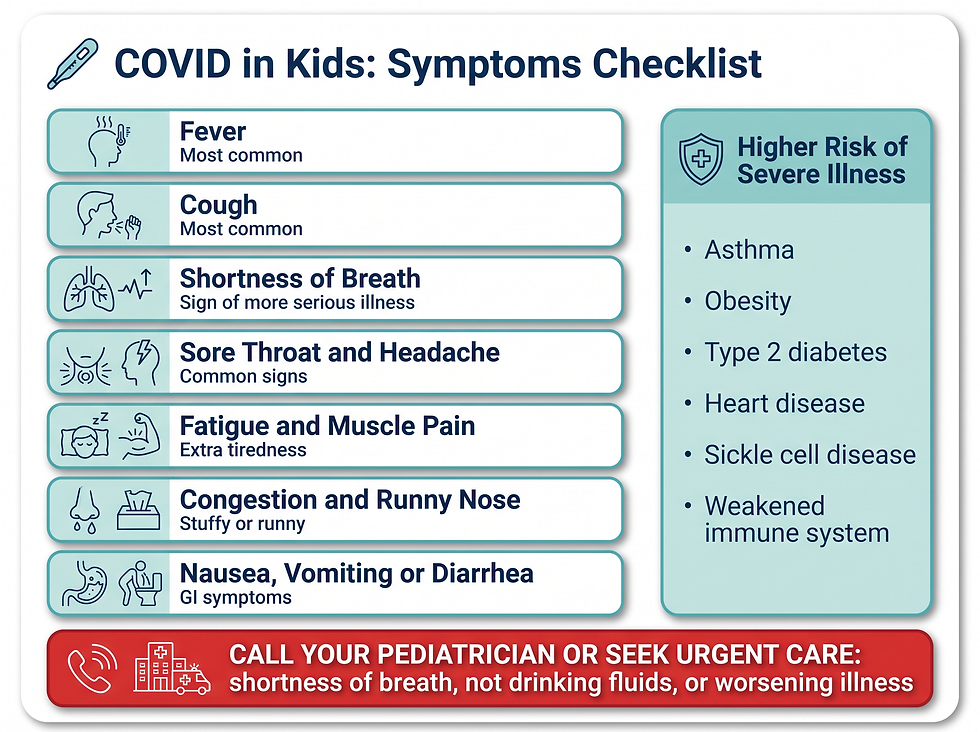
It is not always easy to tell if your child has COVID just by looking at their symptoms. COVID symptoms in kids resemble symptoms of other common infections, like the flu and RSV.
Symptom | Notes |
Fever | Most common symptom |
Cough | Most common symptom |
Shortness of breath | Can signal more serious illness |
Sore throat | Common in respiratory infections |
Headache | Can occur alone or with other symptoms |
Muscle pain | May make children feel achy |
Fatigue | Extra tiredness during illness |
Congestion | Stuffy nose |
Runny nose | Nasal discharge |
GI symptoms | Nausea, vomiting and diarrhea |
Symptoms can vary from child to child. In some cases, children have no symptoms (they are asymptomatic).
Infants (babies under 1 year old) may have a fever and seem uninterested in feeding without any other symptoms.
It is a good idea to call your pediatrician if your child has any symptoms of illness or just seems generally unwell. Your pediatrician can help you sort out what is going on and will tell you if you should come in for an appointment.
How Does COVID Spread in Children?
The SARS-CoV-2 virus enters a person’s body through their mouth, nose or eyes. Once inside the body, the virus can start to multiply.
COVID-19 is highly contagious. Your child can get infected if they are exposed to respiratory droplets from someone who has the virus. This can happen if a person with COVID:
Coughs, sneezes, talks, sings or breathes near your child.
Contaminates a surface your child touches — and then your child touches their face.
Which Children Are at Higher Risk of Severe COVID?
Children with certain underlying medical conditions have an increased risk of getting very sick from COVID.
Risk factor | Why it matters |
Premature birth (in infants) | Higher risk of getting very sick |
Asthma or other chronic lung conditions | Lungs are already affected |
Obesity | Increases risk of severe illness |
Type 2 diabetes | Increases risk of severe illness |
Congenital heart disease or cardiovascular disease | Heart-related risk |
Sickle cell disease | Increases risk of severe illness |
Brain or nervous system disorders | Higher risk of complications |
Conditions requiring a feeding tube | Higher risk of severe illness |
Compromised immune system | Reduced ability to fight infection |
Related reading on these conditions: allergic asthma and sickle cell complications such as acute chest syndrome.
Children without underlying conditions can also develop severe COVID-19 — particularly if they are unvaccinated. This is why pediatricians urge parents to get their children vaccinated. It is also important for all members of a household to stay up to date with COVID vaccinations, since doing so can protect infants younger than 6 months (who are not eligible for a vaccine) and others who may be more vulnerable to severe illness.
What Complications Can COVID Cause in Children?
Complications of COVID in children include:
Croup
Bronchiolitis
Acute respiratory distress syndrome (ARDS)
Myocarditis (inflammation of the heart muscle)
Acute kidney failure
Multisystem inflammatory syndrome in children (MIS-C)
How Is COVID Diagnosed in Children?
Healthcare providers diagnose COVID-19 with a laboratory test. A provider may take a sample of your child’s saliva or use a swab to collect fluid from their nose or throat, then send the sample to a lab for testing.
You may also choose to do an at-home test. If an at-home test shows your child has COVID-19, call your pediatrician and they will advise you on what to do next.
How Is COVID Treated in Kids?
Healthcare providers tailor treatment to each child’s condition and needs. They focus on relieving symptoms and, in certain situations, preventing or managing complications.
At-Home Care
Most kids have mild to moderate symptoms that go away with at-home care. Your pediatrician will advise you on how to care for your child. In general, you can:
Help your child stay hydrated by giving them plenty of fluids.
Manage your child’s fever (ask your pediatrician before using fever-reducing medication).
Encourage your child to get plenty of rest.
Run a humidifier in your child’s room to help with nasal congestion.
Antiviral Medications
If your child has a high risk of severe COVID, their provider may prescribe antiviral medications. These are only used in select cases when providers feel they are necessary.
Hospital Care
Children who have severe symptoms or develop complications may need care at a hospital. Some children need care in the intensive care unit (ICU). If your child is hospitalized, their providers will tell you what you can expect. Supportive treatments may include:
Medications.
Intravenous (IV) fluids.
Supplemental oxygen.
How Long Does COVID Last in Kids?
Most kids get better within one to two weeks. But children who develop complications may need longer to recover. Your pediatrician can tell you more about what to expect.
Can My Child Go Back to School?
Follow your healthcare provider’s advice about your child’s return to school or daycare. But be sure to check with your school as well — many schools and daycares have their own criteria for returning after illness.
Can Children Develop Long COVID?
Yes. Some children develop post-COVID conditions, also known as long COVID. This is a collection of symptoms a person experiences within three months of their first COVID symptoms.
Long COVID is less common in children compared to adults. Children who develop long COVID most commonly have the following symptoms:
Long COVID symptom | Description |
Fatigue | Ongoing tiredness |
Headache | Recurring head pain |
Insomnia | Trouble sleeping |
Trouble concentrating | Difficulty focusing |
Muscle and joint pain | Aching muscles or joints |
Cough | Ongoing cough |
Tell your pediatrician if your child has lingering symptoms of COVID or if new symptoms develop.
How Can COVID Be Prevented in Children?
Vaccination can protect your child from getting very sick or developing complications from COVID. All members of a household should stay up to date with COVID vaccinations — this also protects infants younger than 6 months who are not yet eligible for a vaccine.
Because the virus spreads through respiratory droplets, everyday habits such as washing hands, keeping a sick child home, and covering coughs and sneezes help reduce spread.

Conclusion
COVID in children usually causes mild symptoms — most commonly fever and cough — and most kids recover within one to two weeks with fluids, rest, fever management, and a humidifier. But COVID can look like the flu or RSV, and some children, especially those with underlying conditions like asthma, obesity, Type 2 diabetes, or heart disease, face a higher risk of severe illness, complications such as MIS-C or myocarditis, and hospitalization.
If your child seems ill, call your pediatrician. Keep every checkup current, stay up to date with COVID vaccination, and act quickly if your child has trouble breathing or heart-related symptoms.
Next step: if your child has fever, cough, or any signs of illness, contact your pediatrician for guidance and testing. If your child is at high risk for severe COVID, ask their provider about antiviral options — and make sure your whole household is up to date on COVID vaccines.
Frequently Asked Questions
What does COVID look like in children?
Usually mild symptoms — most commonly fever and cough — resembling the flu or RSV. Many children also have sore throat, headache, fatigue, congestion, runny nose, or GI symptoms like nausea, vomiting and diarrhea.
What are the most common COVID symptoms in kids?
Fever and cough are the most common.
Can children have COVID without symptoms?
Yes. Some children have no symptoms at all (they are asymptomatic), and children are more likely than adults to have no symptoms or a mild infection.
How do COVID symptoms in kids differ from the flu or RSV?
They often don’t — COVID symptoms resemble symptoms of other common infections like the flu and RSV, which is why testing helps sort it out.
How do infants show COVID symptoms?
Infants (babies under 1 year old) may have a fever and seem uninterested in feeding without any other symptoms.
What causes COVID in children?
The SARS-CoV-2 virus, which is part of the coronavirus family. It enters the body through the mouth, nose or eyes and multiplies inside.
How does COVID spread to children?
Through respiratory droplets when a person with COVID coughs, sneezes, talks, sings or breathes near them — or by touching a contaminated surface and then touching their face.
Is COVID-19 contagious?
Yes. COVID-19 is highly contagious.
Which children are at higher risk of severe COVID?
Children who were born prematurely, have asthma or other chronic lung conditions, obesity, Type 2 diabetes, congenital heart or cardiovascular disease, sickle cell disease, brain or nervous system disorders, conditions requiring a feeding tube, or a compromised immune system.
Can healthy children still get very sick from COVID?
Yes. Children without underlying conditions can also develop severe COVID-19, particularly if they are unvaccinated.
What complications can COVID cause in children?
Croup, bronchiolitis, acute respiratory distress syndrome (ARDS), myocarditis, acute kidney failure, and multisystem inflammatory syndrome in children (MIS-C).
Can COVID cause myocarditis in children?
Yes. Myocarditis is listed as one of the complications of COVID in children.
How is COVID diagnosed in children?
With a laboratory test — a saliva sample or a nose/throat swab sent to a lab. At-home tests are also available; if positive, call your pediatrician.
How do you treat COVID in kids at home?
Plenty of fluids to stay hydrated, plenty of rest, fever management (ask your pediatrician before using fever-reducing medication), and a humidifier for nasal congestion.
Can antiviral medications be used for children with COVID?
Yes, if your child has a high risk of severe COVID — but only in select cases when providers feel they are necessary.
When does a child with COVID need hospital care?
If they have severe symptoms or develop complications. Some children need ICU care and may receive medications, IV fluids, and supplemental oxygen.
How long does COVID last in kids?
Most kids get better within one to two weeks. Children who develop complications may need longer to recover.
When can my child return to school after COVID?
Follow your healthcare provider’s advice, and also check with your school — many schools and daycares have their own return criteria.
Can children get long COVID?
Yes. Long COVID is a collection of symptoms experienced within three months of the first COVID symptoms. It is less common in children than in adults.
What are long COVID symptoms in children?
Most commonly fatigue, headache, insomnia, trouble concentrating, muscle and joint pain, and cough.
Can COVID-19 vaccines be given to children?
Pediatricians urge parents to get their children vaccinated; vaccination can protect a child from getting very sick or developing complications. Infants younger than 6 months are not yet eligible for a vaccine.
Should everyone in the household get the COVID vaccine?
Yes — it is important for all members of a household to stay up to date, which also protects infants younger than 6 months and others who are more vulnerable.
When should I call my child’s pediatrician about COVID?
If your child has any symptoms of illness or just seems generally unwell — and right away if symptoms of serious illness appear, such as shortness of breath.
Should I tell the pediatrician about lingering symptoms after COVID?
Yes. Tell your pediatrician if your child has lingering symptoms of COVID or new symptoms develop.
Can COVID affect my child’s heart?
Yes. Myocarditis and other heart complications are possible, which is another reason severe or worsening symptoms need prompt medical attention.
Related Reading
Source
Medical Disclaimer
This content is for informational purposes only and is not a substitute for professional medical advice, diagnosis, or treatment. Always seek the advice of your physician or other qualified health provider with any questions you may have regarding a medical condition. Never disregard professional medical advice or delay in seeking it because of something you have read here. In a medical emergency, call 911 or your local emergency number immediately.
Comments