Acute Chest Syndrome: A Life-Threatening Sickle Cell Complication Explained (2026 Guide)

Updated: 2 days ago
Medically reviewed by Dr. Baraa Alnahhal, MD · Last reviewed: September 2026
TL;DR
Acute chest syndrome is a dangerous complication of sickle cell disease (SCD) in which sickle-shaped red blood cells get stuck in the small blood vessels of the lungs, creating a vaso-occlusive crisis. It is an emergency — the leading cause of hospitalization and death in people with SCD — and it recurs in more than 1 out of 2 people who have had it. Key symptoms include cough, fever of 100.4°F (38°C), shortness of breath, wheezing, and low blood oxygen. The death rate is about 4 out of 100 adults and 1 in 100 children, but most people recover with prompt treatment: pain medication, antibiotics, blood transfusions, IV fluids, oxygen, and spirometry exercises.
Quick Answer
What it is: Acute chest syndrome is a serious complication of sickle cell disease where sickle cells get stuck in the small blood vessels of the lungs, blocking blood flow and creating a vaso-occlusive crisis — the leading cause of hospitalization and death in SCD.
How common it is: It is common in people with SCD, especially between ages 2 and 4, and it happens more than once in 1 out of 2 people who have had it.
The stakes: Without immediate treatment, complications include respiratory failure, ARDS, multi-organ failure, and death — the death rate is about 4 in 100 adults and 1 in 100 children.
What to do: Anyone with SCD who develops chest symptoms needs immediate hospital care. Tell emergency room providers the patient has sickle cell disease and ask for a chest X-ray right away so treatment can start quickly.
What Is Acute Chest Syndrome?
Acute chest syndrome is a serious complication of sickle cell disease (SCD) in which sickle cells get stuck in small blood vessels in the lungs. This blockage creates a vaso-occlusive crisis — when oxygen-rich blood cannot reach body tissues.
People with sickle cell disease have red blood cells with a crescent or sickle shape. These cells cannot pass through blood vessels easily. As a result, hemoglobin (a protein in red blood cells) cannot carry enough oxygen throughout the body.
The condition can get worse quickly and become fatal. It is an emergency and the most common cause of death in people with sickle cell disease.
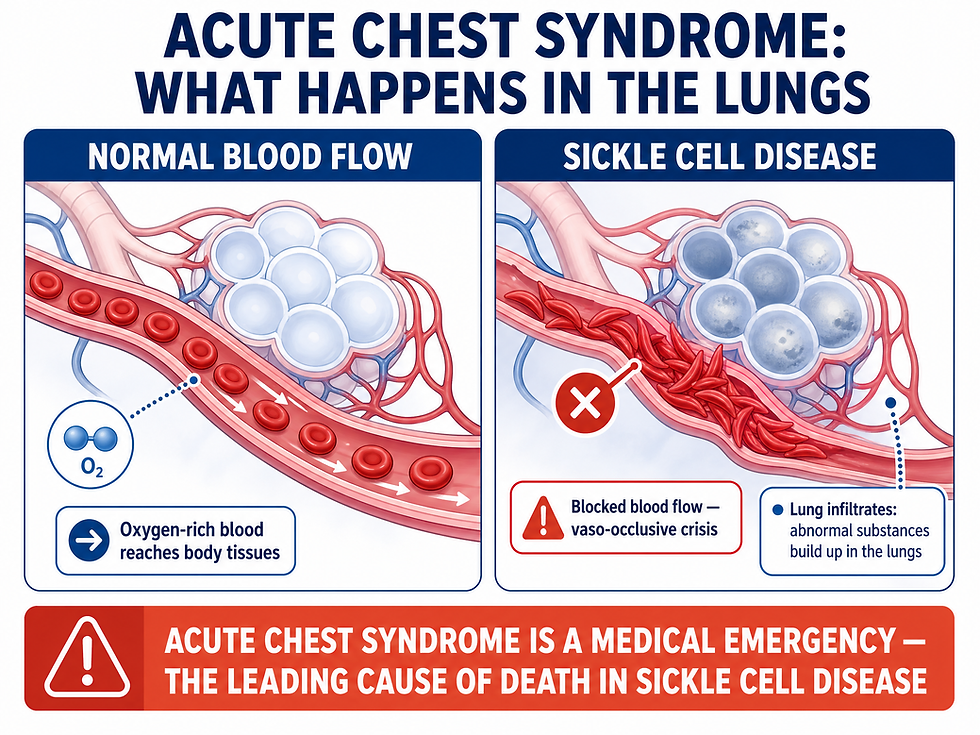
Acute chest syndrome is common in people with sickle cell disease, especially between ages 2 and 4. It can also happen again after it has occurred once: it happens more than once in 1 out of 2 people with SCD.
What Are the Symptoms of Acute Chest Syndrome?
Symptoms may vary from person to person. They happen because of inflammation and blood vessel blockages in the lungs. People often have symptoms like:
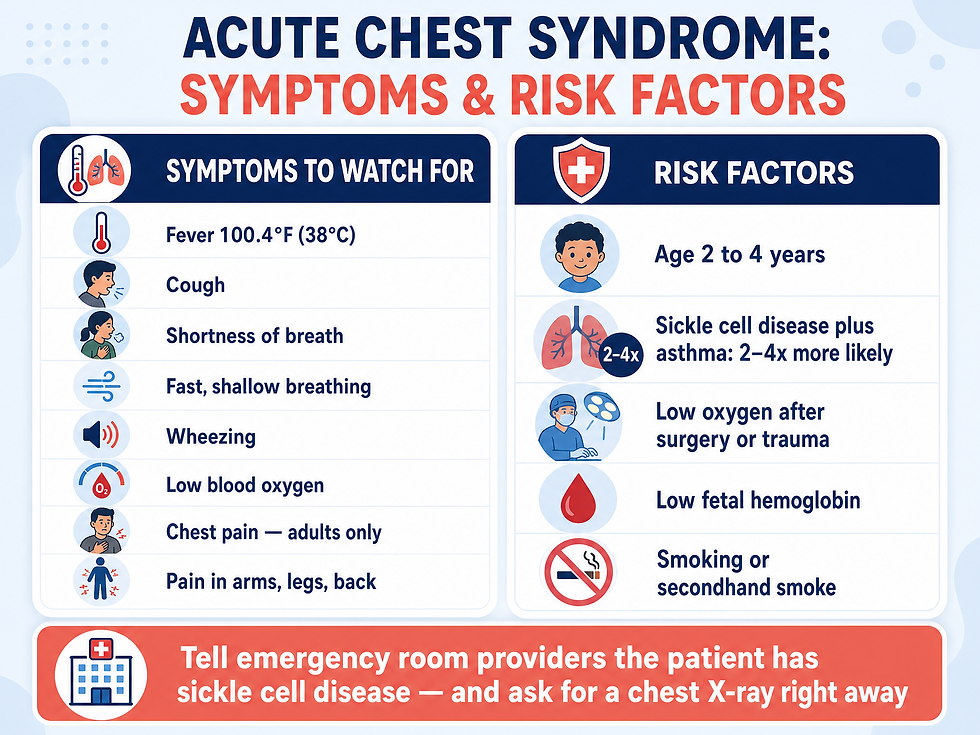
Cough: Often one of the first signs
Fever: 100.4°F (38°C) or higher
Shortness of breath (dyspnea): Difficulty getting enough air
Low oxygen in the blood (hypoxemia): Measured by pulse oximetry
Fast, shallow breathing (tachypnea): The body tries to compensate for low oxygen
Wheezing: A whistling sound when breathing
Chest pain: Occurs in adults only
Acute pain in arms, legs, and back: Caused by blocked blood flow (vaso-occlusive crisis), especially in adults
Fluid buildup in the lungs and chest (pleural effusion): Seen in adults
What Causes Acute Chest Syndrome?
Scientists are not entirely sure what causes acute chest syndrome. They believe it is related to an embolism or an infection in the lungs.
With an embolism, a blood clot, fat, or a piece of dead bone marrow tissue can get stuck in a blood vessel and block blood flow. This pathway may lead to acute chest syndrome, especially in adults.
Infections, such as viral or bacterial pneumonia, can also cause acute chest syndrome. This is the most common cause of the syndrome in children.
Who Is at Highest Risk?
People with both SCD and asthma are two to four times more likely to have an episode of acute chest syndrome than people with SCD alone.
Age between 2 and 4 years: The age range when episodes are most common
Sickle cell disease plus asthma: 2–4x more likely to have an episode than SCD alone
Low oxygen levels: For example, after surgery or trauma
Low levels of fetal hemoglobin: A protective form of hemoglobin
Smoking or secondhand smoke: Damages lungs and airways
How Can a Child's Risk Be Lowered?
If your child has sickle cell disease, talk to your healthcare team about ways to reduce their risk of acute chest syndrome. They may suggest:
Staying current with asthma treatments: Controls airway inflammation
Getting vaccinations for flu, pneumonia, and COVID-19: Prevents infections that can trigger the syndrome
Blowing into a bottle frequently: Clears the airways and reduces fluid buildup around the lungs
Getting regular physical activity: Strengthens the lungs
Getting regular blood transfusions: Improves oxygen-carrying capacity
Taking hydroxyurea or L-glutamine: Reduces pain and helps avoid hospitalization
What Happens Without Immediate Treatment?
Without immediate treatment, people who develop acute chest syndrome may have complications, including acute respiratory distress syndrome (ARDS), a life-threatening lung injury; altered mental status; kidney injury; interstitial lung disease; pulmonary hypertension; liver dysfunction; multi-organ failure; respiratory failure; and severe pain.
This complication list is why every minute counts: the syndrome can escalate from breathlessness to multi-organ failure rapidly.
How Is Acute Chest Syndrome Diagnosed?
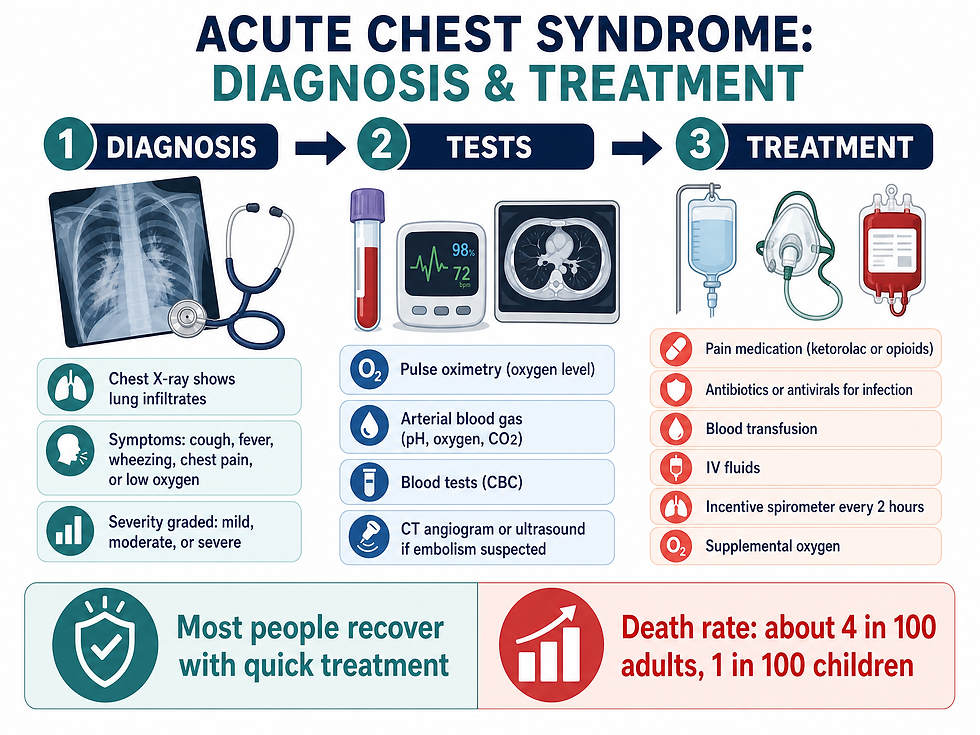
Acute chest syndrome criteria include abnormal substances building up in the lungs (lung infiltrates) plus at least one of the following: chest pain, cough, wheezing, fever, or low oxygen levels. A healthcare provider might grade a case as mild, moderate, or severe.
A provider can make an acute chest syndrome diagnosis based on symptoms, exam, history, and results from the following tests:
Pulse oximetry: The patient's oxygen level
Arterial blood gas analysis: Acidity (pH), oxygen, and carbon dioxide in the blood
Blood tests, including complete blood count (CBC): Red blood cells, white blood cells, platelets; looks for infections
Chest X-ray: Infection or abnormal substances (infiltrates) in the lungs
Bronchoscopy: Certain kinds of infections
CT angiogram: A pulmonary embolism
Ultrasound of the legs: Blood flow
How Is Acute Chest Syndrome Treated?
Early treatment is essential to keep the patient alive. Treatment may include:
Medications: Pain relief (ketorolac or opioids) and infection treatment (antibiotics or antivirals)
Blood transfusion: Replaces some of the blood with donated blood or blood products
IV fluids: Prevent dehydration, which can worsen sickle cell disease and increase pain
Incentive spirometer: A device that encourages deep breaths, keeping parts of the lungs from collapsing
Supplemental oxygen therapy: Raises blood oxygen levels
What to Do in an Emergency
Seek immediate medical attention at a hospital if someone with sickle cell disease develops symptoms of acute chest syndrome. Tell the healthcare providers in the emergency room that the patient has SCD, and ask for an X-ray right away so providers can start treatment quickly. Diagnosing acute chest syndrome promptly can save a life — and it can also lessen the chance of another episode.
What Is the Outlook After an Episode?
Acute chest syndrome is usually more severe in adults than in children. A worse outcome may be more likely in adults with low platelet counts. But most people with this condition can recover if they get treatment quickly.
Even after successful treatment, a person with SCD can have another episode in the future. Acute chest syndrome is one of the more common reasons for hospital stays in adults with sickle cell disease.
Death rate: about 4 out of 100 in adults with acute chest syndrome; about 1 in 100 in children.
Can Acute Chest Syndrome Be Prevented?
Healthcare providers can prevent acute chest syndrome from developing during an SCD-related hospital stay. If someone is getting treatment for SCD in the hospital, their healthcare team should monitor and test them regularly, ensure they receive the medicines they need for pain and asthma, and provide the oxygen and fluids they need.
Patients can also do their part: breathing into a spirometer every two hours during a hospital stay helps keep the lungs clear.
Outside the hospital, prevention means managing the risk factors covered earlier: asthma control, vaccinations, staying active, avoiding smoke exposure, and taking prescribed medications like hydroxyurea.
Conclusion
Acute chest syndrome is the emergency that defines the stakes of sickle cell disease: sickle cells block the tiny blood vessels of the lungs, oxygen drops, and the condition can turn fatal quickly. It is the leading cause of hospitalization and death in SCD, it strikes children as young as two, it returns in more than half of those who have had it, and it claims about 4 in 100 adults who develop it. The counterweight is speed: prompt diagnosis — a chest X-ray on arrival, oxygen, transfusions, antibiotics, pain control, and spirometry — lets most people recover.
If you or your child has sickle cell disease and develops chest pain, cough, fever, or trouble breathing, go to the nearest hospital emergency room immediately — and tell the providers, in the first breath, that the patient has SCD. Ask for a chest X-ray right away, and ask the team about spirometry exercises and follow-up care before discharge.
Frequently Asked Questions
What is acute chest syndrome?
Acute chest syndrome is a serious complication of sickle cell disease in which sickle-shaped red blood cells get stuck in the small blood vessels of the lungs, creating a vaso-occlusive crisis where oxygen-rich blood cannot reach body tissues. It is an emergency and the most common cause of death in people with sickle cell disease.
What are the symptoms of acute chest syndrome?
Symptoms include cough, fever of 100.4°F (38°C) or higher, shortness of breath, low blood oxygen, fast shallow breathing, and wheezing. Chest pain occurs in adults only, and adults may also have acute pain in the arms, legs, and back, plus fluid buildup in the lungs and chest.
What causes acute chest syndrome?
Scientists are not entirely sure, but they believe it is related to an embolism (a blood clot, fat, or piece of dead bone marrow tissue stuck in a blood vessel) or an infection in the lungs. Infection — such as viral or bacterial pneumonia — is the most common cause in children; embolism is a more likely driver in adults.
Who is most at risk for acute chest syndrome?
People with both sickle cell disease and asthma are two to four times more likely to have an episode than people with SCD alone. Other risk factors include being between ages 2 and 4, low oxygen levels (for example after surgery or trauma), low levels of fetal hemoglobin, and smoking or secondhand smoke exposure.
Can acute chest syndrome happen more than once?
Yes. Acute chest syndrome can recur after successful treatment — it happens more than once in 1 out of 2 people with sickle cell disease. It is also one of the more common reasons for hospital stays in adults with SCD.
How is acute chest syndrome diagnosed?
Diagnosis requires lung infiltrates (abnormal substances building up in the lungs) on imaging plus at least one symptom — chest pain, cough, wheezing, fever, or low oxygen levels. Providers grade cases as mild, moderate, or severe, and may order pulse oximetry, arterial blood gases, blood tests, chest X-ray, bronchoscopy, CT angiogram, or leg ultrasound.
How is acute chest syndrome treated?
Early treatment is essential and may include pain medications (ketorolac or opioids), antibiotics or antivirals for infection, blood transfusion, IV fluids, an incentive spirometer to keep the lungs from collapsing, and supplemental oxygen therapy.
What are the chances of surviving acute chest syndrome?
Most people recover if they get treatment quickly. The death rate is about 4 out of 100 in adults and about 1 in 100 in children. The condition is usually more severe in adults, and a worse outcome is more likely in adults with low platelet counts.
References
This article is based on medically reviewed clinical information from StatPearls: Acute Chest Syndrome (NCBI Bookshelf), and clinical overviews of pneumonia, sickle cell disease, hypoxemia, and ARDS.
This article is for general informational purposes only and is not a substitute for professional medical advice, diagnosis, or treatment. Acute chest syndrome is a life-threatening complication of sickle cell disease and a medical emergency. Anyone with sickle cell disease who develops chest symptoms, fever, cough, or breathing difficulty should seek emergency medical care immediately.
Comments