Cockroach Allergy: What It Is, Why It Happens, and How It's Treated

Updated: 2 days ago
Medically reviewed by Dr. Baraa Alnahhal, MD · Last reviewed: October 2026
Quick Answer
Cockroach allergy is a condition in which the immune system overreacts to proteins in cockroach saliva, feces and body parts [4] [6]. It is one of the most common indoor allergies worldwide [1] [4]. Symptoms include congestion, sneezing, coughing and itchy eyes or skin [4] [6]. An allergist diagnoses it with skin prick or blood tests [4] [6]. There is no cure, but avoidance and medications control symptoms [4].
What the research says
According to PubMed, research on cockroach allergen exposure reports the following:
Cockroach sensitization is common in urban asthma. A 2012 review notes that 40% to 60% of patients with asthma in urban and inner-city areas have IgE antibodies to cockroach allergens, making the cockroach one of the most common sources of indoor allergens worldwide. (Sohn et al., Allergy Asthma Immunol Res, 2012) 1
Cutting cockroach exposure helped children with asthma. In a 12-month randomized trial of 102 children aged 5 to 17 with moderate to severe asthma, homes treated with insecticidal bait had significantly fewer cockroaches than control homes (mean change in cockroaches trapped 13.14; 95% CI 6.88-19.39). Children in control homes had more asthma symptoms and more unscheduled health care use, and higher odds of an FEV1 below 80% of predicted (odds ratio 5.74; 95% CI 1.60-20.57). (Rabito et al., J Allergy Clin Immunol, 2017) 2
Skin test wheal size tracks real-world reactivity. In a 2026 study of 103 sensitized urban children with asthma who had a cockroach nasal allergen challenge, larger skin prick test wheals were significantly associated with a positive challenge (2.2 mm larger than in children with a negative challenge). (Dunaway et al., J Allergy Clin Immunol Glob, 2026) 3
Study details are from PubMed abstracts.
What Is a Cockroach Allergy?
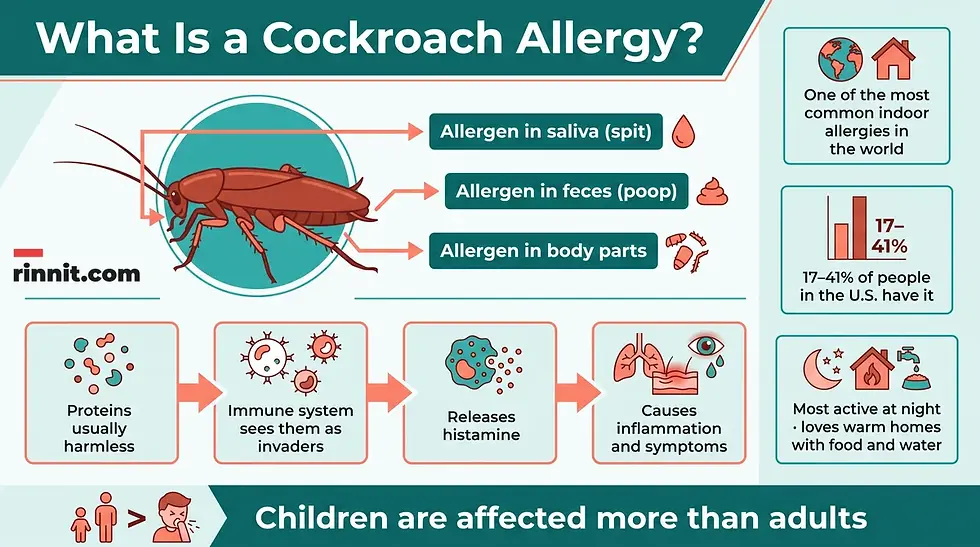
A cockroach allergy occurs when you have allergy symptoms after exposure to cockroaches. Cockroaches are flat, reddish-brown insects with wings and six legs. They often live in warm houses and buildings with easy access to water and food. They're most active at night.
Cockroaches have proteins (allergens) in their saliva (spit), feces (poop), and body parts [4] [5] [6]. These proteins are usually harmless. But if you have a cockroach allergy, your immune system views those proteins as harmful "invaders," like bacteria or viruses. Your immune system produces histamine and other chemicals that lead to inflammation [4].
Key Term | What It Means |
Allergen | A usually harmless substance (like a protein in cockroach saliva, feces, or body parts) that triggers an immune system overreaction |
Histamine | A chemical your immune system releases during an allergic reaction, causing symptoms like itching, sneezing, and runny nose |
Inflammation | Swelling and irritation caused when your immune system fights off what it sees as an "invader" |
Immune system | Your body's defense system that normally fights bacteria and viruses but overreacts in an allergy |
Indoor allergy | An allergy to allergens common inside your home, such as dust mites, pet dander, or cockroaches |
Atopy | A genetic (inherited) likelihood of developing allergies |
How Common Is a Cockroach Allergy?
Yes, cockroach allergies are a common allergy. They're one of the most common indoor allergies in the world [1] [4]. Indoor allergies include allergens that are common inside your home, such as dust mites or pet dander.
Studies suggest that between 17% and 41% of people in the United States have cockroach allergies [4] [6]. And exposure is widespread: in 2021, U.S. census reports noted about 14 million out of approximately 124 million occupied homes in the U.S. had cockroaches [7].
Who Does a Cockroach Allergy Affect?
Anyone can have a cockroach allergy. But it affects children more than adults [4].
You're more likely to develop a cockroach allergy if you have asthma, eczema, or hay fever (allergic rhinitis, an allergy that causes a runny or stuffy nose and sneezing) [4]. You're also more likely to develop one if you have a biological family history of atopy, which is a genetic (inherited) likelihood of developing allergies [4].
Risk Factor | Detail |
Age | Affects children more than adults |
Asthma | Increases both allergy risk and the chance that exposure triggers an asthma attack |
Eczema | Increases risk |
Hay fever (allergic rhinitis) | Increases risk |
Family history of atopy | Atopy is a genetic (inherited) likelihood of developing allergies |
What Are the Symptoms of a Cockroach Allergy?
Cockroach allergy symptoms may include congestion, coughing, an itchy mouth, nose or throat, an itchy skin rash, postnasal drip (mucus that drips into your throat), red, itchy and watery eyes, a runny nose, and sneezing [4] [6].
Symptom | What You Might Notice |
Congestion | Stuffy nose |
Coughing | A persistent cough |
Itchy mouth, nose or throat | Scratchy, irritated feeling |
Itchy skin rash | Red, itchy patches on the skin |
Postnasal drip | Mucus that drips into your throat |
Red, itchy, watery eyes | Eyes look red and produce tears; itchy |
Runny nose | Mucus draining from the nose |
Sneezing | Repeated sneezing fits |

Can Cockroaches Cause Other Health Problems?
If you have asthma, cockroach allergies can cause an asthma attack [2] [4] [6]. This is an important reason to see a provider if you have both asthma and allergy symptoms.
Asthma Attack Symptom | What It Feels Like |
Chest tightness, pain or pressure | A squeezing or heavy feeling in the chest |
Coughing | A persistent cough |
Shortness of breath (dyspnea) | Trouble catching your breath |
Wheezing | A whistling sound when you breathe |
Seek emergency care right away if you have severe shortness of breath, chest pain or pressure, or trouble breathing. These can be signs of a severe asthma attack.
How Is a Cockroach Allergy Diagnosed?
If you have cockroach allergy symptoms, it's a good idea to reach out to a healthcare provider for diagnosis. They may refer you to an allergist (immunologist) [4]. An allergist is a healthcare provider who specializes in diagnosing and treating allergies.
As part of their examination, they'll ask questions, including: What symptoms do you have? When did symptoms start to appear? What have you tried to relieve your symptoms? Have you ever seen cockroaches in your home or workplace? Does anyone else in your biological family have allergies? Has a provider ever diagnosed you with other types of allergies?
What Tests Will Be Done?
An allergist may use different allergy tests to diagnose a cockroach allergy according to your symptoms [4] [6].
Test | How It Works |
Skin prick (scratch) test | The allergist uses a thin needle to gently scratch your skin and introduce various types of allergens to the surface of your skin. They then measure any itchy spots similar to a mosquito bite on your skin. |
Blood test | The allergist takes a small blood sample from your arm and sends it to a lab. Laboratory tests check for reactions to various indoor and outdoor allergens, including cockroaches. |
How Is a Cockroach Allergy Treated?
The best way to prevent symptoms of a cockroach allergy reaction is to avoid cockroaches [4] [6]. Your allergist will also recommend over-the-counter (OTC) and prescription medications to treat your allergy symptoms [4] [5] [6].
What Medications Are Used?
An allergist may recommend or prescribe the following medications to treat your cockroach allergy symptoms:
Medication | How It Works | Key Details |
Oral and nasal antihistamines | Block histamine | Available by mouth, as a nose spray, or as eye drops; help with itching, sneezing, itchy eyes, and runny nose |
Nasal corticosteroids | Decrease inflammation and nasal congestion | Sprayed into your nose through your nostrils; can also help treat itchy eyes |
Leukotriene modifiers | Help reduce allergy symptoms | May take four to six weeks to start working |
Decongestants | Temporarily relieve a stuffy nose | Oral or nasal; only use over a short period. Don't use long-term |
Allergy shots (immunotherapy) | "Train" your immune system to tolerate cockroach allergens | May take 6 to 12 months of regular shots before symptoms improve; expect at least 3 to 5 years of regular shots for the greatest symptom reduction |

What Can I Expect If I Have a Cockroach Allergy?
You can't cure a cockroach allergy. But avoiding cockroach allergens and taking medications can help control cockroach allergy symptoms [4].
The good news is that with avoidance plus medication, most people keep symptoms well under control. The main long-term concern is for people with asthma, since cockroach allergens can trigger asthma attacks [6].
Can Symptoms of Cockroach Allergy Be Prevented?
The most effective way to lower your risk of cockroach allergy symptoms is to reduce your exposure to cockroaches [2] [4]. The following tips can help:
Prevention Step | What It Involves |
Call an exterminator | Pest control professionals determine how cockroaches get into your home, locate their nest, identify their food and water sources, and set traps to get rid of them |
Clean your home | Clean up dirty dishes, crumbs, and any other food sources on or around counters, sinks, floors, cupboards, stoves, and microwaves, including pet food. Regularly vacuum and/or mop your floors. |
Seal food sources | Securely close food containers and trash cans |
Fix leaky plumbing | Leaks provide cockroaches with water and create damp environments they prefer |
Clean up piles | Cockroaches hide in dark, cluttered places, such as laundry, newspaper, or dirty dish piles |
What is the bottom line on cockroach allergy?
A cockroach allergy happens when your immune system overreacts to proteins in cockroach saliva, feces, and body parts. It's one of the most common indoor allergies in the world (studies suggest 17% to 41% of people in the U.S. have it), and it affects children more than adults, especially those with asthma, eczema, hay fever, or a family history of atopy [4]. Symptoms include congestion, sneezing, runny nose, coughing, itchy mouth or throat, itchy skin rash, red and watery eyes, and postnasal drip. In people with asthma, exposure can cause an asthma attack [4] [6], so take breathing trouble seriously.
An allergist diagnoses the allergy with questions, a skin prick test, or a blood test [4] [6]. There's no cure, but symptoms are controllable: avoid cockroaches (exterminator, cleaning, sealed food, fixed leaks, cleared piles) and use medications like antihistamines, nasal corticosteroids, leukotriene modifiers, decongestants, or allergy shots. Talk to a healthcare provider if you suspect cockroaches are behind your symptoms. They can order the right tests and recommend treatment that brings relief.
Frequently Asked Questions
What is a cockroach allergy?
A cockroach allergy occurs when you have allergy symptoms after exposure to cockroaches. Your immune system overreacts to proteins in their saliva, feces, and body parts.
Where are cockroach allergens found?
In cockroach saliva (spit), feces (poop), and body parts. These proteins are usually harmless, but an allergic immune system treats them as dangerous invaders.
What do cockroaches look like?
Cockroaches are flat, reddish-brown insects with wings and six legs. They often live in warm houses and buildings with easy access to water and food, and they're most active at night.
What happens in your body during a cockroach allergy reaction?
Your immune system views the proteins as harmful "invaders" (like bacteria or viruses) and produces histamine and other chemicals that lead to inflammation, which causes your symptoms.
Is cockroach allergy common?
Yes. It's one of the most common indoor allergies in the world. Indoor allergies include allergens common inside your home, such as dust mites or pet dander.
What percentage of Americans have cockroach allergies?
Studies suggest that between 17% and 41% of people in the United States have cockroach allergies.
How many U.S. homes have cockroaches?
In 2021, U.S. census reports noted about 14 million out of approximately 124 million occupied homes in the U.S. had cockroaches.
Who gets cockroach allergies?
Anyone can have one, but it affects children more than adults.
What raises my risk of developing a cockroach allergy?
Having asthma, eczema, or hay fever (allergic rhinitis), or a biological family history of atopy, which is a genetic (inherited) likelihood of developing allergies.
What is allergic rhinitis?
Allergic rhinitis is the medical term for hay fever, an allergy that causes symptoms like a runny or stuffy nose and sneezing.
What is atopy?
Atopy is a genetic (inherited) likelihood of developing allergies.
What are the symptoms of a cockroach allergy?
Congestion, coughing, itchy mouth, nose or throat, itchy skin rash, postnasal drip, red itchy and watery eyes, runny nose, and sneezing.
What is postnasal drip?
Mucus that drips into your throat.
Can cockroaches cause other health problems?
Yes. If you have asthma, cockroach allergies can cause an asthma attack.
What are the symptoms of an asthma attack?
Chest tightness, pain or pressure; coughing; shortness of breath (dyspnea); and wheezing.
What is dyspnea?
Dyspnea is the medical term for shortness of breath.
How is a cockroach allergy diagnosed?
A healthcare provider may refer you to an allergist (immunologist), a specialist in diagnosing and treating allergies. They'll ask questions about your symptoms, exposure, and family history, then may order a skin prick test or blood test.
What is a skin prick (scratch) test?
The allergist uses a thin needle to gently scratch your skin and introduce various allergens to the surface of your skin. They then measure any itchy spots similar to a mosquito bite.
Can a blood test diagnose a cockroach allergy?
Yes. The allergist takes a small blood sample from your arm and sends it to a lab, where tests check for reactions to indoor and outdoor allergens, including cockroaches.
How is a cockroach allergy treated?
The best way to prevent symptoms is to avoid cockroaches. Your allergist will also recommend over-the-counter and prescription medications.
How do antihistamines work?
Antihistamines block histamine and are available to take by mouth, in a nose spray, or as eye drops. They help with itching, sneezing, itchy eyes, and runny nose.
What are nasal corticosteroids?
Sprays you apply into your nose through your nostrils. They decrease inflammation and nasal congestion, and can also help treat itchy eyes.
How long do leukotriene modifiers take to work?
Leukotriene modifiers help reduce allergy symptoms but may take four to six weeks to start working.
Can I use decongestants long-term?
No. Oral or nasal decongestants temporarily relieve a stuffy nose when used over a short period, but you shouldn't use them long-term.
What are allergy shots (immunotherapy)?
Allergy shots help "train" your immune system to tolerate cockroach allergens. It may take 6 to 12 months of regular shots before symptoms improve, and you should expect at least 3 to 5 years of regular shots for the greatest symptom reduction.
Can a cockroach allergy be cured?
No. You can't cure a cockroach allergy, but avoiding cockroach allergens and taking medications can help control symptoms.
What can I expect if I have a cockroach allergy?
With avoidance and medication, most people keep symptoms under control. The main concern is for people with asthma, since exposure can trigger asthma attacks.
How can I prevent cockroach allergy symptoms?
Reduce your exposure to cockroaches: call an exterminator, clean your home (including pet food), seal food containers and trash cans, fix leaky plumbing, and clean up piles like laundry and newspaper where cockroaches hide.
What does an exterminator do?
Pest control professionals determine how cockroaches get into your home, locate their nest, identify their food and water sources, and set traps to get rid of them.
Why do leaks matter for cockroaches?
Leaks provide cockroaches with water and create damp environments that they prefer.
Where do cockroaches hide?
In dark, cluttered places, such as laundry, newspaper, or dirty dish piles.
What is katsaridaphobia?
Katsaridaphobia is the fear of cockroaches. It's a type of entomophobia (fear of insects).
Why is katsaridaphobia so common?
People associate cockroaches with dirty homes or unsanitary environments; they're large, fast, and move unpredictably; they have a musty, oily smell; they look and feel slick or slimy; they're challenging to get rid of; and they're social bugs. If you find one or two, there are usually others you can't see.
What is entomophobia?
Entomophobia is the fear of insects.
When should I see a healthcare provider?
If you have cockroach allergy symptoms, it's a good idea to reach out to a healthcare provider. They can order tests to make sure cockroaches are causing your symptoms and recommend or prescribe medications to bring relief.
When should I seek emergency care?
If you have severe shortness of breath, chest pain or pressure, or trouble breathing (signs of a severe asthma attack), seek emergency medical care right away.
Related Reading
References
Sohn MH, et al. The cockroach and allergic diseases. Allergy Asthma Immunol Res. 2012;4(5):264-269. PMID 22950031. https://doi.org/10.4168/aair.2012.4.5.264
Rabito FA, et al. A single intervention for cockroach control reduces cockroach exposure and asthma morbidity in children. J Allergy Clin Immunol. 2017;140(2):565-570. PMID 28108117. https://doi.org/10.1016/j.jaci.2016.10.019
Dunaway LE, et al. Correlates of cockroach nasal challenge responsiveness among sensitized urban children with asthma. J Allergy Clin Immunol Glob. 2026;5(3):100684. PMID 42006155. https://doi.org/10.1016/j.jacig.2026.100684
Cleveland Clinic. Cockroach Allergy: Symptoms, Diagnosis & Treatment. Cleveland Clinic. Last updated September 1, 2023. https://my.clevelandclinic.org/health/diseases/25229-cockroach-allergy
American College of Allergy, Asthma & Immunology. Cockroach Allergy: Causes, Symptoms & Treatment. ACAAI Public Website. Reviewed February 1, 2018. https://acaai.org/allergies/allergic-conditions/cockroach-allergy/
Asthma and Allergy Foundation of America. Cockroach Allergy: How to Identify and Treat. AAFA. Medically reviewed July 2025. https://aafa.org/allergies/types-of-allergies/insect-allergy/cockroach-allergy/
Sellner M, Wicht J. Residents of 14 Million Housing Units Reported Seeing Roaches, 14.8 Million Saw Rodents in Last 12 Months. United States Census Bureau. April 21, 2021. https://www.census.gov/library/stories/2021/04/how-many-american-homes-have-pests.html
Medical disclaimer
This article is for general informational purposes only and is not a substitute for professional medical advice, diagnosis, or treatment. Always seek the advice of your physician or other qualified health provider with any questions you may have regarding a medical condition. Never disregard professional medical advice or delay seeking it because of something you have read here. If you experience severe shortness of breath, chest pain or pressure, or signs of a severe asthma attack, seek emergency medical care immediately.



Comments