Cholesterol Emboli: What They Are, Why They Happen, and How They're Treated

Updated: 3 days ago
Medically reviewed by Dr. Baraa Alnahhal, MD · Last reviewed: October 17, 2026
Quick Answer
Cholesterol emboli are tiny fragments of plaque, made mostly of cholesterol crystals, that break off an artery wall and travel through the blood. [8] [5] About 70% of the time they are a complication of blood vessel procedures. [8] Symptoms include fatigue, fever and organ-specific signs like blue-purple skin on the feet. [8] [5] The condition is sometimes fatal, so follow-up care is essential. [8]

What the research says
According to PubMed:
Cholesterol embolization is uncommon after heart catheterization, but serious when it happens. In a prospective study of 1,786 consecutive patients aged 40 and older who had left-heart catheterization at 11 hospitals, 25 (1.4%) developed cholesterol embolization syndrome, and in-hospital mortality was 16.0% in those patients versus 0.5% in patients without it (Fukumoto et al., J Am Coll Cardiol, 2003) [1]).
Statins were linked to better outcomes in atheroembolic kidney disease. In a multicenter cohort of 354 patients with atheroembolic renal disease followed for about 2 years, 116 needed dialysis and 102 died; the risk of dialysis and death was 50% lower among those receiving statins (an observational finding, not proof of cause) (Scolari et al., Circulation, 2007) [2].
The kidneys are involved in nearly all reported cases, and mortality is high. A review of published case reports found atheroembolic renal disease in 92% of cases and mortality of 63%, with older age, male sex, atherosclerotic risk factors, anticoagulation, and femoral access as the main predisposing factors (Agrawal et al., J Interv Cardiol, 2018) [3].
What Are Cholesterol Emboli?
Cholesterol emboli are bits of plaque that break away from the wall of a large artery and travel through your blood. [8] [7] Plaque (atheroma) is a sticky substance that builds up in your arteries over time (atherosclerosis). [8] The plaque may be stable for a long time, but sometimes, it can break apart (rupture). This may happen as a complication of certain medical procedures, such as a heart catheterization, or for other reasons. [8]
Key terms at a glance: An artery is a blood vessel that carries blood away from the heart. Plaque (atheroma) is a sticky buildup of cholesterol and other materials inside the artery wall. An embolus is any piece of material that travels through the blood and gets stuck in a vessel; cholesterol emboli are emboli made mostly of cholesterol crystals.
Term | What it means |
Cholesterol emboli | Bits of plaque that break away from an artery wall and travel through the blood [8] |
Atheroma | Plaque — the sticky substance that builds up in arteries over time |
Atherosclerosis | The condition of plaque buildup in the arteries |
Microemboli | Very small emboli — providers call a burst of them a "shower of microemboli" [8] |
Atheroembolic renal disease | Cholesterol emboli affecting the kidneys [8] |
When plaque ruptures, it breaks into many small pieces. These bits of plaque material can travel through your blood in what healthcare providers call a "shower of microemboli." [8] Compared with blood clots that form on the surface of plaque, cholesterol emboli are smaller. And they are made mostly of cholesterol crystals. [8] So, they tend to get stuck in medium or small arteries, rather than large ones. [8] [3]
Once they are lodged in smaller arteries, cholesterol emboli block blood flow to whatever parts of your body those arteries supply. [8] Most often, cholesterol emboli affect blood flow to your kidneys and may lead to kidney failure. [8] [3] They may also travel to small arteries in your foot, particularly after a procedure such as a heart catheterization. [8] But no matter where they are lodged, cholesterol emboli may cause gradual damage to organs in your body and may also be fatal. [8]
Healthcare providers use various terms to refer to cholesterol emboli and their effects on your body, including cholesterol embolization syndrome, blue toe syndrome, atheroembolism, atheromatous embolization syndrome, cholesterol-crystal embolization, and atheroembolic renal disease (when the cholesterol emboli affect your kidneys). [8] [5]
How Common Are Cholesterol Emboli?
Researchers do not know exactly how often cholesterol emboli occur. Cases that are severe enough to need treatment may affect up to 3% of adults. [8] The condition mostly affects adults over age 60 with atherosclerosis and other forms of cardiovascular disease. [8]
What Are the Signs and Symptoms of Cholesterol Emboli?
Cholesterol emboli cause inflammation in your body that leads to these symptoms. [8]
Other symptoms (things you notice) and signs (things your provider notices) can vary. It depends on which arteries are affected and what parts of your body those arteries supply with blood. The chart below lists some signs and symptoms based on where the cholesterol emboli become lodged.
Body area | Signs and symptoms |
Skin (usually feet or legs) | |
Kidneys | Signs and symptoms of kidney failure [8] |
Digestive tract | |
Brain | |
Eyes |
What Causes Cholesterol Emboli?

About 70% of the time, cholesterol emboli occur as complications of medical procedures involving your blood vessels, like a heart catheterization. [8] Such procedures can disrupt plaque in your arteries, causing them to break apart. [8]
When cholesterol emboli develop as a complication, it is most often after an angiogram. [8] It is important to know that angiograms are typically safe and have a low risk of serious complications. But cholesterol emboli are one known, rare risk. [8]
What Are the Risk Factors?
Risk factor | Why it raises your risk |
Age over 50 | Older arteries are more likely to carry long-standing plaque |
Male | |
Advanced atherosclerosis | Extensive plaque buildup means more material that can break apart |
High blood pressure | A key risk factor for atherosclerosis |
High cholesterol | Feeds the plaque buildup process |
Diabetes | A risk factor for atherosclerosis |
Tobacco use | Smoking or tobacco products damage blood vessels |
Chronic kidney disease | Linked to both vascular disease and emboli risk |
What Are the Complications of Cholesterol Emboli?
Cholesterol emboli can damage various organs in your body. These include your kidneys, skin, intestines and brain. [8] Healthcare providers will do everything possible to treat any organ damage to give you the best chance of recovery.
How Are Cholesterol Emboli Diagnosed?
Cholesterol emboli can be challenging to diagnose. Many of the signs and symptoms are nonspecific, meaning they could point to many different problems. [8] [5] Your provider will give you a physical exam and talk with you about any symptoms you have, your medical history, and any recent medical procedures you have had. [8]
Test | What it checks |
Physical exam | A hands-on exam looking for skin changes and other signs |
Medical history review | Your symptoms and any recent blood vessel procedures |
Blood tests (complete blood count) | Markers of inflammation or signs of kidney dysfunction [8] |
Biopsy |
How Do You Treat Cholesterol Emboli?
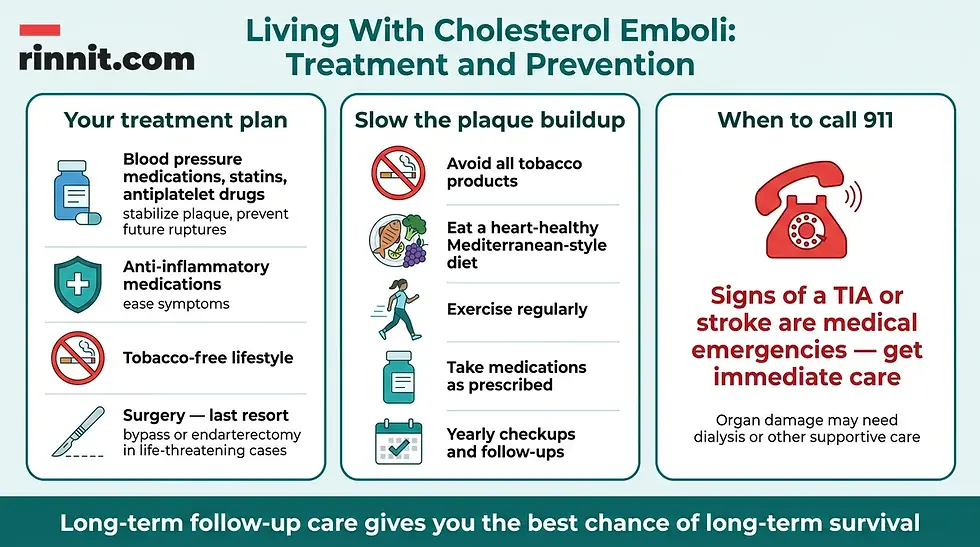
Healthcare providers tailor treatment to your needs and the severity of your condition. Treatment may include medications to manage cardiovascular disease risk factors, lifestyle changes, medications to reduce inflammation, and surgery. [8]
Treatment | What it does |
Blood pressure medications | Manage blood pressure and may help stabilize artery plaque [8] |
Statins | |
Antiplatelet medications | Make blood cells less likely to clump; may help stabilize plaque |
Medications to reduce inflammation | Cholesterol emboli cause inflammation throughout the body; these medications ease symptoms [8] |
Lifestyle changes | Avoiding tobacco products supports the health of your blood vessels and heart [8] |
Surgery (bypass or endarterectomy) | A last line of treatment in life-threatening cases — bypass reroutes blood flow; endarterectomy removes plaque if the emboli location is known [8] |
Medications to manage cardiovascular disease risk factors may help stabilize the plaque in your arteries. This can prevent future ruptures and cholesterol emboli. [8] Your provider may prescribe blood pressure medications, statins and antiplatelet medications. [8] [7] Such changes can support the health of your blood vessels and heart.
Surgery is a last line of treatment in life-threatening cases. Your provider may recommend bypass surgery (to reroute your blood flow) or an endarterectomy if they know the exact location of the cholesterol emboli. [8]
In addition, treatment may include supportive care in response to organ damage. For example, you may need dialysis to support your kidney function, surgery to remove part or all of your colon, or amputation of a limb. [8]
What Is the Outlook?
Your outlook depends on many factors, including associated conditions and the extent of organ damage. [8] Some research shows that kidney damage may lead to a poorer outcome. [8] [2]
Cholesterol emboli are sometimes fatal. Researchers estimate a 63% mortality rate. [8] [3] But that number can be higher or lower depending on the extent of organ damage and your overall condition. [8]
Your healthcare provider is the best person to tell you about your outlook, or what you can expect going forward. They can evaluate your situation based on your medical history and current condition.
How Can I Lower My Risk of Cholesterol Emboli?
Doing whatever you can to slow the progression of atherosclerosis can help lower your risk of cholesterol emboli. [8] Steps you can take include avoiding all tobacco products — if you currently smoke or use tobacco products, ask your provider for resources to help you quit — eating a heart-healthy diet, like the Mediterranean diet, exercising regularly according to your provider's guidance, taking your medications as your provider prescribes them, and visiting your provider for a yearly check-up and keeping all of your follow-up appointments. [8]
Prevention step | What it does |
Avoid all tobacco products | Smoking and tobacco damage blood vessels and feed plaque buildup |
Eat a heart-healthy diet (Mediterranean diet) | Supports blood vessel and heart health |
Exercise regularly | Helps slow the progression of atherosclerosis |
Take medications as prescribed | Keeps blood pressure and cholesterol under control |
Keep yearly checkups and follow-ups | Lets your provider catch problems early |
How Do I Take Care of Myself?
Your provider will tell you how to care for yourself at home. It is important to follow their guidelines closely, including medication guidelines. Ask your provider if anything is unclear.
Your provider will tell you how often you need to come in for appointments. If your provider diagnoses you with cholesterol emboli, you will need long-term care to manage your condition and minimize damage to your organs. [8] It is vital to go to all of your appointments so you have the best possible chance of long-term survival. [8]
When Should I Go to the ER?
Call 911 or your local emergency number if you have signs or symptoms of a TIA or stroke. These are medical emergencies that require immediate care. [8]
What is the bottom line on cholesterol emboli?
Cholesterol emboli are small fragments of artery plaque — mostly cholesterol crystals — that break away from a large artery wall and travel through the blood until they lodge in smaller arteries, blocking blood flow. They usually occur after a blood vessel procedure like heart catheterization or an angiogram (about 70% of the time), and they most often affect the kidneys, the feet, the digestive tract, the brain, or the eyes. Because symptoms like fatigue, fever, and mottled skin can point to many problems, diagnosis is challenging and may require blood tests and a biopsy. Treatment focuses on stabilizing the plaque with medications, reducing inflammation, lifestyle changes such as quitting tobacco, and supportive care for any organ damage — surgery is a last resort in life-threatening cases. The outlook depends on the extent of organ damage, and long-term follow-up care is essential. If you have atherosclerosis or risk factors like high blood pressure, high cholesterol, or diabetes, working with your provider to slow plaque buildup is your best protection.
Frequently Asked Questions
What are cholesterol emboli?
Bits of plaque that break away from the wall of a large artery and travel through your blood. They are smaller than blood clots and made mostly of cholesterol crystals.
Why do cholesterol emboli form?
Plaque (atheroma) builds up in your arteries over time (atherosclerosis). Sometimes it breaks apart (ruptures), and the fragments travel through your blood in a "shower of microemboli" that lodge in smaller arteries.
Are cholesterol emboli the same as a blood clot?
No. Compared with blood clots that form on the surface of plaque, cholesterol emboli are smaller and are made mostly of cholesterol crystals.
How common are cholesterol emboli?
Researchers do not know exactly, but cases severe enough to need treatment may affect up to 3% of adults. The condition mostly affects adults over 60 with atherosclerosis.
What causes cholesterol emboli?
About 70% of the time, they occur as complications of medical procedures involving the blood vessels, like heart catheterization — most often after an angiogram. Rarely, they occur spontaneously without a clear cause.
Are angiograms dangerous?
Angiograms are typically safe with a low risk of serious complications — but cholesterol emboli are one known, rare risk.
Who is at higher risk?
People over age 50, men, people with extensive plaque buildup (advanced atherosclerosis), and people with atherosclerosis risk factors: high blood pressure, high cholesterol, diabetes, tobacco use, and chronic kidney disease.
What are the symptoms?
General symptoms include fatigue, fever, muscle pain (myalgia), and weight loss. Organ-specific signs include mottled or blue-purple skin on the feet, signs of kidney failure, abdominal/back/flank pain, bleeding, diarrhea, confusion, memory loss, dizziness, headache, TIA, stroke, eye pain, and blurred vision.
What is blue toe syndrome?
One of the names healthcare providers use for cholesterol emboli affecting the toes — purple or blue skin on your toe or other parts of your foot.
Why do my feet turn purple?
Fragments may lodge in small arteries in the foot, particularly after a heart catheterization, blocking blood flow to the skin.
Can cholesterol emboli affect the brain?
Yes. They can cause confusion, memory loss, dizziness, headache, a transient ischemic attack (TIA), or a stroke.
What are Hollenhorst plaques?
Yellow cholesterol crystals visible in the retinal arteries of the eye — one sign of cholesterol emboli.
How are cholesterol emboli diagnosed?
With a physical exam, a review of your symptoms and recent procedures, blood tests (complete blood count) to check for inflammation or kidney dysfunction, and sometimes a biopsy of skin or kidney tissue to look for cholesterol crystals.
Why is diagnosis difficult?
Many of the signs and symptoms are nonspecific, meaning they could point to many different problems.
Can cholesterol emboli cause kidney failure?
Yes. They most often affect blood flow to the kidneys and may lead to kidney failure.
How are cholesterol emboli treated?
With medications to manage cardiovascular risk factors (blood pressure medications, statins, antiplatelet medications), medications to reduce inflammation, lifestyle changes like avoiding tobacco, and — in life-threatening cases — surgery such as bypass or endarterectomy.
What if my organs are damaged?
Treatment may include supportive care such as dialysis for kidney function, surgery to remove part or all of the colon, or amputation of a limb.
What is my outlook?
It depends on associated conditions and the extent of organ damage; kidney damage may mean a poorer outcome. Cholesterol emboli are sometimes fatal — researchers estimate a 63% mortality rate, which can be higher or lower based on organ damage and your overall condition. Your provider can evaluate your specific situation.
Can cholesterol emboli be prevented?
You can lower your risk by slowing the progression of atherosclerosis: avoid all tobacco, eat a heart-healthy (Mediterranean) diet, exercise regularly, take prescribed medications, and keep yearly checkups.
When should I go to the ER?
Call 911 if you have signs or symptoms of a TIA or stroke — these are medical emergencies that require immediate care.
What questions should I ask my provider?
Ask about your risk factors, how to lower your risk before any cardiovascular procedure, and what symptoms to watch for. If diagnosed, ask about treatment options, lifestyle changes, and your outlook.
Related Reading
This article is for general informational purposes only and does not constitute medical advice, diagnosis, or treatment. Always seek the guidance of a physician or other qualified health provider with any questions you have about a medical condition. Never disregard professional medical advice or delay seeking it because of something you read here. Cholesterol emboli can damage your organs and are sometimes fatal — if you have signs or symptoms of a TIA or stroke, call 911 or your local emergency number immediately; for other concerning symptoms like mottled or blue-purple skin, kidney problems, or confusion, seek medical care promptly.
References
Fukumoto Y, Tsutsui H, Tsuchihashi M, et al. The incidence and risk factors of cholesterol embolization syndrome, a complication of cardiac catheterization: a prospective study. J Am Coll Cardiol. 2003;42(2):211-216. PMID 12875753. https://doi.org/10.1016/s0735-1097(03)00579-5
Scolari F, Ravani P, Gaggi R, et al. The challenge of diagnosing atheroembolic renal disease: clinical features and prognostic factors. Circulation. 2007;116(3):298-304. PMID 17606842. https://doi.org/10.1161/CIRCULATIONAHA.106.680991
Agrawal A, Ziccardi MR, Witzke C, et al. Cholesterol embolization syndrome: an under-recognized entity in cardiovascular interventions. J Interv Cardiol. 2018;31(3):407-415 (published online December 15, 2017). PMID 29243285. https://doi.org/10.1111/joic.12483
Ozkok A. Cholesterol-embolization syndrome: current perspectives. Vasc Health Risk Manag. 2019;15:209-220. PMID 31371977. https://doi.org/10.2147/VHRM.S175150
Saric M, Kronzon I. Cholesterol embolization syndrome. Curr Opin Cardiol. 2011;26(6):472-479. PMID 21993354. https://doi.org/10.1097/HCO.0b013e32834b7fdd
Kuwatani M, Sakamoto N. Angiogenic dreaded killer: cholesterol crystal embolization. Intern Med. 2021;60(6):825-826 (published online October 14, 2020). PMID 33055490. https://doi.org/10.2169/internalmedicine.6100-20
Shah N, Nagalli S. Cholesterol emboli. In: StatPearls [Internet]. Treasure Island (FL): StatPearls Publishing; updated January 23, 2024. PMID 32310551. https://www.ncbi.nlm.nih.gov/books/NBK556091/
Cleveland Clinic. Cholesterol Emboli. Cleveland Clinic. Last updated January 5, 2023. https://my.clevelandclinic.org/health/diseases/24575-cholesterol-emboli



Comments