Childhood Asthma: Symptoms, Triggers, Diagnosis & Treatment — Complete Parent's Guide

Updated: 2 days ago
Medically reviewed by Dr. Baraa Alnahhal, MD · Last reviewed: October 2026
Quick Answer: What Is Childhood Asthma?
Childhood asthma is a condition in which a child's lungs and airways become easily inflamed by triggers such as pollen, a cold or tobacco smoke, causing wheezing, coughing, shortness of breath and chest tightness. It cannot be cured, but with daily treatment, trigger avoidance and a written asthma action plan, most children keep symptoms under control.
What the research says
Long-term inhaled steroids may slow growth only slightly. In a meta-analysis of 13 studies of children with asthma using inhaled corticosteroids for at least 6 months, growth velocity was not significantly reduced overall (mean difference −0.38 cm/year, 95% CI −0.84 to 0.07); after excluding high-risk-of-bias studies the estimate was −0.59 cm/year (95% CI −1.10 to −0.07), and limited long-term data suggested about 1.2 cm lower adult height (95% CI −1.90 to −0.50 cm). (Zhao J et al., Front Med, 2026) [3]
Smoke and vapor exposure are linked to asthma in young people. In a meta-analysis of 72 studies in adolescents aged 10–19, passive smoking was associated with higher odds of asthma (adjusted OR 1.23, 95% CI 1.17–1.29), parental smoking even more (aOR 1.85, 95% CI 1.33–2.36), and e-cigarette use also showed an association (aOR 1.13, 95% CI 1.10–1.16), although the certainty of the evidence was very low. (Shi et al., BMC Public Health, 2026) [4]
Early respiratory infections raise the chance of later wheeze and asthma. In a meta-analysis of 51 studies, early-life respiratory viral infections were linked to higher odds of wheeze and asthma (OR 1.59, 95% CI 1.39–1.82), while viral prophylaxis including maternal influenza vaccination was linked to lower odds of wheeze, asthma, and lower respiratory tract infection (OR 0.78, 95% CI 0.72–0.85). (Zhao R, Front Med, 2026) [5]
At a Glance
Aspect | Summary |
What it is | Easily inflamed lungs and airways when exposed to triggers; not a different disease from adult asthma |
Can it be cured | No — but symptoms can be controlled and growing lungs protected |
Common symptoms | Wheezing, coughing, shortness of breath, chest tightness, trouble sleeping, fatigue |
Emergency signs | Stops mid-sentence to breathe; stomach muscles working; widened nostrils; stomach sucked under ribs |
How diagnosed | Lung function tests (spirometry, peak flow, bronchoprovocation), nitric oxide test, allergy skin testing — under 5, diagnosis relies on symptom history |
Core treatment | Daily long-term control medicines (cornerstone) + quick-relief rescue inhalers as needed |
Everyday plan | Written asthma action plan with green/yellow/red zones, shared with all caregivers |
What Is Childhood Asthma?
Childhood asthma is a condition in which the lungs and airways become easily inflamed when exposed to certain triggers — such as inhaling pollen or catching a cold or other respiratory infection.
It can cause irritating daily symptoms that interfere with play, sports, school, and sleep. In some children, unmanaged asthma can cause dangerous asthma attacks.
Childhood asthma is not a different disease from asthma in adults, but children face unique challenges. The condition is a leading cause of emergency department visits, hospitalizations, and missed school days.
The good news: With the right treatment, you and your child can keep symptoms under control and prevent damage to growing lungs.
Childhood asthma can't be cured, and symptoms can continue into adulthood. If you want to understand the underlying condition in full, our asthma complete guide and asthma attack guide cover it in depth.
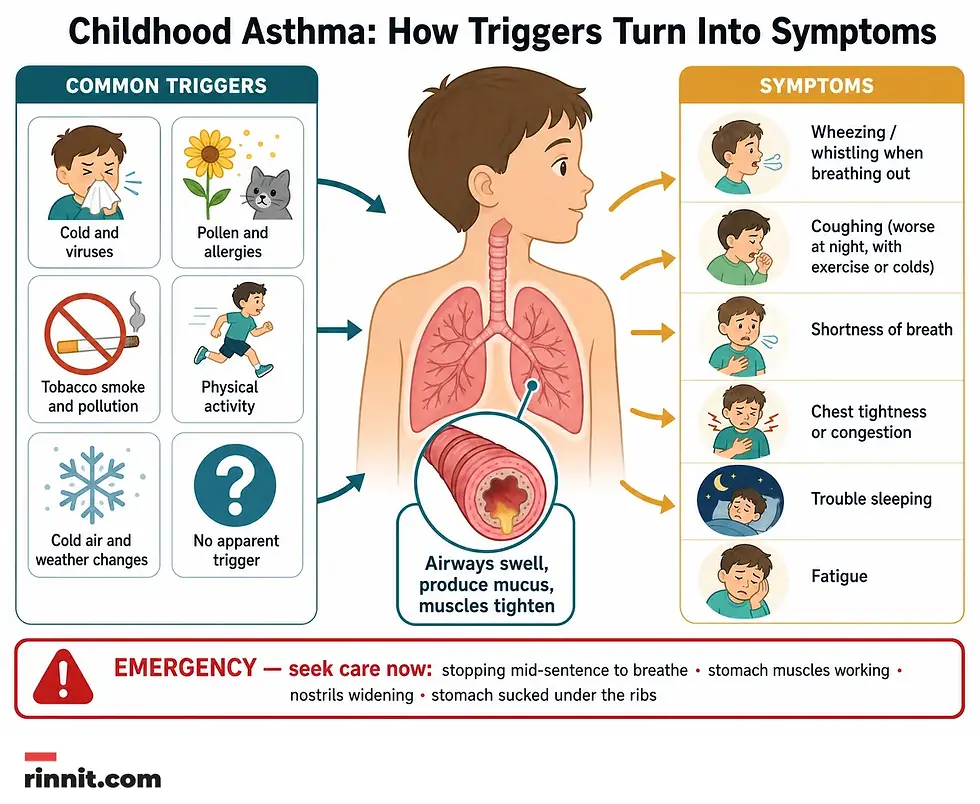
Image: rinnit.com
What symptoms of childhood asthma should parents watch for?
Typical signs of childhood asthma include wheezing when breathing out, shortness of breath, chest tightness and coughing that worsens with viral infections, sleep, exercise or cold air.
Common Symptoms
The typical signs of childhood asthma include:
A whistling or wheezing sound when breathing out
Shortness of breath
Chest congestion or tightness
Coughing that gets worse when a child has a viral infection, is sleeping, is exercising, or is in cold air
Other Signs That Point to Asthma
Childhood asthma also might cause:
Trouble sleeping due to shortness of breath, coughing, or wheezing
Bouts of coughing or wheezing that worsen with a cold or the flu
Delayed recovery or bronchitis after a respiratory infection
Trouble breathing that hampers play or exercise
Fatigue, which can be due to poor sleep
Symptoms vary from child to child and might get worse or better over time. Your child might have only one symptom, such as a lingering cough or chest congestion.
When to See a Doctor
Make an appointment with a healthcare professional if you notice:
Coughing that is constant, intermittent, or linked to physical activity
Wheezing or whistling sounds when your child breathes out
Shortness of breath or rapid breathing
Complaints of chest tightness
Repeated episodes of suspected bronchitis or pneumonia
Children with asthma may say things like, "My chest feels funny" or "I'm always coughing." Listen for coughing during sleep, which might not wake them. Crying, laughing, yelling, strong emotional reactions, and stress can also trigger coughing or wheezing.
Early treatment helps control symptoms and may prevent asthma attacks.
When to Seek Emergency Care
In severe cases, you might see your child's chest and sides pulling inward when breathing is difficult. Your child might have an increased heartbeat, sweating, and chest pain.
Seek emergency care immediately if your child:
Stops mid-sentence to take a breath
Uses stomach muscles to breathe
Has widened nostrils when breathing in
Breathes so hard that the stomach is sucked under the ribs
Even without an asthma diagnosis, seek immediate medical attention for any troubled breathing. Asthma attacks can start with coughing, then progress to wheezing and labored breathing.
What Causes Childhood Asthma?
The exact causes are not fully understood. What is known: an increased immune system sensitivity causes the lungs and airways to swell and produce mucus when exposed to certain triggers.
An important complicating factor: the reaction to a trigger can be delayed, making the trigger harder to identify. Triggers vary from child to child:
Trigger Category | Examples |
Infections | Viral infections such as the common cold |
Air quality | Air pollutants such as tobacco smoke |
Allergies | Dust mites, pet dander, pollen, or mold |
Activity | Physical activity |
Weather | Weather changes or cold air |
Sometimes, asthma symptoms happen with no apparent triggers at all.
What risk factors increase a child's chances of asthma?
Risk factors for childhood asthma include tobacco smoke exposure, allergies, a family history of asthma, early airway infections, pollution, obesity and GERD.
# | Risk Factor |
1 | Exposure to tobacco smoke, including before birth |
2 | Previous allergic reactions — skin reactions, food allergies, or hay fever (allergic rhinitis) |
3 | A family history of asthma or allergies |
4 | Early childhood airway infections |
5 | Living in an area with high pollution |
6 | Obesity |
7 | Respiratory conditions — chronic runny or stuffy nose, inflamed sinuses, or pneumonia |
8 | GERD (gastroesophageal reflux disease) |
9 | Being male |
10 | Being Black or Puerto Rican |
What complications can uncontrolled childhood asthma cause?
Uncontrolled childhood asthma can cause severe attacks needing emergency care, a permanent decline in lung function, missed school, poor sleep and limits on play and sports.
Severe asthma attacks that need emergency treatment or hospital care
Permanent decline in lung function
Missed school days or falling behind in schoolwork
Poor sleep and extreme tiredness
Symptoms that interfere with play, sports, or other activities
How is childhood asthma diagnosed?
Asthma can be hard to diagnose. A healthcare professional considers the symptoms and the child's medical history, and tests may be needed to rule out other conditions.
Test | What It Does |
Lung function tests | Diagnose asthma the same way as in adults. Spirometry measures how much air a child can exhale and how quickly — done at rest, after exercising, and after taking asthma medicine. A peak flow meter is a simple device measuring how hard the child can breathe out. Bronchoprovocation uses spirometry to measure how lungs react to triggers such as exercise or cold air |
Exhaled nitric oxide test | Measures nitric oxide in an exhaled breath sample if the diagnosis remains uncertain after lung function tests; can also show whether steroid medicines might help |
Allergy skin testing | For allergic asthma — the skin is pricked with extracts of common allergens (animal dander, mold, dust mites) and observed for a reaction |
Important for young children: certain asthma tests are not accurate before 5 years of age. For younger children, the professional relies on information from you and your child about symptoms. A trial of asthma medicines may be done to see how the child responds — and sometimes a diagnosis can't be made until later, after months or even years of observation.
Conditions That Look Like Asthma
Several childhood conditions cause asthmalike symptoms — and often occur alongside asthma:
Rhinitis and sinusitis
Acid reflux or GERD
Airway problems and breathing problems
Respiratory tract infections such as bronchiolitis and respiratory syncytial virus (RSV)
A healthcare professional must determine whether symptoms come from asthma, another condition, or both.
What is the goal of childhood asthma treatment, and which medicines are used?
The goal of childhood asthma treatment is to keep symptoms under control using long-term control medicines and quick-relief medicines, depending on how serious the asthma is.
The Goal of Treatment
Treatment depends on the seriousness of the child's asthma. The goal is to keep symptoms under control, meaning the child has:
Minimal or no symptoms
Few or no asthma flare-ups
No limitations on physical activities or exercise
Minimal use of quick-relief inhalers (such as albuterol — ProAir HFA, Ventolin HFA, others — also called rescue inhalers)
Few or no side effects from medicines
If an infant or toddler has frequent or severe wheezing episodes, a professional might prescribe a medicine to see if symptoms improve.
Long-Term Control Medicines (The Cornerstone)
Preventive, long-term control medicines reduce airway inflammation that leads to symptoms, and usually need to be taken daily:
Medicine Type | Examples | Key Notes |
Inhaled corticosteroids | Fluticasone (Flovent Diskus), budesonide (Pulmicort Flexhaler), mometasone (Asmanex HFA), ciclesonide (Alvesco), beclomethasone (Qvar Redihaler) | May need several days to weeks for full benefit; long-term use linked to slightly slowed growth, but the effect is minor — benefits outweigh risks |
Leukotriene modifiers (oral) | Montelukast (Singulair), zafirlukast (Accolate) | Help prevent symptoms for up to 24 hours |
Combination inhalers | Inhaled corticosteroid + LABA: fluticasone/salmeterol (Advair Diskus), budesonide/formoterol (Symbicort), fluticasone/vilanterol (Breo Ellipta), mometasone/formoterol (Dulera) | LABAs alone have been linked to severe attacks — always given with a corticosteroid; only for asthma not well controlled by other medicines |
Biologics | Mepolizumab (Nucala), dupilumab (Dupixent), benralizumab (Fasenra) — ages 6+ with severe eosinophilic asthma; omalizumab (Xolair) — ages 6+ with moderate to severe allergic asthma; tezepelumab (Tezspire) — ages 12+ with severe asthma | For children with severe or allergy-driven asthma |
Quick-Relief (Rescue) Medicines
Quick-relief medicines quickly open swollen airways and are used as needed for rapid, short-term relief during an attack — or before exercise if recommended:
Short-acting beta agonists (SABAs) — inhaled bronchodilators such as albuterol and levalbuterol (Xopenex HFA); act within minutes, last several hours, sometimes combined with a corticosteroid
Oral and intravenous corticosteroids — such as prednisone and methylprednisolone for severe asthma; can cause serious side effects long term, so used short-term only
Treatment for Allergy-Induced Asthma
When allergies trigger or worsen a child's asthma, allergy treatment can help:
Omalizumab — reduces the immune reaction to allergens (pollen, dust mites, pet dander); injected every four weeks; for people with allergies and severe asthma
Allergy medicines — oral and nasal spray antihistamines and decongestants
Immunotherapy — gradually reduces the immune reaction to specific allergens; available as a shot or a pill dissolved under the tongue
Don't Rely Only on Quick-Relief Medicines
Long-term control medicines — especially inhaled corticosteroids — are the cornerstone of asthma treatment. They keep asthma under control and make attacks less likely. A rescue inhaler eases flare-up symptoms right away, but if long-term medicines are working properly, it should be needed rarely.
Keep a record of how many puffs your child uses each week. Frequent quick-relief use means you'll probably need to adjust the long-term control medicine.
Inhaled Medicine Devices by Age
Child's Age | Device |
Older children and teens | Pressurized metered dose inhaler or a dry-powder inhaler |
Infants and toddlers | Face mask attached to a metered dose inhaler or a nebulizer |
Babies | Nebulizer (turns liquid medicine into fine droplets) with a face mask |
The Written Asthma Action Plan
Work with your healthcare professional to create a written asthma action plan — especially important if your child has severe asthma. The plan helps you:
Recognize when to adjust long-term control medicines
Determine how well treatment is working
Identify the signs of an asthma attack and know what to do
Know when to call a healthcare professional or seek emergency help
Children with enough coordination and understanding might use a peak flow meter, and the plan ties peak flow levels to actions. The plan typically uses green, yellow, and red zones — well-controlled, partly controlled, and poorly controlled symptoms — to make tracking easier.
Asthma changes over time. If symptoms are completely controlled for a time, the care team might recommend step-down treatment (lowering doses or stopping medicines). If control slips, they may recommend step-up treatment (increasing, changing, or adding medicines).
How can you prevent childhood asthma attacks?
Careful planning and avoiding triggers, such as allergens and smoke, are the best ways to prevent childhood asthma attacks.
Limit exposure to asthma triggers — help your child avoid the allergens and irritants that cause symptoms
Don't allow smoking around your child — smoke exposure during infancy is a strong risk factor and a common attack trigger; e-cigarettes and vaping devices also worsen symptoms
Encourage your child to be active — as long as asthma is well controlled, regular exercise helps the lungs work more efficiently
See the healthcare team when necessary — check in regularly; don't ignore signs of poor control, such as using a quick-relief inhaler too often
Help your child maintain a healthy weight — excess weight worsens symptoms and raises other health risks
Keep heartburn under control — acid reflux can worsen symptoms; prescription or over-the-counter medicines may be needed
Home Care: Reducing Triggers Around the House
Maintain low humidity — in a damp climate, discuss a dehumidifier with your care team
Keep indoor air clean — have HVAC checked yearly, change filters per manufacturer instructions, consider a small-particle filter
Reduce pet dander — avoid fur or feather pets if allergic; bathe and groom pets regularly; keep them out of your child's room
Use your air conditioner — it blocks airborne pollen, lowers humidity, and reduces dust mite exposure; keep windows closed during pollen season if you lack AC
Keep dust to a minimum — dustproof covers on pillows, mattresses, and box springs; hard flooring in the child's bedroom; washable curtains and blinds
Clean regularly — at least once a week
Reduce cold air exposure — a face mask outside helps when cold, dry air worsens symptoms
Coping and Support for Parents
Helping a child manage asthma can be stressful. These tips help:
Make treatment routine — daily medicine should be as ordinary as brushing teeth
Share the action plan — give copies to childcare providers, teachers, coaches, and friends' parents
Be encouraging — focus on what your child can do; involve teachers, school nurses, coaches, and relatives; don't limit activities out of fear
Stay calm during flare-ups — focus on the action plan and involve your child in each step
Connect with other parents — online chat rooms, message boards, or local support groups
Help your child connect — "asthma camp" or organized activities for children with asthma reduce isolation and build understanding
Alternative Medicine
Some alternative remedies are used for asthma, but more research is needed on effectiveness and side effects. Breathing techniques such as the Buteyko breathing technique, the BrEX method, and yoga breathing exercises are among the options to discuss with your care team.
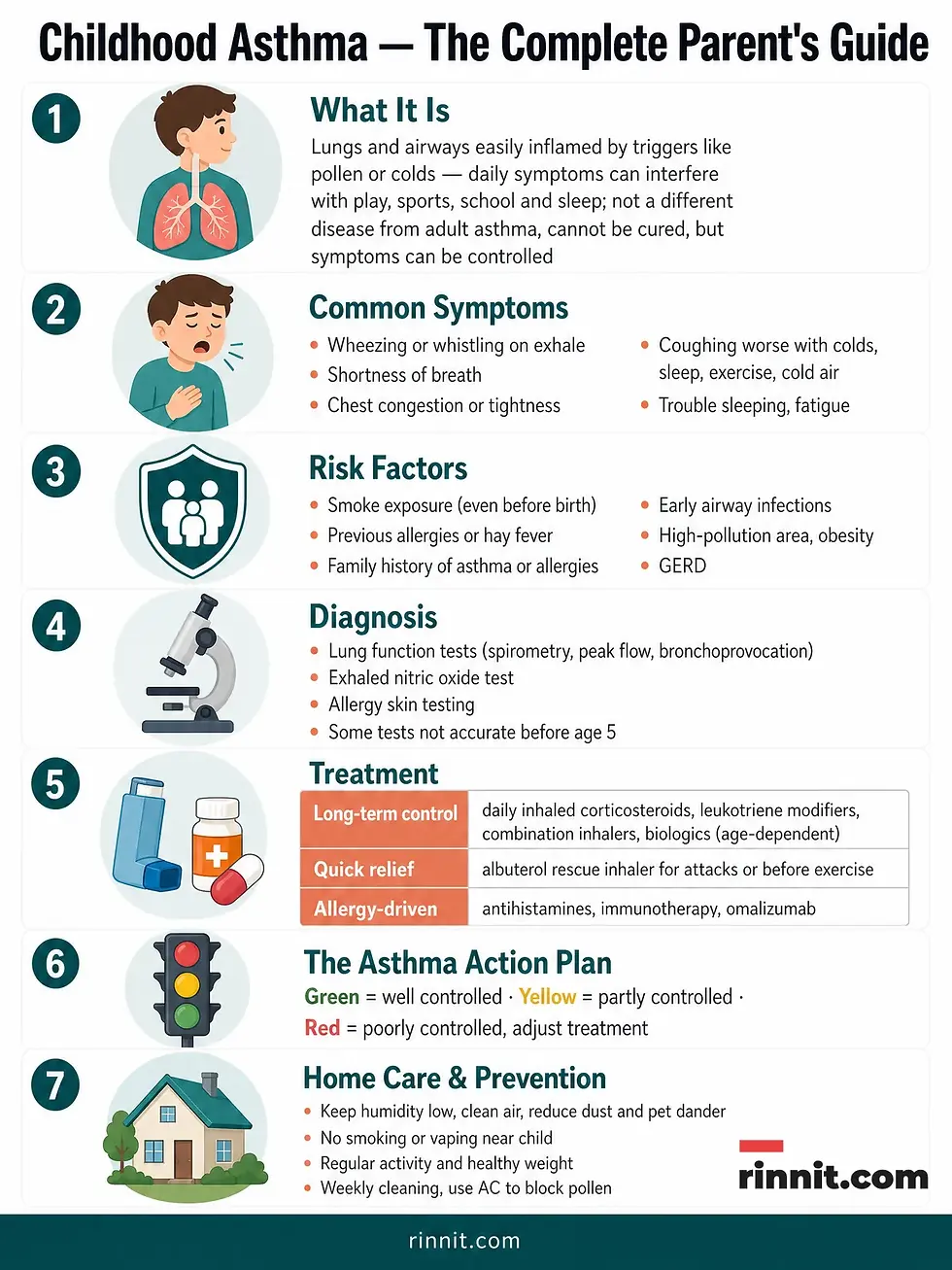
Image: rinnit.com
How should you prepare for an appointment about childhood asthma?
You'll likely start with your child's pediatrician or primary care team; you may be referred to an allergist, a pulmonologist (lung doctor), or another specialist.
What You Can Do
Make a list of:
Your child's symptoms — severity and timing. Note when they bother your child most: certain times of day, seasons, exposure to cold air, pollen, or other triggers, or during hard play and sports
Key personal information — major stresses or recent life changes
All medicines, vitamins, and supplements with doses
Questions to ask during the appointment
Questions to Ask the Doctor
Is asthma the most likely cause of my child's breathing problems?
What else could be causing my child's symptoms?
What tests does my child need?
Is my child's condition likely temporary or chronic?
What treatment do you suggest?
My child has other health conditions — how can we best manage them together?
Are there restrictions my child needs to follow?
Should my child see a specialist?
Are there brochures or other printed materials I can have? What websites do you recommend?
Questions the Doctor Will Likely Ask
When did you notice your child's symptoms?
Does your child have difficulty breathing most of the time, or only at certain times or in certain situations?
Does your child have allergies such as hay fever?
What, if anything, appears to worsen your child's symptoms?
What, if anything, seems to improve your child's symptoms?
Do allergies or asthma run in your child's family?
FAQ: Childhood Asthma Questions People Also Ask
What is childhood asthma?
Childhood asthma is a condition in which a child's lungs and airways become easily inflamed when exposed to certain triggers, such as pollen or a cold. It is the same disease as adult asthma, but children face unique challenges. It cannot be cured, though symptoms can be controlled with the right treatment.
What are the symptoms of childhood asthma?
The most common symptoms are a whistling or wheezing sound when breathing out, shortness of breath, chest congestion or tightness, and coughing that worsens with viral infections, sleep, exercise, or cold air. Trouble sleeping, fatigue, and frequent bouts of coughing with colds or flu are also common signs.
What triggers an asthma attack in a child?
Common triggers include viral infections such as the common cold, air pollutants like tobacco smoke, allergies to dust mites, pet dander, pollen, or mold, physical activity, and weather changes or cold air. Sometimes symptoms occur with no apparent trigger.
At what age can asthma be diagnosed?
Certain asthma tests are not accurate before 5 years of age, so for younger children doctors rely on symptom history from parents and may run a trial of asthma medicines. A diagnosis can sometimes take months or even years of observing symptoms.
What medicines treat childhood asthma?
Long-term control medicines taken daily — especially inhaled corticosteroids — are the cornerstone of treatment, with leukotriene modifiers, combination inhalers, and age-dependent biologics for more severe cases. Quick-relief rescue inhalers such as albuterol are used as needed for rapid symptom relief during flare-ups.
How do I prevent my child's asthma attacks?
Limit exposure to triggers, never allow smoking or vaping around your child, encourage regular physical activity and a healthy weight, keep heartburn under control, maintain clean low-dust indoor air, and use a written asthma action plan shared with all caregivers.
Can childhood asthma be cured?
No — childhood asthma cannot be cured, and symptoms can continue into adulthood. However, with the right daily treatment and trigger avoidance, symptoms can be kept under control and permanent damage to growing lungs can be prevented.
Conclusion
By now, you understand the essentials of raising a child with this manageable condition:
It's not a different disease, just a different patient — childhood asthma is the same condition as adult asthma, but it disrupts play, school, sports, and sleep, and unmanaged attacks can endanger growing lungs.
Numbers, zones, and plans keep your child safe — lung function tests (when age allows), allergy testing, and a written asthma action plan with green/yellow/red zones turn uncertainty into a clear daily playbook that every caregiver can follow.
Daily control beats rescue — inhaled corticosteroids and other long-term medicines are the cornerstone; a rescue inhaler is a backup, not the strategy, and frequent rescue use is your signal to revisit treatment with your care team.
This guide has walked you through the signs, the triggers, the ten risk factors, the diagnosis process, the full range of medicines, and the home care and coping steps that let your child thrive. With a solid action plan, most children with asthma live fully active lives.
If you want to go deeper into respiratory health, explore our related guides:
Asthma Complete Guide — the underlying condition behind every childhood case
Asthma Attack Complete Guide — how to spot, stop, and treat attacks when they happen
Medical disclaimer: The information in this article is for general educational purposes only and does not replace professional medical advice, diagnosis, or treatment. Always consult a qualified healthcare provider about your individual condition.
References
Mayo Clinic Staff. Childhood asthma — Symptoms and causes. Mayo Clinic. September 20, 2025. https://www.mayoclinic.org/diseases-conditions/childhood-asthma/symptoms-causes/syc-20351507
Mayo Clinic Staff. Childhood asthma — Diagnosis and treatment. Mayo Clinic. September 20, 2025. https://www.mayoclinic.org/diseases-conditions/childhood-asthma/diagnosis-treatment/drc-20351513
Zhao J, Dong A, Kong Y, et al. Effects of long-term inhaled corticosteroids on growth velocity and adult height in children with asthma: a systematic review and meta-analysis. Front Med (Lausanne). 2026;13:1937498. PMID 42807464. https://doi.org/10.3389/fmed.2026.1937498
Shi W, Kaewsanmung S, Kiratipaisarl W, et al. Association of active and passive smoking with adolescent asthma: a systematic review and meta-analysis. BMC Public Health. 2026;26(1). PMID 42106720. https://doi.org/10.1186/s12889-026-27640-6
Zhao R. The association between early-life respiratory infections and childhood asthma: a meta-analytic perspective. Front Med (Lausanne). 2026;13:1751843. PMID 41778038. https://doi.org/10.3389/fmed.2026.1751843



Comments