Catecholaminergic Polymorphic Ventricular Tachycardia (CPVT): Symptoms, Causes, and Treatment

Updated: 3 days ago
Medically reviewed by Dr. Baraa Alnahhal, MD · Last reviewed: November 2026
Quick answer
Catecholaminergic polymorphic ventricular tachycardia (CPVT) is a rare heart rhythm disorder in which the lower chambers beat too fast during exercise or strong emotions [1]. It is caused by a gene mutation, usually inherited [1] [5]. Symptoms include fainting, fast hard heartbeats and seizures, usually starting in childhood [1] [5]. Treatment includes medicines, an implantable defibrillator and lifestyle changes [1].
What the research says
According to PubMed:
Combining treatments lowered the risk of cardiac events in children. In 133 children with CPVT followed for a median of 6 years, 33% (44 of 133) had a cardiac event and 3% died. Event risk after diagnosis was 48% (32 of 67) on a beta-blocker or flecainide alone, versus 10% (5 of 48) on a beta-blocker plus flecainide and/or left cardiac sympathetic denervation (P < .001). (Kallas et al., Heart Rhythm, 2021 [6]).
CPVT in children can still be dangerous despite treatment. In a Korean registry of 39 children with CPVT followed for a median of 59 months, 46.1% had breakthrough cardiac events, 25.6% had aborted cardiac arrest, and 10.3% had sudden cardiac death. Triple therapy (beta-blocker, flecainide, and left cardiac sympathetic denervation) reduced breakthrough events but did not prevent sudden death, and ICD-related complications were common. (Cho et al., American Journal of Cardiology, 2025 [7]).
A high-intensity exercise test found more arrhythmias. In 28 patients who had both exercise tests, the sudden high-intensity "Burst" protocol provoked more severe arrhythmias than the traditional Bruce protocol in 20 patients (71%), and led to starting or increasing a beta-blocker or flecainide in 13 (65%), with no safety events. (Naderi et al., JAMA Cardiology, 2026 [8]).
What is catecholaminergic polymorphic ventricular tachycardia?
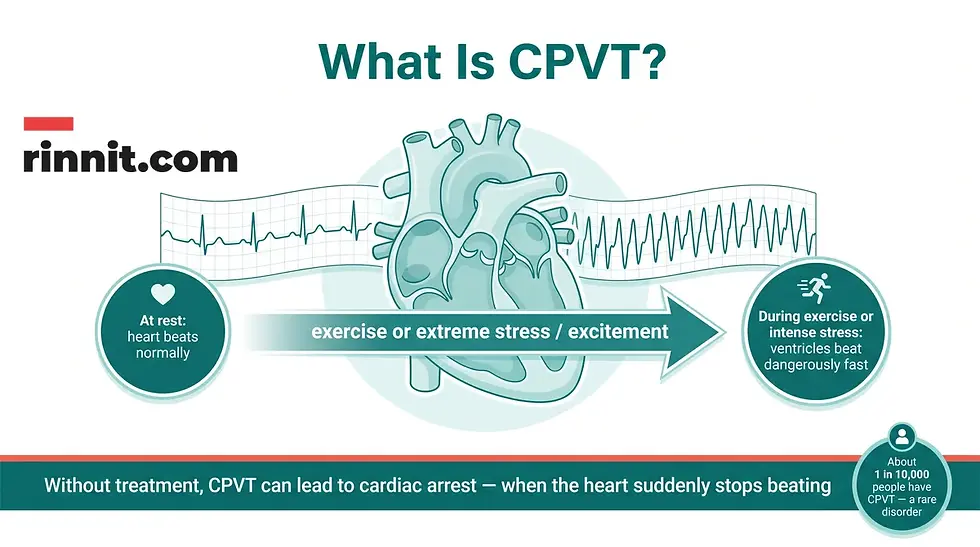
Catecholaminergic polymorphic ventricular tachycardia — usually called CPVT for short — is a rare heart rhythm disorder. In CPVT, the heart's lower chambers, known as the ventricles, beat too quickly when you exercise or feel extremely stressed [1]. When the heartbeat speeds up this way, it becomes harder for the heart to pump blood through the body as it should [1].
CPVT symptoms usually start when you're a child. Without treatment, CPVT can lead to health complications, including cardiac arrest — when the heart suddenly stops beating — which can be life-threatening [1] [5]. But with treatment, many people with CPVT live a high quality of life [1].
What is ventricular tachycardia?
Ventricular tachycardia is an abnormally fast heartbeat in the heart's lower chambers (ventricles) [1]. When you have CPVT, you may experience ventricular tachycardia at certain times, such as after exercise.
How common is CPVT?
What causes CPVT?
CPVT occurs because of a change (mutation) in one of your genes. Usually, you inherit this gene change from one or both parents [1] [5]. Sometimes, you don't get the gene change from your parents — it happens randomly [1] [5].
What are the symptoms of CPVT?
CPVT symptoms usually start when you're a child [1] [5]. You may experience symptoms after intense exercise or when you feel strong emotions, such as extreme stress or excitement [1].
The main symptoms are:
Fainting — or feeling like fainting — more often than is typical [1]
Fast and hard heartbeats (heart palpitations)
Seizures

How is CPVT diagnosed?
Catecholaminergic polymorphic ventricular tachycardia (CPVT) is diagnosed with tests that check heart health, sometimes including an ambulatory monitor worn for days or weeks.
Test | What it does |
|---|---|
Echocardiogram (echo test) | Uses sound waves to check the heart's structures and blood flow |
Electrocardiogram (EKG) | Measures the heart's electrical signals |
Exercise stress test | Measures how the heart rate changes when you exercise [1] |
Imaging tests (MRI, cardiac catheterization, coronary angiography) | Get a better picture of the heart's function and blood flow |
Genetic tests |
Your provider may also give you an ambulatory monitor — a device you wear for a few days or weeks as you go about your usual activities [1]. The monitor gives the provider a more comprehensive picture of your heartbeat throughout the day.
How is CPVT treated?
Catecholaminergic polymorphic ventricular tachycardia (CPVT) may need emergency electrical cardioversion during an episode, while long-term treatment focuses on keeping the heart in a regular rhythm.
What happens during an episode?
If your heart is in ventricular tachycardia, you may need an electrical shock (cardioversion) to restore a typical rhythm. Electrical cardioversion in this case is usually an emergency treatment [1].
What is the long-term treatment?
Long-term CPVT treatment focuses on keeping the heart in a regular rhythm. A treatment plan may include:
Treatment | How it works |
|---|---|
Medicines | Calcium channel blockers (Cardizem, Procardia) or beta-blockers (Lopressor, Corgard) to prevent ventricular tachycardia [1] |
Implantable cardioverter defibrillator (ICD) | A small device placed beneath the skin that uses electrical signals to keep the heart in rhythm [1] |
Lifestyle changes |

What's the outlook?
Without treatment, CPVT can lead to health complications. Some of these — such as sudden cardiac arrest — can affect life expectancy [1]. Treatment can help keep the heart in a typical rhythm and lower the risk of these complications [1].
If you have CPVT, you'll need lifelong follow-up care to ensure the heart stays in a regular rhythm [1]. Contact your healthcare provider immediately if you experience CPVT symptoms, such as fainting after exercise.
Can CPVT be prevented?
CPVT occurs because of a gene mutation, so there's no way to prevent the condition itself [1]. But with management, you can live a high quality of life with CPVT.
If someone in your family has CPVT, consider genetic testing and counseling [1] [4]. A genetic counselor can help you understand what it means to have the condition and whether you could pass it to your children.
How can CPVT complications be prevented?
To lower the risk of CPVT complications, you can:
Step | Why it helps |
|---|---|
Create a safe exercise plan with your healthcare provider | Keeps activity within safe limits for your heart |
Limit caffeine | Caffeine can speed up the heart rate [1] |
Monitor symptoms | Call your provider right away if heart palpitations occur |
Visit your provider regularly | Ongoing care keeps the heart rhythm under control |
What questions should I ask my provider?
If you or your child has CPVT symptoms or a diagnosis, consider asking your provider about likely causes, diagnostic tests, treatment options and at-home care between appointments.
What's the most likely cause of these symptoms?
What tests will help diagnose CPVT?
What are the treatment options for CPVT?
What at-home treatments help CPVT symptoms between appointments?
What's the bottom line?
Catecholaminergic polymorphic ventricular tachycardia is a rare childhood-onset heart rhythm disorder in which the ventricles beat too fast during exercise or intense stress, affecting about 1 in 10,000 people. Its symptoms — fainting, racing hard heartbeats, and seizures — are serious enough that untreated CPVT can lead to sudden cardiac arrest. But the outlook today is hopeful: gene-based diagnosis, preventive medicines, implanted defibrillators, and carefully planned exercise all work together to keep the heart in a regular rhythm, and with treatment many people with CPVT live full, high-quality lives. If a child faints during or after exercise, getting a heart evaluation promptly is the most important step a family can take.
Ready to learn more? Visit Rinnit.com for trusted, easy-to-understand health guides like this one.
Conclusion
CPVT is a rare genetic heart rhythm disorder that usually announces itself in childhood, when exercise or intense emotion pushes the ventricles into a dangerously fast rhythm. While fainting, palpitations, and seizures may seem unrelated at first, they share one root cause — and modern medicine has effective answers: preventive medicines, implanted defibrillators, and careful, provider-guided exercise plans. With early diagnosis and lifelong follow-up care, many people with CPVT lead fulfilling lives.
Find more compassionate, plain-English health guides at Rinnit.com.
Frequently Asked Questions
What is catecholaminergic polymorphic ventricular tachycardia (CPVT)?
CPVT is a rare heart rhythm disorder that makes the heart's lower chambers (ventricles) beat too quickly during exercise or extreme stress, making it harder for the heart to pump blood through the body as it should.
What does "ventricular tachycardia" mean?
Ventricular tachycardia is an abnormally fast heartbeat in the heart's lower chambers, called the ventricles. People with CPVT may experience it at certain times, such as after exercise.
How common is CPVT?
CPVT is rare — experts estimate about 1 in 10,000 people have it.
What causes CPVT?
CPVT occurs because of a change (mutation) in one of your genes. Usually the gene change is inherited from one or both parents; sometimes it happens randomly and is not inherited.
When do CPVT symptoms usually start?
Symptoms usually start in childhood.
What triggers CPVT symptoms?
Symptoms typically occur after intense exercise or during strong emotions, such as extreme stress or excitement.
What are the symptoms of CPVT?
Fainting — or feeling like fainting — more often than is typical, fast and hard heartbeats (heart palpitations), and seizures.
Can CPVT be life-threatening?
Yes. Without treatment, CPVT can lead to health complications including cardiac arrest — when the heart suddenly stops beating — which can be life-threatening and can affect life expectancy.
How is CPVT diagnosed?
Providers use heart-health tests such as an echocardiogram (sound waves that check heart structures and blood flow), an electrocardiogram (EKG) that measures electrical signals, an exercise stress test, imaging tests like MRI, cardiac catheterization, or coronary angiography, and genetic tests that look for the gene changes that lead to CPVT.
What is an ambulatory monitor?
A small device you wear for a few days or weeks during your usual activities. It tracks the heart's electrical activity and gives the provider a more comprehensive picture of the heartbeat throughout the day.
What happens if the heart goes into ventricular tachycardia?
You may need an electrical shock (cardioversion) to restore a typical rhythm. Electrical cardioversion in this case is usually an emergency treatment.
What medicines treat CPVT?
Calcium channel blockers (such as Cardizem and Procardia) and beta-blockers (such as Lopressor and Corgard) help prevent ventricular tachycardia.
What is an ICD?
An implantable cardioverter defibrillator is a small device placed beneath the skin that uses electrical signals to keep the heart in rhythm.
Can I still exercise with CPVT?
With a safe exercise plan created with your healthcare provider, yes. Limiting strenuous exercise like running is common, and children with CPVT may need to avoid intense competitive sports.
Does caffeine affect CPVT?
Yes — caffeine can speed up the heart rate, so limiting it helps lower the risk of complications.
Can CPVT be prevented?
The condition itself cannot be prevented because it is caused by a gene mutation. But with proper management, you can live a high quality of life with CPVT.
Should my family get genetic testing?
If someone in your family has CPVT, consider genetic testing and counseling. A genetic counselor can help you understand what the condition means and whether you could pass it to your children.
How can I prevent CPVT complications?
Create a safe exercise plan with your provider, limit caffeine, monitor symptoms and call your provider right away if palpitations occur, and visit your provider regularly for ongoing care.
Will I need lifelong care for CPVT?
Yes. You'll need lifelong follow-up care to ensure the heart stays in a regular rhythm. Contact your provider immediately if you experience symptoms such as fainting after exercise.
What's the outlook for someone with CPVT?
Hopeful. With treatment, the heart can be kept in a typical rhythm, lowering the risk of dangerous complications — and many people with CPVT live a high quality of life.
What questions should I ask my provider about CPVT?
Ask about the most likely cause of your symptoms, which tests will help diagnose CPVT, what treatment options exist, and what at-home steps help manage symptoms between appointments.
This article is for general informational purposes only and does not constitute medical advice, diagnosis, or treatment. Always seek the guidance of your physician or other qualified health provider with any questions about a medical condition. Never disregard professional medical advice or delay seeking care because of something you have read here. If you or someone else collapses or shows signs of cardiac arrest, call 911 or your local emergency number immediately and begin CPR if trained.
References
Cleveland Clinic. Catecholaminergic Polymorphic Ventricular Tachycardia. Cleveland Clinic. Last updated May 5, 2022. https://my.clevelandclinic.org/health/diseases/23006-catecholaminergic-polymorphic-ventricular-tachycardia
American College of Cardiology. The Athlete With Catecholaminergic Polymorphic Ventricular Tachycardia. ACC.org. Accessed October 14, 2026. https://www.acc.org/latest-in-cardiology/articles/2017/07/27/07/49/the-athlete-with-catecholaminergic-polymorphic-ventricular-tachycardia
Genetic and Rare Diseases Information Center (GARD), National Institutes of Health. Catecholaminergic polymorphic ventricular tachycardia. Genetic and Rare Diseases Information Center. Last updated June 2026. https://rarediseases.info.nih.gov/diseases/4421/catecholaminergic-polymorphic-ventricular-tachycardia
Napolitano C, Mazzanti A, Bloise R, et al. Catecholaminergic Polymorphic Ventricular Tachycardia. Published October 14, 2004; updated June 23, 2022. In: Adam MP, Bick S, Mirzaa GM, et al., editors. GeneReviews® [Internet]. Seattle (WA): University of Washington, Seattle; 1993-2026. PMID 20301466. https://www.ncbi.nlm.nih.gov/books/NBK1289/
National Library of Medicine. Catecholaminergic polymorphic ventricular tachycardia. MedlinePlus Genetics. Last updated July 1, 2020. https://medlineplus.gov/genetics/condition/catecholaminergic-polymorphic-ventricular-tachycardia/
Kallas D, Roston TM, Franciosi S, et al. Evaluation of age at symptom onset, proband status, and sex as predictors of disease severity in pediatric catecholaminergic polymorphic ventricular tachycardia. Heart Rhythm. 2021;18(11):1825-1832. PMID 34333088. https://doi.org/10.1016/j.hrthm.2021.07.061
Cho MJ, Song MK, Jun SY, et al. Arrhythmic risk and clinical features in catecholaminergic polymorphic ventricular tachycardia: results from a multicenter study in Korea. Am J Cardiol. 2025;254:119-126. PMID 40784471. https://doi.org/10.1016/j.amjcard.2025.08.008
Naderi B, Li COY, Davies B, et al. Burst exercise stress testing in catecholaminergic polymorphic ventricular tachycardia. JAMA Cardiol. 2026;11(5):464-468. PMID 41949873. https://doi.org/10.1001/jamacardio.2026.0384



Comments