Botulism: Symptoms, Causes, and Treatment

Updated: 3 days ago
Medically reviewed by Dr. Baraa Alnahhal, MD · Last reviewed: October 2026

Quick Answer: What is botulism?
Botulism is a rare illness caused by botulinum toxin, a nerve poison made by Clostridium botulinum that blocks nerve signals to muscles. All forms can be fatal because breathing muscles may fail, so suspected botulism needs emergency help immediately. Early antitoxin treatment stops further toxin damage, and many people recover fully, though recovery can take up to a year.
What the research says
Think of botulism even without an obvious food source. A review of botulism in Japan noted that in some foodborne cases no incriminating food was ever identified, so foodborne botulism should be considered even without a clear history of high-risk food or a mass outbreak. The authors stress that early botulinum antitoxin is essential to improve outcomes, and that local public health authorities should be notified promptly when botulism is suspected (Kihara and Mochizuki, Brain Nerve, 2026) [7].
Emergency antitoxin usually reaches its destination fast. CDC records covering 2,912 antitoxin and other drug shipments (May 2006 to February 2024) showed that, of 850 shipments with available data, 83% (702/850) arrived within 8 hours of authorization. Commercial air transport and authorization outside routine work hours were linked to delays (Rubin et al., J Public Health Manag Pract, 2025) [8].
Homemade preserved food can cause family clusters. A case series from China described botulism in a family after eating homemade fermented eggs. Symptoms included vomiting, trouble swallowing, restricted eye movement, and progressive limb weakness; antitoxin was not given because of delayed recognition, yet both patients (one of them pregnant) recovered fully with supportive care (Wei and Sun, Front Med, 2025) [9].
Study details are from PubMed abstracts.
What does botulism actually mean?
The word "botulism" comes from the Latin word for sausage, because early cases were tied to contaminated meat. Today, it describes a small group of illnesses that share one cause: botulinum toxin. This toxin is made by a bacterium called Clostridium botulinum, and it is among the most powerful nerve poisons known.
Once the toxin enters the body, it travels to the nerves and blocks the chemical signals those nerves use to tell muscles to move. That is why the hallmark of botulism is a symmetrical, descending pattern of weakness. It usually starts around the eyes, face, and mouth, then moves downward to the throat, breathing muscles, and eventually the whole body.
One fact makes botulism different from most infections: it cannot spread from person to person. The illness comes from the toxin itself entering the body, not from catching it from someone else. That is one reason fast diagnosis and public-health reporting matter. When a case is reported quickly, officials can track down contaminated food and keep other people from eating it.
What are the five forms of botulism?
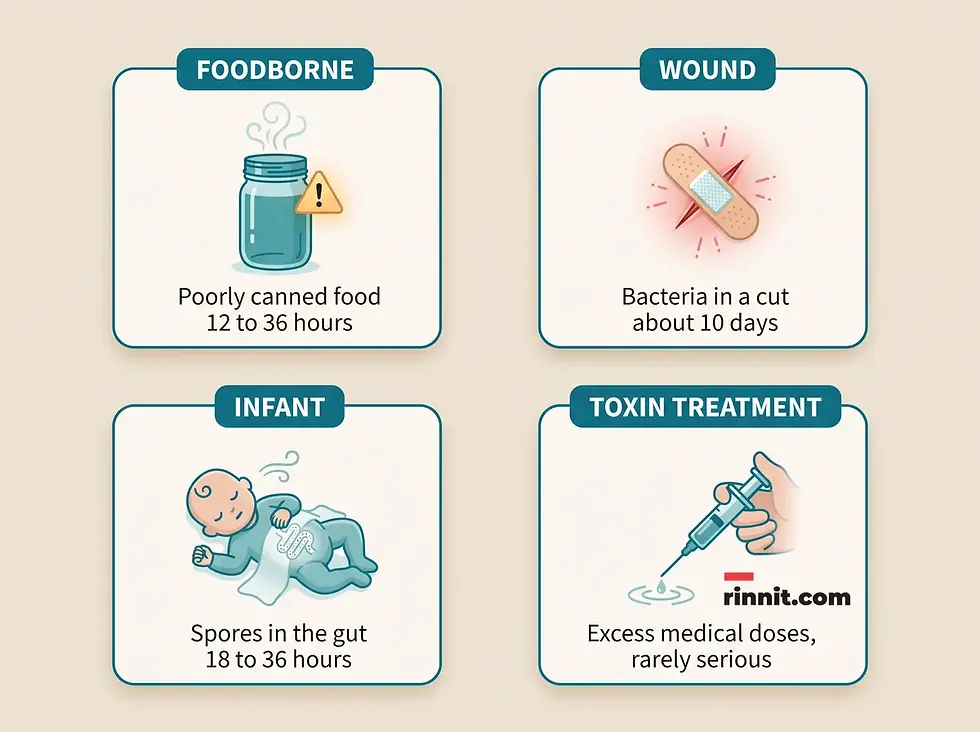
Botulism has three common forms and two rare ones, and the form determines where the toxin came from, how fast symptoms appear and how it is treated. The form a person has determines where the toxin came from, how quickly symptoms appear, and how it is treated.
Form | Where the toxin comes from | When symptoms start |
Foodborne | Toxin already made in poorly canned or preserved food. Affects anyone who ate the food. | 12 to 36 hours after eating (range: hours to days) |
Wound | Bacteria enter a cut, even a small one, and make toxin inside the wound. Often affects people who inject drugs. | About 10 days after the toxin enters |
Infant | Spores enter the baby's intestinal tract, and bacteria grow there. Mainly affects babies 2 to 8 months old. | 18 to 36 hours after spores enter |
Iatrogenic | Too much botulinum toxin from cosmetic or medical injections. Rarely serious. | Varies |
Inhaled | Breathing in botulinum toxin, such as from use as a bioweapon. Rare; affects groups exposed together. | Depends on dose |
The term "iatrogenic" simply means an illness caused by a medical exam or treatment. Iatrogenic botulism happens when someone receives more botulinum toxin than intended through a cosmetic or medical injection, such as treatments for wrinkles or migraines. It rarely causes serious side effects.
What are the symptoms of botulism?
Botulism symptoms include trouble swallowing or speaking, double vision, drooping eyelids, facial weakness, breathing trouble and paralysis, with timing that varies by form.
Foodborne botulism
Symptoms of foodborne botulism most often begin 12 to 36 hours after the toxin enters the body, though depending on how much toxin was eaten, the start can range from hours to days.
Symptom clue | What it looks like |
Speech and swallowing | Trouble swallowing or speaking |
Mouth | Dry mouth |
Face | Weakness on both sides of the face |
Eyes | Blurred or double vision, drooping eyelids |
Breathing | Trouble breathing |
Stomach | Nausea, vomiting, and stomach cramps |
Body | Inability to move, called paralysis |
Wound botulism
Symptoms of wound botulism appear about 10 days after the toxin enters the body. They mirror foodborne botulism: trouble swallowing or speaking, double vision, drooping eyelids, facial weakness on both sides, breathing trouble, and paralysis. There is one addition: fever, which usually comes from the infected wound.
An important caution: the skin around the wound may not always look swollen or discolored. The absence of obvious wound changes does not rule out wound botulism.
Infant botulism
Infant botulism mainly affects babies between 2 and 8 months of age. Symptoms most often begin 18 to 36 hours after spores enter the baby's body, and the first warning sign is frequently one parents might not connect to a nerve illness: constipation.
Infant symptom | What to watch for |
First sign | Trouble passing stool (constipation) |
Movement | Floppy movements from muscle weakness; trouble holding up the head |
Voice | A weak cry |
Behavior | Crankiness and tiredness |
Feeding | Drooling; trouble sucking or feeding |
Eyes and body | Drooping eyelids; paralysis |
Iatrogenic botulism
Side effects from too much botulinum toxin in cosmetic or medical treatment rarely become serious. They may include headache, lack of facial movement, and muscle weakness.
What causes botulism to develop?
Botulism is caused by toxin from C. botulinum bacteria, most often from poorly canned homemade food, though the bacteria can also infect wounds.
Foodborne botulism
The most common source of foodborne botulism is homemade food that was poorly canned or preserved. The dangerous bacteria thrive in places with little oxygen, which is exactly the environment inside a sealed jar. Fruits, vegetables, and fish are the usual culprits. Other foods that have caused botulism include spicy chili peppers, foil-wrapped baked potatoes, and oil infused with garlic.
Wound botulism
When C. botulinum bacteria get into a wound, they can multiply and make toxin, even if the wound is only a small cut. In recent years, wound botulism has happened more often in people who use needles to inject drugs. The drug supply may carry the bacterial spores, and this form is more common among people who use black tar heroin.
Infant botulism
Babies develop infant botulism when bacterial spores get into the intestinal tract, where the bacteria then grow and make toxin. Honey is sometimes the source, which is why honey and honey-containing foods should never be fed to babies younger than 1 year. But infant botulism is more likely to come from contact with soil contaminated by the bacteria. Rarely, adults develop this intestinal form as well.
Iatrogenic and inhaled botulism
Iatrogenic botulism happens when too much botulinum toxin is given by injection for cosmetic reasons (such as smoothing wrinkles) or medical reasons (such as treating migraines). Inhaled botulism can occur from breathing in the toxin, and if a group of people fall ill with no clear cause, public health experts may suspect the toxin was used as a bioweapon.
What are the risk factors for botulism?
Risk factor | Who it affects | Why it raises the risk |
Eating poorly canned, preserved, or stored food | Home canners and consumers of homemade preserves | Low-oxygen sealed environments let the bacteria multiply and make toxin |
Using needles to inject drugs | People who inject illicit drugs | Spores enter the body with the drug supply and can grow in wounds |
Giving honey to babies under 1 year | Infants | Honey can carry spores that grow into toxin-producing bacteria in a baby's immature gut |
What complications can botulism cause?
Because botulinum toxin affects muscle control throughout the body, it can cause several complications. The greatest danger is the inability to breathe, which is a common cause of death in people who get botulism. Other complications include trouble speaking, trouble swallowing, long-lasting weakness, and shortness of breath.
People who experience these complications may need rehabilitation after the acute illness to rebuild strength and to relearn or support speaking, swallowing, and breathing.
When should you see a doctor about botulism?
Get medical care right away if you think you or your baby has botulism. Fast treatment raises the chances of surviving and lowers the risk of complications.
Reporting a suspected case quickly also serves the public. Public health officials can identify and remove contaminated food before other people eat it. And because botulism cannot spread from person to person, families and caregivers do not need to worry about catching it.
How is botulism diagnosed?
To diagnose botulism, a healthcare professional looks for the signature pattern: muscle weakness or a lack of muscle movement, called paralysis, particularly the symmetrical weakness that starts in the face and eyes.
Because the toxin works fast, the patient's story matters as much as the exam. Providers will ask about foods eaten in the past few days, whether there is a wound that might be infected, and, for a possible infant case, whether the baby has eaten honey, is constipated, or has been less active than usual.
Laboratory studies of blood, vomit, stool, or the suspected food can confirm infant or foodborne botulism by finding the toxin directly. But getting these test results may take days. Since treatment cannot wait, the physical examination is the main way botulism is diagnosed, and treatment often begins before any lab result comes back.
How is botulism treated?
Botulism caught early is treated mainly with an antitoxin injection that keeps toxin in the bloodstream from harming nerves, and many people recover fully with rehabilitation.
Antitoxin: the time-sensitive treatment
If foodborne or wound botulism is diagnosed early, treatment centers on an antitoxin given by injection. The antitoxin attaches itself to toxin still moving through the bloodstream and keeps it from harming nerves.
The honesty point that patients need to understand: the antitoxin cannot reverse damage that has already been done. But nerves can repair themselves. With treatment, many people recover fully, though recovery may take up to a year, and most people need rehabilitation therapy along the way.
For infants, healthcare professionals use a different antitoxin called human-derived botulism immune globulin.
Other treatments
Treatment | When it's used | What it does |
Removing toxin from the gut | Foodborne botulism | A provider may induce vomiting or give medicine to help pass stool, clearing the toxin from the body |
Surgery | Wound botulism | A surgeon may remove infected tissue |
Antibiotics | Wound botulism with an infected wound | Treat the wound infection, but never the other forms, because antibiotics can speed up toxin release in the body |
Mechanical ventilator | Trouble breathing | A machine forces air into the lungs through a tube in the nose or mouth, sometimes for several weeks |
Rehabilitation therapy | Recovery phase | Rebuilds strength and helps with speaking, swallowing, and other affected functions |
Time and observation | Iatrogenic botulism | Side effects from excess medical or cosmetic toxin most often get better on their own |
The antibiotic row contains one of the most important lessons in botulism care: antibiotics treat wound botulism when the wound is infected, but they do not treat other forms of botulism. In fact, they can speed up the release of toxin in the body. That is why the type of botulism must be identified correctly before medication is given.
How can botulism be prevented?
Foodborne botulism is prevented mainly through strict kitchen habits, such as pressure-cooking home-canned foods and never eating food from bulging containers.
Preventing foodborne botulism
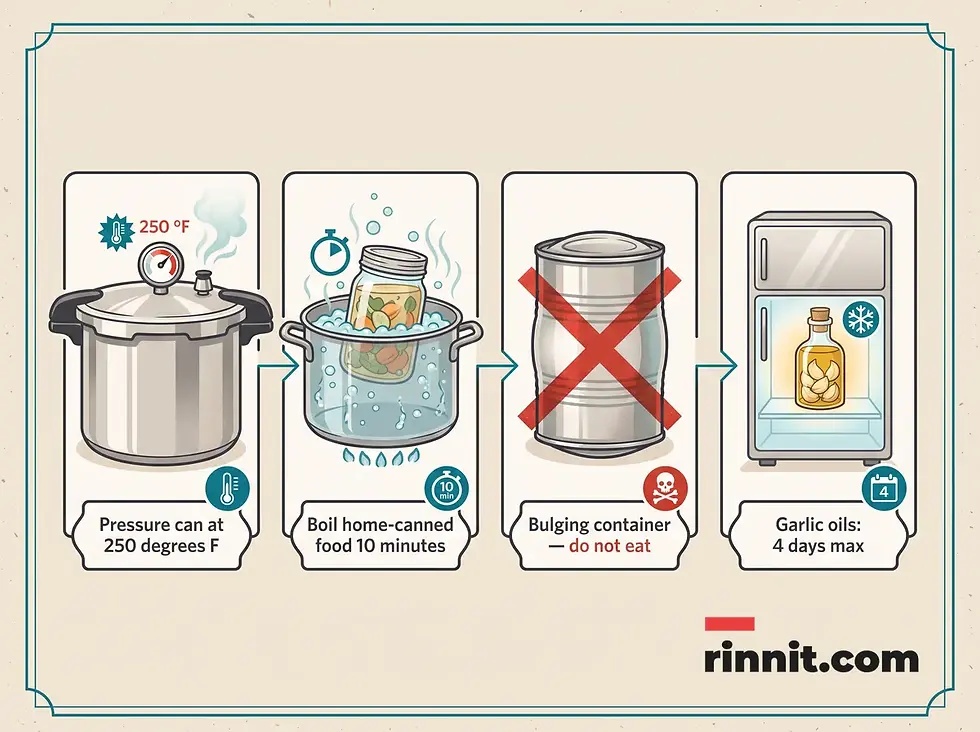
Prevention starts in the kitchen, where a few strict habits neutralize the risk.
Pressure-cook home-canned foods at 250 degrees Fahrenheit (121 degrees Celsius) for 20 to 100 minutes, depending on the food. This is the temperature that destroys the botulism-causing germs. Ordinary boiling is not hot enough for low-acid home-canned foods.
Boil home-canned foods for 10 minutes before serving them.
Do not eat preserved food if the container bulges or the food smells bad. But know the trap: taste and smell will not always reveal the toxin. Some strains of C. botulinum do not make food smell or taste bad at all.
Foil-wrapped potatoes: eat them hot. To store them, loosen the foil and put the potatoes in the refrigerator. Never leave them at room temperature.
Garlic- or herb-infused homemade oils: store them in the refrigerator and throw them out after four days.
Opened canned foods: transfer them to a container and refrigerate after opening.
Preventing wound, infant, and iatrogenic botulism
Wound botulism: never inject or breathe in street drugs, keep all wounds clean, and seek medical help right away for any wound that seems infected.
Infant botulism: do not give any honey to babies younger than 1 year.
Iatrogenic botulism: receive any cosmetic or medical procedure that uses botulinum toxin, including treatments sold under the brand names Botox and Dysport, only from a licensed healthcare professional.
How should you prepare for a botulism appointment?
Botulism care usually starts with an emergency department visit rather than a scheduled appointment, so it helps to know what information to bring. At the hospital, a person may see several specialists, including neurologists (doctors who specialize in conditions affecting the brain and nerves) and infectious disease specialists. To make the visit go smoothly, prepare the following:
Your symptoms and when they began.
Key personal information, including major stresses, recent life changes, and family medical history.
All medicines, vitamins, and other supplements you take, including dosages.
Questions to ask your healthcare professional. Bring a family member or friend along if possible to help remember the information shared.
Questions worth asking
How did I get botulism?
What treatment do you suggest?
Will I have lasting damage?
How can I keep this from happening again?
What your doctor will likely ask
Are your symptoms constant, or do they come and go?
How bad are they?
Have you eaten any home-canned food recently?
If your infant is ill, has the baby eaten honey?
Did anyone else eat the food that might have made you sick?
What is the bottom line on botulism?
Botulism is rare, but it is one of the most serious food-related and wound-related illnesses a person can face, because its toxin shuts down the body's muscles, including the muscles that keep us breathing. The pattern to remember is simple: sudden, symmetrical weakness that starts in the eyes and face, spreads downward, and may follow home-canned food, a wound, or honey given to an infant.
Every form of botulism demands emergency care without delay. The antitoxin works only on toxin still circulating, which is why hours matter. The good news is equally clear: with fast treatment, breathing support, and rehabilitation, many people recover fully.
Next steps: If you or a loved one is showing signs of botulism, seek emergency medical care immediately.
FAQ
What is botulism in simple terms?
Botulism is a rare, serious illness caused by a toxin that attacks the nerves and blocks the signals that tell muscles to move. It starts with food that was poorly canned, a contaminated wound, honey given to an infant, or, rarely, excess medical doses of botulinum toxin.
Is botulism contagious?
No. Botulism cannot spread from person to person. The illness comes from the toxin entering the body, not from contact with a sick person. That is why reporting suspected cases quickly helps public health officials protect others through food safety rather than quarantine.
What does botulism look like in a baby?
Infant botulism, which mainly affects babies 2 to 8 months old, often starts with constipation as the first symptom. It then causes a "floppy" body from muscle weakness, trouble holding up the head, a weak cry, crankiness, drooling, drooping eyelids, tiredness, trouble feeding, and in severe cases paralysis.
How quickly does botulism set in?
Foodborne botulism usually begins 12 to 36 hours after eating, though the range spans hours to days. Infant botulism typically starts 18 to 36 hours after spores enter the baby's body. Wound botulism appears about 10 days after the toxin enters the wound.
Can botulism be cured?
There is treatment but not an instant cure. An antitoxin given early stops toxin still circulating in the bloodstream from reaching nerves, though it cannot undo damage already done. Because nerves repair themselves, many people recover fully with breathing support and rehabilitation, but recovery can take up to a year.
Disclaimer: This article is for general informational purposes only and does not constitute medical advice. Always consult a qualified health care provider for individual questions. If you suspect botulism, seek emergency medical care immediately.
References
Mayo Clinic Staff. Botulism - Symptoms and causes. Mayo Clinic. February 13, 2026. https://www.mayoclinic.org/diseases-conditions/botulism/symptoms-causes/syc-20370262
Mayo Clinic Staff. Botulism - Diagnosis and treatment. Mayo Clinic. February 13, 2026. https://www.mayoclinic.org/diseases-conditions/botulism/diagnosis-treatment/drc-20370266
Centers for Disease Control and Prevention. Botulism Prevention. Centers for Disease Control and Prevention. Updated February 26, 2026. https://www.cdc.gov/botulism/prevention/index.html
Bush LM, Vazquez-Pertejo MT. Botulism. Merck Manual Professional Edition. Updated June 2026. https://www.merckmanuals.com/professional/infectious-diseases/anaerobic-bacteria/botulism
National Center for Home Food Preservation. Guide Part 1: Principles of Home Canning. National Center for Home Food Preservation. Accessed October 14, 2026. https://nchfp.uga.edu/resources/entry/guide-part-1-principles-of-home-canning
Rao AK, et al. Clinical Guidelines for Diagnosis and Treatment of Botulism, 2021. MMWR Recomm Rep. 2021;70(2):1-30. PMID 33956777. https://doi.org/10.15585/mmwr.rr7002a1
Kihara K, et al. [Botulism in Japan]. Brain Nerve. 2026;78(5):479-483. PMID 42156031. https://doi.org/10.11477/mf.188160960780050479
Rubin L, et al. A Review of Malaria, Diphtheria, and Botulism Medication Distributions by CDC Port Health Stations From May 2006 to February 2024. J Public Health Manag Pract. 2025;31(6):1048-1054. PMID 41117477. https://doi.org/10.1097/PHH.0000000000002243
Wei S, et al. Foodborne botulism from consumption of homemade spoiled eggs: a case series and literature review. Front Med (Lausanne). 2025;12:1649424. PMID 41090124. https://doi.org/10.3389/fmed.2025.1649424



Comments