Beyond the Nerves: A Guide to Non-Neurogenic Voiding Dysfunction

Updated: 2 days ago
Medically reviewed by Dr. Baraa Alnahhal, MD · Last reviewed: October 2026
Quick Answer: Key Facts About Non-Neurogenic Voiding Dysfunction
Non-neurogenic voiding dysfunction is the inability to completely empty the bladder when the cause is not a nervous system problem. [1] It causes a weak or stop-and-start stream, straining, urgency and leaking. [1] It most affects children aged 4 to 6 and women over 40. [1] Bladder training, pelvic floor therapy and medicines help, and the outlook is good for most people. [1]
Feature | Details |
Definition | Not being able to completely empty the bladder when the cause is not a problem with the nervous system. [1] |
Common symptoms | A weak or stop-and-start stream, straining, feeling the bladder is never empty, frequent or sudden urges, leaking, and daytime wetting in children. [1] |
Main causes | Weak bladder muscles, blockages, constipation, UTIs, overactive or underactive bladder, and habits such as ignoring the urge to pee. [1] |
Who is affected most | Potty-trained children aged 4 to 6 and women over 40. [1] |
Main treatments | Bladder training, pelvic floor therapy, and medicines, with other options if these don't work. [1] |
Outlook | Good. Treatment improves bladder control for most people. [1] |
Possible complications | UTIs, bladder or kidney stones, kidney damage if severe, and anxiety or depression. [1] |
What the research says
About 6% of women over 40 have voiding dysfunction, and a complete cure may not always be possible. A review of 20 original studies (plus 45 more found in their reference lists) reports that female voiding dysfunction may be related to a weak bladder muscle, a blockage, or both, and that no universally accepted diagnostic criteria exist yet. The authors say the goal of treatment is to relieve symptoms and limit long-term complications. Options range from behavioral therapy to self-catheterization and nerve stimulation. (Abdel Raheem and Madersbacher, Arab J Urol, 2013) [2]
In 17–22% of children, bladder symptoms last beyond age 5, and behavior-based treatment comes first. A review of bladder dysfunction in neurologically normal children reports that first-line treatment is urotherapy, which combines behavioral measures to avoid putting off urination, for at least 2 months. Cure rates were around 40%, with daytime symptoms improving in 32% of cases. When dysfunctional voiding persists, biofeedback is the next step, with a reported success rate of around 80%. (Fuentes et al., Front Pediatr, 2019) [3]
Pelvic floor muscle training works well for urinary leakage in women. A Cochrane review of 31 trials involving 1,817 women found that women with stress urinary incontinence who did pelvic floor muscle training were eight times more likely to report a cure than women with no treatment (56% versus 6%). Adverse events were rare and minor. This review looked at leakage, not emptying problems, but it supports the pelvic floor exercises used in therapy. (Dumoulin et al., Cochrane Database Syst Rev, 2018) [4]
What Is Non-Neurogenic Voiding Dysfunction?
Non-neurogenic voiding dysfunction is a condition that keeps you from completely emptying your bladder. [1] “Non-neurogenic” means it is not caused by a problem with your brain, spinal cord, or nerves. [1] “Voiding dysfunction” means you are not peeing the way you should. [1]
Anyone can have it. It usually comes from weak bladder muscles, a blockage in the urinary system, or habits that build up over time. [1] It is more common in potty-trained children between 4 and 6 and in women over 40. About 1 in 5 children aged 4 to 6 have daytime wetting because of it, and more than 6% of women over 40 have it. [1]
Neurogenic voiding dysfunction (also called neurogenic bladder) is different. It happens when a problem with the brain, nerves, or spinal cord affects bladder control. [1]

What are the signs and symptoms of non-neurogenic voiding dysfunction?
Non-neurogenic voiding dysfunction can cause trouble starting to pee, a weak or stop-start stream, a bladder that never feels empty and leaking, symptoms that overlap with other urinary problems. Common signs include:
Difficulty starting to pee, or straining to pee [1]
A weak stream, or a stream that starts and stops [1]
Having to push with your stomach muscles, or press on your lower belly, to pee [1]
Feeling like your bladder is never empty, even right after you go [1]
Peeing more often or less often than usual [1]
Leaking pee, or a sudden, uncontrollable urge to pee (urge incontinence) [1]
Waking more than once a night to pee (nocturia) [1]
Constipation [1]
Symptoms in children
Children may wet their pants during the day. They may also use “holding maneuvers” to put off peeing, such as crossing their legs, squatting, or pressing their hands or the heel of a foot between their legs. [1]

What causes non-neurogenic voiding dysfunction and who is at risk?
Finding out why the bladder isn't emptying is the first step toward treatment. Causes range from physical problems to everyday habits.
Category | Examples |
Muscles and blockages | Weak bladder muscles, or a blockage in the urinary system. [1] |
Bladder problems | Overactive bladder, or an underactive bladder that doesn't trigger the urge to pee. [1] |
Other conditions | Constipation, urinary tract infections (UTIs), an enlarged prostate (BPH), and prostate cancer. [1] |
Habits | Ignoring the need to pee until the bladder gets too full. [1] |
Children | Dysfunctional elimination syndrome, when the bladder muscles and nerves don't work together. [1] |
How Is It Diagnosed?
A healthcare provider will review your health history and do a physical exam, which may include a pelvic exam or a digital rectal exam to check the prostate. [1] They may ask you to keep a bladder diary that tracks how much you drink, when and how much you pee, and when you leak. [1]
Other tests may help confirm the diagnosis:
Urine test (urinalysis): Checks for a UTI. [1]
PSA blood test: Looks for prostate problems. [1]
Ultrasound: Shows how much pee is left in the bladder after you go (called post-void residual) and whether the kidneys have been affected. [1]
Urodynamic testing: Measures how much your bladder holds and how well the muscles of the bladder, urethra, and pelvis work together. [1]
Cystoscopy: A thin camera is passed into the urethra to look for problems in the urethra and bladder. [1]
Tests for children are usually less invasive, often a bladder diary, a blood test, a urine test, an ultrasound, and certain urodynamic tests. [1]
How Is It Treated?
Treatment depends on the cause and often starts with gentle, non-invasive steps.
Bladder training and pelvic floor therapy
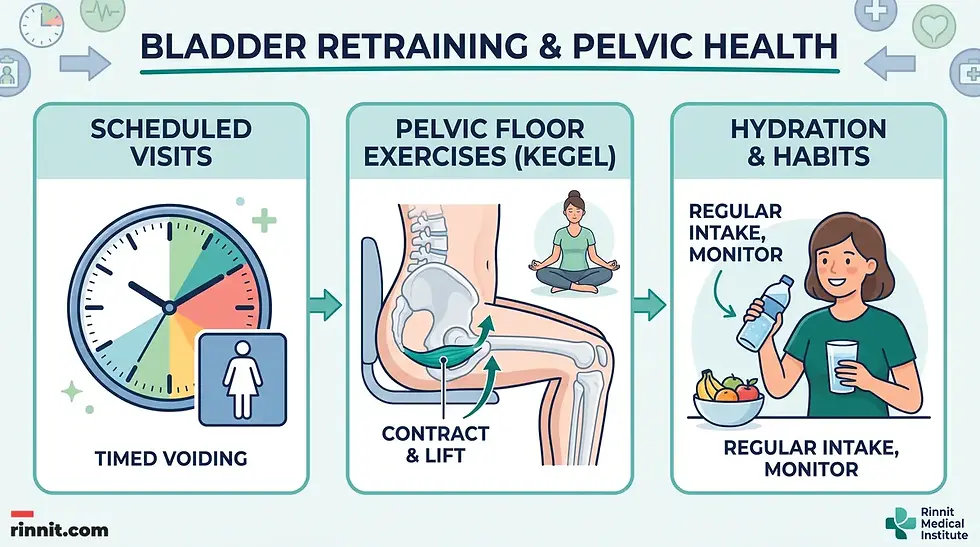
Bladder training teaches your bladder muscles to hold pee longer. You go to the bathroom at set times through the day, even if you don't feel the need, so your bladder never gets too full. [1] A physical therapist or another provider who specializes in pelvic floor problems can guide you. [1]
Pelvic floor therapy helps you relax the pelvic floor muscles so you can pee more easily. Your therapist may use biofeedback sensors to make sure you are working the right muscles, and may teach Kegel exercises to strengthen the pelvic floor, which helps prevent urinary incontinence and urge incontinence. [1]
Medicines and procedures
If behavior changes and therapy aren't enough, your provider may suggest:
Medicines: Alpha-blockers (such as tamsulosin) to relax muscles, and antispasmodics (such as oxybutynin or tolterodine) to calm an overactive bladder. Depending on the type, other options include other anticholinergics and beta-3 receptor agonists. [1]
Botulinum toxin (Botox) injections: Injected into the bladder to relax the muscle and ease urge incontinence. [1]
Percutaneous tibial nerve stimulation (PTNS): Mild electrical signals sent through a small electrode near the ankle to help regulate bladder signals. [1]
Sacral nerve stimulation: A small electrode implanted under the skin just above the buttocks that sends mild impulses to the sacral nerve to help the bladder muscles work. [1]
Self-catheterization: Inserting a thin tube at regular intervals to drain the bladder. [1] A provider shows you how.
Surgery: Bladder augmentation surgery, which makes the bladder larger, is a last option and is rarely needed. [1]
For non-neurogenic overactive bladder, the first steps are usually cutting back on foods and drinks that irritate the bladder, such as tea, coffee, alcohol, and spicy or acidic foods, plus bladder training. [1]
Treatment in children
For children, alpha-blockers and anticholinergic medicines can help treat an overactive bladder. [1] Some children can also learn pelvic floor exercises. A provider may recommend bladder training, such as going to the bathroom at regular times, and show the child the best way to sit on the toilet. [1]
How soon will I feel better?
It depends on the treatment. Bladder training and pelvic floor training may take a few weeks or months to work. Nerve stimulation usually starts working after a few weeks, and medicines usually begin to work within a few days or weeks. [1] Your provider can give you a clearer idea.
What complications can non-neurogenic voiding dysfunction cause?
When the bladder doesn't empty, bacteria in the leftover pee can cause a UTI. [1] You may also be more likely to develop bladder stones or kidney stones. [1] If the problem is severe, it can lead to kidney damage. [1]
There can be an emotional cost too. Many people feel embarrassed, ashamed, or insecure about not controlling when and how they pee. [1] Avoiding social situations can lead to anxiety and depression [1], so it's worth getting help early.
Can It Be Prevented?
Non-neurogenic voiding dysfunction risk can be lowered by cutting back on bladder irritants, eating more fiber, keeping a healthy weight and quitting smoking. [1]
Cut back on bladder irritants. Caffeinated drinks, citrus fruits, spicy foods, and alcohol can irritate the bladder. [1]
Eat more fiber. Constipation can lead to voiding dysfunction or make it worse. Beans, fruits, vegetables, and whole grains help. [1] Talk to a provider before using laxatives or giving them to a child. [1]
Keep a healthy weight. A body mass index (BMI) above 25 can put pressure on the bladder and cause leaking. [1]
Quit smoking. Nicotine can irritate the bladder muscles, and smokers are more likely to have a chronic cough, which puts pressure on the bladder. [1]
When should you see a provider for non-neurogenic voiding dysfunction?
See a provider about possible non-neurogenic voiding dysfunction as soon as you first notice problems using the bathroom [1], especially if certain warning signs appear.
What is the bottom line on non-neurogenic voiding dysfunction?
Non-neurogenic voiding dysfunction is common and often misunderstood. Whether it affects a child learning to manage their body or an adult dealing with changes in bladder function, it can disrupt daily life. The outlook is good, though. [1] With the right mix of therapy, medicine, and habit changes, most people regain control of their bladder. [1]
Noticing bladder problems in yourself or your child? A weak stream, straining, leaking, or daytime wetting is worth a conversation with a healthcare provider. Finding the cause is the first step toward treatment that works.
Frequently Asked Questions
Is this the same as a “weak bladder”?
Not exactly. Weak bladder muscles are one possible cause, but voiding dysfunction means the bladder doesn't empty fully or you aren't peeing the way you should.
What is the difference between non-neurogenic and neurogenic voiding dysfunction?
In the neurogenic type, a problem with the brain, nerves, or spinal cord affects bladder control. [1] In the non-neurogenic type, the nervous system is not the cause.
Can stress cause voiding dysfunction?
Stress isn't listed as a direct cause. But living with symptoms can lead to anxiety and depression, and a provider can help with both the bladder problem and the emotional toll.
Is it normal for my 5-year-old to still wet their pants during the day?
Occasional accidents happen. But persistent daytime wetting in a potty-trained child aged 4 to 6 is a common sign of voiding dysfunction [1] and is worth checking with a provider.
How long does bladder training take?
Bladder training and pelvic floor training may start to work in a few weeks or months. [1]
Can I treat this with over-the-counter medicine alone?
No. See a provider for a proper diagnosis. Medicines used for voiding problems, such as alpha-blockers and antispasmodics, are chosen based on the cause.
Does drinking less water help?
Not as a fix. Staying hydrated matters for your overall health. Cutting back on bladder irritants like caffeine, alcohol, citrus, and spicy foods, and going to the bathroom on a schedule, are better first steps.
What are “holding maneuvers” in children?
These are actions a child uses to hold pee in, such as crossing the legs tightly, squatting, or pressing the hands or the heel of a foot between the legs. [1]
Can men get this too?
Yes. It is more common in women over 40 and in young children, but men can have it too, often because of an enlarged prostate, prostate cancer, or constipation. [1]
Is surgery always required?
No. Surgery is a last option. Bladder augmentation surgery is rarely needed to treat this condition. [1]
What is pelvic floor biofeedback?
A therapist places sensors in the vagina or rectum to make sure you are working the right muscles [1], which helps you learn to relax and strengthen the pelvic floor.
Can UTIs cause voiding dysfunction?
Yes, UTIs are listed as a cause. [1] It also works the other way: leftover pee in the bladder can let bacteria grow and cause a UTI. [1]
Is this condition hereditary?
Heredity is not listed as a cause. Common causes include weak bladder muscles, blockages, constipation, UTIs, and habits like holding pee for too long. [1]
Can constipation really affect how I pee?
Yes. Constipation can lead to voiding dysfunction or make it worse [1], which is why eating more fiber is part of prevention.
When should I see a specialist?
Talk to a healthcare provider as soon as you notice problems using the bathroom. Get checked promptly if you can't pee for a long time, have pain when you pee, see blood or cloudy, foul-smelling pee, or have fever or chills. [1] Your provider may refer you to a urologist.
References
Cleveland Clinic. Non-neurogenic voiding dysfunction. Cleveland Clinic. Last updated May 13, 2025. https://my.clevelandclinic.org/health/diseases/16394-non-neurogenic-voiding-dysfunction
Abdel Raheem A, Madersbacher H. Voiding dysfunction in women: How to manage it correctly. Arab J Urol. 2013;11(4):319-30. PMID 26558099. https://doi.org/10.1016/j.aju.2013.07.005
Fuentes M, Magalhães J, Barroso U. Diagnosis and Management of Bladder Dysfunction in Neurologically Normal Children. Front Pediatr. 2019;7:298. PMID 31404146. https://doi.org/10.3389/fped.2019.00298
Dumoulin C, Cacciari LP, Hay-Smith EJC. Pelvic floor muscle training versus no treatment, or inactive control treatments, for urinary incontinence in women. Cochrane Database Syst Rev. 2018;10(10):CD005654. PMID 30288727. https://doi.org/10.1002/14651858.CD005654.pub4
Medical disclaimer
This article is for general informational purposes only and does not constitute medical advice. Always consult a qualified healthcare professional for diagnosis and treatment decisions. If you or your child cannot pee at all or has a fever with urinary symptoms, seek medical care right away.



Comments