Bedbugs: Symptoms, Causes, and How to Get Rid of Them

Updated: 3 days ago
Medically reviewed by Dr. Baraa Alnahhal, MD · Last reviewed: October 17, 2026
Quick Answer
Bedbugs are small, reddish-brown, blood-sucking, wingless insects about the size of an apple seed that hide near sleeping areas and feed on humans at night. They are not known to transmit disease, though bites can cause allergic or skin reactions. Signs include clustered itchy bites and dark specks on mattress seams. Professional extermination is recommended for infested homes.
What the research says
Bedbugs carry pathogens but have not been shown to pass them to people. A systematic review of clinical and laboratory studies from 1990 to 2016 noted that upwards of 45 disease pathogens have been reported in bedbugs, yet concluded that no published study has demonstrated a causal relationship between bedbugs and infectious disease transmission in humans (Lai et al., Arch Dermatol Res, 2016) [6].
There is little trial evidence for bite treatments. A JAMA review of 53 articles found only 2 clinical trials on bedbugs (both testing pest control), little evidence that bedbugs are vectors of communicable disease, and no evidence that outcomes differ significantly between people treated for bite reactions and those who received no treatment (Goddard and deShazo, JAMA, 2009) [7].
Bite reactions resolve on their own, but eradication calls for a professional. A more recent review reports that reactions to bedbug bites are self-limited, so treatment is mainly symptomatic (topical pramoxine or oral antihistamines for itching), and recommends consulting a professional exterminator to fully eradicate an infestation (Leung et al., Curr Pediatr Rev, 2024) [8].
What are bedbugs?
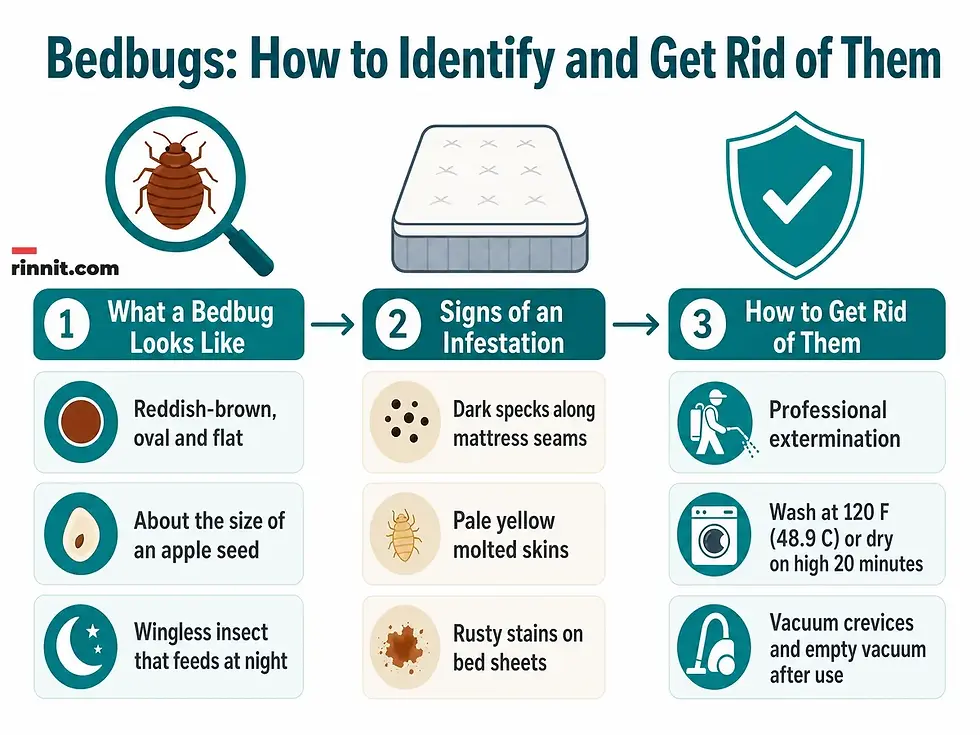
Bedbugs are small, reddish-brown, blood-sucking, wingless insects. They are oval and flat, and about the size of an apple seed. During the day, they hide in the cracks and crevices of beds, box springs, headboards, bed frames, and other objects near the bed. At night, they come out to feed on their preferred host: humans.
The good news first. Bedbugs can bite, but they are not known to spread disease. Bedbug bites usually clear up without treatment in a week or two. In some people, however, the bites can cause an allergic reaction or a severe skin reaction.
The risk of running into bedbugs is higher in places where nighttime guests come and go often, such as hotels, hospitals, and homeless shelters. If bedbugs have moved into your home, professional extermination is recommended.

At a glance: bedbugs in numbers and facts
Aspect | What the evidence shows |
What they are | Small, reddish-brown, wingless, blood-sucking insects |
Shape and size | Oval and flat, about the size of an apple seed |
When they feed | At night, primarily on humans |
Where they hide | Cracks and crevices of beds, box springs, headboards, bed frames |
Do they spread disease | No, but bites can cause allergic or severe skin reactions |
Bite healing time | Usually clear up without treatment in a week or two |
Survival without food | Can live months without eating |
Recommended home response | Professional extermination |
What are the symptoms of bedbug bites?
Bedbug bites can be difficult to tell apart from other types of insect bites and rashes. They are usually itchy and may appear clustered together or lined up in rough rows.
The bites themselves typically have a few recognizable features. They are inflamed spots, often with a darker spot in the middle. They are usually located on the face, neck, arms, and hands, because those areas are most exposed during sleep.
Reactions vary widely from person to person. Some people have no reaction to bedbug bites at all. Others experience an allergic reaction that can include severe itching, blisters, or hives.
Symptom | What it looks like |
Itchiness | Bites are usually itchy |
Arrangement | May appear clustered or lined up in rough rows |
Spot appearance | Inflamed spots, often with a darker spot in the middle |
Typical locations | Face, neck, arms, and hands |
Allergic reaction | Severe itching, blisters, or hives |
No reaction | Some people react not at all |
When to see a doctor
If you experience allergic reactions or severe skin reactions to bedbug bites, see your health care provider for professional treatment. This includes blisters, hives, or itching that feels out of proportion to a small bite.
What causes bedbug infestations?
Bedbug infestations may be linked to three broad factors: more frequent travel, changes in pest control practices, and insecticide resistance. As people travel more and as bedbugs develop resistance to some older insecticides, infestations have become harder to prevent and control.
Where do bedbugs hide?
Bedbug infestations usually occur around or near where people sleep. Beyond the bed itself, check clothing, luggage, bedding, boxes, box springs, mattresses, headboards, and other objects near the bed.
Bedbugs also hide in less obvious places. They can be found under peeling paint and loose wallpaper, under carpeting near baseboards, in the seams of upholstered furniture, and under light switch plates or electrical outlets.
Hiding area | Examples |
Around the bed | Box springs, mattresses, headboards, objects near beds |
Personal items | Clothing, luggage, bedding, boxes |
Wall coverings | Under peeling paint and loose wallpaper |
Flooring edges | Under carpeting near baseboards |
Furniture | Seams of upholstered furniture |
Electrical fixtures | Under light switch plates or electrical outlets |
How do bedbugs spread?
Bedbugs can move from one site to another by traveling on items such as clothing, luggage, furniture, boxes, and bedding. They can also travel easily between floors and rooms in hotels or apartment buildings.
Do bedbugs mean a home is dirty?
No. Bedbugs do not care whether their environment is clean or dirty. All they need is a warm host and plenty of hiding places. An infestation is not a sign of uncleanliness.
Who is at risk of bedbug bites?
You are at higher risk of bedbug bites if you spend time in places where people come and go often.
High-risk locations | Why the risk is higher |
Hotels | Nighttime guests come and go often |
Apartment buildings | Bugs travel easily between floors and rooms |
Dorm rooms | Frequent turnover and shared furniture |
Homeless shelters | High density of sleeping occupants |
Cruise ships | Enclosed sleeping quarters, constant travel |
Trains and buses | Seats used by many different riders |
Refugee camps | Dense, temporary sleeping arrangements |
Hospitals | Constant flow of overnight patients |
How are bedbugs diagnosed at home?
Bedbugs have no lab test, so they are diagnosed by checking your home for signs of the insects. The diagnosis happens in your own home. If you suspect you are being bitten by bedbugs, immediately inspect your home for the insects. Thoroughly examine the crevices in walls, mattresses, and furniture. You may need to perform the inspection at night, when bedbugs are active.
Three signs confirm an infestation even if you never see a live bug.
Sign | What it means |
Dark specks | Typically found along mattress seams, these specks are bedbug excrement |
Skin castings | Bedbugs molt five times before becoming adults; the empty skins are pale yellow |
Rusty or reddish stains | Small smears of blood on bed sheets where bedbugs were crushed |
How are bedbug bites treated?
Bedbug bites usually do not need treatment, because they disappear on their own within a week or two. To ease symptoms, a skin cream containing hydrocortisone or an oral antihistamine such as diphenhydramine can help with itching.
Treatment | How it helps |
No treatment | Bites usually disappear on their own within a week or two |
Hydrocortisone skin cream | Eases itching and inflammation on the skin |
Oral antihistamine (e.g., diphenhydramine) | Reduces allergic itching |
If bites trigger a severe allergic reaction, see a health care provider for professional treatment.
How do you get rid of bedbugs in your home?
Getting rid of a bedbug infestation is difficult, because the insects hide well and can live for months without eating. You may need to hire a professional exterminator, who will likely use a combination of pesticides and nonchemical treatments.
Alongside professional help, several steps support the effort at home.
Vacuuming. A thorough vacuuming of crevices can remove bedbugs from an area but likely will not capture all of them. Empty the vacuum after each use so the insects do not crawl back out.
Laundering. Washing items in water that is at least 120 F (48.9 C) can kill bedbugs. Putting items in a dryer on a high setting for 20 minutes works as well.
Heat treatment in a vehicle. If you live in a very hot place, bag up the infested items and place them in a car parked in the sun with the windows rolled up for a day. The target temperature is at least 120 F (48.9 C).
Discarding items. In some cases, you may have to throw out heavily infested items such as mattresses or couches. Make it obvious the item is unusable, so no one else picks it up and gets bedbugs.
Home treatment step | Key detail |
Professional extermination | Likely combines pesticides and nonchemical treatments |
Vacuuming | Thoroughly vacuum crevices; empty the vacuum after each use |
Laundering | Wash at 120 F (48.9 C) or dry on high for 20 minutes |
Vehicle heat treatment | Bag items, park in sun for a day; target at least 120 F (48.9 C) |
Discarding items | Ruin heavily infested mattresses or couches so no one else uses them |
How do you prevent bedbugs?
Three habits make a real difference.
Cover up. Bedbugs do not tend to burrow under clothing. You may be able to avoid bites by wearing pajamas that cover as much skin as possible.
Inspect secondhand items. Look over used bedding, mattresses, and upholstered furniture before bringing them into your home.
Use hotel precautions. Check mattress seams for bedbug excrement when you arrive. Place your luggage on tables or dressers instead of on the floor.
Prevention habit | How to practice it |
Cover up | Wear pajamas that cover as much skin as possible |
Inspect secondhand items | Check used bedding, mattresses, and upholstered furniture before bringing them home |
Hotel precautions | Check mattress seams for excrement; keep luggage on tables or dressers, not the floor |

What is the bottom line on bedbugs?
Bedbugs are a nuisance, not a health emergency. They are not known to spread disease, and their bites usually heal on their own within a week or two. The real problem is how persistent they are. They hide deep in crevices, survive months without food, and travel silently on luggage and furniture.
The fastest path to a clear home runs through professional extermination, supported by heat-based laundering, careful vacuuming, and, in some cases, discarding heavily infested furniture. Trying to fight an infestation with DIY methods alone often leaves hidden pockets of bugs that return weeks later.
Prevention is simpler than elimination. Cover up at night, inspect secondhand furniture before it enters your home, and keep luggage off hotel floors while checking mattress seams on arrival. These small habits stop most problems before they start.
The best next step depends on what you are dealing with. If you have itchy bite clusters, inspect your mattress seams tonight. If you find dark specks, pale yellow skins, or rusty stains, book a professional exterminator promptly. And if your bites blister or cause hives, see a health care provider for treatment.
Take the next step: Itchy bites that keep coming back deserve a closer look. Inspect your mattress seams tonight, and talk to a health care provider if bites blister or cause hives.
FAQ
Do bedbugs spread disease?
No. Bedbugs are not known to spread disease, but their bites can cause allergic reactions or severe skin reactions in some people, including blisters and hives.
What do bedbug bites look like?
Bedbug bites are usually itchy, inflamed spots, often with a darker spot in the middle. They tend to be clustered or lined up in rough rows, most often on the face, neck, arms, and hands.
How do I know if I have bedbugs?
Inspect your home immediately: check mattress seams for dark specks of excrement, look for pale yellow molted skins (bedbugs molt five times before adulthood), and look for rusty or reddish blood smears on sheets where bugs were crushed.
How long do bedbug bites last?
Bedbug bites usually disappear on their own within a week or two and typically do not need treatment, though hydrocortisone cream or an oral antihistamine can ease itching.
Can I get rid of bedbugs myself?
Vacuuming and hot laundering help, but professional extermination is recommended for an infested home because bedbugs hide well and can live months without eating. DIY methods rarely reach all hiding spots.
Disclaimer: This article is for general informational purposes only and does not constitute medical advice. Always consult a qualified healthcare professional or licensed pest professional for individual questions.
References
Mayo Clinic Staff. Bedbugs - Symptoms and causes. Mayo Clinic. January 5, 2024. https://www.mayoclinic.org/diseases-conditions/bedbugs/symptoms-causes/syc-20370001
Mayo Clinic Staff. Bedbugs - Diagnosis and treatment. Mayo Clinic. January 5, 2024. https://www.mayoclinic.org/diseases-conditions/bedbugs/diagnosis-treatment/drc-20370005
US Environmental Protection Agency. How to Find Bed Bugs. US EPA. Updated September 8, 2026. https://www.epa.gov/bedbugs/how-find-bed-bugs
US Environmental Protection Agency. Top Ten Tips to Prevent or Control Bed Bugs. US EPA. Updated August 19, 2026. https://www.epa.gov/bedbugs/top-ten-tips-prevent-or-control-bed-bugs
Centers for Disease Control and Prevention. About Bed Bugs. CDC. April 26, 2024. https://www.cdc.gov/bed-bugs/about/index.html
Lai O, et al. Bed bugs and possible transmission of human pathogens: a systematic review. Arch Dermatol Res. 2016;308(8):531-538. PMID 27295087. https://doi.org/10.1007/s00403-016-1661-8
Goddard J, et al. Bed bugs (Cimex lectularius) and clinical consequences of their bites. JAMA. 2009;301(13):1358-1366. PMID 19336711. https://doi.org/10.1001/jama.2009.405
Leung AKC, et al. Bed Bug Infestation: An Updated Review. Curr Pediatr Rev. 2024;20(2):137-149. PMID 37038684. https://doi.org/10.2174/1573396320666230406084801



Comments