Anal Itching: Symptoms, Causes, Treatment & Complete Guide

Updated: 2 days ago
Medically reviewed by Dr. Baraa Alnahhal, MD. Last updated: October 2026.
Anal itching, also called pruritus ani, is a common condition in which the itch in or around the anus is often intense and embarrassing. It has four main groups of causes, often gets worse at bedtime, and with the right care most people get complete relief.
Quick Answer: What is anal itching?
Anal itching, also called pruritus ani, is a common condition causing intense itching in or around the anus, often worse at bedtime or in hot, humid weather. Causes include irritants, infections, skin conditions and hemorrhoids, though often none is found. Gentle self-care usually helps; see a doctor if itching is severe, bleeding occurs or the area seems infected.
What the research says
Pinworms are a common, treatable cause of night-time anal itching. A review reports that pinworm infestation affects about 30% of children worldwide, that 30 to 40% of infested people have no symptoms, and that the most common symptom is nocturnal pruritus ani. A single cellophane tape test finds the worm eggs only about 50% of the time, rising to about 90% when it is done on three different mornings (Leung et al., Curr Pediatr Rev, 2025) [3].
Chili can irritate the anal area. In a randomized, double-blind trial of 56 patients after anal sphincterotomy (28 per group), those given 1.5 g of chili powder twice daily had higher pain scores (7.60 vs 2.95) and anal burning scores (8.85 vs 4.21) in the first week than the control group. The trial studied people recovering from surgery, not itching alone, but it supports the advice to cut back on spicy food while the area is irritated (Gupta, Dig Surg, 2007) [4].
Anal Itching at a Glance
Aspect | Summary |
What it is | Pruritus ani: an intense itch in or around the anus; a common condition |
Key symptoms | Intense itching, inflammation, burning, soreness, often worse at bedtime or in hot, humid weather |
Common causes | Irritants, infections, skin conditions, and other medical conditions |
The honest truth | Often the cause is never found, yet the symptoms can still be treated |
Self-care core | Cleanse gently, pat dry (no heat, no scrubbing), don't scratch, cotton underwear, avoid irritants |
Ointments that help | Zinc oxide ointment or petroleum jelly as a moisture barrier; hydrocortisone 1% cream 2 to 3 times daily for a week or two |
Medical care | Treat the cause (infection, fecal incontinence); oral antihistamine if worse at night |
Outlook | With proper care, most people get complete relief |
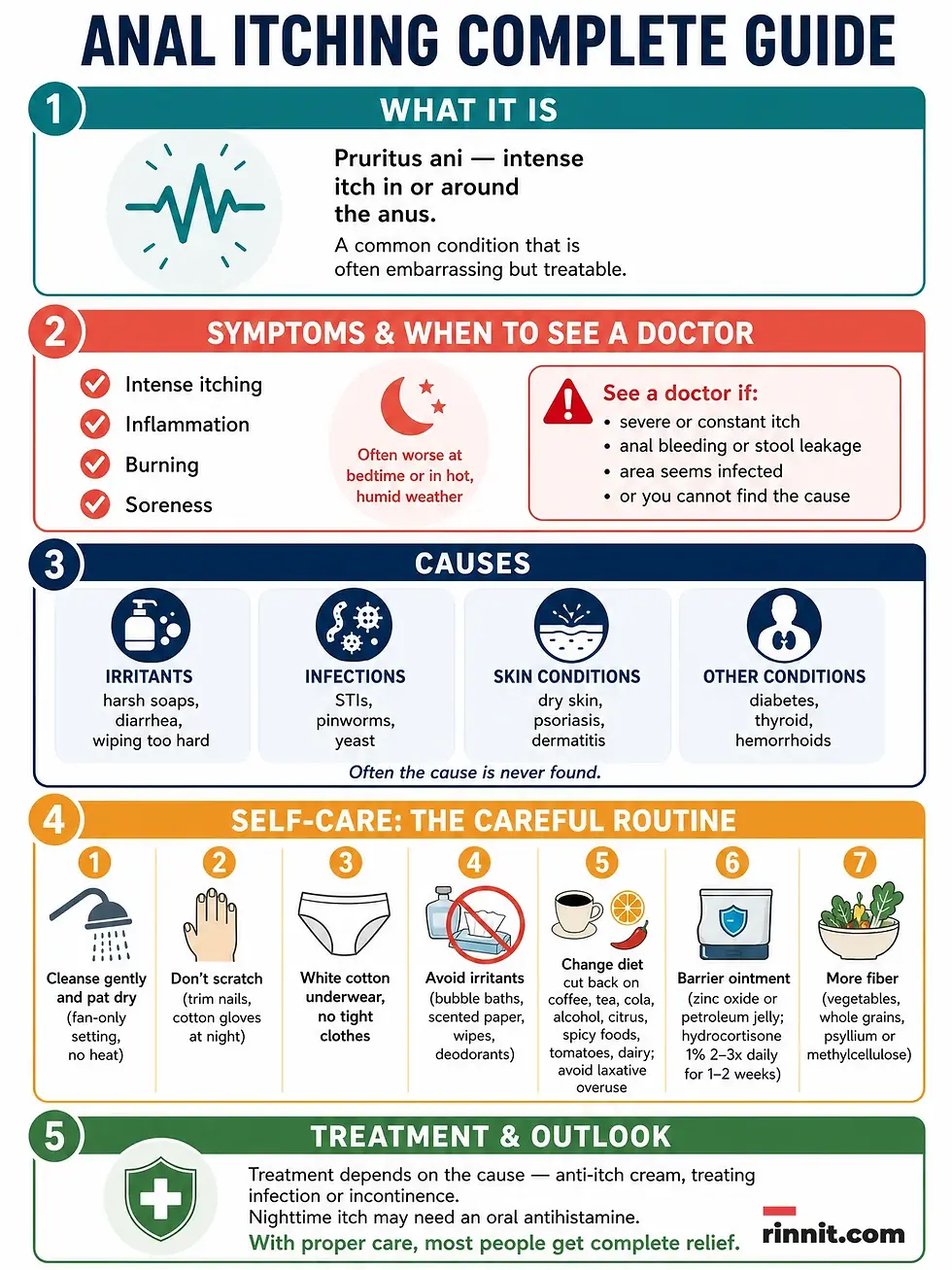
A complete guide to anal itching: what it is, symptoms, causes, the seven-step self-care routine, and the outlook. Source: rinnit.com
What Is Anal Itching?
Anal itching is a common condition. The itch in or around the anus is often intense and can be embarrassing and uncomfortable [1].
Anal itching is also called pruritus ani (proo-RIE-tus A-nie), and it has several possible causes. They include infections, hemorrhoids and ongoing diarrhea. Skin inflammation, also called dermatitis, is another cause [1].
The good news is straightforward: if the symptoms don't clear up with self-care, talk with your healthcare provider. With treatment, most people get complete relief [1].
What are the symptoms of anal itching?
Anal itching causes intense itching in or around the anus, along with skin inflammation, burning and soreness [1].
Intense itching in or around the anus
Inflammation of the skin
Burning
Soreness
The itching and irritation may be short lived or more persistent, depending on the cause [1]. Two timing patterns stand out: anal itching often is worse at bedtime, which can make sleep miserable, and it is often worse in hot, humid weather [1], when moisture gets trapped against the skin.
When to See a Doctor
Medical care isn't needed for most anal itching [1]. But see your healthcare provider if:
Anal itching is severe or constant.
You have anal bleeding or stool leakage.
The anal area seems to be infected.
You can't figure out what's causing a constant itch.
What causes anal itching?
Anal itching falls into four cause categories, and often the cause is never identified at all [1].
1. Irritants
Fecal incontinence and long-term diarrhea can irritate the skin. Or your skin care routine may include products or behaviors that irritate the skin. Examples include using harsh soaps or wiping too hard and too often [1].
2. Infections
These include sexually transmitted infections, pinworm infections and yeast infections [1].
3. Skin Conditions
Sometimes anal itching is the result of a specific skin condition, such as dry skin, psoriasis or contact dermatitis [1].
4. Other Medical Conditions
These include diabetes, thyroid disease and hemorrhoids [1].
Often the cause of anal itching isn't known [1]. That does not mean you have to live with the itch. The symptoms can still be treated.

The four main cause categories of anal itching. Often the cause is never found, yet the symptoms can still be treated. Source: rinnit.com
How is anal itching diagnosed?
Your healthcare provider may be able to diagnose the cause of your itching by asking about your symptoms, medical history and personal habits. You may need a physical exam, including a rectal exam. You might have a test for pinworms if a pinworm infection is suspected [2].
If the cause of your itching isn't obvious or your itching doesn't respond to treatment, your healthcare provider may refer you to a specialist in skin conditions, a dermatologist [2]. In many cases the cause of the itching isn't known, but the symptoms can be treated [2].
How is anal itching treated?
Treatment of anal itching depends on the cause of the problem. It may include taking self-care measures such as using an anti-itch cream or treating an infection or fecal incontinence [2].
If symptoms are worse at night, an oral antihistamine might be prescribed. It can help give relief until an anti-itch cream takes effect [2].
With proper care, most people get relief from anal itching [2]. See your healthcare provider if the itching lasts.
What home remedies help relieve anal itching?
Home remedies for anal itching center on a careful washing routine that keeps the area clean, cool and dry without irritating the skin. If you already have anal itching, try these self-care steps to ease your symptoms:
Cleanse gently. Clean the area around the anus when it's soiled or after each bowel movement when possible. This may involve a quick shower, a bidet, a sitz bath or a squeeze bottle. Moist toilet tissue can help. Avoid scrubbing or rough cloths. Pat dry with a cloth or dry the area with a hair dryer on a fan-only setting. Using the heat setting could further irritate this delicate area [2].
Don't scratch. Scratching provides only short-term relief from itchy skin and further irritates your skin. You may find some relief by applying a moist, room-temperature compress to the area or taking a lukewarm oatmeal bath. Trim your nails short and wear cotton gloves to bed to prevent scratching while you're sleeping [2].
Wear white cotton underwear that doesn't bind. This helps keep the area dry. Avoid wearing pantyhose and other tight-fitting garments because these can trap moisture [2].
Avoid irritants. Avoid bubble baths, genital deodorants, scented toilet paper, personal cleansing wipes, and harsh or perfumed soaps. Cleansing with a gentle soap and water and not using any other products is usually the best approach [2].
Change your diet. Cut back on or avoid the following items until your symptoms clear up: tea, coffee, cola, alcohol, citrus fruits, pepper, dairy products, spicy foods, tomato sauce and tomatoes. Avoid overuse of laxatives [2].
Apply ointments, creams or gels. Protect the affected skin from moisture by applying a thin layer of a zinc oxide ointment (Desitin, Balmex) or petroleum jelly (Vaseline). If needed to ease inflammation and itching, apply hydrocortisone 1% cream 2 to 3 times daily for a week or two [2].
Eat more vegetables, whole grains and noncitrus fruits. This will help with maintaining regular bowel movements. Other sources of fiber are beans, nuts and seeds. Fiber supplements such as psyllium (Metamucil) and methylcellulose (Citrucel) may help [2].
How should you prepare for an anal itching appointment?
Most people won't need to see a healthcare provider about anal itching. But if the itching doesn't stop even after taking self-care measures, seek help. Your care provider may refer you to a skin doctor called a dermatologist, or to a doctor who specializes in treating rectal and anal problems, called a proctologist.
What You Can Do
Before your appointment, make a list of:
Symptoms you are having, including any that may seem unrelated to anal itching.
How long you've had your symptoms.
All medicines, vitamins and supplements you take, including the doses.
Questions to ask your care provider.
For anal itching, some basic questions to ask your care provider include:
What's the most likely cause of my symptoms?
What tests do I need?
Is this problem temporary?
What treatments are available? Which do you recommend?
Do you think I need to see a specialist?
Do you have any brochures or other printed material that I can take with me? What websites do you recommend?
What to Expect From Your Doctor
Your healthcare provider is likely to ask you a number of questions, such as:
Have your symptoms been continuous, or do they come and go?
How severe are your symptoms?
Have you had recent changes in your bowel movements, such as diarrhea?
What type of soap or other products do you use on your body?
Does anything seem to improve your symptoms?
What, if anything, worsens your symptoms?
Have you noticed any other changes in your general health?
Are others in the home experiencing a similar itch?
What You Can Do in the Meantime
Cleanse the anal area gently right away after bowel movements and dry thoroughly. Wear cotton underwear and loose clothing. Try not to scratch [2].
Frequently Asked Questions
What is anal itching (pruritus ani)?
Anal itching, or pruritus ani, is a common condition in which the itch in or around the anus is often intense, embarrassing, and uncomfortable. It has several possible causes, and in many cases the exact cause is never found, but the symptoms can still be treated.
What are the symptoms of anal itching?
Symptoms may include intense itching, inflammation, burning, and soreness. The irritation may be short lived or more persistent depending on the cause, and it is often worse at bedtime or in hot, humid weather.
What causes anal itching?
Causes fall into four categories: irritants (fecal incontinence, diarrhea, harsh soaps, wiping too hard or too often), infections (sexually transmitted infections, pinworms, yeast infections), skin conditions (dry skin, psoriasis, contact dermatitis), and other medical conditions (diabetes, thyroid disease, hemorrhoids).
When should I see a doctor for anal itching?
Medical care isn't needed for most anal itching. See a doctor if the itching is severe or constant, you have anal bleeding or stool leakage, the area seems infected, or you cannot figure out what is causing a constant itch.
How should I clean the area to avoid making it worse?
Cleanse gently with a quick shower, bidet, sitz bath, squeeze bottle, or moist toilet tissue, and never scrub or use rough cloths. Pat dry with a cloth or a hair dryer on the fan-only setting. The heat setting could further irritate the delicate area.
Will changing my diet help with anal itching?
Cutting back on tea, coffee, cola, alcohol, citrus fruits, pepper, dairy products, spicy foods, tomato sauce, and tomatoes until symptoms clear can help. Eating more vegetables, whole grains, and noncitrus fruits, plus fiber supplements such as psyllium or methylcellulose if needed, also supports regular bowel movements.
What can a doctor do if self-care does not work?
Your provider may treat the underlying cause (such as an infection or fecal incontinence), prescribe an oral antihistamine if symptoms are worse at night, and refer you to a dermatologist or proctologist if the cause isn't obvious or the itching doesn't respond to treatment.
Conclusion
The main lessons of this guide: First, anal itching is common and treatable. Pruritus ani is often intense and embarrassing, but with proper care, most people get complete relief. Second, four cause categories cover most cases (irritants, infections, skin conditions, and other medical conditions), yet often the cause is never found, and treatment still works. Third, self-care does the heavy lifting. A gentle cleansing routine that keeps the area clean, cool, and dry, combined with no scratching, cotton underwear, diet changes, and barrier ointments, resolves most cases.
This guide has covered what anal itching is, its symptoms and timing patterns, the four cause categories, when to see a doctor, diagnosis, treatment, the full seven-step self-care routine, and how to prepare for an appointment.
References
Mayo Clinic Staff. Anal itching — Symptoms & causes. Mayo Clinic. Accessed Oct. 11, 2026. https://www.mayoclinic.org/diseases-conditions/anal-itching/symptoms-causes/syc-20369345
Mayo Clinic Staff. Anal itching — Diagnosis & treatment. Mayo Clinic. Accessed Oct. 11, 2026. https://www.mayoclinic.org/diseases-conditions/anal-itching/diagnosis-treatment/drc-20369350
Leung AKC, Lam JM, Barankin B, et al. Pinworm (Enterobius vermicularis) infestation: an updated review. Current Pediatric Reviews. 2025;21(4):333-347. PMID 38288810. https://doi.org/10.2174/0115733963283507240115112552
Gupta PJ. Red hot chilli consumption is harmful in patients operated for anal fissure: a randomized, double-blind, controlled study. Digestive Surgery. 2007;24(5):354-7. PMID 17785979. https://doi.org/10.1159/000107716
Medical disclaimer
This article is for general information only and does not replace professional medical advice, diagnosis, or treatment. Always consult a qualified healthcare provider for decisions about your health.



Comments