Urea Cycle Disorder: Managing Ammonia Levels and Genetic Health

Medically reviewed by Dr. Baraa Alnahhal, MD · Last reviewed: October 2026
TL;DR
Urea cycle disorder (UCD) is a group of rare genetic conditions that prevent the body from effectively removing ammonia, a toxic waste product of protein metabolism. When the enzymes or proteins responsible for the urea cycle are missing or malfunctioning, ammonia builds up in the blood, leading to life-threatening complications, particularly affecting brain function. Treatment focuses on lifelong management through a low-protein diet, specialized medications, and supplements to maintain safe ammonia levels and prevent irreversible damage.
Quick Answer
What is it? A genetic inability to convert toxic ammonia into urea for excretion.
What is the main risk? Hyperammonemia (high ammonia), which can cause brain swelling and coma.
How common is it? Approximately 1 in 35,000 people in the United States.
How is it diagnosed? Often identified through newborn screening, blood tests, or genetic analysis.
How is it managed? A strict low-protein diet, ammonia-scavenging drugs, and amino acid supplements.
What the research says
UCDs are estimated to affect about 1 in 35,000 people, yet diagnosis is often delayed. A revised European guideline (GRADE-scored) notes that UCDs cause hyperammonemia in the newborn period in roughly 50% of cases and later in life in the rest, which can lead to intellectual disability or death even though effective therapies exist. Under-recognition and delayed diagnosis still appear widespread. (Häberle et al., J Inherit Metab Dis, 2019)
Much of the evidence behind UCD care comes from case reports and case series. The original European guideline, built by a panel of specialists across seven countries, found that the level of evidence hardly ever exceeded level C (non-analytical studies such as case reports and series), but it was enough to guide diagnosis, acute and long-term management, and monitoring. It describes alternative-pathway therapy and liver transplantation as effective treatments. (Häberle et al., Orphanet J Rare Dis, 2012)
Ammonia harms the brain in a time-dependent way, and children are more vulnerable. A review of drug-induced hyperammonaemia reports that neurological effects reflect the ammonia level, how long it stays high, and the person's age, with children more susceptible. It recommends prompt discussion with a metabolic physician, and notes that its treatment approach follows urea cycle disorder guidelines. (Shakerdi and Ryan, J Clin Pathol, 2023)
What Is Urea Cycle Disorder?
Urea cycle disorder refers to a cluster of eight distinct genetic conditions that disrupt the body's natural filtering process. Under normal circumstances, the liver performs a vital sequence of chemical reactions known as the urea cycle. When you consume protein, your body breaks it down into amino acids to build muscle and support organ function. A byproduct of this process is ammonia, a substance that is highly toxic to human tissues.
In a healthy system, specific enzymes convert this ammonia into urea, which is then safely transported through the blood to the kidneys and excreted in urine. Individuals with a urea cycle disorder lack one of the essential proteins or enzymes required to complete this conversion. Consequently, ammonia accumulates in the bloodstream — a condition called hyperammonemia — leading to toxic effects that primarily target the brain and other vital organs.

The Eight Types of Urea Cycle Disorders
UCD is classified based on which specific enzyme or protein is deficient. Each type is caused by a unique genetic mutation, though they all result in the same dangerous buildup of ammonia. The most common form is ornithine transcarbamylase (OTC) deficiency, which is X-linked, meaning it is passed down differently than the other types.
The table below details the specific deficiencies and their associated genetic mutations:
Disorder Type | Genetic Mutation |
NAGS deficiency | NAGS gene mutation |
CPS1 deficiency | CPS1 gene mutation |
OTC deficiency | OTC gene mutation (X-linked) |
Citrullinemia type I | ASS1 gene mutation |
Citrullinemia type II (citrin deficiency) | SLC25A13 gene mutation |
ASL deficiency | ASL gene mutation |
ARG deficiency | ARG gene mutation |
Ornithine translocase deficiency | SLC25A15 gene mutation |
Recognizing Signs and Symptoms
Symptoms of urea cycle disorder can emerge at any stage of life, though they are most frequently identified shortly after birth. In newborns, early warning signs often include extreme lethargy, irritability (fussiness), and a refusal to feed. Abnormal breathing patterns, such as breathing too fast or too slow, and frequent vomiting are also critical indicators that require immediate medical evaluation.
As ammonia levels rise, the symptoms become more severe and can lead to permanent neurological damage. High ammonia levels in the blood can cause the brain to swell (cerebral edema), leading to seizures, developmental delays, and behavioral changes. In the most critical cases, untreated hyperammonemia can result in a coma or death. Because these symptoms directly affect brain function, they are considered a medical emergency.

How Is UCD Diagnosed?
Most infants in the United States are screened for urea cycle disorders through universal newborn screening programs. These tests use a small blood sample to detect metabolic imbalances before symptoms even appear. For those who develop symptoms later in life, doctors perform a physical exam and review the patient's medical history to look for signs of metabolic distress.
Confirmatory testing is essential for a definitive diagnosis. An amino acid profile analyzes blood or urine to measure how the body is processing specific proteins. Genetic testing is used to identify the exact mutation responsible for the condition. In some cases, a liver biopsy may be performed to directly examine the levels of specific enzymes within the liver tissue.
Treatment and Lifelong Management
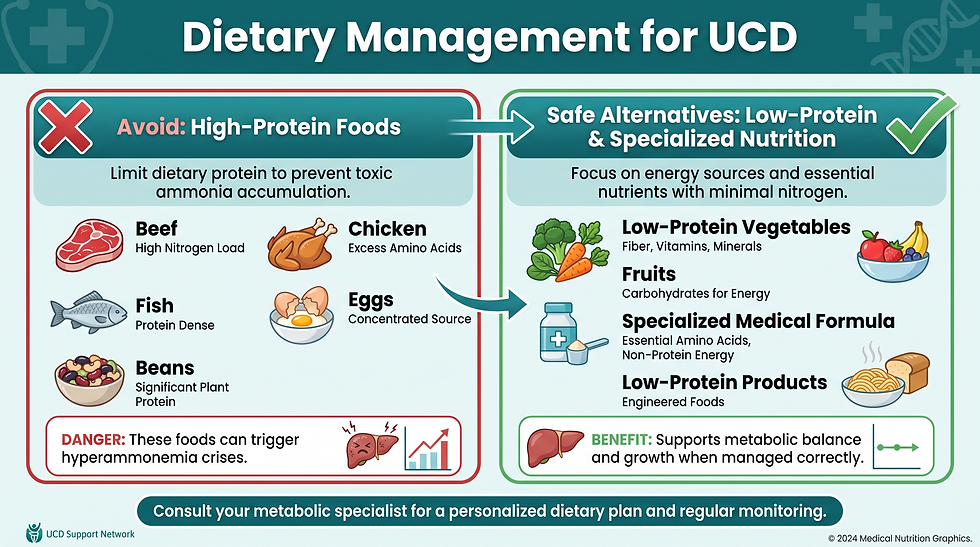
The primary goal of UCD treatment is to keep ammonia levels within a safe range. This is achieved through a combination of dietary control and medical intervention. A strict low-protein diet is the most critical component of management, as it reduces the amount of ammonia the body produces. Patients must work closely with specialized dietitians to ensure they receive enough essential nutrients for growth without triggering a metabolic crisis.
Medical treatments include "ammonia-scavenging" drugs like sodium phenylacetate and sodium benzoate, which provide an alternative pathway for the body to remove nitrogen. Supplements of specific amino acids, such as arginine or citrulline, are often prescribed to help the body complete as much of the urea cycle as possible. In acute emergencies, hemodialysis may be used to rapidly clear toxins from the blood. For severe or uncontrollable cases, a liver transplant may be considered a curative option.
Long-Term Outlook and Prevention
The prognosis for an individual with urea cycle disorder depends heavily on the timing of the diagnosis and the consistency of treatment. With early detection and strict adherence to a low-protein diet and medication, many individuals can lead a relatively normal life. However, the condition requires lifelong monitoring, as even a single high-protein meal or a common illness can trigger a dangerous spike in ammonia.
While urea cycle disorder cannot be prevented because it is a genetic condition, families with a history of the disorder can benefit from genetic counseling. Understanding the inheritance patterns — whether autosomal recessive or X-linked — can help parents make informed decisions about future pregnancies and ensure that newborns receive immediate testing and care.
The Bottom Line
Urea cycle disorder is a complex metabolic challenge that requires vigilance and specialized care. By understanding the underlying genetic causes and strictly following a managed treatment plan, patients can mitigate the risks of ammonia toxicity. Proactive management and early intervention remain the most effective tools for ensuring a healthy future for those living with UCD.
Frequently Asked Questions
What is the most common urea cycle disorder?
Ornithine transcarbamylase (OTC) deficiency is the most frequently diagnosed type.
Can urea cycle disorder be cured?
While there is no genetic cure, a liver transplant can resolve the metabolic symptoms in severe cases.
Is a low-protein diet safe for growing children?
Yes, but it must be carefully managed by a medical dietitian to ensure the child receives essential amino acids and nutrients.
Can adults be diagnosed with UCD?
Yes, some individuals have partial enzyme deficiencies that only become apparent during times of stress or illness in adulthood.
How is UCD inherited?
Most types are autosomal recessive (both parents carry the gene), while OTC deficiency is X-linked.
What happens if ammonia levels get too high?
High ammonia can cause brain swelling, seizures, coma, and permanent neurological damage.
Can I breastfeed a baby with UCD?
Breast milk contains protein; a doctor may recommend specialized formula or very limited breastfeeding under close monitoring.
What are "ammonia scavengers"?
These are medications that help the body remove nitrogen through pathways other than the urea cycle.
Does UCD affect life expectancy?
With early treatment and strict management, life expectancy can be normal. Untreated, it can be fatal.
Are there specific foods to avoid?
High-protein foods like beef, chicken, fish, eggs, and beans must be strictly limited.
Can illness trigger a UCD crisis?
Yes, infections or fever can cause the body to break down its own muscle protein, increasing ammonia levels.
Is UCD contagious?
No, it is a purely genetic condition and cannot be passed from person to person.
How often do ammonia levels need to be checked?
Patients require lifelong, regular monitoring by a metabolic specialist.
What is hyperammonemia?
It is the medical term for dangerously high levels of ammonia in the blood.
Why is ammonia toxic to the brain?
Ammonia crosses the blood-brain barrier and interferes with normal brain cell function and fluid balance.
References
Cleveland Clinic. Urea cycle disorder. Cleveland Clinic. Last updated July 11, 2022. Accessed October 14, 2026. https://my.clevelandclinic.org/health/diseases/23470-urea-cycle-disorder
Häberle J, Burlina A, Chakrapani A, et al. Suggested guidelines for the diagnosis and management of urea cycle disorders: first revision. J Inherit Metab Dis. 2019;42(6):1192-1230. PMID: 30982989. DOI: 10.1002/jimd.12100
Häberle J, Boddaert N, Burlina A, et al. Suggested guidelines for the diagnosis and management of urea cycle disorders. Orphanet J Rare Dis. 2012;7:32. PMID: 22642880. DOI: 10.1186/1750-1172-7-32
Shakerdi L, Ryan A. Drug-induced hyperammonaemia. J Clin Pathol. 2023;76(8):501-509. PMID: 37164630. DOI: 10.1136/jcp-2022-208644
Disclaimer: This guide is for general information only and is not a substitute for professional medical advice, diagnosis, or treatment. Always seek the advice of a physician or other qualified health provider with any questions about a medical condition. Never disregard professional medical advice or delay seeking it because of something you have read here. If you are experiencing a medical emergency, call 911 or your local emergency number immediately.


Comments