Understanding Prosthetic Hands: A Guide to Types, Technology, and Benefits

Updated: 2 days ago
Medically reviewed by Dr. Baraa Alnahhal, MD · Last reviewed: September 2026
A prosthetic hand is an artificial replacement for an absent or sub-functional hand, designed to restore mobility and independence. Modern devices range from passive cosmetic restorations to sophisticated myoelectric “bionic” hands. The process involves custom fitting, intensive therapy, and long-term maintenance. Beyond daily tasks, a well-fitted prosthesis protects the body from overuse injuries and postural imbalances.
Quick answer: A prosthetic hand is a custom-built artificial device that replaces a missing portion of the hand or the entire hand. It is used by individuals with amputations or congenital limb differences to perform daily tasks and maintain physical balance. These devices operate through various mechanisms, including body-powered cables or electronic muscle impulses, allowing users to regain functional independence and improve their overall quality of life.
What Is a Prosthetic Hand?
A prosthetic hand, also known as a hand prosthesis, serves as a functional and often aesthetic replacement for a hand that is missing due to surgery, injury, or a congenital difference. These devices are engineered to assist with a wide range of activities, from simple stabilization to complex grasping patterns. A certified prosthetist works closely with the user to select, fit, and maintain the device, ensuring it aligns with their specific lifestyle needs and goals.
Beyond immediate functional utility, using a hand prosthesis provides significant long-term health benefits. By allowing the body to function more symmetrically, these devices distribute physical stress more evenly across the musculoskeletal system. This helps prevent repetitive strain injuries on the opposite limb, reduces chronic neck and back pain, and maintains proper postural alignment.
Types of Hand Prostheses and Functionality
The choice of a prosthetic hand depends heavily on the user’s amputation level and their desired level of activity. Devices are categorized by their operating mechanisms and the specific tasks they are designed to perform.
Prosthesis Type | Operating Mechanism | Key Features and Use Cases |
Passive | None (Static) | Primarily cosmetic or used for stabilization and carrying. Often a child’s first prosthesis. |
Body-Powered | Pulley/Cable System | Operated by residual limb, shoulder, or chest muscles. Rugged, waterproof, and ideal for manual labor. |
Myoelectric | Electronic Impulses | Responds to muscle contractions via skin electrodes. Offers multi-articulating fingers and programmable grips. |
Activity-Specific | Task-Optimized | Specialized tools for machinery operation, sports, or playing musical instruments. |
Amputation Levels and Congenital Differences
Prosthetic designs are tailored to the specific anatomical absence. Common levels of intervention include partial finger or thumb replacements, partial hand designs (metacarpal), whole hand replacements (wrist disarticulation), and devices that include part of the lower arm (transradial). Children born with differences such as symbrachydactyly, ectrodactyly (cleft hand), or radial dysplasia can also benefit from early introduction to prosthetic devices to support their natural growth and development.
Essential Components and Customization
Every prosthetic hand is a custom assembly designed for the individual. While some devices focus on a robotic, functional appearance, others prioritize a lifelike aesthetic.
Component/Feature | Description |
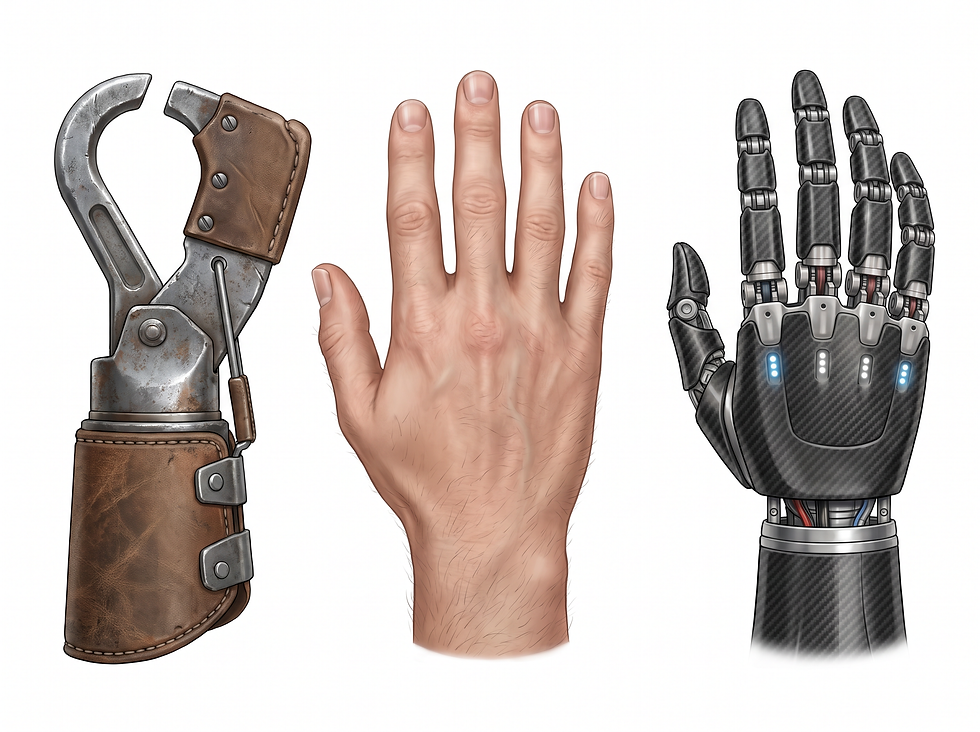
The Device | Can range from a simple hook for manual labor to a multi-motor bionic hand. |
Silicone Restoration | A cosmetic restoration custom-painted to match the user’s natural skin tone and hand details. |
Control Interface | Cables for body-powered models or electrodes for myoelectric (electronic) models. |
Articulating Fingers | Found in high-tech bionic hands, allowing for complex and natural movement patterns. |
The Process of Obtaining a Hand Prosthesis
Acquiring a prosthetic hand is a multidisciplinary journey that requires significant time and commitment. The process is divided into several critical stages to ensure the best possible outcome for the user.
Consultation and Assessment: Healthcare providers evaluate the user’s lifestyle, goals, and the physical fitness of the residual limb to determine the most suitable device.
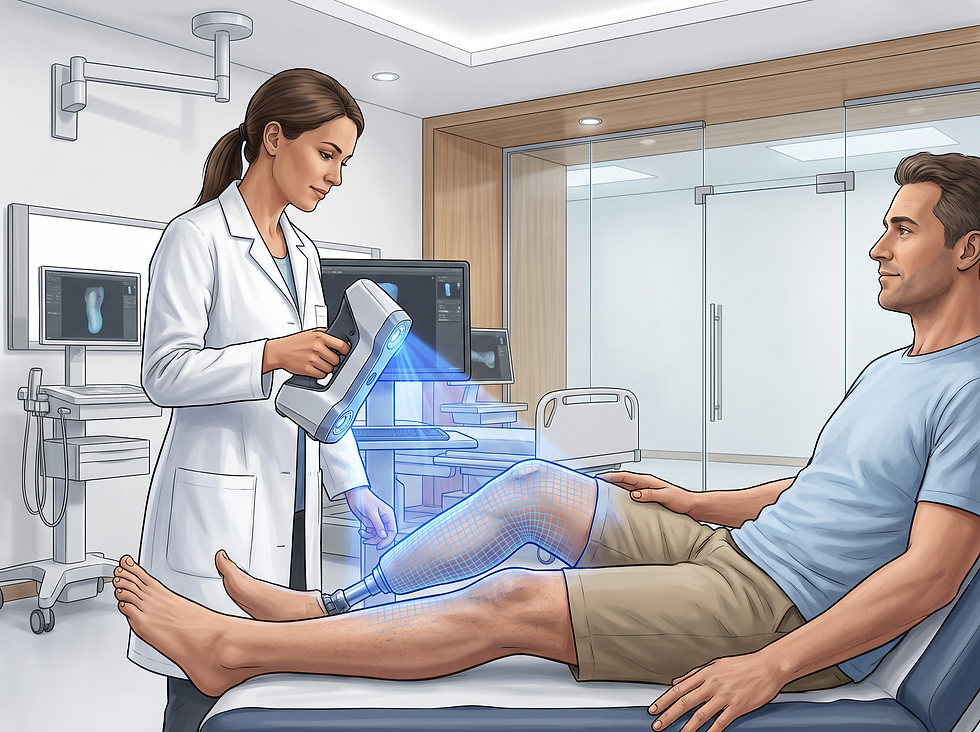
Fitting: A prosthetist takes precise measurements using casts, 3D scans, or measurements of the opposite hand to create a custom-fitted device.
Basic Training: Users learn the fundamentals of donning and doffing the prosthesis, basic operation, and equipment maintenance.
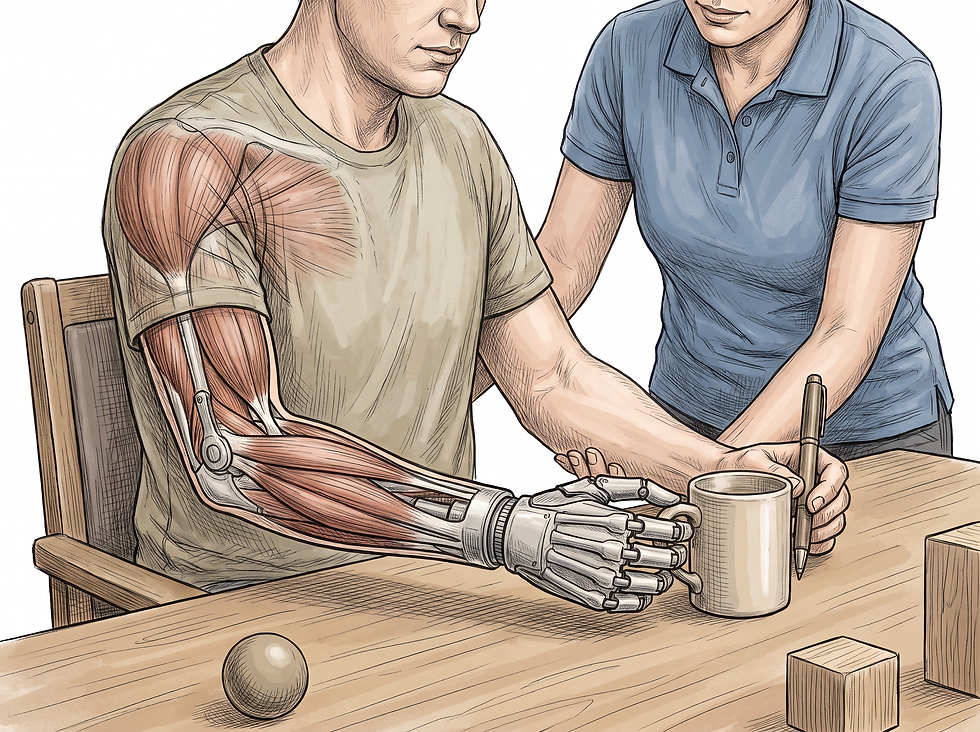
Therapeutic Rehabilitation: Intensive physical and occupational therapy sessions help users master specific movement patterns and strengthen the muscles required for operation.
Mental Health Support: Professionals assist with the psychological adjustment to limb loss and the transition to living with a prosthesis.
Risks and Considerations
While the benefits of a prosthetic hand are substantial, users must be aware of potential challenges. Common side effects include pressure sores or chafing from an improper fit, and sweat buildup within the device, which requires regular cleaning. Body-powered models may lead to muscle strain if overused, while electronic models are subject to mechanical breakdowns or charging requirements. Proper training and regular adjustments by a prosthetist can mitigate most of these risks.
Conclusion
A prosthetic hand is a powerful tool for restoring function and maintaining physical health for those with limb differences. Whether choosing a rugged mechanical hook for work or a sophisticated bionic hand for daily versatility, the right device can significantly enhance independence. Success depends on a collaborative effort between the user and their medical team, combined with a commitment to long-term therapy and device maintenance.
Next Steps
Schedule an Assessment: Consult with a healthcare provider to evaluate your candidacy for a hand prosthesis.
Find a Certified Prosthetist: Work with a specialist to explore the different types of devices and begin the custom fitting process.
Engage in Therapy: Commit to a rehabilitation program to maximize the functionality of your new device.
Frequently Asked Questions
What is a prosthetic hand?
It is an artificial device designed to replace a missing or sub-functional hand or part of a hand.
Who can benefit from a prosthetic hand?
Individuals with amputations due to injury or surgery, and children born with congenital hand differences.
What is a passive prosthesis?
A non-functional device used for stabilization, carrying, or cosmetic purposes.
How does a body-powered hand work?
It uses a system of cables and pulleys operated by the user’s own muscle movements.
What is a myoelectric hand?
An electronic “bionic” hand that responds to electrical signals from the user’s muscles.
Can a prosthetic hand look natural?
Yes, silicone restorations can be custom-painted to match your natural skin and hand appearance.
What are activity-specific prostheses?
Devices designed for specialized tasks like sports, playing instruments, or manual labor.
Is a hook better than a bionic hand?
A hook is often more rugged and better for manual labor, while a bionic hand offers more natural movement.
How long does it take to get a prosthetic hand?
The process involves multiple steps, including assessment, fitting, and training, which can take several weeks or months.
Do I need therapy to use a prosthetic hand?
Yes, physical and occupational therapy are essential to learn how to operate the device effectively.
Can children use prosthetic hands?
Yes, early introduction is often recommended to help children grow and develop with the device.
What are the risks of using a prosthesis?
Potential risks include skin chafing, pressure sores, sweat buildup, and muscle strain.
How do I maintain my prosthetic hand?
Regular cleaning, charging (for electronic models), and periodic adjustments by a prosthetist are required.
Why is it important to use a prosthesis?
It helps prevent overuse injuries on the opposite side and maintains overall body alignment.
Can I use different prostheses for different tasks?
Yes, many users have a collection of devices, such as a passive hand for social events and an activity-specific one for work.
Related reading: Physical Therapy: Enhancing Mobility, Strength, and Recovery
Medical Disclaimer: This content is for informational purposes only and does not constitute medical advice. Always consult with a qualified healthcare provider for diagnosis and treatment.
Comments