Understanding Polydipsia: Causes, Symptoms, and Management

Updated: 3 days ago
Medically reviewed by Dr. Baraa Alnahhal, MD · Last reviewed: October 2026
Polydipsia is the medical term for excessive, unquenchable thirst that persists regardless of fluid intake. Common causes include diabetes mellitus, diabetes insipidus, certain medications, and psychogenic factors. Key symptoms are a constant urge to drink, frequent urination, and dry mouth, and treatment focuses on addressing the underlying medical condition, such as managing blood sugar levels or adjusting medications.
Quick Answer
Polydipsia is extreme, persistent thirst that cannot be satisfied by drinking normal or even large amounts of fluid. Unlike ordinary thirst after exercise or salty food, it is an abnormal urge to drink that can last days or months. It is often a key sign of underlying conditions, especially diabetes mellitus or diabetes insipidus, and requires clinical evaluation. [1]
What the research says
Most children newly diagnosed with type 1 diabetes report extreme thirst and frequent urination beforehand. In a review of 681 children under 16 diagnosed at one regional center in China (2009–2018), 91% reported polydipsia and 89% polyuria at diagnosis, and 50.1% already had diabetic ketoacidosis at presentation (Peng et al., Front Endocrinol, 2021).
Doctors now use a hormone-based test, not just the water deprivation test, to separate the causes of extreme thirst and urination. A 2024 review reports that the hypertonic saline test combined with plasma copeptin measurement emerged as the test with the highest diagnostic accuracy for the polyuria-polydipsia syndrome (central diabetes insipidus, nephrogenic diabetes insipidus, or primary polydipsia), replacing the water deprivation test as the gold standard (Atila et al., Nat Rev Endocrinol, 2024).
Getting the cause right matters, because the wrong treatment can be dangerous. A clinical review describes diabetes insipidus as urine output above 50 ml per kg of body weight per 24 hours with fluid intake above 3 liters a day, notes that telling it apart from primary polydipsia is difficult in mild cases, and warns that applying the wrong treatment can be dangerous (Christ-Crain & Gaisl, Presse Med, 2021).
Research summaries are based on article abstracts retrieved from PubMed.
What is Polydipsia?
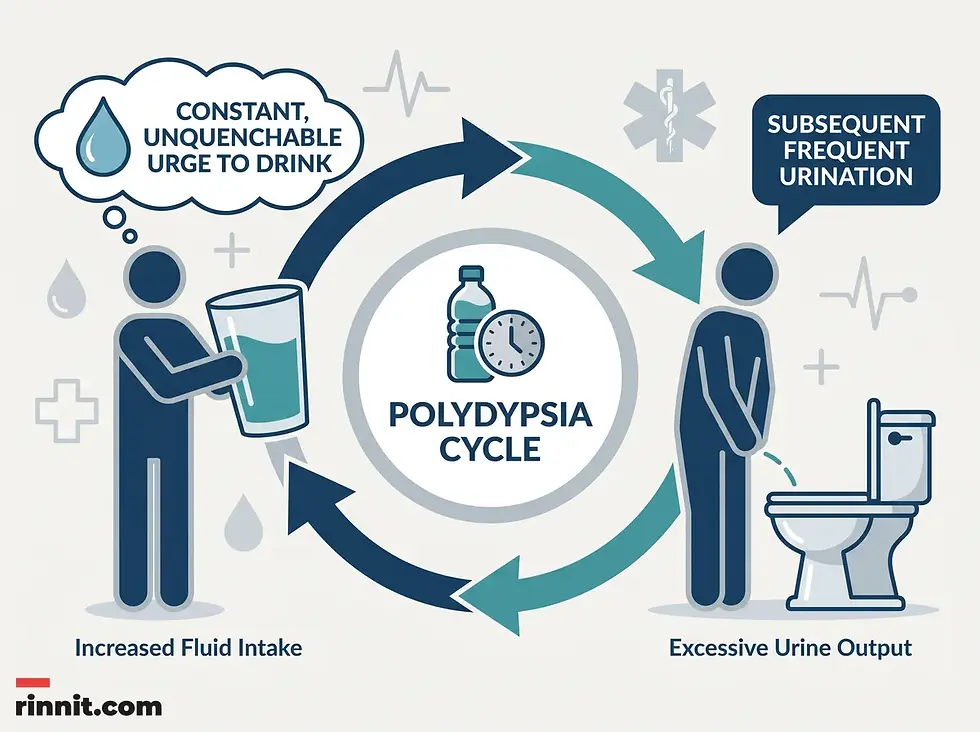
Polydipsia is more than just a temporary need for water; it is a physiological reaction to fluid loss or hormonal imbalances within the body. When an individual experiences polydipsia, their body is signaling a critical need to rehydrate, yet the sensation of thirst remains constant. This condition often presents alongside xerostomia (dry mouth) and polyuria (frequent urination), creating a cycle of high fluid intake and high fluid output. [1]
Understanding the duration of the thirst is essential for diagnosis. While temporary thirst might follow a spicy meal or a workout, polydipsia is defined by its persistence. If the urge to drink remains unquenched for an extended period, it serves as a clinical red flag for metabolic or endocrine disorders. [1]
What causes polydipsia (excessive thirst)?
The causes of polydipsia range from lifestyle factors to serious systemic diseases. Identifying the specific trigger is the first step toward effective management. [1]
Cause Category | Specific Factors |
Lifestyle & Diet | Consumption of spicy/salty foods, excessive caffeine, or alcohol intake |
Physical Factors | Profuse sweating from exercise, fever, vomiting, or pregnancy |
Metabolic Disorders | Diabetes mellitus (high blood sugar) and diabetes insipidus |
Psychological Factors | Psychogenic polydipsia linked to anxiety or schizophrenia |
Organ & Blood Health | Kidney or liver failure, sepsis, and low potassium levels (hypokalemia) |
Medical professionals distinguish between diabetes mellitus and diabetes insipidus. While they share similar symptoms of thirst and urination, diabetes insipidus is unrelated to blood sugar and instead involves the kidneys and the hormones that regulate fluid balance. [1]

How is polydipsia diagnosed and treated?
When excessive thirst persists, healthcare providers use a combination of physical exams and laboratory tests to pinpoint the cause. The diagnostic process often involves tracking how long the thirst has lasted, whether it developed suddenly, and if there are associated changes in appetite or weight. [1]
Common diagnostic tests include blood glucose monitoring to check for diabetes, electrolyte panels to assess sodium and potassium levels, and urinalysis to evaluate kidney function and urine concentration. Once the underlying cause is identified, treatment can be tailored to the individual's needs. [1]
Diabetes Management: If blood sugar levels are high, providers will focus on insulin therapy or oral medications to stabilize glucose.
Medication Adjustments: If a current prescription is causing dry mouth or thirst, the dosage or type of medication may be changed.
Hydration Strategies: For conditions like diabetes insipidus, the primary focus is on maintaining adequate fluid levels to prevent dehydration.
Behavioral Support: Psychogenic cases may benefit from counseling to manage compulsive water consumption. [1]

Conclusion
Polydipsia is a significant clinical symptom that should not be ignored. While it may simply be a sign of dehydration, its persistence often points to more complex health challenges. By recognizing the signs early and seeking professional medical advice, individuals can address the root cause of their thirst and maintain proper physiological balance.
Frequently Asked Questions
What is the medical definition of polydipsia?
Polydipsia is the medical term for excessive, persistent thirst that is not quenched by drinking fluids.
How is polydipsia different from normal thirst?
Normal thirst is temporary and satisfied by drinking water. Polydipsia lasts for days or weeks and feels unquenchable regardless of how much you drink.
Can diabetes cause excessive thirst?
Yes, polydipsia is one of the "big three" signs of diabetes mellitus, often caused by high blood sugar levels (hyperglycemia).
What is psychogenic polydipsia?
Psychogenic polydipsia is a condition where excessive water drinking is driven by psychological factors or mental health disorders rather than a physical need for hydration.
Why do I feel extremely thirsty at night?
Nighttime thirst can be caused by inadequate daytime hydration, mouth breathing, room temperature, or certain medications taken before bed.
What tests do doctors use to diagnose polydipsia?
Common tests include blood glucose tests, urinalysis, electrolyte panels, and complete blood counts (CBC).
Is polydipsia related to kidney health?
Yes, conditions like diabetes insipidus and cystic kidney disease can affect how the kidneys process fluids, leading to excessive thirst.
Can medications cause me to feel thirsty?
Certain prescription medications are known to cause dry mouth or increase the urge to drink as a side effect.
When should I see a doctor for my thirst?
You should seek medical advice if your thirst lasts for several days, or if it is accompanied by frequent urination, blurry vision, or extreme fatigue.
Can polydipsia be prevented?
Prevention depends on the cause, but maintaining consistent hydration and managing underlying conditions like diabetes can help reduce the risk.
References
Cleveland Clinic. Polydipsia. Cleveland Clinic Health Library. Accessed October 11, 2026. https://my.clevelandclinic.org/health/symptoms/24050-polydipsia
Peng W, Yuan J, Chiavaroli V, et al. 10-Year Incidence of Diabetic Ketoacidosis at Type 1 Diabetes Diagnosis in Children Aged Less Than 16 Years From a Large Regional Center (Hangzhou, China). Front Endocrinol (Lausanne). 2021;12:653519. PMID: 33986725. https://doi.org/10.3389/fendo.2021.653519
Atila C, Refardt J, Christ-Crain M. Arginine vasopressin deficiency: diagnosis, management and the relevance of oxytocin deficiency. Nat Rev Endocrinol. 2024;20(8):487-500. PMID: 38693275. https://doi.org/10.1038/s41574-024-00985-x
Christ-Crain M, Gaisl O. Diabetes insipidus. Presse Med. 2021;50(4):104093. PMID: 34718110. https://doi.org/10.1016/j.lpm.2021.104093
Medical disclaimer
This article is for informational purposes only and is not a substitute for professional medical advice, diagnosis, or treatment. Always seek the advice of your physician or other qualified health provider with any questions you may have about a medical condition.


Comments