
Understanding Polydactyly: A Guide to Extra Fingers and Toes

Updated: 2 days ago
Medically reviewed by Dr. Baraa Alnahhal, MD · Last reviewed: September 2026
Quick answer: Polydactyly, also known as hyperdactyly, is a congenital condition characterized by the presence of more than five fingers or toes on a hand or foot. It is caused by genetic changes during fetal development and can affect anyone, though it is more common in certain demographics. Treatment typically involves the surgical removal of the additional digit, a procedure that generally leads to a full recovery and normal limb function.
Polydactyly is one of the most frequent congenital differences affecting the hands and feet of newborns. The term itself is derived from the Greek words for "many" and "finger." While the appearance of an extra digit can be surprising to parents, the condition is well-understood in the medical community and is highly treatable. In most cases, the additional finger or toe is not fully functional and may be attached by only a small amount of skin or tissue.
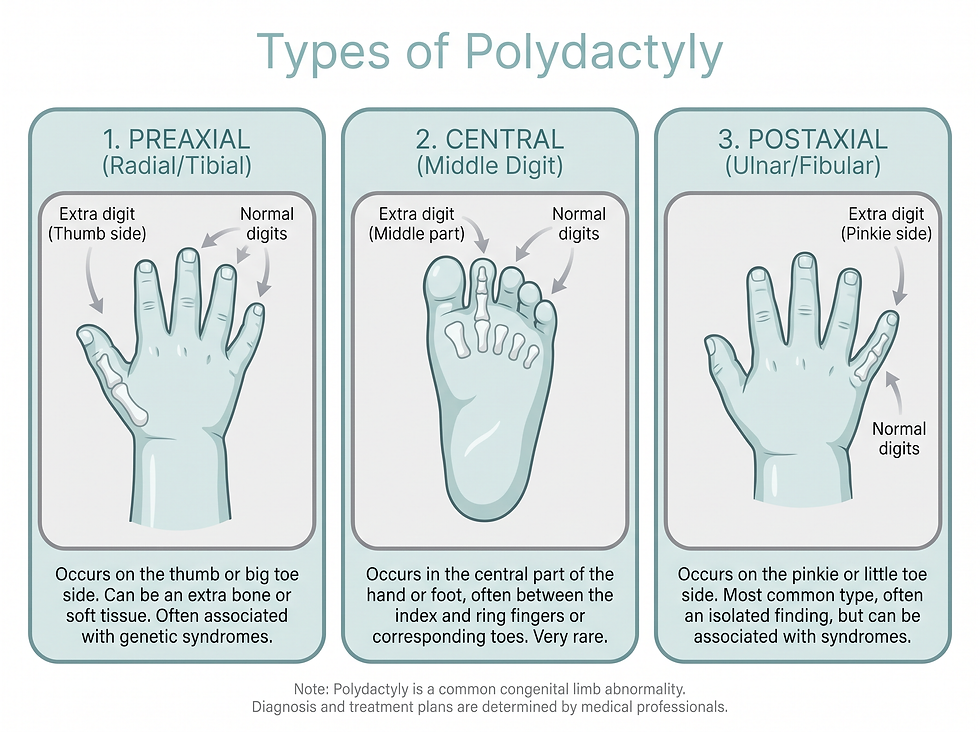
Classifying the Types of Polydactyly
Healthcare providers categorize polydactyly based on where the extra digit is located on the hand or foot. This classification is essential for determining the most appropriate treatment method and assessing whether the condition might be linked to other genetic factors.
Type of Polydactyly | Location and Description |
Preaxial | An extra thumb (radial) or big toe (tibial). |
Central | An extra digit located between the index, middle, or ring fingers/toes. |
Postaxial | An extra pinkie finger (ulnar) or pinkie toe (fibular). |
Causes and Known Risk Factors
The development of extra digits is driven by biological changes in the genes responsible for limb formation during pregnancy. These genetic shifts can be spontaneous or passed down through families. While polydactyly often occurs in isolation, it is sometimes a component of broader genetic disorders such as Down syndrome, Fanconi anemia, or Carpenter syndrome.
Statistical data indicates that certain groups have a higher likelihood of being born with extra digits. For instance, male infants are more frequently affected than female infants. Additionally, there is a significant ethnic disparity; polydactyly is notably more common in Black infants than in white infants, with rates being up to 22 times higher in some demographics. A family history of congenital hand or foot differences also serves as a primary risk factor.
Diagnostic Procedures and Genetic Evaluation
Many cases of polydactyly are identified through prenatal ultrasound screenings. However, an official diagnosis typically occurs at birth during a physical examination. Depending on the complexity of the extra digit, specifically whether it contains bone or functional nerves, a healthcare provider may order X-rays of the hand or foot to plan for removal.
For families with a history of polydactyly, genetic counseling is often recommended. A counselor can help parents understand the likelihood of passing the trait to future children and discuss whether genetic testing is appropriate to screen for associated syndromes.

Management and Removal Techniques
The primary goal of treatment is the removal of the extra digit to ensure normal hand or foot function and appearance. The specific method chosen depends on the type of polydactyly and how the extra digit is attached.
Removal Method | Description of Procedure |
Surgical Ligature | A tight band is placed at the base to cut off blood supply; the digit falls off in 1–2 weeks. |
In-Office Excision | The area is numbed, and a cautery device is used to remove the extra tissue. |
Polydactyly Surgery | A formal surgical procedure, often required for extra toes or complex finger attachments. |
Following the removal, parents should monitor the site for signs of infection, such as swelling, bleeding, or unusual discharge. When handled by a qualified professional, the recovery process is generally swift and uncomplicated.

Conclusion
Polydactyly is a common and manageable condition that does not hinder a child's long-term potential. With early diagnosis and appropriate medical intervention, children born with extra digits can expect to achieve full physical development and normal function in their hands and feet. The focus of care is on safe removal and, where necessary, addressing any associated genetic conditions to ensure the best possible start in life.
When to See a Doctor
If your child was born with an extra finger or toe, schedule a consultation with a pediatric specialist or hand surgeon to discuss removal options. Early intervention ensures a smooth recovery and allows your child to grow without any functional limitations. For families with a history of extra digits, consider speaking with a genetic counselor to better understand your family's health profile.
Frequently Asked Questions
Is polydactyly painful for the baby?
No, having an extra digit typically does not cause any pain or discomfort to the infant.
Can an extra finger be functional?
In some cases, the extra digit is fully developed with bone and muscle, but it is more common for it to be a small, non-functional nub.
When is the best time to remove an extra digit?
Removal often occurs in infancy, sometimes within the first few weeks of life, depending on the method used.
Will my child need physical therapy after surgery?
Most children do not require physical therapy after a standard removal, as they quickly adapt to normal hand or foot use.
Is polydactyly always inherited?
Not always. It can occur spontaneously due to genetic changes during development, though family history does increase the risk.
Does an extra toe affect walking?
If left untreated, an extra toe can make it difficult to find comfortable footwear, which is why surgical removal is generally recommended.
What is the difference between polydactyly and syndactyly?
Polydactyly refers to extra digits, while syndactyly refers to digits that are fused or webbed together.
Are there any risks associated with surgical ligature?
Ligature is generally safe for small, skin-attached nubs, but it must be performed by a healthcare professional to prevent infection.
Can polydactyly be a sign of other health issues?
Yes, in some cases, it is associated with other genetic syndromes, which is why a full pediatric evaluation is important.
How common is polydactyly?
It is one of the most common birth defects, affecting approximately 1 in every 500 to 1,000 live births.
Will the extra digit grow back?
No, once the digit is surgically removed, it does not grow back.
Does insurance typically cover polydactyly removal?
Most insurance plans cover the procedure as it is considered a corrective surgery for a congenital difference.
Can an ultrasound always detect extra fingers?
While many cases are caught on ultrasound, small or skin-only digits may be missed until birth.
What should I look for during recovery?
Watch for signs of infection like redness, warmth, swelling, or pus at the removal site.
Is genetic testing mandatory for polydactyly?
No, it is not mandatory, but it can be helpful for families who want more information about their genetic risks.
Related Reading
March of Dimes: Common Birth Defects and Genetic Conditions. American Society for Surgery of the Hand: Polydactyly Resources. National Institutes of Health (NIH): Fanconi Anemia and Associated Conditions.
Medically reviewed by Dr. Baraa Alnahhal, MD. This content is for informational purposes only and does not constitute medical advice. If you have questions about your child's health or congenital conditions, consult a qualified healthcare professional.
Comments