
Understanding Polyclonal Gammopathy: Causes, Symptoms, and Clinical Outlook

Updated: 2 days ago
Medically reviewed by Dr. Baraa Alnahhal, MD · Last reviewed: September 2026
Quick answer: Polyclonal gammopathy occurs when multiple types of B-cells and plasma cells produce large quantities of immunoglobulins (antibodies). This is generally not a disease itself but an immune response to other health issues. While it often has no direct symptoms, extremely high levels can thicken the blood, causing headaches or vision changes. Healthcare providers use tests like serum protein electrophoresis (SPEP) to detect it and then work to identify and treat the underlying cause, which determines the overall prognosis.
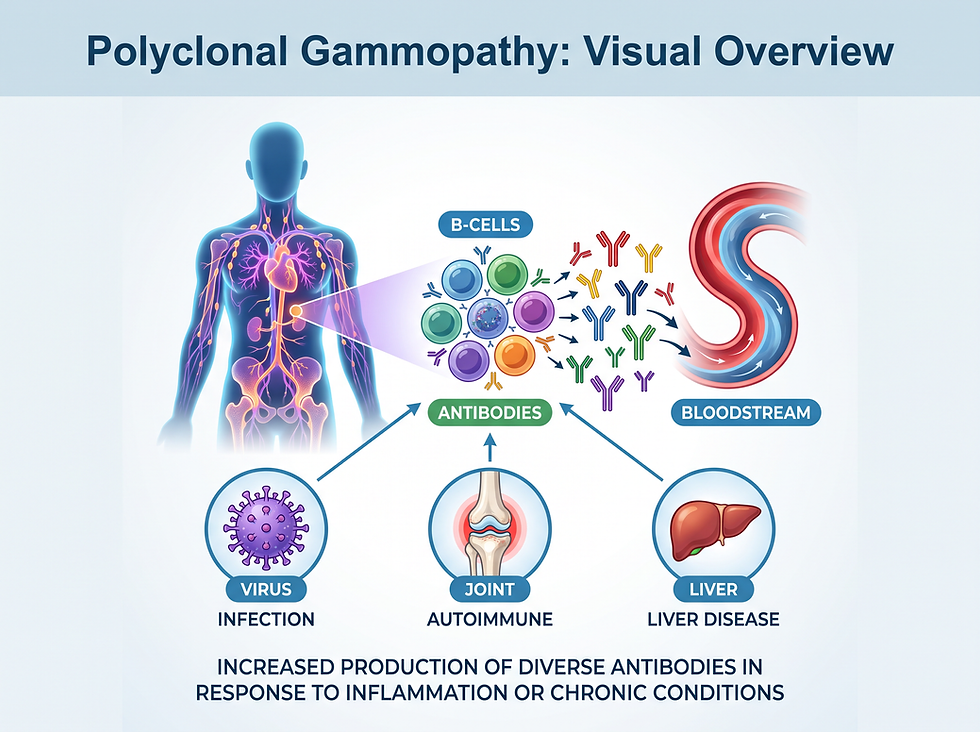
Polyclonal gammopathy, clinically referred to as hypergammaglobulinemia, is a condition characterized by the overproduction of antibodies, or immunoglobulins, by the immune system. These proteins are the body's primary defense against intruders like bacteria and viruses. When different lineages of plasma B-cells are activated simultaneously, they release a broad array of antibodies into the bloodstream. While this elevated immune activity is not considered a serious primary disease, it acts as an important indicator that the body is actively fighting an underlying health challenge.
Recognizing Potential Symptoms and Complications
Polyclonal gammopathy itself is an asymptomatic condition, meaning it does not directly cause physical discomfort. However, the underlying diseases that trigger this immune response often present with a variety of symptoms. Furthermore, in rare cases where immunoglobulin levels become exceptionally high, the blood may thicken, a condition known as hyperviscosity, leading to specific neurological and vascular issues.
Category | Potential Signs and Symptoms |
Underlying Triggers | Fatigue, persistent fever, stiff joints, and swollen lymph nodes. |
Hyperviscosity Signs | Frequent headaches, sudden vision changes, and unexplained bleeding. |
General Health | Symptoms vary widely depending on the specific primary disease present. |
Common Causes and Risk Factors
Healthcare professionals view polyclonal gammopathy as a signal rather than a diagnosis. It is often the result of the immune system reacting to chronic inflammation, long-term infections, or other systemic health issues. Identifying the specific trigger is the most critical step in clinical management.
Trigger Category | Examples of Associated Conditions |
Autoimmune Diseases | Lupus, rheumatoid arthritis, and Sjögren's syndrome. |
Infectious Diseases | HIV, tuberculosis, pneumonia, mononucleosis, and malaria. |
Liver Conditions | Viral hepatitis, autoimmune hepatitis, and cirrhosis. |
Malignancies | Leukemia, lymphoma, and cancers of the kidney, liver, lung, or ovary. |
Blood Disorders | Sickle cell anemia and other noncancerous hematologic conditions. |
Diagnosis and Clinical Evaluation
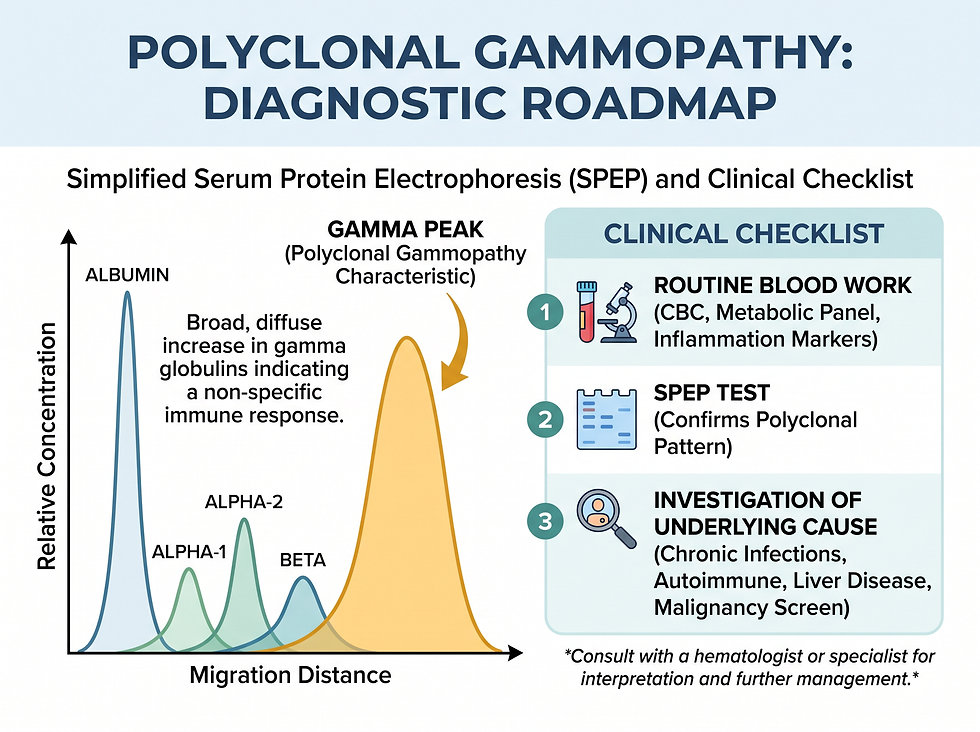
The discovery of polyclonal gammopathy often occurs during routine blood work when a provider notices unusually high total protein or globulin levels. To confirm the condition and differentiate it from other types of immune disorders, specialized testing is required.
The primary diagnostic tool is the serum protein electrophoresis (SPEP) test. This globulin blood test separates and measures the various proteins in the blood serum, allowing providers to see the broad "polyclonal" spike characteristic of a healthy but overactive immune response. Once confirmed, the focus shifts to a diagnostic search for the underlying cause, which may involve imaging, biopsies, or additional blood panels tailored to the patient's symptoms and medical history.
Management and Long-Term Outlook
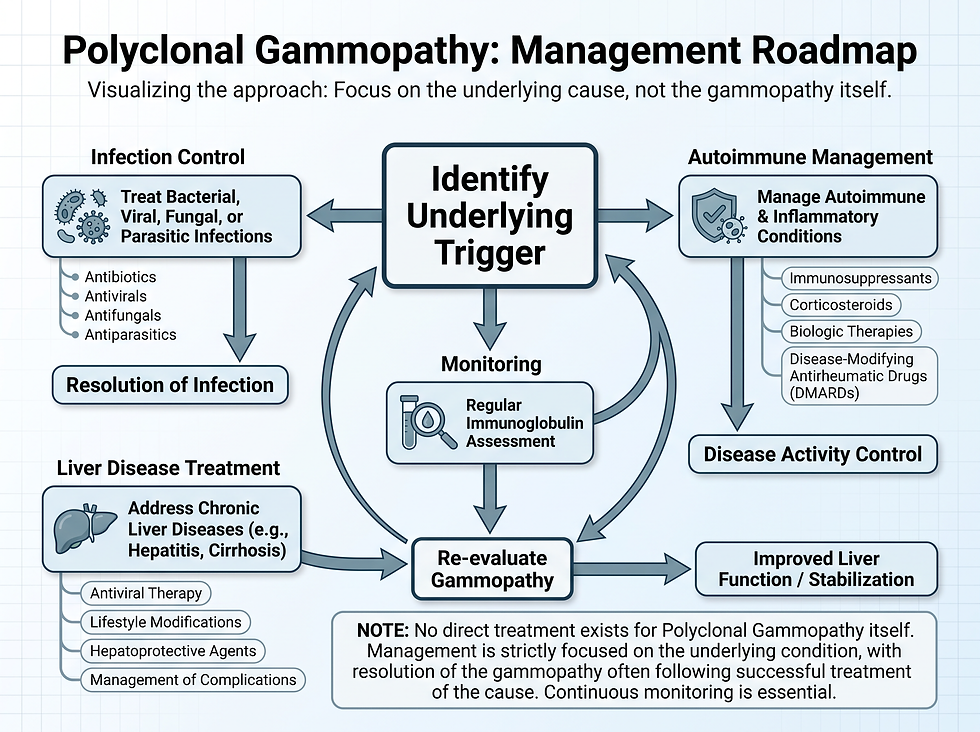
Because polyclonal gammopathy is an immune response rather than a standalone disease, there is no direct treatment for the condition itself. Instead, medical intervention is directed at the primary health issue that triggered the antibody production. As the underlying condition is successfully managed or resolved, immunoglobulin levels typically return to a normal range.
The long-term prognosis for an individual with polyclonal gammopathy depends entirely on the nature and severity of the underlying trigger. Some causes, such as a temporary infection, have an excellent outlook, while chronic autoimmune diseases or malignancies require long-term management. Regular monitoring of antibody levels is often used as a metric to track the effectiveness of the primary treatment plan.
Conclusion
Polyclonal gammopathy is a powerful example of the body's internal signaling system. While the elevated protein levels themselves are not a cause for alarm, they provide healthcare providers with a vital clue that the immune system is actively engaged. By focusing on the underlying cause, patients and their care teams can address the root of the problem, ensuring a more accurate diagnosis and a more effective path toward recovery and long-term health.
When to See a Doctor
If a routine blood test has shown high globulin levels or if you are experiencing persistent symptoms like fatigue and swollen lymph nodes, consult a healthcare provider. A thorough evaluation, including specialized protein testing, can help identify the underlying cause and ensure you receive the appropriate care for your specific health needs.
Frequently Asked Questions
Is polyclonal gammopathy a form of cancer?
No, it is not cancer. It is an immune response. However, it can sometimes be a sign of an underlying malignancy like lymphoma or leukemia.
What is the main difference between polyclonal and monoclonal gammopathy?
In polyclonal gammopathy, many different cell types make antibodies. In monoclonal gammopathy, a single type of cell produces an excess of one specific protein (M protein).
Can polyclonal gammopathy go away on its own?
If the underlying cause, such as a temporary infection, is resolved, the immunoglobulin levels will typically return to normal.
Does the condition require chemotherapy?
No, polyclonal gammopathy itself does not require chemotherapy. Treatment depends entirely on the underlying cause.
How is it usually discovered?
It is often found during routine blood tests that measure total protein or globulin levels.
Can stress cause polyclonal gammopathy?
While stress affects the immune system, the condition is typically triggered by specific medical issues like infections or inflammation.
What is hyperviscosity?
Hyperviscosity occurs when the blood becomes too thick due to high protein levels, which can interfere with circulation and cause vision issues or headaches.
Is polyclonal gammopathy hereditary?
The condition itself is not hereditary, though some of the underlying causes, like sickle cell anemia, are genetic.
What is an SPEP test?
Serum protein electrophoresis (SPEP) is a lab test that breaks down the proteins in your blood to help doctors identify specific immune patterns.
Are there any dietary changes that can help?
There are no specific dietary treatments for polyclonal gammopathy, as management focuses on the underlying medical trigger.
Can children have polyclonal gammopathy?
Yes, children can develop the condition, often in response to infections or autoimmune issues.
Does it affect life expectancy?
Polyclonal gammopathy does not directly affect life expectancy; the outlook depends on the seriousness of the underlying disease.
What kind of doctor treats this condition?
Hematologists (blood specialists) often oversee the diagnosis and management of gammopathies.
Are immunoglobulins the same as antibodies?
Yes, these terms are used interchangeably to describe the proteins the immune system uses to fight germs.
Should I be worried if I have this condition?
It is not a reason for immediate alarm, but it does require follow-up testing to ensure any underlying health issues are identified and treated.
Related Reading
American Society of Hematology: Gammopathy Resources. National Institutes of Health (NIH): Hypergammaglobulinemia Overview. Lupus Foundation of America: Understanding Autoimmune Responses.
Medically reviewed by Dr. Baraa Alnahhal, MD. This content is for informational purposes only and does not constitute medical advice. If you have concerns about your blood test results or immune health, seek evaluation from a qualified healthcare professional.
Comments