Understanding Pogonophobia: Causes, Symptoms, and Overcoming the Fear of Beards

Updated: 2 days ago
Medically reviewed by Dr. Baraa Alnahhal, MD · Last reviewed: September 2026
Pogonophobia is an extreme, persistent fear of beards and facial hair that can significantly disrupt daily life and social interactions. Often rooted in genetics, past trauma, or negative associations, it manifests through severe anxiety and physical symptoms like panic attacks. Fortunately, professional treatments such as Cognitive Behavioral Therapy (CBT) and exposure therapy are highly effective, with approximately 90% of individuals successfully managing their fear through gradual desensitization.
What Is Pogonophobia?
Pogonophobia is a severe and overwhelming fear of beards, a term derived from the Greek word “pogon” for beard. It's classified as a specific phobic disorder, a type of anxiety disorder where the focus of fear presents a very real and immediate threat to the individual. While it primarily targets beards, the fear can extend to all forms of facial hair, including mustaches, goatees, and even minor stubble or “five o'clock shadows.” The distress can be triggered by real beards, artificial beards in costumes, or even visual representations in photos and videos.
Pogonophobia is an extreme fear of beards… Someone with pogonophobia may feel severe anxiety or panic around people with beards.
Because it's impossible to predict when one might encounter a bearded person, this phobia can make it exceptionally difficult to function in workplace environments, public spaces, or social gatherings. While exact prevalence for pogonophobia specifically is unclear, specific phobic disorders affect approximately 12% of adults and 19% of teenagers in the United States, appearing about twice as frequently in women as in men.
Symptoms and Manifestations
The primary behavioral symptom of pogonophobia is actively avoiding situations where beards might be present — skipping barbershops, hair salons, or even shopping malls during the holiday season to avoid costume beards like those worn by Santa Claus. When avoidance isn't possible, the resulting anxiety can escalate into a full-blown panic attack.
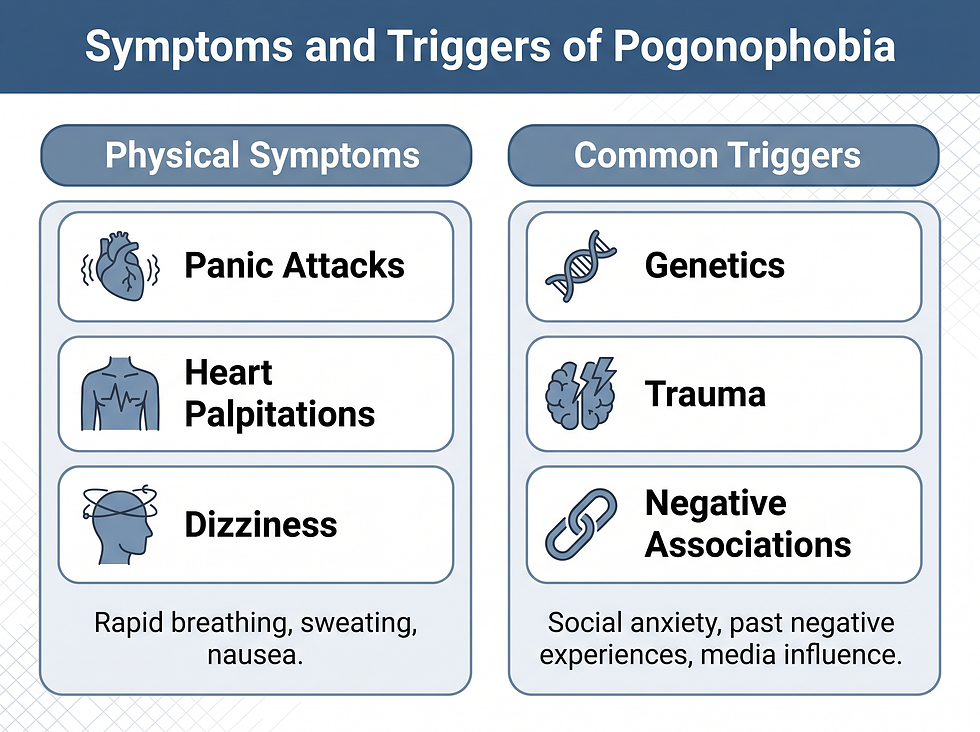
Autonomic response: Excessive sweating (hyperhidrosis), chills, and heart palpitations.
Respiratory and gastric: Shortness of breath (dyspnea), nausea, and indigestion (dyspepsia).
Neurological: Dizziness, lightheadedness, and trembling or shaking.
Potential Causes and Triggers
A fear of beards rarely develops in isolation and is often the result of complex interactions between genetics, environment, and personal history.
Associations and stereotypes: Many people subconsciously associate beards with negative stereotypes, such as poverty, illness, or criminal behavior. The belief that a beard is used to hide one's face can lead to feelings of mistrust or danger.
Genetic factors: Family history plays a significant role in the development of anxiety disorders. Research suggests that between 25% and 65% of specific phobias have a genetic component, meaning the risk can be inherited.
Traumatic experiences: Past trauma involving a bearded individual — such as abuse or a frightening encounter — can create a lasting mental connection between beards and danger. Scary media or movies featuring bearded villains can trigger this response too.
Overlapping phobias: Pogonophobia may be linked to other fears, such as mysophobia (fear of germs), where beards are perceived as unhygienic, or trichophobia (fear of hair in general).
How It's Diagnosed
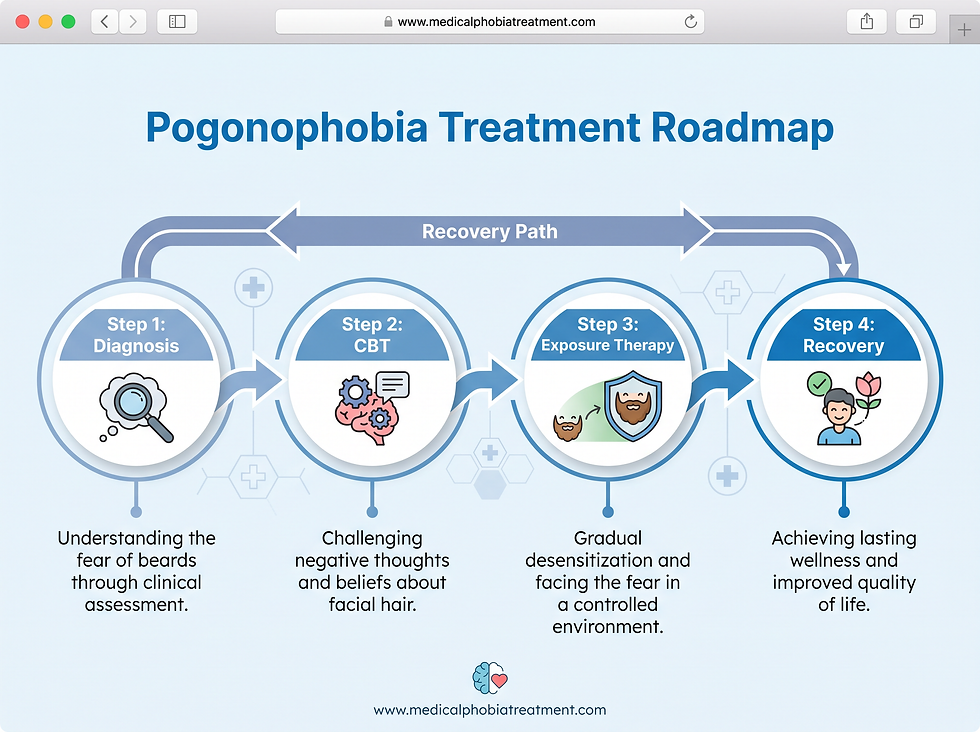
Healthcare providers diagnose pogonophobia by evaluating the frequency, severity, and duration of symptoms. A formal diagnosis is typically considered if the fear has persisted for six months or longer and significantly impairs the individual's ability to function at work, school, or in social settings. Providers also work to rule out or identify other co-occurring conditions, such as obsessive-compulsive disorder (OCD) or panic disorder, to ensure a comprehensive treatment plan.
Treatment and Recovery Roadmap
Fortunately, pogonophobia is highly treatable through professional psychotherapy. The goal of treatment is to change the individual's relationship with the object of their fear and reduce the intensity of their physical response.
Cognitive Behavioral Therapy (CBT): Focuses on identifying and changing negative or false thought patterns regarding beards while teaching coping techniques like deep breathing.
Exposure therapy: A gradual process of desensitization, starting with looking at pictures of beards and eventually progressing to real-world encounters.
Short-term medication: Anti-anxiety medications may help manage symptoms in specific high-stress situations, though they don't treat the underlying phobia.
The prognosis for those who seek help is excellent. Approximately 9 out of 10 people with specific phobic disorders can overcome their fear through exposure therapy. While phobias can occasionally recur after years of remission, additional treatment can effectively manage these instances.
Frequently Asked Questions
What is the literal meaning of pogonophobia? It's derived from the Greek word “pogon,” meaning beard, and refers to the extreme fear of facial hair.
Can pogonophobia include mustaches? Yes, the fear often extends to mustaches, goatees, and even short stubble.
Is this fear considered a mental health disorder? Yes, it's classified as a specific phobic disorder, a type of anxiety disorder.
How common are specific phobias like this? About 12% of U.S. adults experience a specific phobic disorder at some point in their lives.
Why are beards sometimes associated with danger? Some people associate beards with negative stereotypes or the idea that someone is hiding their face or intentions.
Can genetics cause a fear of beards? Studies suggest 25% to 65% of phobias have a genetic component, meaning it can run in families.
What is Santaphobia? It's the fear of Santa Claus, which often overlaps with pogonophobia due to his iconic long beard.
What are the physical symptoms of a panic attack triggered by beards? Heart palpitations, sweating, dizziness, and shortness of breath.
How long must symptoms last for a diagnosis? A diagnosis typically requires the fear to be present and disruptive for at least six months.
What is exposure therapy for beards? It involves gradually facing the fear, starting with pictures and moving toward real-life encounters in a controlled way.
Does medication cure pogonophobia? No, medication only helps manage anxiety symptoms and doesn't treat the root cause of the phobia.
What is the success rate of treatment? About 90% of people can overcome specific phobias with proper exposure therapy.
Can a fear of germs cause a fear of beards? Yes, people with mysophobia may fear beards because they perceive them as unhygienic.
When should I see a doctor about this fear? Seek help if the fear makes it difficult to function at work or in social situations.
Can pogonophobia return after treatment? It's possible for phobias to recur, but they can be managed again with additional therapy.
Related Reading
If you or someone you know is struggling with an overwhelming fear of beards that interferes with daily life, reaching out to a mental health professional is the first step toward recovery.
This content is for informational purposes only and does not constitute medical advice. Always seek the advice of your physician or other qualified health provider with any questions you may have regarding a medical condition or treatment.
Comments