Understanding Montgomery Glands: Function, Anatomy, and Health

Updated: 2 days ago
Medically reviewed by Dr. Baraa Alnahhal, MD · Last reviewed: September 2026
Editorial note: This article is provided for educational purposes only. It is not medical advice. Always consult a qualified healthcare professional for diagnosis and treatment of any condition.
TL;DR
Montgomery glands are specialized sebaceous glands located in the areola that produce protective oils to lubricate the nipple and areola. They play a crucial role during breastfeeding by preventing infection, maintaining skin pH, and releasing a scent that guides infants during latching. While they grow larger during pregnancy, they are a normal anatomical feature present in both male and female breasts.
Quick Answer
Montgomery glands are small, specialized oil-producing glands found within the areola, the dark skin surrounding the nipple. Their primary purpose is to secrete a lubricating fluid that protects the delicate skin from chafing, maintains a healthy acidic pH to deter bacterial growth, and emits a natural scent to aid infant feeding. These glands often appear as tiny bumps, known as Montgomery tubercles, and typically become more prominent during pregnancy and lactation due to hormonal shifts.
Overview of Montgomery Glands
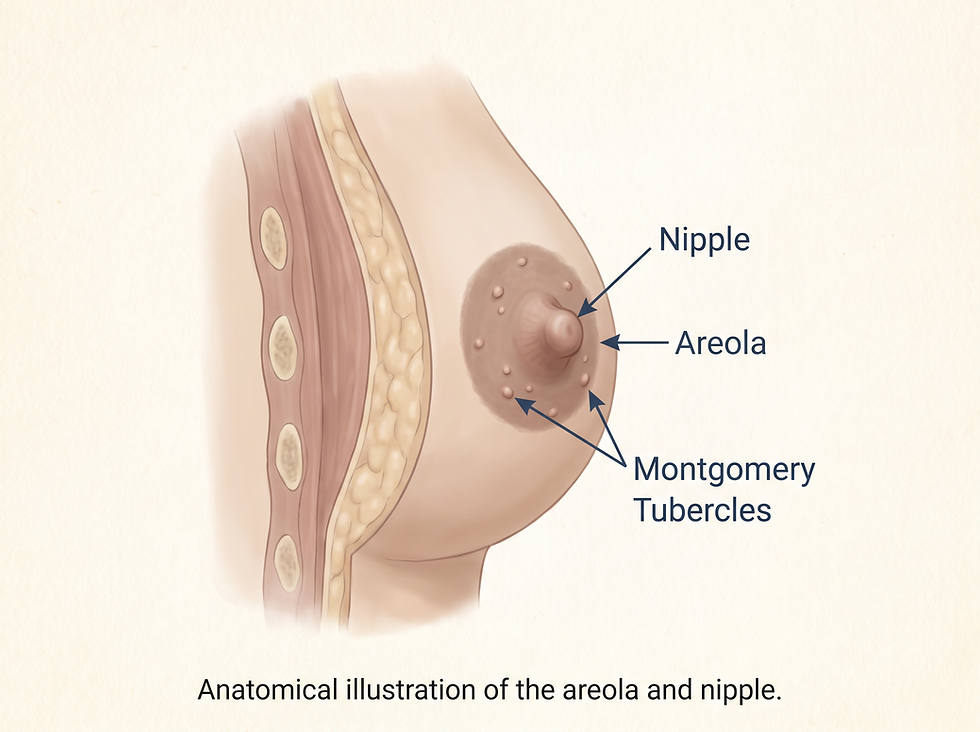
Montgomery glands, also referred to as areolar glands, are a fundamental yet often misunderstood component of human breast anatomy. These specialized sebaceous glands are situated within the areola, the pigmented circular area surrounding the nipple. Unlike standard oil glands found elsewhere on the body, Montgomery glands produce a unique substance designed specifically for the high-sensitivity environment of the breast. While they are present in individuals of all genders, they undergo significant physiological changes during the reproductive cycle, particularly during pregnancy and the postpartum period.
The visibility of these glands varies significantly among individuals. In many cases, they appear as small, skin-colored bumps on the surface of the areola, often resembling goosebumps. These protrusions are technically known as Montgomery tubercles or tubercles of Morgagni. Their primary function is to serve as a biological defense and support system for the nipple-areolar complex, ensuring the skin remains resilient against environmental stressors and the mechanical demands of breastfeeding.
Anatomical Structure and Location
Anatomically, Montgomery glands are located just beneath the surface of the areolar skin. They are frequently found at the base of hair follicles and are distributed in a circular pattern around the nipple. The oil they produce is released through tiny skin openings called tubercles. The number and size of these glands are highly individualized; some people may have only a few barely visible bumps, while others possess numerous prominent tubercles.
Anatomical Feature | Description |
Location | Distributed within the areola, just beneath the skin surface. |
Openings | Known as Montgomery tubercles or tubercles of Morgagni. |
Secretory Type | Specialized sebaceous (oil-producing) glands. |
Connectivity | Often linked to mammary glands and hair follicles. |
Physiological Functions
The primary role of the Montgomery glands is the production of a clear, lubricating oil that differs chemically from standard sebum. This fluid provides a protective barrier for the delicate skin of the areola and nipple, which is especially susceptible to dryness and chafing. By maintaining an acidic pH balance on the skin's surface, these secretions actively discourage the overgrowth of harmful bacteria and yeast, thereby reducing the risk of localized infections.
During lactation, these glands take on an additional, highly specialized role. Research indicates that the fluid secreted by Montgomery glands contains volatile compounds that act as a natural olfactory signal for newborns. This scent helps the infant locate the nipple and stimulates their innate feeding instincts, facilitating a successful latch. Furthermore, these glands are occasionally capable of secreting small amounts of milk, acting as a supplemental resource for the mammary system.
Primary Function | Biological Benefit |
Lubrication | Prevents chafing and skin cracking during nursing. |
pH Regulation | Discourages bacterial and fungal infections. |
Olfactory Signaling | Helps infants identify and latch onto the breast. |
Milk Secretion | Provides supplemental nourishment during lactation. |
Changes During Pregnancy and Lactation
One of the most notable characteristics of Montgomery glands is their responsiveness to hormonal fluctuations. For many individuals, an increase in the size and visibility of these glands is one of the earliest signs of pregnancy, often occurring within the first trimester. As the body prepares for breastfeeding, the glands enlarge to maximize their protective and signaling capabilities. This enlargement typically persists throughout the duration of breastfeeding and may remain visible for some time afterward.
Other factors can also trigger the prominence of these tubercles. Elevated estrogen levels during the menstrual cycle or the use of estrogen supplements for menopause management can cause the glands to appear more distinct. Additionally, physical stimuli, such as cold temperatures that cause nipple erection, can make the tubercles more apparent on the skin's surface.
Common Conditions and Management
While Montgomery glands are a normal part of anatomy, they can occasionally be affected by localized issues similar to other skin glands. The most common complication is a clogged tubercle, which occurs when oil and skin cells become trapped in the opening. This can result in a firm, swollen bump that resembles a pimple. It is critical to avoid squeezing or picking at these bumps, as doing so can introduce bacteria and lead to an infection.
In rare instances, a blockage deeper within the duct can lead to the formation of a retroareolar cyst, also known as a cyst of Montgomery. These are generally benign (noncancerous) growths that appear as a mass behind the areola. While they may resolve on their own, they can become painful if they grow large or become infected. Professional clinical evaluation is recommended if a bump becomes excessively sore, inflamed, or persists for an extended period.

Proactive Care and Prevention
Maintaining the health of the Montgomery glands involves allowing the skin to breathe and avoiding irritants. The use of heavy nipple balms or thick creams can inadvertently clog the glandular openings, increasing the risk of inflammation. If topical treatments are necessary for sore nipples, it is advisable to ensure the skin is cleaned periodically to prevent buildup. For those using breast pads, frequent changes are essential to maintain a dry environment and prevent the growth of bacteria or yeast.

Conclusion
Montgomery glands are a sophisticated anatomical feature that provides essential protection and support for the breast. By producing specialized lubricants and chemical signals, they ensure skin integrity and facilitate the complex process of infant feeding. Recognizing that variations in their size and appearance are normal can help individuals better understand their bodies and identify when professional care might be necessary.
Take action today:
Monitor for Changes: Regularly observe the areolar area for any signs of unusual inflammation or persistent pain.
Practice Gentle Hygiene: Clean the breast area with mild soap and water, avoiding harsh chemicals that may strip away natural oils.
Support Breathability: Choose breathable fabrics and change breast pads regularly to prevent moisture buildup.
Related reading: Cracked Nipples (Nipple Fissures): Symptoms, Causes, Treatment and Healing | Paget's Disease of the Breast: Symptoms, Causes, and Treatment
Frequently Asked Questions
1. What are Montgomery glands?
They are specialized oil-producing glands located in the areola that protect and lubricate the nipple skin.
2. Are Montgomery glands normal?
Yes, they are a standard anatomical feature found in both male and female breasts.
3. What do Montgomery tubercles look like?
They appear as small, skin-colored bumps on the areola, often resembling tiny pimples or goosebumps.
4. Why do they get bigger during pregnancy?
Hormonal changes stimulate the glands to grow in preparation for the protective needs of breastfeeding.
5. Can men have Montgomery glands?
Yes, these glands are present in the areolas of individuals of all genders.
6. Do they produce milk?
While their primary product is oil, they are connected to mammary glands and can release small amounts of milk.
7. What is the "scent" they produce?
The fluid contains a natural scent that guides newborns to the nipple for feeding.
8. Should I squeeze a Montgomery tubercle?
No, squeezing can lead to infection and inflammation; most clogged glands clear up on their own.
9. How do I treat a clogged gland?
Applying a warm, clean cloth to the area can help the blockage clear naturally.
10. Are they a sign of pregnancy?
Enlargement of these glands can be one of the earliest physical indicators of pregnancy.
11. What is a Montgomery cyst?
It is a benign growth that occurs when the duct of a Montgomery gland becomes blocked.
12. Can they be painful?
They are usually painless, but they can become sore if they become infected or severely clogged.
13. Do they go away after breastfeeding?
They typically shrink after weaning, though they may remain slightly more visible than before pregnancy.
14. How many glands are normal?
The number varies widely; some people have very few, while others have many.
15. When should I see a doctor?
Consult a professional if a gland becomes red, severely swollen, extremely painful, or leaks pus.
Medical Disclaimer: The information provided in this article is for educational purposes only and should not be used as a substitute for professional medical advice, diagnosis, or treatment. Always seek the advice of a qualified healthcare provider with any questions you may have regarding a medical condition.
Comments