Cracked Nipples (Nipple Fissures): Symptoms, Causes, Treatment and Healing — What You Need to Know

Updated: 2 days ago
Medically reviewed by Dr. Baraa Alnahhal, MD · Last reviewed: September 2026
Quick Answer
Cracked nipples are painful splits in the nipple's surface that most often happen during breastfeeding, especially for first-time nursing parents. Symptoms usually appear in the second or third week after birth and include soreness, rawness, and a crusty, flaky or scabbed appearance. Home care — lanolin-free nipple balm, a medical honey gel, warm compresses and hydrogel pads — plus fixes to positioning, latching and pump settings typically heal cracks in a few days to a few weeks. If cracks won't heal, your nipple is swollen or warm, or you develop flu-like symptoms, contact your healthcare provider.
TL;DR
Nipple fissures are painful cracks that can appear in one or both breasts, most commonly from strain during breastfeeding — engorged breasts, an improper latch, tongue-tie, breast pump suction that is too high, or frequent comfort-suckling. Left untreated, cracks can open and bleed, and germs can enter the skin, causing bacterial mastitis or an abscess. Treatment combines skin care (lanolin-free balm, medical honey gel, warm compresses, fragrance-free products) with technique changes taught by a lactation expert. Healing takes a few days to a few weeks, and soreness often improves sooner. Finding and fixing the cause is the only way to keep the cracks from returning.
Important limitation: the source material does not provide statistics on how common cracked nipples are, so no prevalence figures are quoted here. Everything in this article is drawn from a single medically reviewed reference page.
When to see your healthcare provider: Contact your provider if the cracks in your nipple aren't healing, your nipple feels swollen or warm to the touch, you have flu-like symptoms, or your symptoms are making it hard to nurse or pump.

What Are Nipple Fissures?
Nipple fissures are painful cracks in your nipple that can appear in one or both breasts. Most people with this issue say they have "cracked nipples." You're most likely to have cracked nipples if you're breastfeeding, especially if this is your first time.
Cracked nipples can become so painful that they may keep you from nursing even if you'd prefer to continue. You might feel worried, frustrated or ready to give up. But cracked nipples are common and treatable with home remedies — and they don't have to stop you from breastfeeding. Lactation consultants can teach you ways to adjust your nursing technique to protect your nipples.
This article focuses on cracked nipples related to breastfeeding. But it's important to know there are other causes, too. For example, friction from clothes can irritate and crack your nipples — this happens to runners and cyclists, and it's known as jogger's nipple. Cracked nipples can also occur from skin conditions like eczema.
What Are the Symptoms of Cracked Nipples?
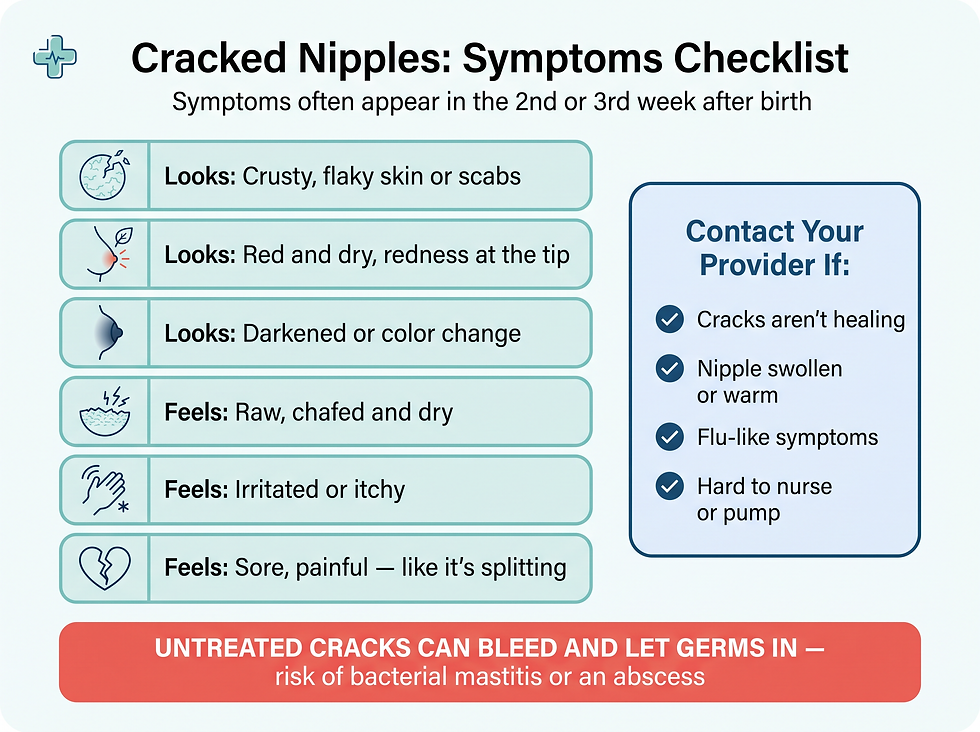
The main symptoms of cracked nipples are pain or soreness along with a split in your nipple's surface. Symptoms often appear during the second or third week after your baby is born.
What a cracked nipple looks like | What a cracked nipple feels like |
Crusty, with flaky skin or scabs on or around your nipple | Raw, chafed and dry |
Red and dry, sometimes with more pronounced redness at the tip | Irritated or itchy |
Darkened or changed in color | Sore or painful — like it's splitting |
What Causes Cracked Nipples?
Too much strain on your nipple tissue can cause cracks to develop. Common causes of such strain include:
Cause | How it creates strain |
Engorged breasts | Your breasts swell up from extra fluid volume — common in the first week after giving birth. The swelling stretches your nipple tissue until it cracks |
Improper latch | If your baby isn't latching on well, they may struggle to get more milk, putting extra strain on sensitive nipple tissue. Position at the breast and medical conditions like tongue-tie affect the latch |
Breast pump issues | Suction set too high, or the wrong size flanges, can cause nipple pain and fissures |
Frequent non-nutritive suckling | When your infant latches on and suckles for comfort rather than for milk |
What Complications Can Develop Without Treatment?
Without treatment, cracked nipples can open up and bleed. It's also possible for germs to enter the cracks in your skin, causing bacterial mastitis or an abscess.
How Do Doctors Diagnose Cracked Nipples?
Your healthcare provider can diagnose cracked nipples during a physical exam. They may suggest you see a lactation consultant or breastfeeding medicine specialist.
It's not too difficult for your provider to identify nipple fissures. But the cause isn't always so obvious. Providers will talk with you and may observe a breastfeeding session. They may also examine your baby's mouth to check for issues like tongue-tie.
Knowing what's causing your cracked nipples can help you and your provider treat them. Soothing the damaged skin will only help temporarily — you may need to make some changes to your breastfeeding technique to keep the fissures from coming back.
How Are Cracked Nipples Treated?
You can treat cracked nipples at home by:
Home treatment | How it helps |
Nipple balm without lanolin | Apply liberally; look for lanolin-free formulas. Lanolin is derived from sheep's wool and may cause an allergic reaction, further irritating your nipples |
Medical honey gel (MediHoney®) | A gel that can help heal your nipples — a special medical formula with sterilized honey. Never apply honey from a jar to your nipples while breastfeeding, as it can cause botulism in infants |
Warm compresses and/or hydrogel nipple pads | Soothe nipple pain and promote healing |
Unscented soaps, shampoos and conditioners | Doesn't directly treat cracks, but scented products could cause contact dermatitis on already irritated nipples — opt for fragrance-free whenever possible |
How to Keep Nursing While You Heal
While your nipples heal, nursing might be painful. It may help to alternate breasts so you're not putting too much strain on either nipple. You may also choose to pump and bottle feed as your skin heals. A lactation expert can advise you on how long to pump and how to use the pump correctly to prevent nipple soreness.
Your lactation expert may also suggest changes to your breastfeeding technique:
Technique area | What to aim for |
Position | You shouldn't have to reposition yourself or shift your body while your baby is nursing, and your baby shouldn't have to turn their head to find your nipple. Small position changes reduce strain |
Latch | Your baby shouldn't just suckle on your nipple — their mouth should cover your entire nipple and most of your areola, so suckling doesn't place too much pressure on your nipple |
Pumping | Suction set too high hurts your nipples. Find a comfortable yet effective suction level, and use the correct flange size |
A proper position and latch can help your nipples heal and protect them from future damage.
How Long Do Cracked Nipples Last?
It can take anywhere from a few days to a few weeks for cracked nipples to heal. But the soreness may improve much sooner.

When Should You See Your Healthcare Provider?
Contact your healthcare provider if:
The cracks in your nipple aren't healing
Your nipple feels swollen or warm to the touch
You have flu-like symptoms
Your symptoms are making it hard to nurse or pump
"Cracked nipples can make the early bonding moments with your baby difficult to enjoy. When your nipples are raw and hurting, you may also wonder how long you'll be able to continue breastfeeding. That's why it's so important to reach out to a healthcare provider. Even if home remedies heal your nipples, your provider will still want to find the cause. Addressing the cause of cracked nipples is the only way to keep the issue from coming back or getting worse."
Questions to Ask Your Doctor
Your question | What the answer helps you understand |
What is causing my cracked nipples? | Whether latch, pump settings or another issue is behind the cracks |
What home treatments are safe while nursing? | Which balms, pads and gels you can use without harming your baby |
Should my baby be evaluated? | Whether conditions like tongue-tie need attention |
Conclusion
Cracked nipples are a common and painful — but highly treatable — part of early breastfeeding. They come from strain on sensitive nipple tissue: engorgement, an improper latch, tongue-tie, pump settings that are too aggressive, or frequent comfort-suckling. Left alone, the cracks can bleed and invite infection, including mastitis or an abscess.
The good news is that most people heal fully within days to weeks using lanolin-free balm, medical honey gel, warm compresses and fragrance-free skin care — combined with the technique fixes a lactation expert provides for position, latch and pumping. Healing the skin alone isn't enough: fixing the underlying cause is the only way to keep the cracks from coming back.
Next step: start the home-care routine today, and reach out to a lactation consultant or your provider if the cracks aren't healing, your nipple is swollen or warm, flu-like symptoms appear, or nursing becomes too difficult. Early help protects both your comfort and your breastfeeding journey.
References
This article is based solely on the referenced source. It is for informational purposes only and is not medical advice.
FAQ
What is a nipple fissure?
A nipple fissure is a painful crack in your nipple that can appear in one or both breasts. Most people with this issue call them "cracked nipples."
How common are cracked nipples?
The referenced source describes cracked nipples as common when breastfeeding but does not provide specific statistics, so no prevalence numbers are quoted here.
Who is most likely to get cracked nipples?
You're most likely to have cracked nipples if you're breastfeeding, especially if this is your first time.
When do cracked nipple symptoms usually appear?
Symptoms often appear during the second or third week after your baby is born.
What do cracked nipples look like?
A cracked nipple can look crusty, with flaky skin or scabs on or around the nipple; red and dry, sometimes with more pronounced redness at the tip; or darkened or changed in color.
What do cracked nipples feel like?
Raw, chafed and dry; irritated or itchy; sore or painful; or like they're splitting. The main symptoms are pain or soreness along with a split in the nipple's surface.
What causes cracked nipples while breastfeeding?
Too much strain on nipple tissue, most commonly from engorged breasts, an improper latch, breast pump issues, or frequent non-nutritive suckling.
How do engorged breasts cause cracks?
Engorgement is when your breasts swell up from extra fluid volume — common in the first week after giving birth. The swelling stretches your nipple tissue until it cracks.
How does an improper latch cause cracks?
If your baby isn't latching on well, they may struggle to get more milk, which puts extra strain on sensitive nipple tissue. Position at the breast and conditions like tongue-tie affect the latch.
Can a breast pump cause cracked nipples?
Yes. You can develop nipple pain and fissures if the suction setting on your breast pump is too high, or if you use the wrong size flanges.
What is non-nutritive suckling?
When your infant latches on and suckles for comfort, rather than for milk — frequent non-nutritive suckling strains the nipple.
Can cracked nipples have causes other than breastfeeding?
Yes. Friction from clothes can irritate and crack nipples in runners and cyclists (jogger's nipple), and skin conditions like eczema can also cause cracked nipples.
What complications can cracked nipples cause?
Without treatment, cracks can open up and bleed, and germs can enter the skin, causing bacterial mastitis or an abscess.
How are cracked nipples diagnosed?
During a physical exam. Your provider may suggest seeing a lactation consultant or breastfeeding medicine specialist, observe a breastfeeding session, and examine your baby's mouth for issues like tongue-tie.
Why does the cause matter if the skin heals?
Soothing the damaged skin only helps temporarily. Knowing and addressing the cause is the only way to keep the fissures from coming back or getting worse.
What home treatments help cracked nipples heal?
Lanolin-free nipple balm, medical honey gel (MediHoney), warm compresses and/or hydrogel nipple pads, and unscented soaps, shampoos and conditioners.
Is lanolin safe for cracked nipples?
The source recommends lanolin-free formulas — lanolin is derived from sheep's wool and may cause an allergic reaction that further irritates your nipples.
Is MediHoney safe while breastfeeding?
MediHoney is a special medical formula with sterilized honey made to help nipples heal. But never apply honey from a jar to your nipples while breastfeeding — it can cause botulism in infants.
Can I keep breastfeeding with cracked nipples?
Yes. Cracked nipples are common and treatable, and they don't have to stop you from breastfeeding. You can alternate breasts, pump and bottle feed while the skin heals, and adjust your technique with a lactation expert's help.
What breastfeeding technique changes help?
Positioning so you don't have to shift or your baby turn their head; a latch where your baby's mouth covers your entire nipple and most of your areola; and comfortable, effective pump suction with the correct flange size.
How long do cracked nipples take to heal?
Anywhere from a few days to a few weeks — but the soreness may improve much sooner.
How can I tell if my cracked nipples are infected?
Contact your provider if your nipple feels swollen or warm to the touch, or if you develop flu-like symptoms — these can signal mastitis or an abscess.
When should I contact my healthcare provider?
If the cracks aren't healing, your nipple is swollen or warm, you have flu-like symptoms, or your symptoms make it hard to nurse or pump.
Can tongue-tie cause my baby's poor latch?
Yes — tongue-tie is one of the medical conditions that affects your baby's latch. A provider may examine your baby's mouth to check for it.
Will a lactation consultant help prevent future cracks?
Yes. Lactation consultants teach positioning and latching techniques that reduce pressure on your nipples, prevent cracks, and protect against future damage.
Medical disclaimer: This content is for informational purposes only and is not a substitute for professional medical advice, diagnosis, or treatment. Always seek the advice of your physician or other qualified health provider with any questions you may have regarding a medical condition. Never disregard professional medical advice or delay in seeking it because of something you have read here. In a medical emergency, call 911 or your local emergency number immediately.
Comments