Understanding Mirizzi Syndrome: Symptoms, Causes, and Care

Updated: 2 days ago
Medically reviewed by Dr. Baraa Alnahhal, MD · Last reviewed: September 2026
TL;DR: Mirizzi syndrome is a rare but serious complication of chronic gallstone disease where a stuck gallstone blocks the flow of bile by pressing on a nearby duct from the outside. While it is often difficult to diagnose before surgery, early intervention through surgical repair and gallbladder removal is essential for a good prognosis and to avoid complications like infection or liver damage.
Quick Answer: Mirizzi syndrome occurs when a large gallstone or cluster of stones becomes stuck in the gallbladder's neck or the cystic duct, causing enough swelling to compress the adjacent common bile duct or hepatic duct. This external pressure blocks the flow of bile, potentially leading to jaundice, inflammation, and serious infections. Treatment typically involves surgical gallbladder removal and duct repair, with most patients experiencing a full recovery when the condition is addressed early.
Mirizzi syndrome is an unusual manifestation of gallstone disease, characterized by the external compression of the biliary tract. Unlike typical blockages where a stone sits directly inside the bile duct, Mirizzi syndrome involves a stone located in the gallbladder or cystic duct that is so large it exerts pressure on the neighboring passageway. This rare phenomenon is identified in approximately 2.5% of individuals undergoing gallbladder removal surgery, often remaining undetected until the procedure is underway due to its shared symptoms with more common biliary conditions.
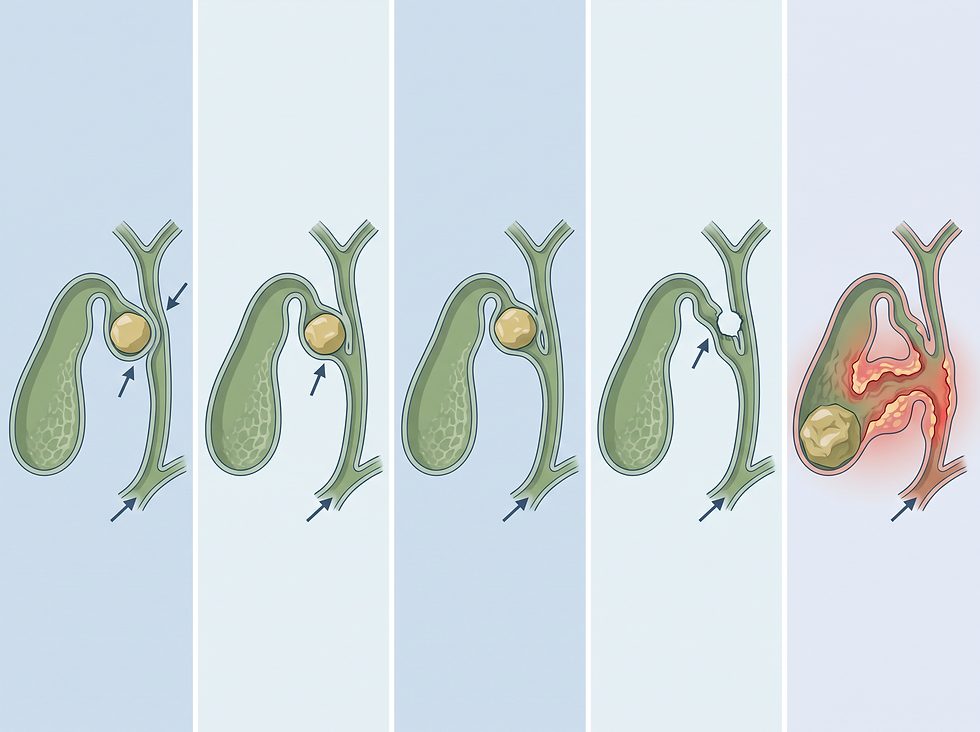
The condition is categorized into five distinct types based on the presence and severity of a fistula, which is an abnormal opening between the gallbladder and the bile duct. Type I involves simple compression without a hole, while Types II through IV describe increasing degrees of duct wall destruction. Type V is a complex classification where a fistula is present alongside any other Mirizzi type. Understanding these classifications is critical for surgeons, as the complexity of the repair depends heavily on the extent of the damage to the biliary architecture.
Mirizzi Type | Description of Condition | Extent of Duct Involvement |
Type I | External compression only. | No fistula present. |
Type II | Fistula (hole) formation. | Less than one-third of the duct circumference. |
Type III | Significant fistula formation. | Between one-third and two-thirds of the duct. |
Type IV | Complete duct wall destruction. | Gallbladder is fused to the bile duct. |
Type V | Complex fistula involvement. | Fistula present in addition to Types I-IV. |
Recognizing the Symptoms
The symptoms of Mirizzi syndrome are generally categorized into three primary areas: inflammation, infection, and jaundice. Patients frequently experience sharp pain and swelling in the upper right quadrant of the abdomen, which is a hallmark of biliary inflammation. If an infection develops, it may be accompanied by fever, nausea, vomiting, or diarrhea. Jaundice, characterized by the yellowing of the skin and eyes, occurs when bile backs up into the bloodstream, often accompanied by dark-colored urine and light-colored stools.
It is important to note that these symptoms are not unique to Mirizzi syndrome and can mirror those of standard gallstone disease or other liver-related issues. Because the condition is so rare, healthcare providers primarily look for these signs as indicators of a complicated biliary problem rather than Mirizzi syndrome specifically. Early recognition of these symptoms is vital, as delaying treatment increases the risk of systemic infection and long-term organ damage.
Causes and Complications
The primary cause of Mirizzi syndrome is the long-term presence of gallstones, which are crystals formed from concentrated bile. When a stone becomes lodged in the narrow neck of the gallbladder (the infundibulum) or the cystic duct, the resulting swelling and inflammation create a physical barrier for bile traveling through the adjacent common bile duct. This "pear-shaped" anatomy of the gallbladder makes certain individuals more susceptible to this type of compression if their ducts are positioned closer together.
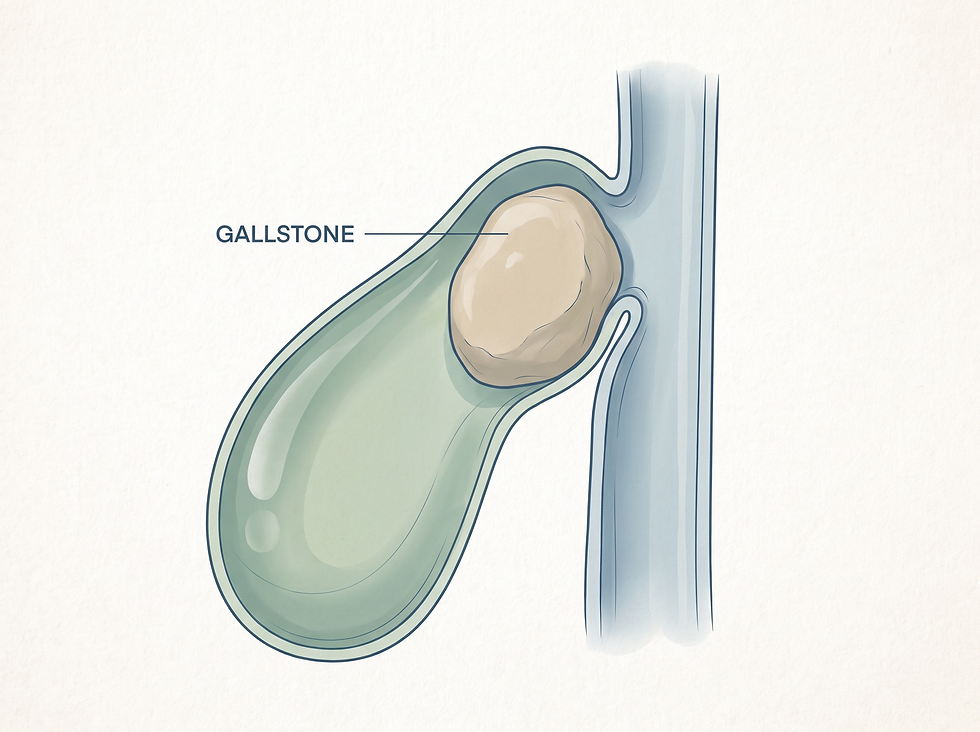
If left untreated, Mirizzi syndrome can lead to several severe complications. Cholestasis occurs when bile backs up into the liver, causing inflammation and potential tissue damage. Bacteria can also accumulate, leading to cholangitis, a serious liver infection. Over time, the constant pressure and inflammation can wear down the walls of the bile duct, creating a fistula. Additionally, the lack of bile flow into the small intestine can cause malabsorption, hindering the body's ability to process proteins and essential nutrients.
Complication | Impact on Health | Potential Severity |
Cholestasis | Bile backup into the liver. | High (Liver inflammation). |
Cholangitis | Bacterial infection of the liver. | Critical (Life-threatening). |
Fistula | Abnormal hole in the bile duct. | High (Requires complex repair). |
Malabsorption | Inability to digest nutrients. | Moderate (Long-term deficiency). |
The Diagnostic Pathway
Diagnosing Mirizzi syndrome typically begins with a physical examination where a provider feels for abdominal swelling and reviews the patient's medical history. Blood tests, including a complete blood count (CBC) and liver function tests, are often used to check for signs of infection or biliary obstruction. However, because the condition is rare and symptoms are non-specific, definitive diagnosis usually requires advanced imaging.
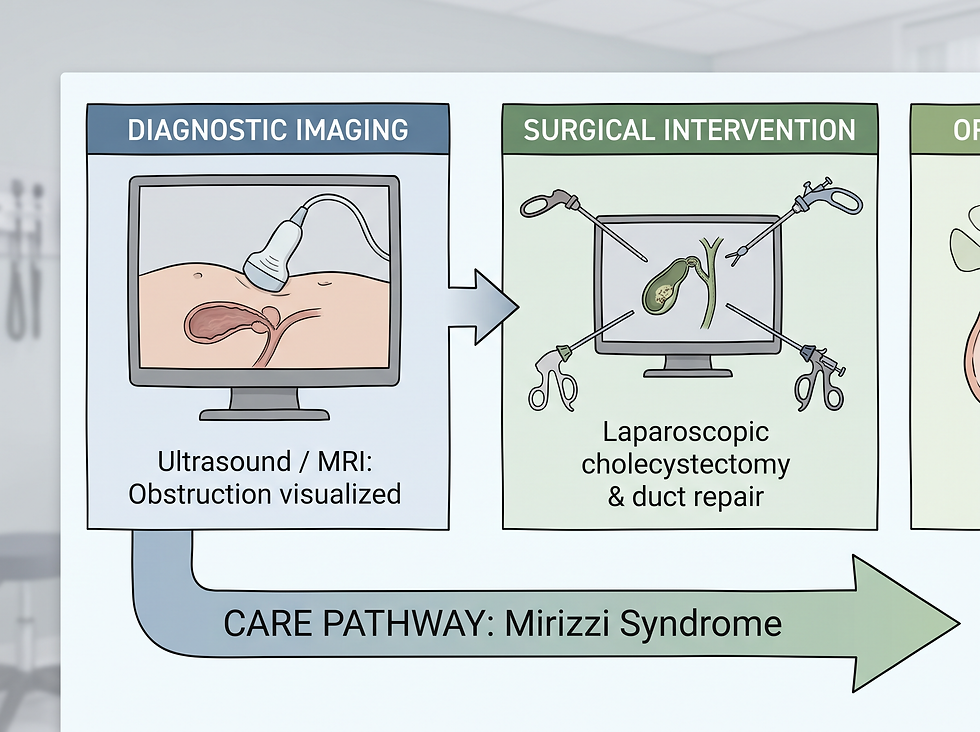
Common imaging tools include abdominal ultrasounds and CT scans to visualize the gallbladder and surrounding ducts. More specialized tests, such as an ERCP (endoscopic retrograde cholangiopancreatography) or an MRI, may be necessary to map the biliary tree and identify the exact location of the blockage. Despite these tools, many cases are only confirmed during surgery when the surgeon can directly observe the compression or the presence of a fistula.
Management and Recovery
Surgery is the standard treatment for Mirizzi syndrome, though the specific procedure is tailored to the individual's anatomy and the type of syndrome present. The primary goal is the removal of the gallbladder (cholecystectomy) and the careful repair of the affected bile duct. In some instances, surgeons may place stents to keep the ducts open or perform more complex reconstructions if a fistula has caused significant damage.
The surgical approach may be minimally invasive (laparoscopic) or open (laparotomy), depending on the severity of the inflammation. While the outlook is generally good with early treatment, the surgery can be challenging due to the intense inflammation that often obscures the surgical field. Potential risks include bile leakage, bleeding, or scarring of the ducts. Most patients recover well and are able to live a normal, healthy life without their gallbladder.
Conclusion
Mirizzi syndrome is a rare but significant complication of gallstone disease that requires specialized surgical care. While its symptoms can be deceptive, early diagnosis and intervention are the keys to a successful recovery. By understanding the risks associated with chronic gallstones and seeking prompt medical attention for abdominal pain or jaundice, patients can avoid the more severe complications associated with this condition.
Call to Action
If you are experiencing persistent abdominal pain, fever, or signs of jaundice, consult a healthcare provider immediately. Early evaluation is essential for identifying gallstone complications and establishing an effective treatment plan to protect your long-term liver and biliary health.
Frequently Asked Questions
Is Mirizzi syndrome a form of cancer?
No, it is a benign complication of gallstone disease, although it is associated with an increased risk of gallbladder cancer due to chronic inflammation.
Can Mirizzi syndrome be treated without surgery?
No, surgery is the only effective way to remove the blockage and repair the damaged ducts.
How rare is Mirizzi syndrome?
It is found in about 2.5% of people undergoing gallbladder removal surgery.
Why is it hard to diagnose before surgery?
Its symptoms are identical to other, more common gallstone problems, and the blockage occurs from the outside of the duct.
What is a fistula in Mirizzi syndrome?
A fistula is an abnormal hole or opening that forms between the gallbladder and the bile duct due to chronic inflammation.
Can I live a normal life after gallbladder removal?
Yes, most people live perfectly well without a gallbladder, as the liver continues to produce bile for digestion.
What are the main symptoms of jaundice?
Yellowing of the skin and eyes, dark urine, and pale or light-colored stools.
What causes gallstones?
They are formed from concentrated bile crystals, often linked to high-cholesterol diets.
Is Mirizzi syndrome fatal?
It can be fatal if left untreated due to sepsis or liver failure, with mortality rates ranging from 5% to 30%.
What is the difference between Type I and Type II?
Type I involves only compression, while Type II includes a small hole (fistula) in the bile duct.
Can children get Mirizzi syndrome?
While rare, it can occur in children, particularly those with underlying biliary issues.
What is an ERCP?
It is a specialized procedure that uses an endoscope and X-rays to look at the bile ducts and treat blockages.
What is sepsis?
A life-threatening emergency where the body has an extreme response to an infection, sometimes occurring after surgery.
How can I prevent gallstones?
Maintaining a healthy diet low in cholesterol and saturated fats may help reduce the risk.
What should I do if I have a fever after surgery?
Seek medical attention immediately, as it could be a sign of infection or sepsis.
Medical Disclaimer
The information provided in this article is for educational purposes only and is not intended as a substitute for professional medical advice, diagnosis, or treatment. Always seek the advice of your physician or other qualified health provider with any questions you may have regarding a medical condition.
Comments