Understanding Membranous Nephropathy: Symptoms, Causes, and Management

Updated: 2 days ago
Medically reviewed by Dr. Baraa Alnahhal, MD · Last reviewed: September 2026
In short: Membranous nephropathy (MN) is a rare kidney condition where the immune system mistakenly attacks the kidney's filtering units, known as glomeruli. This attack leads to inflammation, causing essential proteins to leak into the urine and resulting in symptoms like swelling and fatigue. While there is no cure, the condition is manageable through blood pressure medications, diuretics, and immune-suppressing therapies.
Quick Answer
Membranous nephropathy is a rare autoimmune disorder affecting the kidneys' ability to filter waste. It occurs when antibodies attack healthy cells in the glomeruli, causing them to leak protein into the urine. This often results in nephrotic syndrome, characterized by swelling (edema), foamy urine, and high cholesterol. Affecting roughly 1 in 5,000 people, it is most common in men aged 50 to 60. Treatment focuses on managing symptoms and preventing progression to kidney failure.
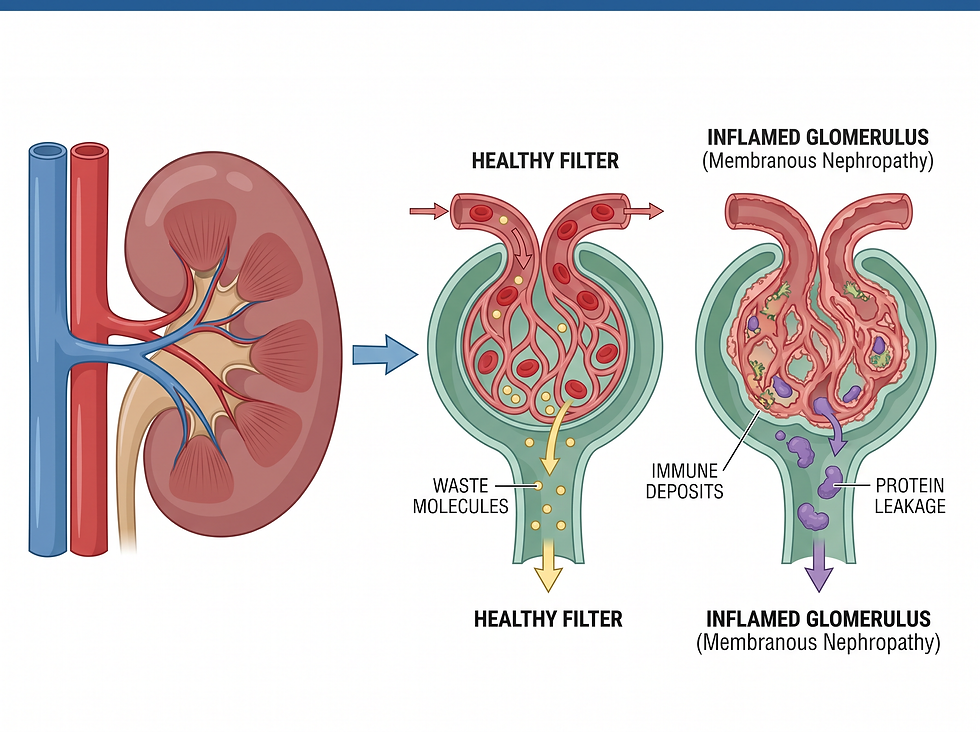
Membranous nephropathy, also referred to as membranous glomerulopathy or membranous glomerulonephritis, is a serious condition that affects the vital filtration process within the kidneys. Each kidney contains thousands of tiny filters called glomeruli, which are responsible for removing waste products and excess fluid from the bloodstream. When these filters become inflamed due to an immune system attack, the kidneys lose their ability to effectively retain protein, leading to a cascade of physical symptoms and potential complications.
The condition can develop suddenly or progress slowly over many years, and it is common for individuals to remain asymptomatic in the early stages. Because the kidneys play a critical role in maintaining overall health, damage to the glomeruli can impact blood pressure, cholesterol levels, and cardiovascular health. Understanding the distinction between the primary and secondary forms of the disease is essential for determining the most effective course of treatment.
Classification and Prevalence
Membranous nephropathy is categorized into two main types based on the underlying cause of the kidney damage. Primary membranous nephropathy, which accounts for up to 75% of cases, is an autoimmune condition that directly targets the kidneys. Secondary membranous nephropathy occurs as a result of another health condition, medication, or environmental exposure.
Primary (idiopathic), about 75% of cases: Caused by an autoimmune response directly attacking the kidneys.
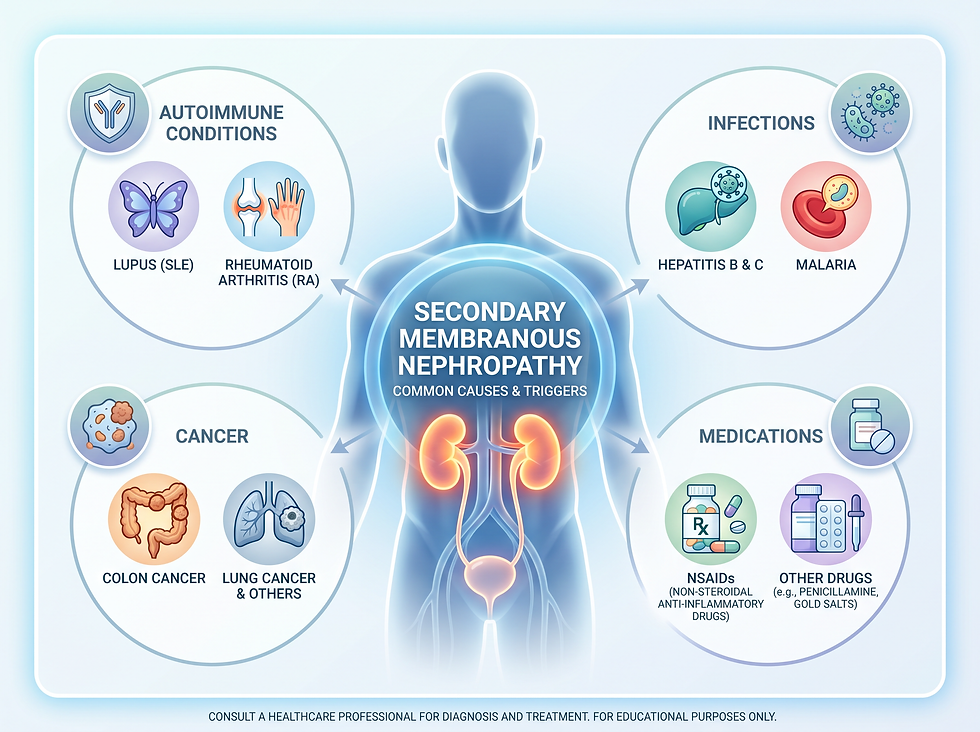
Secondary, about 25% of cases: Triggered by underlying infections, cancers, or specific medications.
This condition is considered rare, with a prevalence of approximately 1 in 5,000 individuals. Clinical data indicates that it is most frequently diagnosed in men between the ages of 50 and 60, while it remains extremely rare in the pediatric population.
Symptoms and Warning Signs
The hallmark of membranous nephropathy is the leakage of protein into the urine, a condition known as proteinuria. This loss of protein disrupts the body's fluid balance, leading to a cluster of symptoms collectively known as nephrotic syndrome. The most visible sign is edema, or swelling, which typically occurs in the legs, ankles, and feet.
Beyond swelling, individuals may notice that their urine appears foamy or bubbly due to high protein content. Other systemic signs include persistent fatigue, unexplained weight gain from water retention, and high blood pressure. In some cases, the condition can cause shortness of breath or changes in the frequency of urination.
The main symptoms of membranous nephropathy result from excess protein in the urine due to kidney damage, which leads to significant water retention and other metabolic changes.
Causes and Risk Factors
In primary membranous nephropathy, the immune system produces a specific antibody that targets the phospholipase A2 receptor (PLA2R) protein found in healthy kidney cells. This autoimmune reaction causes the filtration barrier to break down, allowing proteins to escape into the urine.
Secondary membranous nephropathy can be triggered by a wide range of factors, including other autoimmune diseases like lupus or rheumatoid arthritis. Certain infections, such as hepatitis B, hepatitis C, and malaria, are also known triggers. Furthermore, long-term use of nonsteroidal anti-inflammatory drugs (NSAIDs) and exposure to toxins like mercury can increase the risk of developing the condition.
Complications and Long-Term Health
If left unmanaged, membranous nephropathy can lead to severe complications that extend beyond the kidneys. The metabolic imbalances caused by the disease often result in high cholesterol and chronic high blood pressure. Furthermore, the risk of developing blood clots, such as deep vein thrombosis (DVT) or a pulmonary embolism, is significantly increased in patients with this condition.
In the most serious cases, the cumulative damage to the glomeruli can lead to chronic kidney disease or complete kidney failure. Monitoring for these complications is a vital part of the long-term care strategy for anyone diagnosed with the disorder.
Diagnosis and Clinical Testing
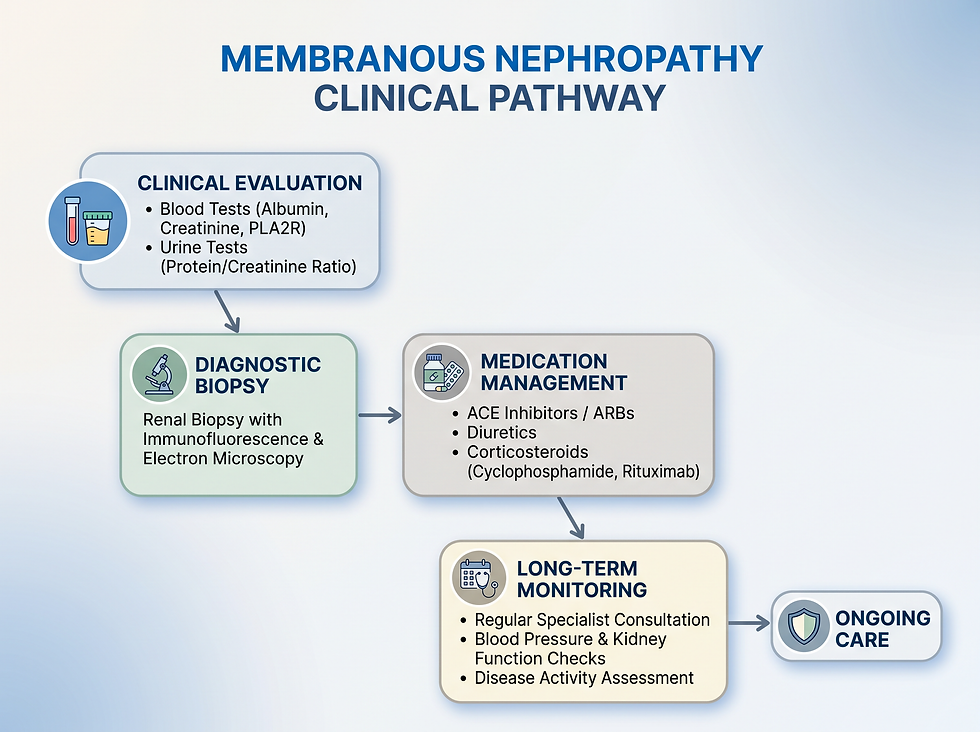
A diagnosis of membranous nephropathy typically begins with a referral to a nephrologist, a specialist in kidney health. Several clinical tests are utilized to assess kidney function and confirm the presence of the disease.
Blood tests: Used to measure levels of blood urea nitrogen (BUN), creatinine, and albumin to evaluate how well the kidneys are cleaning the blood.
Urinalysis: A critical test to detect high levels of protein and the presence of blood in the urine.
Glomerular filtration rate (GFR): A measurement that determines the speed at which the kidneys are filtering waste products.
Kidney biopsy: The definitive diagnostic tool, where a small tissue sample is examined for the specific antibodies associated with MN.
Treatment Pathways
The primary goal of treatment is to alleviate symptoms, reduce protein loss, and prevent the progression of kidney damage. The specific approach depends on whether the condition is primary or secondary and the severity of the symptoms.
Blood pressure control: ACE inhibitors and ARBs lower blood pressure and reduce protein leakage.
Fluid management: Diuretics remove excess fluid and reduce swelling.
Immune suppression: Corticosteroids and immunotherapy stop the immune system from attacking kidney cells.
Metabolic support: Statins and blood thinners manage cholesterol and prevent blood clots.
Conclusion
Membranous nephropathy is a complex and rare disorder that requires a proactive approach to management. While a definitive cure does not currently exist, modern medical interventions can effectively control symptoms and protect kidney function. By working closely with a specialized care team and adhering to treatment protocols, individuals with this condition can lead full and active lives while minimizing the risk of serious complications.
If you are experiencing persistent swelling in your extremities or have noticed changes in your urination, it is important to consult a healthcare professional. Early detection and intervention are key to preserving kidney health and preventing long-term damage.
Frequently Asked Questions
What is the main cause of membranous nephropathy?
Primary membranous nephropathy is an autoimmune disease where the body produces antibodies that attack healthy kidney filters. Secondary cases are caused by other conditions like infections, cancers, or medications.
Is membranous nephropathy a common condition?
No, it is considered rare, affecting only about 1 in every 5,000 people. It is most frequently seen in men between the ages of 50 and 60.
What are the first signs of kidney filter damage?
The most common early signs are swelling (edema) in the legs and ankles, and urine that appears foamy due to excess protein.
Can children develop membranous nephropathy?
While possible, it is extremely rare for children to develop this condition; it primarily affects older adults.
How is the condition diagnosed?
Diagnosis involves blood and urine tests to check kidney function, followed by a kidney biopsy to confirm the presence of specific antibodies.
Is there a cure for membranous nephropathy?
There is no known cure, but the condition can be effectively managed with medications to control symptoms and stop progression.
What is nephrotic syndrome?
Nephrotic syndrome is a group of symptoms caused by kidney damage, including high protein in the urine, low blood protein, high cholesterol, and swelling.
Can medications cause membranous nephropathy?
Yes, certain medications like NSAIDs and penicillamine are known triggers for secondary membranous nephropathy.
What is the goal of using ACE inhibitors in treatment?
ACE inhibitors help lower blood pressure, reduce the amount of protein leaking into the urine, and decrease inflammation in the kidneys.
Does diet play a role in managing the condition?
Yes, healthcare providers often recommend a low-salt diet and moderate protein intake to help manage fluid retention and kidney stress.
What are the risks if the condition is left untreated?
Untreated membranous nephropathy can lead to high blood pressure, blood clots, chronic kidney disease, and eventually kidney failure.
What is a kidney biopsy?
A kidney biopsy is a procedure where a small sample of kidney tissue is removed and examined under a microscope to diagnose the specific type of kidney disease.
Can secondary membranous nephropathy be reversed?
In some cases, treating the underlying cause (such as an infection or stopping a specific medication) can stop or even reverse kidney damage.
What is the role of immunotherapy in treatment?
Immunotherapy drugs, such as rituximab, are used to stop the immune system from producing the antibodies that attack the kidneys.
Is a kidney transplant necessary for all patients?
No, a kidney transplant is only considered for patients whose kidneys have sustained severe, irreversible damage leading to failure.
Medical Disclaimer: The information provided in this article is for educational purposes only and should not be used as a substitute for professional medical advice, diagnosis, or treatment. Always seek the advice of a qualified healthcare provider with any questions you may have regarding a medical condition.
Comments