
Understanding Lumbar Hernia: Symptoms, Causes, and Treatment

Updated: 2 days ago
Medically reviewed by Dr. Baraa Alnahhal, MD · Last reviewed: September 2026
TL;DR
A lumbar hernia, also known as a flank hernia, occurs when tissue pushes through a weak spot in the lower back muscles. Though rare, it typically manifests as a visible bulge beneath the 12th rib and above the hip bone. While some small hernias are asymptomatic, others cause pain, pressure, and mobility issues. Treatment usually involves surgical repair with mesh to strengthen the area and prevent recurrence, especially as untreated hernias can lead to serious complications like bowel obstruction.
Quick Answer
A lumbar hernia is a rare condition where tissue protrudes through weakened muscles in the lower back. It is most common in men aged 50–70 and often appears on the left side. Symptoms include a noticeable bulge, localized pain during activity, and pressure. Diagnosis is confirmed via physical exam and CT scans. Surgery is the primary treatment, focusing on closing the muscle gap and reinforcing the area with surgical mesh to ensure long-term stability.
Defining the Lumbar Hernia
A lumbar hernia represents a specific type of muscular failure in the lower back. It occurs when an organ or internal tissue pushes through a vulnerable area in the abdominal wall, specifically in the region between the bottom of the ribcage and the top of the hip bone. Because this condition involves the flank, it is frequently referred to as a flank hernia.
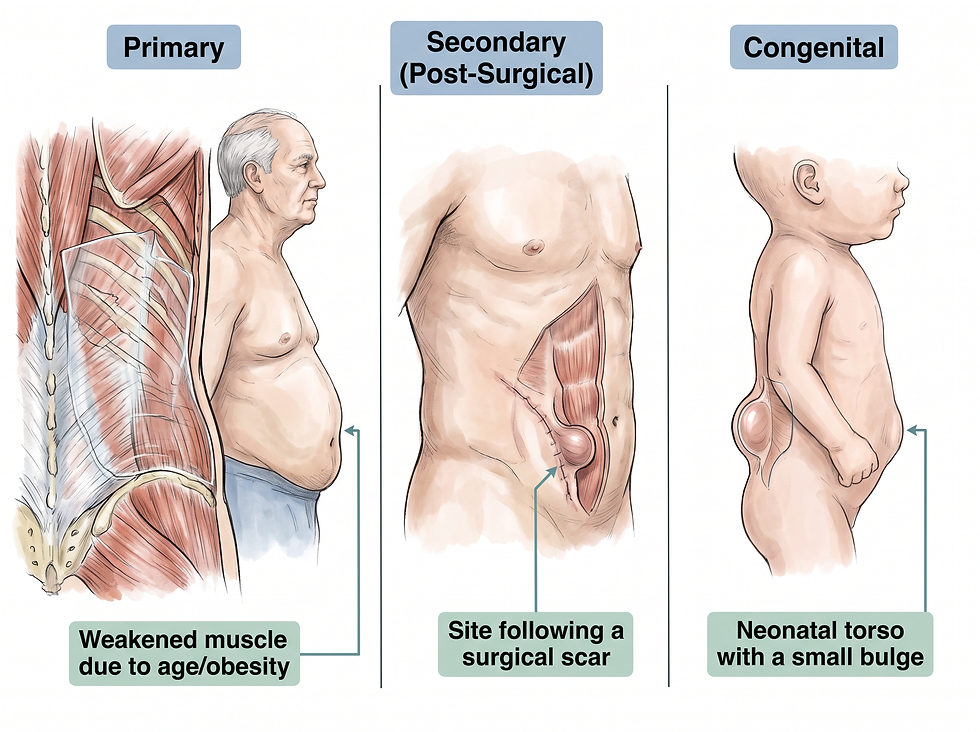
While lumbar hernias are clinically rare, they are significant because they often develop in naturally weaker areas of the back muscle. Most cases are acquired over time due to muscle weakening, though some individuals are born with the condition. Early detection is vital, as these hernias tend to grow larger if left unaddressed, complicating future treatment.

Symptoms and Clinical Presentation
The symptoms of a lumbar hernia often correlate with its size. Small hernias may remain unnoticed for extended periods, but as the protrusion grows, a visible bulge typically appears in the lower back. This bulge may become more prominent or painful during activities that increase abdominal pressure, such as coughing, sneezing, or lifting heavy objects.
Beyond the physical bulge, patients often report a persistent sense of pressure or heaviness in the back. In more advanced cases, the hernia can restrict movement, making it difficult to twist or look behind. Depending on the hernia's specific location and size, it may even interfere with digestive or urinary functions, signaling a need for immediate medical evaluation.
Symptom Category | Common Indicators |
Visual Signs | Noticeable bulge in the low back, often on the left side. |
Physical Sensations | Aching, pressure, or a feeling of heaviness in the flank. |
Activity Triggers | Increased pain when coughing, lifting, or straining. |
Mobility Issues | Difficulty turning the torso or looking behind. |
Advanced Signs | Potential digestive or urinary disruptions. |
Understanding Causes and Risk Factors
Lumbar hernias are categorized by their origin, with the vast majority being acquired later in life. Primary acquired hernias are often linked to obesity, weak back muscles, or chronic straining from physical activity. Secondary acquired hernias, while less common, can result from trauma, such as falls or broken bones, or as a complication following kidney or spinal surgery.
Demographic factors also play a role in risk assessment. The condition is most frequently diagnosed in males between the ages of 50 and 70. Individuals with chronic respiratory conditions that cause frequent coughing, as well as those in occupations requiring heavy lifting and twisting, are at a significantly higher risk for developing this rare muscular weakness.
Treatment and Long-Term Management
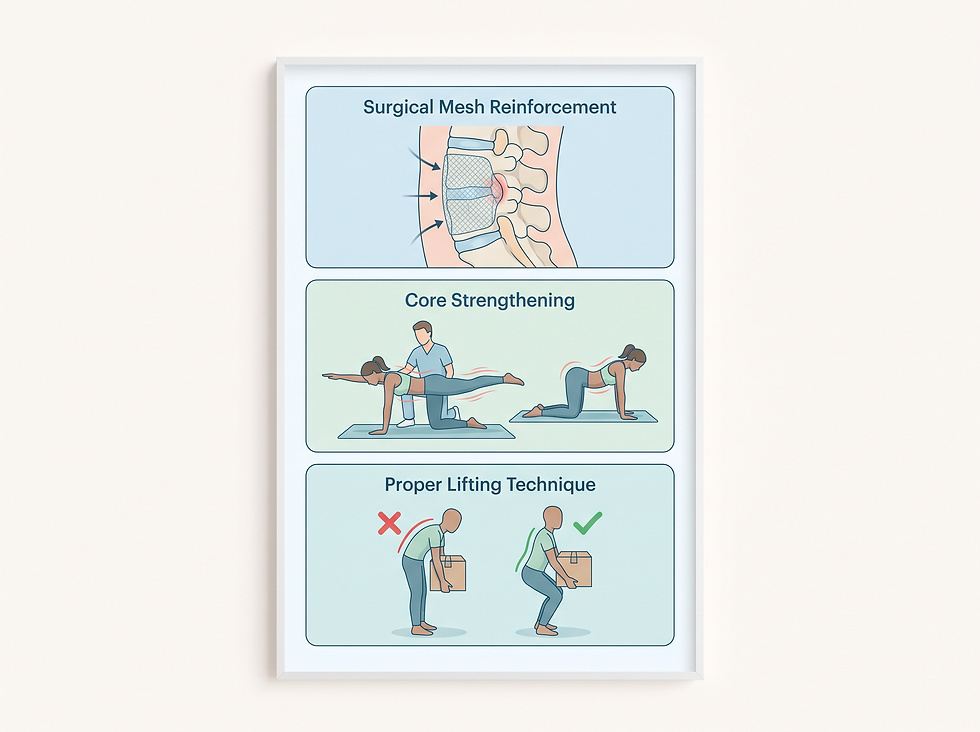
Surgery is the definitive treatment for most lumbar hernias. The procedure focuses on closing the opening in the muscle wall to prevent further protrusion. Surgeons often utilize a specialized surgical mesh to reinforce the area, which significantly reduces the likelihood of the hernia recurring. While "watchful waiting" may be an option for very small, asymptomatic hernias, most will eventually require surgical intervention. For a closer look at what the operation involves, see our guide to hernia repair surgery.
Recovery from hernia repair typically takes a few weeks, during which patients must follow strict guidelines to ensure the muscle heals correctly. Long-term management involves lifestyle adjustments to minimize abdominal pressure. This includes maintaining a healthy weight, utilizing proper lifting techniques, and performing core-strengthening exercises to support the lower back muscles.
Management Phase | Key Actions and Considerations |
Diagnosis | Physical examination followed by a CT scan for confirmation. |
Surgical Repair | Closing the muscle gap, often using surgical mesh for reinforcement. |
Recovery Period | A few weeks of restricted activity to allow for proper healing. |
Recurrence Prevention | Core strengthening, weight management, and proper lifting. |
Complication Risk | Monitoring for signs of bowel blockage or loss of blood flow. |
Conclusion
A lumbar hernia is a rare but manageable condition that requires professional medical attention to prevent serious complications. By recognizing the early signs—such as a persistent bulge or localized pressure—patients can seek treatment before the hernia grows. With modern surgical techniques and a commitment to core health, most individuals can achieve a full recovery and return to their daily activities with confidence.
Next Steps
If you notice an unusual bulge or feel persistent pressure in your lower back, schedule an appointment with a healthcare provider. Early diagnosis and a personalized treatment plan are the best ways to ensure long-term spinal health and prevent future complications.
Frequently Asked Questions
What exactly is a lumbar hernia?
A lumbar hernia occurs when internal tissue or an organ pushes through a weakened area in the muscles of the lower back, often creating a visible bulge.
How rare is a lumbar hernia?
It is considered a rare condition, especially when compared to more common types like inguinal or umbilical hernias.
Where do lumbar hernias usually appear?
They typically appear in the "flank" area, specifically between the bottom of the 12th rib and the top of the hip bone.
Can I be born with a lumbar hernia?
Yes. While most are acquired later in life, some are congenital and may be present at birth, often alongside other medical conditions.
What are the main symptoms of a flank hernia?
The most common symptoms include a visible bulge in the low back, pain when coughing or lifting, and a sense of heaviness.
Why do these hernias often occur on the left side?
Clinical data shows a higher prevalence on the left side, though the exact anatomical reason for this preference is not always clear.
Who is most at risk for developing this condition?
Men between the ages of 50 and 70 are at the highest risk, particularly those with weak core muscles or chronic coughs.
Can heavy lifting cause a lumbar hernia?
Yes. Strenuous physical activity or heavy lifting, especially when combined with a twisting motion, can strain and weaken the back muscles.
How is a lumbar hernia different from a herniated disc?
A lumbar hernia involves tissue pushing through a muscle wall, while a herniated disc involves the soft center of a spinal disc pushing through its outer casing.
Is surgery always necessary for a lumbar hernia?
While small hernias may be monitored, surgery is the primary treatment because hernias tend to grow and can lead to complications.
What is surgical mesh used for in repair?
Surgical mesh acts as a reinforcement to strengthen the weakened muscle wall and significantly lowers the chance of the hernia returning.
What happens if a lumbar hernia is left untreated?
Untreated hernias can grow larger, cause more pain, and potentially lead to dangerous complications like bowel obstructions or strangulation.
How long is the recovery after hernia repair surgery?
Most patients require a few weeks to fully recover, during which they must avoid strenuous activity and heavy lifting.
Can a lumbar hernia cause digestive problems?
Yes. If the hernia is large enough to involve or press against the intestines, it can lead to digestive or urinary disruptions.
How can I prevent a lumbar hernia from coming back?
Prevention involves maintaining a healthy weight, strengthening core muscles, and using proper techniques for lifting and moving.
Medical Disclaimer
The information provided in this article is for educational purposes only and is not intended as medical advice, diagnosis, or treatment. Always seek the advice of your physician or other qualified health provider with any questions you may have regarding a medical condition, including any back bulge or spinal health concern. Never disregard professional medical advice or delay in seeking it because of something you have read here.
Comments