Understanding Left Ventricular Non-Compaction (LVNC): Causes, Symptoms, and Care

Updated: 2 days ago
Medically reviewed by Dr. Baraa Alnahhal, MD · Last reviewed: September 2026
TL;DR: Left ventricular non-compaction (LVNC) is a rare heart condition where the left ventricle develops a spongy, thick texture instead of being smooth and firm. Typically congenital, it can impair the heart's ability to pump blood efficiently and increase the risk of arrhythmias or heart failure. While many people are asymptomatic, management through medication, lifestyle adjustments, and specialized devices is essential for those with symptoms.
Quick Answer: Left ventricular non-compaction (LVNC) occurs when the lower left heart chamber fails to develop properly during fetal growth, resulting in a spongy muscle layer with deep grooves. This structural abnormality can lead to inefficient blood circulation and irregular heart rhythms. While rare, affecting roughly 12 in 1 million people, LVNC requires careful monitoring by specialists to manage potential complications like heart failure or blood clots.
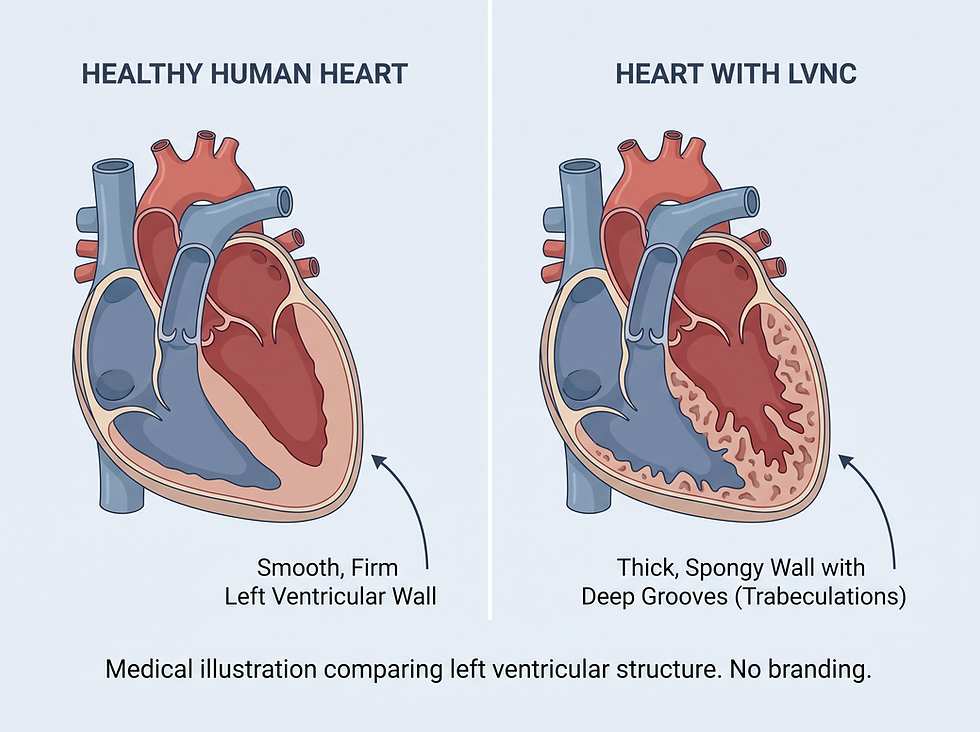
Left ventricular non-compaction (LVNC) cardiomyopathy is a rare and complex heart condition characterized by the unique structural development of the left ventricle. In a healthy heart, this chamber is smooth and firm, allowing it to contract and relax efficiently to pump oxygen-rich blood throughout the body. In individuals with LVNC, the muscle tissue remains spongy and thick, containing deep grooves known as trabeculations.
This structural difference arises because the spongy layer of the heart muscle is disproportionately larger than the smooth, compacted layer. While the condition is typically congenital, meaning it is present from birth, it may not be diagnosed until later in life, especially if the individual does not experience noticeable symptoms.
Identifying Symptoms and Risk Factors
The symptoms of LVNC can range from completely absent to severe and life-altering. Many individuals live with the condition for years without knowing it, while others may experience significant cardiac distress. Common signs include shortness of breath, chronic fatigue, heart palpitations, and dizziness. In more advanced cases, individuals may experience leg swelling or difficulty lying flat due to fluid buildup, which are hallmark signs of heart failure.
LVNC is more frequently diagnosed in males and is often associated with other genetic syndromes or neuromuscular disorders. Certain conditions can significantly increase the risk of developing this specific type of cardiomyopathy.
Associated Conditions | Impact on Cardiac Health |
Barth Syndrome | A genetic disorder that can weaken the heart muscle. |
Muscular Dystrophy | Conditions like Duchenne or Becker that affect muscle protein production. |
Fabry Disease | A metabolic disorder that can lead to heart and kidney complications. |
Noonan Syndrome | A genetic condition that often involves congenital heart defects. |
Causes and Reversibility
The primary cause of LVNC is usually a genetic variation that occurs before birth, affecting the production of essential cardiac proteins. These gene changes can be inherited from parents or occur randomly. However, not all cases are purely genetic. Some women develop LVNC during their first pregnancy due to the extreme stress placed on the heart muscle, and athletes or individuals with sickle cell anemia may also show signs of non-compacted muscle tissue.
Interestingly, some forms of LVNC are reversible. Cases triggered by pregnancy, intense athletic training, or sickle cell anemia can sometimes resolve once the underlying stressor is removed or managed. For most congenital cases, however, the condition is long-term and requires consistent medical oversight.

The Diagnostic Process
Diagnosing LVNC requires detailed imaging to visualize the spongy texture and grooves within the heart muscle. Healthcare providers typically use a combination of tests to assess both the structure and function of the heart.
Diagnostic Tool | Purpose |
Echocardiogram | The primary test used to check how well the heart pumps blood. |
Cardiac MRI or CT | Provides a highly detailed structural view of the non-compacted muscle. |
Electrocardiogram (EKG) | Studies the heart's electrical signals to detect arrhythmias. |
Coronary Angiogram | Examines blood flow through the heart's arteries. |
Management and Long-Term Outlook
Treatment for LVNC is highly personalized, focusing on the specific symptoms and complications each individual faces. For those without symptoms, treatment may not be necessary beyond regular checkups and annual EKGs. However, for symptomatic patients, a combination of medication and specialized procedures is often required.
Common medications include anticoagulants to prevent blood clots, antiarrhythmics to stabilize heart rhythms, and blood pressure medications to reduce strain on the heart. In cases where there is a high risk of cardiac arrest, an implantable cardioverter defibrillator (ICD) or a pacemaker may be recommended. For the most severe cases of heart failure, a heart transplant may be the only remaining option.

Conclusion
While a diagnosis of left ventricular non-compaction cardiomyopathy can be daunting, many people with the condition lead full and active lives. The key to managing LVNC lies in early detection, regular specialist visits, and a commitment to heart-healthy living. By monitoring the condition closely, healthcare providers can help minimize risks and improve long-term quality of life.
If you or a loved one has been diagnosed with LVNC or is experiencing unexplained heart palpitations and shortness of breath, consult with a cardiologist specializing in cardiomyopathy. Consistent monitoring and a tailored treatment plan are the most effective ways to protect your heart and manage this rare condition.
Related reading: Understanding Implantable Cardioverter Defibrillators (ICD) · Heart Failure: Symptoms, Causes & Treatment Guide
Frequently Asked Questions
1. Is LVNC a common condition?
No, it is very rare. Experts estimate that only about 12 in every 1 million people are diagnosed with LVNC each year.
2. Can you be born with LVNC?
Yes, it is typically a congenital condition, meaning the heart muscle does not develop properly during fetal growth.
3. Does LVNC always cause symptoms?
Many people with LVNC have no symptoms and may only discover the condition during testing for other issues.
4. Can athletes develop LVNC?
Some athletes show signs of non-compacted heart muscle due to the stress of intense training, which can sometimes be reversed.
5. What is the main complication of LVNC?
About two-thirds of people with LVNC will eventually develop some degree of heart failure.
6. Is LVNC hereditary?
It often is. Gene changes can be passed down from one or both biological parents, though random mutations also occur.
7. Can pregnancy cause LVNC?
In some cases, the stress of a first pregnancy can lead to the development of LVNC, which may or may not resolve after delivery.
8. How is LVNC different from other cardiomyopathies?
LVNC is specifically defined by the spongy, non-compacted texture of the left ventricle's muscle wall.
9. Can LVNC be cured?
While it cannot usually be "cured" in congenital cases, it can be managed effectively with medication and lifestyle changes.
10. Is physical activity safe for people with LVNC?
Most patients are advised to limit intense physical activity, as exertion can sometimes trigger dangerous heart rhythms.
11. What tests are used to diagnose LVNC?
Echocardiograms and cardiac MRIs are the most common tools used to identify the spongy muscle layer.
12. Can LVNC cause blood clots?
Yes, the grooves in the spongy muscle can sometimes allow blood to pool, increasing the risk of clots and stroke.
13. What is an ICD?
An implantable cardioverter defibrillator is a device that can detect and stop dangerous heart rhythms, often used for high-risk LVNC patients.
14. Does everyone with LVNC need a heart transplant?
No. Heart transplants are only reserved for the most severe cases where other treatments have failed.
15. What is the life expectancy for someone with LVNC?
Many people with LVNC have a typical life expectancy, especially if the condition is managed and monitored by a heart expert.
Medical Disclaimer: The information provided in this article is for educational purposes only and is not intended as medical advice, diagnosis, or treatment. Always seek the advice of your physician or other qualified health provider with any questions you may have regarding a medical condition. Never disregard professional medical advice or delay in seeking it because of something you have read here.
Comments