Understanding Left Bundle Branch Block (LBBB): Causes, Symptoms, and Support

Updated: 1 hour ago
Medically reviewed by Dr. Baraa Alnahhal, MD · Last reviewed: September 2026
TL;DR: Left bundle branch block (LBBB) is a disruption in the electrical impulses that control the heart's rhythm, specifically affecting the left ventricle. While often asymptomatic in healthy individuals, it is frequently associated with underlying heart conditions like heart failure or hypertension. Management ranges from lifestyle changes to surgical interventions like pacemakers, depending on the severity and presence of symptoms.
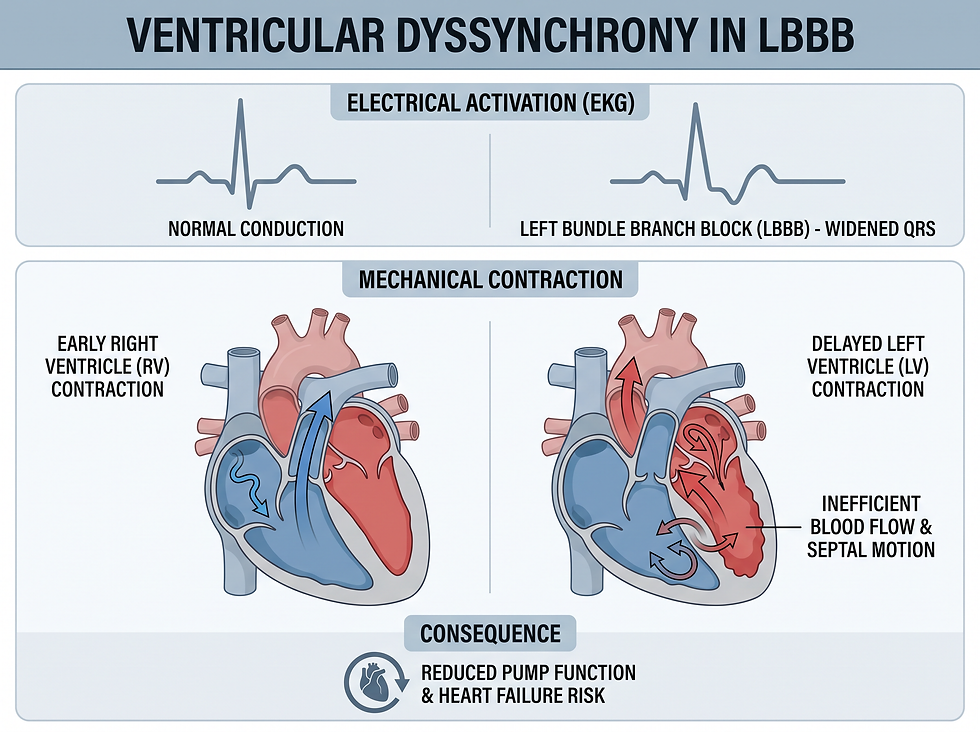
Quick Answer: Left bundle branch block occurs when the electrical signal that triggers the left ventricle to contract is partially or completely blocked. This causes the right ventricle to contract first, reducing the heart's efficiency in pumping blood. While LBBB itself may not be serious in a healthy heart, it often signals an underlying condition and requires diagnostic evaluation via EKG to determine the appropriate management plan.
Left bundle branch block (LBBB) represents a specific type of cardiac conduction abnormality where the electrical impulses responsible for triggering the heart's contraction are disrupted. In a healthy heart, these signals travel through bundle branches to ensure the bottom chambers, or ventricles, beat in perfect synchronization. When the left bundle branch is blocked, this harmony is lost, forcing the right ventricle to contract slightly before the left.

For many individuals, LBBB is discovered during routine medical exams and may not cause any noticeable symptoms. However, its presence often serves as a clinical indicator of an underlying cardiovascular issue. Understanding the relationship between these electrical blocks and overall heart health is essential for long-term wellness.
Prevalence and Risk Factors
LBBB is relatively rare in the general population, affecting between 0.06% and 0.1% of people in the United States. The likelihood of developing this condition increases significantly with age; it is almost never seen in individuals under the age of 35, yet by age 80, approximately 6% of the population is affected.
The condition is most commonly found in those who already have existing heart problems. For example, about one-third of all patients with heart failure also have LBBB. While some individuals may experience the block only during periods of intense exercise when their heart rate rises, for most, it is a persistent feature of their cardiac rhythm.
Identifying Causes and Symptoms
The development of LBBB is usually the result of some form of heart damage. While it can occasionally occur in otherwise healthy hearts with no known cause, it is more frequently linked to chronic conditions that stress or weaken the cardiac muscle.
Potential Causes of LBBB | Description |
Hypertension | Long-term high blood pressure that strains the heart muscle. |
Coronary Artery Disease | Narrowed arteries that limit blood flow to the heart. |
Heart Failure | A condition where the heart cannot pump blood as well as it should. |
Myocarditis | An infection or inflammation of the heart tissue. |
Congenital Defects | Structural heart issues present from birth. |
Symptoms of LBBB are often subtle or entirely absent. When they do occur, they typically involve fainting, feeling faint (presyncope), or a noticeably slow heart rate. It is critical to seek immediate medical attention if you experience chest pain, extreme fatigue, or sudden difficulty breathing, as these can indicate a more serious cardiac event.
The Diagnostic Process
Healthcare providers primarily diagnose left bundle branch block using an electrocardiogram (EKG). This non-invasive test records the electrical activity of the heart as it travels through the ventricles. If a block is detected, further testing is often required to identify any associated health conditions.
Diagnostic Tool | Purpose |
Blood Pressure Reading | Checks for high or low pressure that could be contributing to heart strain. |
Echocardiogram | Examines blood flow and structural integrity of the heart. |
Nuclear Stress Test | Evaluates how well the heart functions under physical stress. |
Blood Tests | Monitors cholesterol levels and other markers of cardiovascular health. |
Management and Treatment Strategies
The approach to treating LBBB depends heavily on whether the patient is experiencing symptoms and if there is an underlying heart condition. For healthy individuals who show no symptoms, active treatment may not be necessary beyond regular monitoring and heart-healthy lifestyle choices.
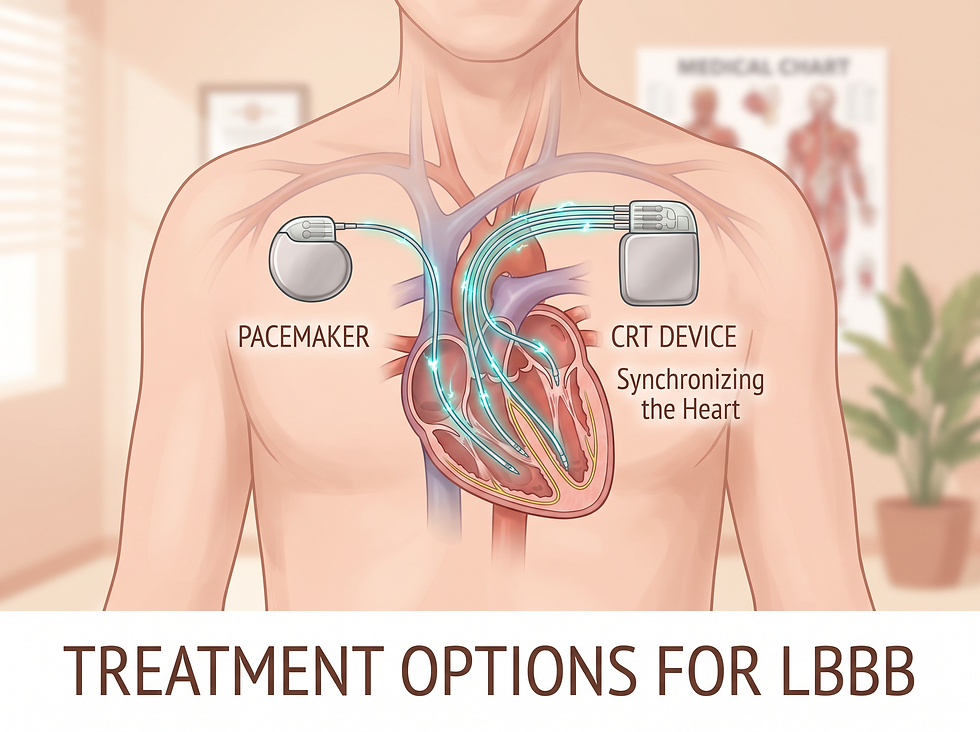
When symptoms like fainting are present, a healthcare provider may recommend the surgical implantation of a pacemaker to manage the heart's electrical signals. For those with heart failure, a specialized form of treatment called cardiac resynchronization therapy (CRT) can be used. This advanced pacemaker helps both ventricles contract simultaneously, which can significantly reduce symptoms like fatigue and shortness of breath.
Conclusion
While a diagnosis of left bundle branch block can be concerning, it is often a manageable condition. For those with healthy hearts, it may have little impact on daily life. For others, it serves as an important signal to address underlying heart health through medical intervention and lifestyle improvements.
If you have been diagnosed with LBBB or are experiencing symptoms like unexplained fainting or shortness of breath, consult with a cardiovascular specialist. Early intervention and consistent monitoring are the best ways to protect your heart health and improve your quality of life.
Related reading: Heart Failure: Symptoms, Causes & Treatment Guide
Frequently Asked Questions
1. Is left bundle branch block a heart attack?
No. While a heart attack can cause LBBB, they are different conditions. LBBB is an electrical rhythm issue, whereas a heart attack involves a blockage of blood flow to the heart muscle.
2. Can LBBB go away on its own?
Generally, no. Once the electrical pathway is blocked, it usually remains so. However, some people only experience LBBB intermittently, such as during exercise.
3. Does everyone with LBBB need a pacemaker?
No. Many people with LBBB require no treatment at all if they are otherwise healthy and have no symptoms.
4. How is LBBB different from RBBB?
LBBB affects the left side of the heart's electrical system, while Right Bundle Branch Block (RBBB) affects the right side. LBBB is often considered more clinically significant.
5. Can I exercise with LBBB?
Most people can, but you should consult your doctor first, especially if your LBBB is exercise-induced or if you have an underlying heart condition.
6. What is an incomplete left bundle branch block?
This is a partial disruption of the electrical signals. While not a full block, it may indicate a higher risk of developing LBBB in the future.
7. Is LBBB hereditary?
While not directly hereditary, the conditions that cause LBBB, such as heart disease and hypertension, often have a genetic component.
8. How common is LBBB?
It affects about 0.06% to 0.1% of the U.S. population and becomes more common as people age.
9. Can stress cause LBBB?
Chronic stress can contribute to hypertension and heart disease, which are primary causes of LBBB, but acute stress does not typically cause the block itself.
10. What is cardiac resynchronization therapy (CRT)?
CRT is a specialized pacemaker that helps the heart's ventricles beat in sync, often used for LBBB patients who also have heart failure.
11. Will LBBB affect my life expectancy?
In healthy individuals, it typically does not. However, in those over 65 with existing heart disease, it can be associated with a higher risk of complications.
12. What are the main symptoms of LBBB?
Many people have no symptoms, but others may experience fainting, feeling lightheaded, or a slow heart rate.
13. How does high blood pressure relate to LBBB?
Long-term high blood pressure can damage the heart's electrical system, leading to a bundle branch block.
14. What should I tell a new doctor about my LBBB?
Always inform new healthcare providers of your diagnosis so they can accurately interpret your EKG results and monitor your heart health.
15. Can LBBB be prevented?
While you may not be able to prevent it entirely, you can lower your risk by maintaining a heart-healthy lifestyle, including regular exercise and a balanced diet.
References
Medical Disclaimer: The information provided in this article is for educational purposes only and is not intended as medical advice, diagnosis, or treatment. Always seek the advice of your physician or other qualified health provider with any questions you may have regarding a medical condition. Never disregard professional medical advice or delay in seeking it because of something you have read here.
Comments