Understanding Human Bites: Risks, Symptoms, and Immediate Care

Updated: 5 days ago
Medically reviewed by Dr. Baraa Alnahhal, MD · Last reviewed: October 2026
TL;DR
While human bites are common, especially among young children, they can be surprisingly dangerous due to bacteria in human saliva. Any bite that breaks the skin carries a high risk of infection and requires professional medical evaluation. Immediate first aid followed by a healthcare consultation is essential to prevent long-term complications like joint or tendon damage.
Quick Answer: What is a Human Bite?
A human bite occurs when a person’s teeth make contact with another person’s skin. There are two main types: occlusion bites (direct biting) and clenched fist bites (indirect injury occurring when a fist hits someone’s teeth). Because human saliva contains numerous bacteria, these wounds often lead to infections if the skin is punctured, even if the initial injury appears minor.

What the research says
Infection is a real risk, especially in children, and the bacteria are mixed. A pediatric review reports that about 10% of human bites in children become infected, that the microbiology of human bites includes both aerobic and anaerobic bacteria, and that amoxicillin-clavulanate is the antibiotic of choice for prevention and early treatment in children who are not allergic to penicillin (Bula-Rudas and Olcott, Pediatrics in Review, 2018).
Preventive antibiotics may help, especially for hand bites, but the evidence is limited. A Cochrane review of 8 randomized trials found that prophylactic antibiotics were associated with a statistically significant reduction in infection after human bites. For hand bites, the odds ratio for infection was 0.10 (95% CI 0.01 to 0.86), with a number needed to treat of 4 (95% CI 2 to 50). The human-bite finding rested on one trial, and the authors called for confirmatory research (Medeiros and Saconato, Cochrane Database of Systematic Reviews, 2001).
Key Takeaways
Feature | Details |
Common Types | Occlusion (direct) and Clenched Fist (indirect) bites. |
Primary Risk | High rate of bacterial infection from human saliva. |
Common Victims | Young children (occlusion) and adults in physical altercations (fist bites). |
Critical Symptom | Redness, warmth, swelling, or pus indicating infection. |
Immediate Action | Clean with soap/water and seek medical evaluation within 24 hours. |
Complications | Permanent joint, tendon, or bone damage if untreated. |
What is a human bite injury?
Healthcare providers in the United States treat about 250,000 human bites each year. Human bites account for only about 3% of the bites seen in emergency departments, but they pose a significant risk of infection. The severity of a human bite is often underestimated because human teeth are not as sharp as those of many animals, frequently resulting in bruising rather than deep tears.
Types of Human Bites
Understanding the mechanism of the injury is crucial for determining the risk of complications:
Occlusion Bites: These occur when teeth sink directly into the skin. They are most common among young children, often as a way to express anger or frustration.
Clenched Fist Bites: These are indirect injuries that happen when a person’s knuckle strikes another person’s teeth. These are particularly dangerous because the puncture often occurs over a joint, allowing bacteria to enter deep into the hand’s structures.
What are the symptoms and warning signs of a human bite?
Initial symptoms at the site of a human bite typically include pain, tenderness, bleeding, and swelling. However, the most concerning signs are those that indicate the onset of an infection or structural damage.
Signs of Infection
If a bite wound becomes infected, you may notice:
Intense, throbbing pain.
Increased swelling and redness around the wound.
Pus or fluid draining from the injury.
Skin that feels hot to the touch.
Fever, chills, or a general feeling of being unwell.
Signs of Nerve or Tendon Damage
If the bite occurs on a finger or hand, watch for:
Numbness or loss of feeling in the fingertip.
Difficulty bending or straightening the finger.

What raises the risk of infection after a human bite?
Certain individuals and injury locations carry a higher risk of developing severe complications after a human bite.
Risk Factor | Why It Matters |
Location | Bites on the hand, foot, face, scalp, or over a bone or joint are more prone to infection. |
Age | Individuals over 50 are at higher risk for complications. |
Health Conditions | Diabetes or vascular disease can slow healing and increase infection risk. |
Immune Status | Medications that suppress the immune system make it harder to fight bacteria. |
What complications can a human bite cause?
Untreated human bites can lead to serious, long-term health issues. The bacteria in saliva can spread quickly through the blood or along tendon sheaths.
Septic Arthritis: Infection within a joint, common after clenched fist injuries.
Osteomyelitis: A serious infection that reaches the bone.
Tenosynovitis: Inflammation of the fluid-filled sheath surrounding a tendon.
Permanent Disability: Severe infections can lead to joint stiffness, loss of function, or, in extreme cases, the need for amputation.
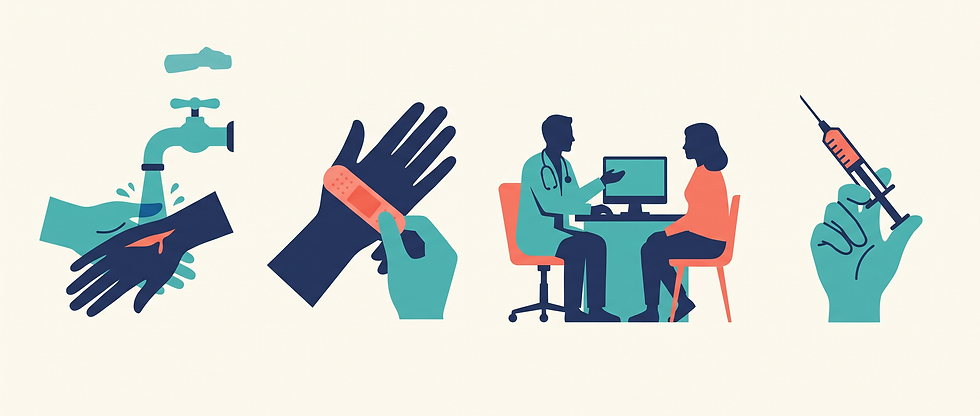
What first aid should you give for a human bite?
If you or someone else is bitten by a human, follow these steps immediately to minimize the risk of infection.
Stop the Bleeding: Apply firm pressure with a clean, dry cloth.
Clean the Wound: Gently wash the area with mild soap and warm water. If possible, use a syringe to flush the wound with water; the pressure helps remove bacteria.
Apply Ointment: Use an antibacterial ointment and cover the area with a clean bandage.
Seek Professional Help: Any bite that breaks the skin should be evaluated by a healthcare provider within 24 hours. Go to the emergency room right away if the bleeding will not stop, you see redness, swelling, pus, or red streaks, the bite is large or deep, or bone or muscle is showing.
How do healthcare providers diagnose and treat a human bite?
A healthcare provider treats a human bite by checking for nerve, tendon and bone damage, then cleaning the wound and often prescribing antibiotics or a tetanus booster. The treatment plan typically involves:
Thorough Cleaning: Disinfecting the wound professionally.
Antibiotics: A course of antibiotics, usually amoxicillin-clavulanate (Augmentin), is often prescribed to prevent or treat infection. If you are allergic to penicillin, your provider will choose an alternative.
Vaccinations: A tetanus booster may be required if your last shot was more than five years ago.
Imaging: X-rays may be ordered to check for fractures or foreign objects (like a tooth fragment) in the wound.
Surgery: In severe cases, surgical cleaning (debridement) or stitches may be necessary.
Conclusion
A human bite may seem like a minor incident, especially when it involves children, but the biological risk from human saliva is significant. Prompt cleaning and professional medical attention are the best ways to ensure a full recovery and prevent permanent damage to your hands or joints.
Frequently Asked Questions
Are human bites more dangerous than dog bites?
They can be. Human saliva contains a high concentration of bacteria, and some germs in human mouths can cause aggressive, hard-to-treat infections in human tissue.
Should I go to the ER for a human bite?
If the bite has broken the skin, you should see a doctor within 24 hours. Go to the ER immediately if the bleeding won't stop or if you see bone or muscle.
Can you get HIV from a human bite?
It is extremely unlikely. There have been rare reports of HIV, hepatitis B, and tetanus linked to bites. HIV transmission is highly unlikely because the concentration of the virus in saliva is low. If the biter is known or suspected to have a disease that can spread by biting, preventive treatment may be needed.
What is a “clenched fist” injury?
It's a bite that happens when a fist hits a person's teeth. It is dangerous because the teeth can puncture the skin directly over a knuckle joint.
Why do human bites get infected so easily?
The human mouth is home to hundreds of species of bacteria. When these are pushed deep into a wound, they thrive in the warm, low-oxygen environment.
Do all human bites need antibiotics?
Most bites that break the skin are treated with preventive (“prophylactic”) antibiotics to help stop an infection from starting.
How do I clean a human bite at home?
Use plenty of warm water and mild soap. Avoid scrubbing too hard, as this can damage the tissue further.
What does an infected bite look like?
It will be red, swollen, painful, and may leak pus. You might also see red streaks moving away from the wound.
Can a child’s bite cause a serious infection?
Yes. Even though children's teeth aren't very sharp, they can still break the skin and introduce bacteria. About 10% of human bites in children become infected.
How long does it take for a bite to heal?
A minor bite may heal in a week, but infected wounds or those requiring surgery can take several weeks or months.
Do I need a tetanus shot after a human bite?
If your last tetanus shot was more than 5 years ago, a doctor will likely recommend a booster. A bite that punctures the skin deeper than 1 centimeter calls for an immediate tetanus shot.
What is debridement?
It is a medical procedure where a doctor removes dead or infected tissue from a wound to help it heal.
Can a human bite cause a broken bone?
Yes, especially in the hand during a fight (clenched fist injury).
Is bruising normal after a human bite?
Yes, bruising is very common because human teeth often crush the skin rather than cutting it.
What is the most common antibiotic for human bites?
Amoxicillin-clavulanate (Augmentin) is the usual first choice because it covers the specific bacteria found in the human mouth. If you are allergic to penicillin, your provider will choose a different antibiotic.
Can I get a human bite from sports?
Yes, accidental collisions in sports like basketball or football can result in occlusion or fist-style bites.
Are human bites common in nursing homes?
Yes, they can occur among residents with dementia or other cognitive conditions.
What should I do if my child bites another child?
Clean the wound for both children and ensure the child who was bitten is seen by a healthcare provider if the skin was broken.
Can a human bite cause permanent scarring?
Deep bites or those that become severely infected can result in permanent scars.
Does ice help a human bite?
Ice can help reduce swelling and pain initially, but it does not prevent infection.
Should I put alcohol or peroxide on a bite?
Modern medical advice suggests avoiding these as they can damage healthy tissue. Soap and water are preferred.
What are “red streaks” a sign of?
Red streaks moving away from a wound are a sign of lymphangitis, indicating the infection is spreading through the lymphatic system. This is a medical emergency.
Can a bite on the ear be dangerous?
Yes, bites on cartilage (like the ear or nose) have poor blood supply, making infections very difficult to treat.
How many people are bitten by humans each year?
About 250,000 human bites are treated by healthcare providers in the U.S. each year.
Can I get a human bite through clothing?
Yes, teeth can sometimes puncture through thin fabric, though the clothing may act as a partial barrier.
Is a human bite considered an assault?
An intentional bite can be treated as assault, depending on the laws where you live.
What if I don't know who bit me?
Tell your doctor. If the biter’s health status is unknown, they may take extra precautions regarding viral transmission.
Can I use superglue to close a bite wound?
No. Never use superglue or other household glue on a bite wound, as it can trap bacteria inside and lead to a serious infection.
Do human bites require stitches?
Many doctors prefer not to stitch bite wounds tightly so they can drain, but deep lacerations may require loose stitches.
What is septicemia?
It is a life-threatening blood infection that can occur if a localized bite infection spreads to the entire body.
Can I get a human bite on my head?
Yes, these are often seen in children or during physical altercations.
Are human bites more common in summer?
Human bites can happen at any time of year. Anyone with a bite that breaks the skin should get it checked.
What is the “two-step” cleaning process?
It involves stopping the bleeding first, then thorough irrigation (washing) of the wound.
Can a bite cause nerve damage?
Yes, if the teeth penetrate deep enough to sever or crush a nerve, usually in the fingers.
How long after a bite should I wait to see a doctor?
Ideally, no more than 24 hours. The sooner you start treatment, the lower the risk of complications.
Can I take ibuprofen for the pain?
Yes, over-the-counter pain relievers can help, but they won't treat the underlying infection risk.
What if the bite was just a “playful” one?
If the skin was broken, the risk of infection remains the same regardless of the intent behind the bite.
Can I get a human bite from a baby?
Yes, though babies lack the jaw strength to cause deep injuries, they can still break the skin.
Are human bites reported to the police?
Reporting rules differ by country and region. Clinicians may be required to report injuries linked to violence or abuse, so ask your care team how this works where you live.
What is a tissue culture?
A test where a doctor swabs the wound to identify the specific type of bacteria causing an infection.
Can a bite cause a joint to lock?
Yes, if an infection develops in the joint space (septic arthritis), it can cause severe stiffness and locking.
Is there a vaccine for human bites?
There is no specific “human bite vaccine,” but staying up to date on tetanus and hepatitis vaccinations provides protection.
Can a human bite cause a hematoma?
Yes, a large bruise or collection of blood (hematoma) can form if small blood vessels are crushed.
Should I cover the bite with a band-aid?
Yes, after cleaning and applying ointment, a clean bandage helps keep out dirt and further bacteria.
What is “irrigation” in medical terms?
It is the process of washing a wound with a large volume of fluid, often under pressure, to clean it out.
Can a human bite lead to arthritis?
Yes, an infection in a joint (septic arthritis) can cause permanent damage that mimics or leads to chronic arthritis.
Are there different risks for bites on the face?
Bites on the face have a high risk of infection and can also cause significant cosmetic concerns.
Can I get a human bite from myself?
Yes, accidentally biting your lip or tongue is a common form of self-inflicted human bite.
What is the recovery time for a hand bite?
If no infection occurs, it may take 10-14 days. If a joint is involved, it could take much longer.
Where can I find first-aid supplies?
Most pharmacies and grocery stores carry the soap, antibacterial ointment, and bandages needed for initial care.
References
Cleveland Clinic. Human Bites. Cleveland Clinic. Last updated March 10, 2023. https://my.clevelandclinic.org/health/diseases/15745-human-bites
Barish RA, Arnold T. Human Bites. Merck Manual Consumer Version. Reviewed/revised January 2025. https://www.merckmanuals.com/home/injuries-and-poisoning/bites-and-stings/human-bites
Bula-Rudas FJ, Olcott JL. Human and animal bites. Pediatrics in Review. 2018;39(10):490-500. PMID 30275032. https://doi.org/10.1542/pir.2017-0212
Medeiros I, Saconato H. Antibiotic prophylaxis for mammalian bites. Cochrane Database of Systematic Reviews. 2001;(2):CD001738. PMID 11406003. https://doi.org/10.1002/14651858.CD001738
Disclaimer
This article is for informational purposes only and does not constitute medical advice. Always seek the advice of your physician or other qualified health provider with any questions you may have regarding a medical condition.


Comments