The Umbilical Cord: Function, Anatomy, and Newborn Care

Medically reviewed by Dr. Baraa Alnahhal, MD | Last reviewed: October 7, 2026

Quick Answer
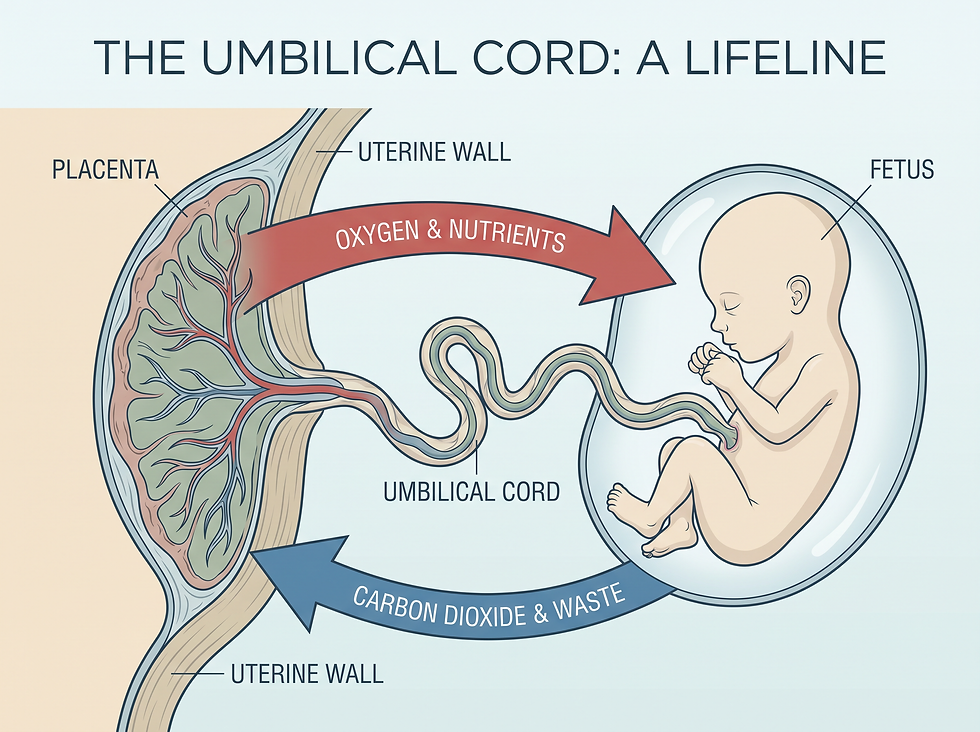
The umbilical cord is a flexible, coiled, tubelike structure that acts as the lifeline between the mother and the fetus during pregnancy. It typically contains three blood vessels, one vein that carries oxygen-rich blood to the fetus and two arteries that carry oxygen-poor blood and waste back to the placenta, all surrounded and protected by Wharton’s jelly. This arrangement supplies the fetus with what it needs to grow until its own organ systems are ready to take over at birth.
What the research says
In community settings, cleaning the cord stump with chlorhexidine reduced infection and death in newborns compared with dry cord care. A Cochrane review of 12 trials found, in three community-based trials, lower rates of omphalitis or infection (RR 0.48, 95% CI 0.40–0.57) and neonatal mortality (RR 0.81, 95% CI 0.71–0.92); in two hospital-based trials the reduction in infection was also seen (RR 0.48, 95% CI 0.28–0.84, moderate-quality evidence). Your provider will tell you how to care for your own baby’s stump (Sinha et al., Cochrane Database of Systematic Reviews, 2015).
A cord around the neck is common and often harmless, but it is linked to more short-term distress signs. A meta-analysis of 20 studies (267,233 pregnancies) found that cord entanglement was associated with a low 1-minute Apgar score below 7 (RR 1.75, 95% CI 1.46–2.11), fetal distress (RR 1.50, 95% CI 1.33–1.69) and fetal pH below 7.1 (RR 1.73, 95% CI 1.48–2.03) (Pergialiotis et al., European Journal of Obstetrics & Gynecology and Reproductive Biology, 2019).
A cord with a single artery calls for closer monitoring. A meta-analysis of 11 studies (1,533 cases) found that prenatally diagnosed isolated single umbilical artery was linked to a higher risk of a small-for-gestational-age baby (OR 2.90, 95% CI 2.02–4.18), preterm birth (OR 2.48, 95% CI 1.73–3.56) and NICU admission (OR 2.28, 95% CI 1.52–3.44), supporting closer surveillance in these pregnancies (Dagklis et al., Journal of Perinatal Medicine, 2022).
TL;DR
The umbilical cord is a vital, coiled structure that connects a developing fetus to the placenta. It works as a two-way lifeline, delivering oxygen and nutrients while removing waste such as carbon dioxide. After birth, the cord is no longer needed and is painlessly cut, leaving a stump that needs simple care until it naturally falls off.
The Vital Function of the Umbilical Cord
The umbilical cord works like a biological highway, allowing a constant exchange of materials between the placenta and the developing fetus. The placenta acts as the fetus’s temporary lungs, heart and digestive system, while the cord is the connector. Traffic runs in both directions: blood rich in oxygen and nutrients flows from the placenta to the fetus, while blood low in oxygen and high in waste products such as carbon dioxide flows back to the placenta to be taken care of by the mother’s body.
This exchange continues throughout the pregnancy. Only after the baby is born does the cord become unnecessary, because the baby’s own organ systems are ready to take over. A healthcare provider then cuts the cord, which is simple, routine and painless.
Direction of Flow | Content | Purpose |
Placenta to Fetus | Oxygen and nutrients | Supports fetal growth and development |
Fetus to Placenta | Carbon dioxide and waste | Removes metabolic byproducts |
Anatomy and Protective Structures
The umbilical cord forms in the uterus during the first trimester. It typically attaches to the center of the placenta on one end and to the fetus’s belly, at the spot that will later become the belly button, on the other. It looks like a thick rope with spirals, or coils, down its length. These coils make the cord stronger and help keep it from being squished as the fetus grows.
A typical cord contains three blood vessels, one large umbilical vein and two smaller umbilical arteries, surrounded and protected by Wharton’s jelly, a white, jelly-like connective tissue. By the end of the second trimester, a normal cord is about 19.6 to 23.6 inches (50 to 60 centimeters) long and 1 to 2 centimeters thick.
Component | Quantity | Primary Role |
Umbilical Vein | 1 | Carries oxygen-rich blood from the placenta to the fetus |
Umbilical Arteries | 2 | Carry oxygen-poor blood from the fetus back to the placenta |
Wharton’s Jelly | N/A | Surrounds, protects and cushions the vessels |
Coils/Spirals | Variable | Make the cord stronger and help prevent compression |
Common Conditions and Abnormalities
Although the cord is a robust structure, problems can arise during pregnancy, and many are noticed on routine prenatal ultrasounds. Some involve how the cord attaches to the placenta, such as marginal or velamentous cord insertion, while others involve the cord itself, such as true knots, abnormal coiling, cysts or a single umbilical artery. Issues with the cord risk reducing blood flow to the fetus, although many of these problems are rare or rarely cause serious complications.
More serious conditions include umbilical cord prolapse, in which the cord drops into the cervix ahead of the baby, which is a medical emergency, and vasa previa, in which unprotected cord vessels cross the opening of the cervix and can bleed heavily during labor. Early diagnosis and a C-section can prevent serious complications from vasa previa. A loose nuchal cord, in which the cord loops around the neck, is common and usually harmless, though a tight loop can sometimes cause complications.
Condition | Description | Potential Impact |
Nuchal Cord | The cord loops around the fetus’s neck | Usually harmless; monitored during labor |
True Knot | A tight knot in the cord | Can reduce blood flow to the fetus |
Cord Prolapse | The cord drops into the cervix ahead of the baby | Medical emergency; typically requires a C-section |
Single Umbilical Artery | The cord has only one artery instead of two | Can be a sign of a genetic condition or structural changes in fetal organs; closer monitoring is advised |
Caring for the Umbilical Cord Stump
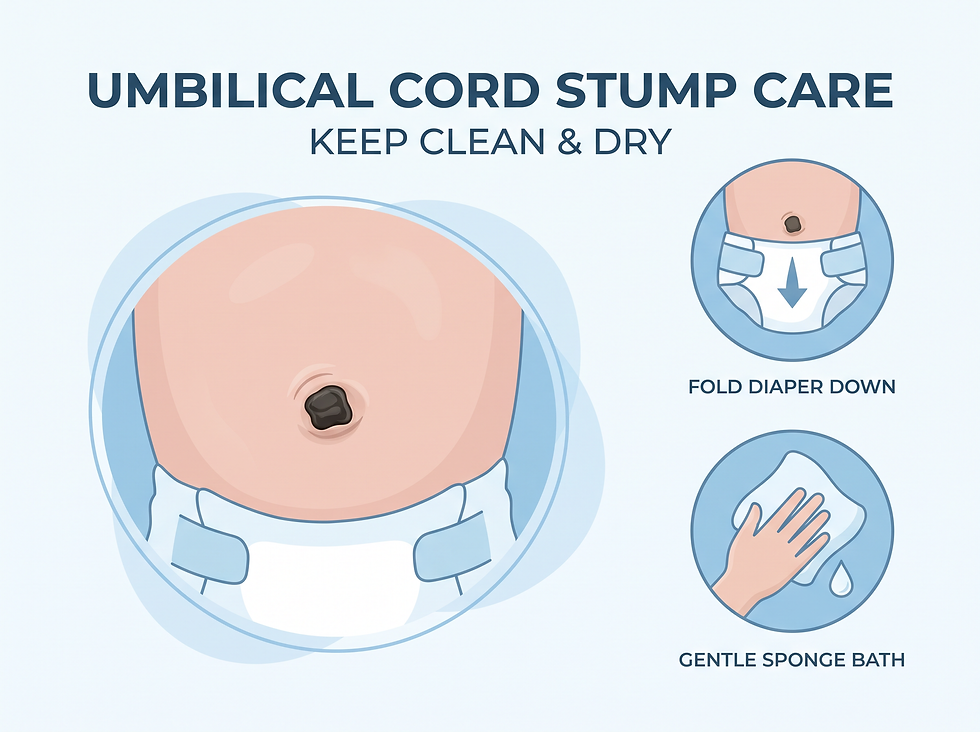
After birth, the cord is cut, leaving a small stump on the baby’s belly. The cord has no nerves, so this is painless for your newborn. The main goal of stump care is to keep it clean and dry to prevent infection, known as omphalitis. The stump dries up, shrinks, and changes color from yellowish-green to brown to black before falling off on its own, typically one to three weeks after birth.
Cleveland Clinic recommends sponge baths until the stump falls off, folding the front of the diaper down below the stump so urine and stool do not reach it, and wiping it with a damp cloth if it gets soiled and letting it air dry. It advises against using alcohol, which may destroy healthy bacteria that help the stump separate naturally. Do not pull the stump off, even if it seems to be dangling by a thread, because pulling it can cause unnecessary bleeding and harm your baby. A little light bleeding when it falls off is normal.
Conclusion
The umbilical cord is a remarkable biological structure that serves as the lifeline during human development. From its three-vessel anatomy to its protective Wharton’s jelly, every part is designed to help the fetus thrive. By understanding how it works and following simple care steps after birth, parents can support a healthy transition for their newborn into life outside the womb.
Next Steps
Check your newborn’s umbilical cord stump daily for signs of infection such as redness, swelling, discharge, a foul smell or bleeding. Call your pediatrician right away if you notice any of these, or if your baby has a fever, will not feed normally, seems overly sleepy, or if the stump has not fallen off after three weeks.
Frequently Asked Questions
What is the umbilical cord?
It is a flexible, tubelike structure that connects a fetus to the placenta to provide oxygen and nutrients and carry away waste.
How many vessels are in a normal umbilical cord?
A typical cord has three vessels: one vein and two arteries.
What is Wharton’s jelly?
It is a white, jelly-like connective tissue that surrounds and protects the vessels inside the cord.
Does cutting the cord hurt the baby?
No. The umbilical cord has no nerves, so cutting it is painless for your baby, and so is the drying and falling off of the stump.
How long is a typical umbilical cord?
By the end of the second trimester, a normal cord is about 19.6 to 23.6 inches (50 to 60 centimeters) long and 1 to 2 centimeters thick.
When does the umbilical cord stump fall off?
The stump typically dries up and falls off one to three weeks after birth. If it is still attached at three weeks, contact your pediatrician.
What is a nuchal cord?
It is when the cord loops around the baby’s neck. It is common and usually harmless, especially if the loop is loose, but a tight loop can sometimes cause complications during pregnancy or delivery.
How should I clean the cord stump?
Keep it clean and dry. If poop or pee gets on it, wipe the area with a damp cloth and let it air dry. Cleveland Clinic advises against using alcohol.
Can I give my baby a bath with the stump still on?
Sponge baths are recommended until the stump falls off. After it falls off, wait a couple of days before giving a regular bath.
What are the signs of a cord infection?
Redness, swelling, fluid discharge, a foul smell, or bleeding are possible signs. Call your pediatrician right away if you suspect an infection, especially if your baby has a fever, will not feed normally, or seems very sleepy.
What happens to the cord after birth?
Your baby’s own organ systems take over breathing and feeding, so the provider cuts the cord and leaves a short stump on the belly. The stump dries up and falls off, and the belly button stays in place.
Why does the cord have a coiled appearance?
The coils make the cord stronger and help keep it from being squished as the fetus grows.
What is a true knot in the umbilical cord?
It is a tight knot in the cord, which can reduce blood flow to the fetus.
What is umbilical cord prolapse?
It is a medical emergency in which the cord drops into the cervix ahead of the baby, and it typically requires a C-section.
What should I do if the stump starts bleeding?
A little bleeding when the stump falls off is normal, so gently wipe it away. Call your pediatrician if bleeding does not stop or more blood appears each time you wipe.
Sources
Cleveland Clinic. Umbilical Cord. Last updated October 4, 2024. my.clevelandclinic.org/health/body/umbilical-cord
Sinha A, Sazawal S, Pradhan A, et al. Chlorhexidine skin or cord care for prevention of mortality and infections in neonates. Cochrane Database Syst Rev. 2015;(3):CD007835. PMID: 25739381. DOI: 10.1002/14651858.CD007835.pub2
Pergialiotis V, Fanaki M, Bellos I, et al. Evaluation of umbilical cord entanglement as a predictive factor of adverse pregnancy outcomes: a meta-analysis. Eur J Obstet Gynecol Reprod Biol. 2019;243:150-157. PMID: 31704532. DOI: 10.1016/j.ejogrb.2019.10.038
Dagklis T, Siargkas A, Apostolopoulou A, et al. Adverse perinatal outcomes following the prenatal diagnosis of isolated single umbilical artery in singleton pregnancies: a systematic review and meta-analysis. J Perinat Med. 2022;50(3):244-252. PMID: 34883005. DOI: 10.1515/jpm-2021-0260
Medical disclaimer: This information is for educational purposes only and does not constitute medical advice. Always consult a healthcare professional for diagnosis and treatment.


Comments