Retinal Tear: Symptoms, Causes, and Treatment Options

Updated: 2 days ago
Medically reviewed by Dr. Baraa Alnahhal, MD · Last reviewed: September 2026
TL;DR
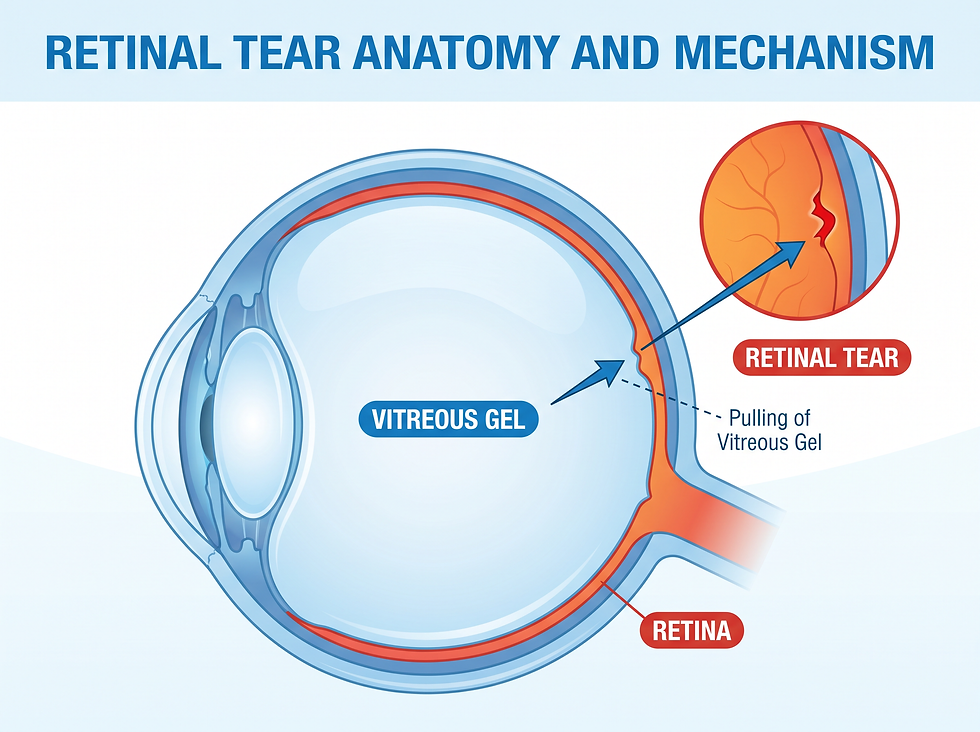
A retinal tear occurs when the vitreous gel in the eye pulls on the retina, creating a split. While often painless, it can cause flashes of light and a sudden increase in floaters. If left untreated, a tear can progress to a full retinal detachment, which is a medical emergency. Early intervention through laser surgery or cryopexy is highly effective in sealing the tear and preserving vision.
Quick Answer
What is a Retinal Tear?
A retinal tear is a split in the light-sensitive tissue at the back of the eye, caused when the gel-like vitreous humor pulls away from the retina. Common symptoms include light flashes and a sudden increase in eye floaters. While a tear is less severe than a detachment, it is a medical emergency that requires prompt treatment to prevent permanent vision loss.
MEDICAL EMERGENCY: SEE AN EYE CARE SPECIALIST IMMEDIATELY A retinal tear threatens your eyesight and can lead to permanent vision loss. Seek immediate medical attention or go to the emergency room if you experience any of the following:
A sudden increase in the number of black spots or floaters.
Frequent flashes of light (photopsia) in your field of vision.
A dark shadow or "curtain" moving across your vision.
Sudden blurred or darkened vision.
What is a Retinal Tear?
A retinal tear, or retinal break, is a condition where the thin, light-sensitive tissue at the back of the eye, the retina, develops a split or hole. This typically occurs when the vitreous humor, the gel-like substance that fills the eye, pulls on the retina with enough force to tear it.
It is important to distinguish between a retinal tear and a retinal detachment. While a tear is a split in the tissue, a detachment occurs when the entire retina pulls away from its supporting tissues. A tear is often the precursor to a detachment, as fluid can seep through the split and lift the retina off the back of the eye.
Symptoms and Warning Signs
Unlike many eye injuries, a retinal tear is usually painless. You must rely on visual symptoms to recognize the problem.
Flashes of Light (Photopsia): Seeing quick bursts or streaks of light, especially in your peripheral vision.
Eye Floaters: A sudden, dramatic increase in the number of small black spots, lines, or cobweb-like shapes drifting across your vision.
Vision Changes: Blurred vision or a general darkening of your sight.
Peripheral Shadow: A dark area or shadow appearing at the edges of your vision.
What Causes a Retinal Tear?
The primary cause of a retinal tear is the natural aging process of the eye, though other factors can contribute.
Cause | Description |
|---|---|
Posterior Vitreous Detachment | As we age, the vitreous gel shrinks and liquefies, eventually pulling away from the retina. |
Eye Injuries | Physical trauma to the eye can cause the retina to tear or break. |
Eye Surgeries | Complications from previous eye procedures can sometimes lead to retinal damage. |
Myopia (Nearsightedness) | Individuals with high myopia have longer eyeballs and thinner retinas, making them more prone to tears. |
Risk Factors
Several factors can increase your likelihood of developing a retinal tear:
Aging: The risk increases significantly as you get older.
Family History: A history of retinal tears or detachments in your family.
Retinal Thinning: Conditions that cause the retina to become thinner over time.
High Myopia: Severe nearsightedness is a major risk factor.
Diagnosis and Testing
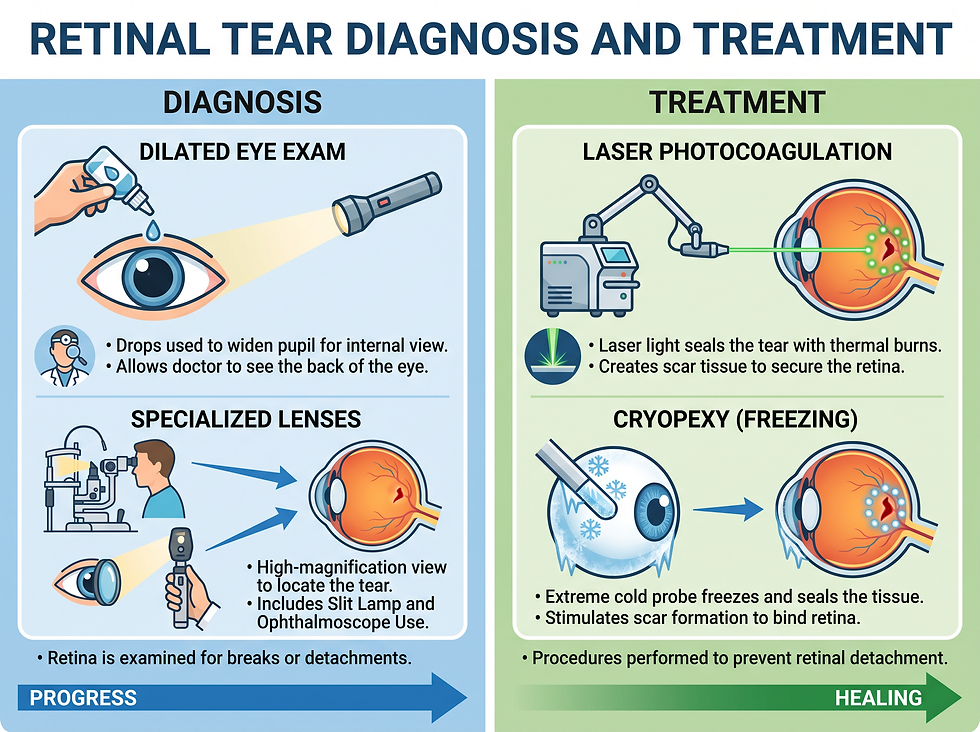
To diagnose a retinal tear, an eye care provider must perform a comprehensive dilated eye exam.
Dilation: Drops are used to widen the pupil, allowing the doctor to see the entire retina.
Specialized Lenses: The provider uses a high-powered lens and a bright light to examine the back of the eye for splits, holes, or detachment.
Visual Field Testing: Checking for shadows or gaps in your peripheral vision.
Treatment Options
The goal of treatment is to seal the tear and prevent it from becoming a full retinal detachment.
Laser Surgery (Photocoagulation)
A retina specialist uses a laser to create small burns around the tear. As these burns heal, they form scar tissue that "welds" the retina back to the underlying tissue, sealing the split and preventing fluid from leaking behind it. This procedure typically takes about 15 minutes.
Cryopexy (Freeze Treatment)
In this procedure, a specialized probe is used to apply extreme cold to the outside of the eye over the site of the tear. Similar to the laser, the freezing creates scar tissue that seals the break. Cryopexy is often used for tears that are difficult to reach with a laser and takes about 30 minutes.
Conclusion
A retinal tear is a serious condition that requires immediate professional care to protect your vision. While the condition is painless, the sudden appearance of floaters or flashes should never be ignored. With modern treatments like laser photocoagulation and cryopexy, retinal tears can be successfully repaired, preventing the more severe complication of retinal detachment.
Next Steps
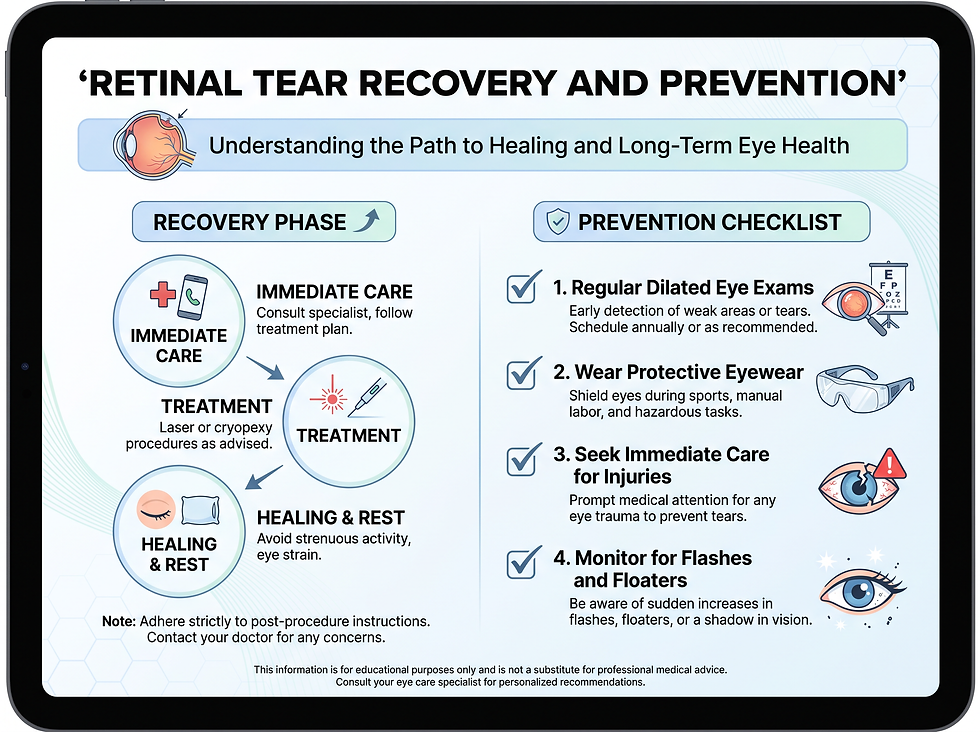
If you experience any sudden changes in your vision, contact an eye specialist immediately. Protect your eyes by wearing safety goggles during sports or high-risk activities, and ensure you attend regular dilated eye exams, especially if you are nearsighted or have a family history of retinal issues.
Frequently Asked Questions
1. Is a retinal tear the same as a detached retina?
No. A tear is a split in the tissue, while a detachment is when the retina completely pulls away from the back of the eye. A tear can lead to a detachment if not treated.
2. Does a retinal tear hurt?
No, there are no pain receptors in the retina, so you won't feel the tear happening. You must watch for visual symptoms.
3. What are "floaters"?
Floaters are small clumps of gel or cells inside the vitreous that cast shadows on the retina. A sudden increase in floaters is a key sign of a retinal tear.
4. Can a retinal tear heal on its own?
While some small tears may stabilize, most require treatment to prevent them from becoming a detachment. You should always have a tear evaluated by a specialist.
5. How long is the recovery from laser surgery?
Most people can return to work the next day, but you should avoid strenuous activities and heavy lifting for several weeks as directed by your doctor.
6. Will I need an eye patch?
Your doctor may recommend wearing a patch for a short period after cryopexy or laser surgery to protect the eye.
7. Can nearsightedness cause retinal tears?
Yes. Nearsighted (myopic) eyes are often longer, which stretches the retina and makes it thinner and more prone to tearing.
8. What is cryopexy?
Cryopexy is a treatment that uses extreme cold to freeze the tissue around a retinal tear, creating a seal through scar tissue.
9. Are there side effects to the treatment?
Possible side effects include a mild headache, temporary blurred vision, or a small risk of cataracts or bleeding in the eye.
10. Can I drive after the procedure?
Your eyes will be dilated, so you will need someone to drive you home. Your doctor will tell you when it is safe to drive again.
11. What is photopsia?
Photopsia is the medical term for seeing flashes of light, which occurs when the vitreous pulls on the retina.
12. How common are retinal tears?
They are relatively common, especially in older adults and those with high myopia.
13. Can eye injuries cause a tear?
Yes, blunt trauma or sharp injuries to the eye can cause the retina to tear or detach.
14. What happens if I ignore a retinal tear?
It will likely progress to a retinal detachment, which can cause permanent blindness in the affected eye if not treated urgently.
15. Should I get regular eye exams?
Yes, regular dilated eye exams are the best way to catch retinal tears early, especially if you have risk factors like myopia.
Related Reading
Trusted External Resources
Medical Disclaimer
This article is for informational purposes only and does not constitute medical advice. Always seek the advice of your physician or other qualified health provider with any questions you may have regarding a medical condition. Never disregard professional medical advice or delay in seeking it because of something you have read in this article.
Comments