Renal Artery Stenting: Restoring Blood Flow to the Kidneys

Updated: 2 days ago
Medically reviewed by Dr. Baraa Alnahhal, MD · Last reviewed: September 2026
Last updated: September 2026 | Source content date: May 19, 2023
TL;DR
Renal artery stenting is a minimally invasive procedure that uses a tiny metal mesh tube to open blockages in the arteries supplying the kidneys. By restoring proper blood flow, this treatment helps manage renal hypertension and protects kidney function. Most patients recover within a week and experience improved blood pressure control.
Quick Answer
What is renal artery stenting? Renal artery stenting is a medical procedure designed to open narrowed kidney arteries caused by atherosclerosis. A healthcare provider inserts a small metal mesh tube, known as a stent, into the artery to keep it open and ensure adequate blood flow. This intervention is primarily used to treat renal hypertension and prevent kidney damage when medications alone are insufficient to manage blood pressure.
Understanding Renal Artery Stenting
Renal artery stenting is a specialized procedure aimed at addressing renal artery stenosis, a condition where the large blood vessels carrying blood to the kidneys become narrowed or blocked. When blood flow is restricted, the kidneys may release hormones that increase blood pressure, leading to a condition called renal hypertension. By placing a stent, medical professionals can physically hold the artery open, allowing for a consistent and healthy supply of blood to reach the kidneys.
Feature | Description |
|---|---|
Primary Goal | Restore blood flow to the kidneys |
Device Used | Tiny metal mesh tube (stent) |
Procedure Type | Minimally invasive (catheter-based) |
Common Cause | Atherosclerosis (plaque buildup) |
Why the Procedure is Performed
This procedure is typically recommended for individuals with significant arterial blockages, often exceeding 60%, that cannot be managed through medication alone. It is particularly beneficial for those experiencing unmanaged high blood pressure despite taking multiple medications, or those with specific complications like flash pulmonary edema. The intervention serves as a critical step in preventing further kidney damage and preserving overall renal health.
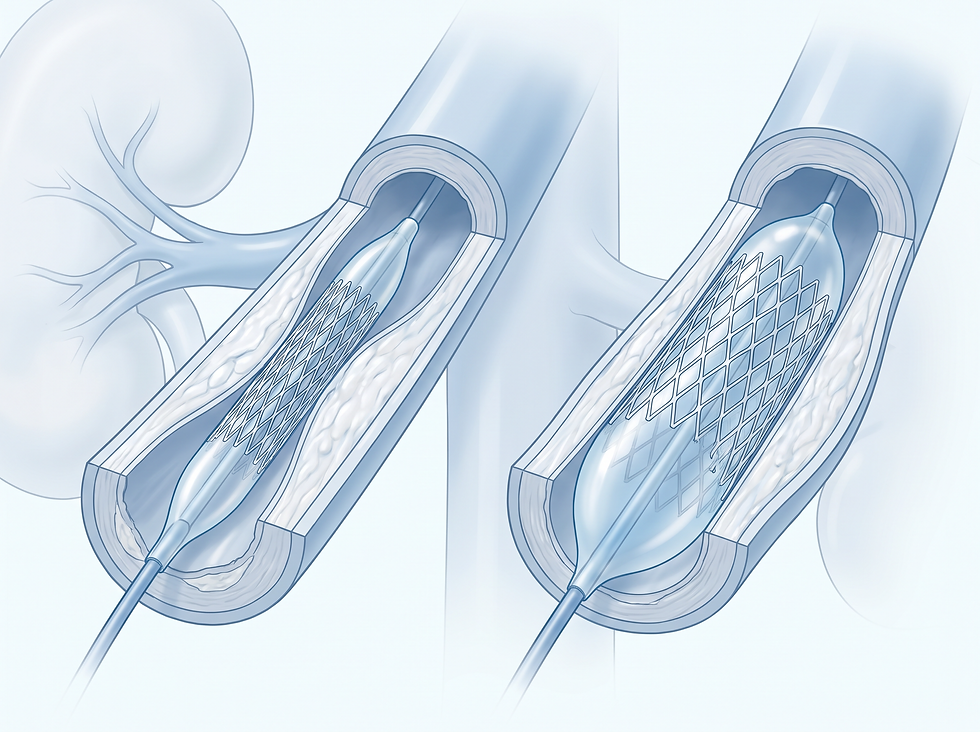
How a renal artery stent holds a narrowed artery open to restore blood flow to the kidney.
The Surgical Process
The procedure is performed during an angiogram, usually under local anesthesia with sedation. A small incision is made in the groin or arm, through which a thin tube called a catheter is guided to the affected renal artery. Once in position, a balloon may be inflated to widen the narrowed area before the stent is permanently deployed against the arterial wall. The entire process is designed to be as efficient and minimally invasive as possible.
Phase | Key Actions |
|---|---|
Preparation | Vitals check and diagnostic imaging (CT, MRA, or ultrasound) |
Procedure | Catheter insertion, balloon angioplasty, and stent deployment |
Recovery | Short hospital stay for monitoring and blood pressure checks |
Recovery and Long-Term Care
Most patients feel significantly better within a few days of the procedure, with a full return to normal activities typically possible within one week. Following the stent placement, it is common to be prescribed blood-thinning medications for several months to prevent clots from forming around the new device. Maintaining a healthy lifestyle and following all post-operative instructions are essential for ensuring the long-term success of the treatment.

Clinical monitoring and blood pressure checks are part of recovery after stent placement.
Risks and Considerations
While renal artery stenting is generally safe and minimally invasive, it does carry certain risks that patients should discuss with their care team. These may include bruising or bleeding at the insertion site, potential damage to the artery, or allergic reactions to the contrast dye used during imaging. In rare cases, more serious complications like kidney failure or blood clots can occur, highlighting the importance of professional medical monitoring during and after the procedure.

Rest, follow-up care, and a healthy lifestyle support long-term recovery.
Conclusion
Renal artery stenting offers a vital solution for individuals struggling with severe arterial blockages that threaten kidney health and blood pressure stability. By utilizing advanced medical technology to restore arterial flow, this procedure helps patients achieve better health outcomes and a higher quality of life. Working closely with a specialized medical team ensures that each patient receives the most appropriate and effective care for their specific needs.
Next Steps
Consult a Specialist: Meet with a vascular or kidney specialist to determine if you are a candidate for stenting.
Diagnostic Testing: Complete all required imaging tests, such as a CT angiogram or ultrasound, to assess arterial health.
Medication Review: Discuss all current medications with your doctor, especially any blood thinners or supplements.
Prepare for Recovery: Arrange for transportation home after the procedure and plan for a few days of rest.
Follow-Up Care: Schedule necessary follow-up appointments to monitor blood pressure and stent performance.
Frequently Asked Questions
What is a renal artery stent?
It is a tiny metal mesh tube used to keep a kidney artery open and improve blood flow.
How does the stent help my kidneys?
By opening blockages, it ensures the kidneys receive enough blood to function properly and manage blood pressure.
Is the procedure minimally invasive?
Yes, it is performed through a small incision using a catheter, avoiding the need for major surgery.
Will I be awake during the procedure?
Usually, patients are given local anesthesia and sedation, so they are relaxed but not completely asleep.
How long is the recovery time?
Most people return to their normal routine within one week after the procedure.
Are there any risks involved?
Possible risks include bruising, bleeding, blood clots, or reactions to the contrast dye.
Do I need to take medication after stenting?
Yes, blood thinners are typically required for a period to prevent clots from forming.
Can I drive myself home after the procedure?
No, you will need a family member or friend to provide transportation after discharge.
How long does the stent stay in my body?
The stent is a permanent device designed to stay in the artery indefinitely.
Does stenting cure high blood pressure?
It can significantly help manage renal hypertension, though other medications may still be needed.
Where is the incision made?
The small incision is typically made in the groin or the arm.
What tests are needed before the procedure?
Common tests include Doppler ultrasound, CT angiograms, or MRAs.
Is a hospital stay required?
Most patients stay for a few hours of monitoring, though some may require an overnight stay.
When can I return to work?
Most patients can return to work within a week, depending on the physical demands of their job.
What happens if the stent moves?
Stent misplacement is a rare risk that is carefully monitored by the surgical team during deployment.
Related Reading
Further Reading
National Kidney Foundation: patient resources on kidney health.
Society of Interventional Radiology: professional society for image-guided, minimally invasive procedures.
Medical Disclaimer: This content is for informational purposes only and does not constitute medical advice. Always seek the advice of a qualified healthcare provider or emergency services in a medical crisis.
Comments