Rejection Sensitive Dysphoria (RSD): Symptoms, Causes, and Management

Updated: 2 days ago
Medically reviewed by Dr. Baraa Alnahhal, MD · Last reviewed: September 2026
Last updated: September 2026 | Source content date: August 30, 2022
TL;DR
Rejection Sensitive Dysphoria (RSD) is a condition characterized by intense emotional pain triggered by perceived failure or rejection. Strongly linked to ADHD, RSD is thought to stem from differences in brain structure that impair emotional regulation. Individuals with RSD may experience overwhelming feelings of embarrassment, low self-esteem, or sudden anger, often leading to people-pleasing behaviors or the avoidance of new challenges. While not an officially recognized diagnosis, it is managed through ADHD medications, therapy, and stress management to help regulate the brain's emotional "volume."
Quick Answer
What is Rejection Sensitive Dysphoria (RSD)? Rejection Sensitive Dysphoria (RSD) is a term used to describe extreme emotional sensitivity and pain triggered by the perception of being rejected, teased, or criticized by important people in one's life. The word "dysphoria" means "unbearable pain."
Key facts about RSD include:
ADHD Connection: It is most commonly experienced by individuals with Attention-Deficit/Hyperactivity Disorder (ADHD).
Intensity: The emotional response is far more intense than typical disappointment and is often described as feeling like physical pain.
Brain Structure: Experts suspect it is caused by the brain's inability to regulate emotional signals, similar to a TV with a broken volume control stuck on high.
Common Behaviors: Includes perfectionism, people-pleasing, and social withdrawal to avoid potential rejection.
Treatment: Often involves "off-label" use of ADHD medications (like clonidine or stimulants) and cognitive behavioral therapy.
Understanding the Emotional "Volume" of RSD
To understand RSD, it is essential to distinguish between typical sensitivity and the overwhelming experience of dysphoria.
Rejection Sensitivity vs. Rejection Sensitive Dysphoria
Feature | Rejection Sensitivity | Rejection Sensitive Dysphoria (RSD) |
|---|---|---|
Primary Sensation | Severe anxiety or negative emotions. | Intense, overwhelming emotional pain. |
Perception | May misinterpret neutral cues as rejection. | High likelihood of misinterpreting vague cues as rejection. |
Reaction | May overreact with anger or sadness. | Extreme reactions (rage, tears, or sudden depression). |
Control | Difficult to manage emotions. | Extremely difficult to manage or contain emotions. |
Impact | Can affect social interactions. | Can lead to severe avoidance of failure and social isolation. |
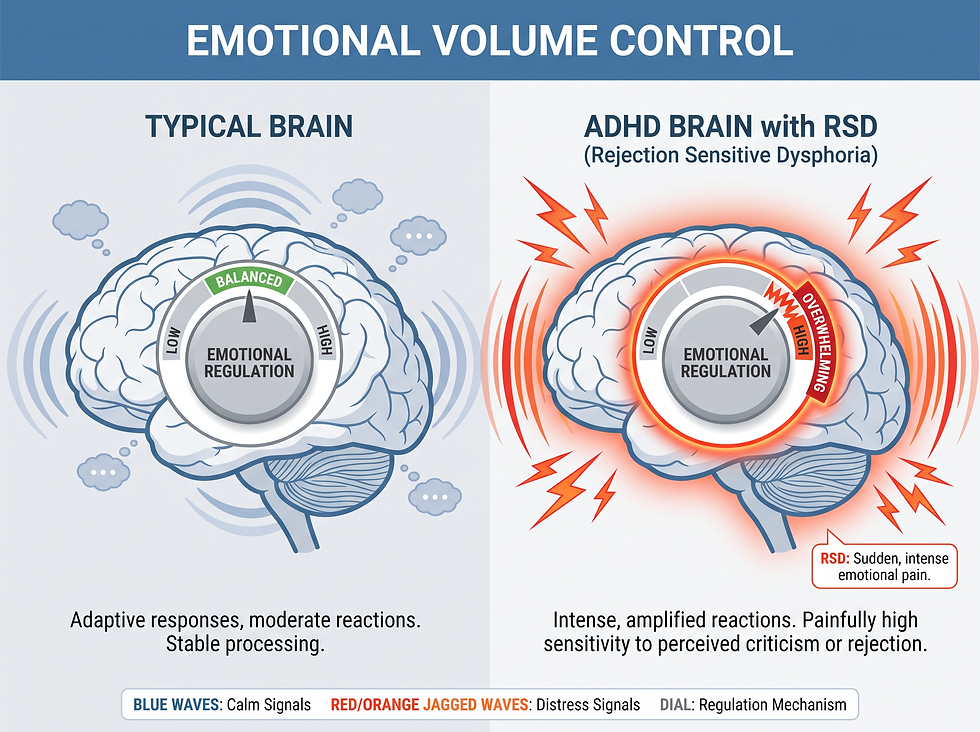
Comparison of how a typical brain regulates emotional signals versus the "high volume" experience of Rejection Sensitive Dysphoria.
Symptoms and Behavioral Traits
RSD often manifests as internal emotional turmoil that can be difficult for others to see, or as sudden, intense outward reactions.
Key Symptoms of RSD
Intense Emotional Pain: A feeling that is often indescribable but as painful as a physical wound.
Sudden Mood Shifts: A snap onset of severe depression or anger triggered by a perceived slight.
Low Self-Esteem: A persistent difficulty in believing in oneself or one's abilities.
Extreme Self-Consciousness: Feeling easily embarrassed or intensely focused on how others perceive you.
Perfectionism: Striving for flawlessness to ensure no one has a reason to criticize or reject you.
Social Withdrawal: Avoiding new projects, tasks, or social situations where failure is a possibility.
Behavioral Responses
People-Pleasing: Becoming hyper-focused on meeting the needs of others to avoid disapproval.
Anger and Rage: Outwardly reacting to rejection with sudden bursts of temper (common in children and teens).
Misread as Bipolar Disorder: Because emotional shifts in RSD happen so quickly, the condition is sometimes mistaken for bipolar disorder.
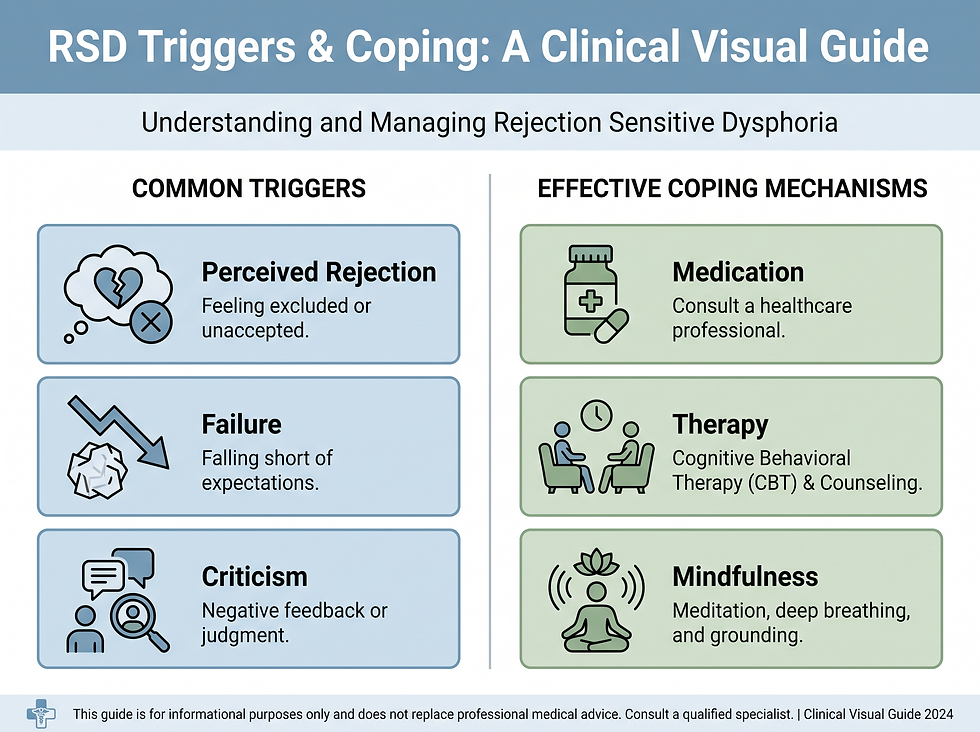
Common RSD triggers and practical coping mechanisms to manage emotional intensity.
Causes and Brain Biology
While research is ongoing, experts believe RSD is rooted in the way the brain processes and filters internal communication.
The ADHD Link
RSD is highly prevalent among those with ADHD. Researchers suspect that the same brain differences that cause ADHD, specifically less activity in the areas that filter and regulate signals, also contribute to RSD. In an ADHD brain, the "filter" on sensory and emotional input is less active, making feelings like rejection feel much more intense.
Genetic Factors
Because ADHD often runs in families, RSD is also believed to have a strong genetic component. It is not a learned behavior or a choice; it is a biological response to emotional stimuli.
Diagnosis and Treatment
Because RSD is not an official diagnosis in the DSM-5, it requires a clinician who is familiar with the term and its association with ADHD. Treatment usually builds on ADHD care, so it helps to understand how ADHD medications work before discussing options with your doctor.
Treatment Strategies
Approach | Description | Goal |
|---|---|---|
Alpha-2 Agonists | Medications like clonidine or guanfacine. | Help the brain regulate internal communication. |
Stimulants | Common ADHD medications such as Adderall or Ritalin. | Increase activity in brain areas that filter emotional signals. |
MAOIs | Medications like tranylcypromine (Parnate). | Treat severe emotional pain (cannot be used with other ADHD medications). |
Therapy | Cognitive Behavioral Therapy (CBT) or counseling. | Develop coping skills and manage stress. |
Stress Management | Mindfulness, adequate sleep, and downtime. | Lower the baseline level of emotional reactivity. |

A patient's guide to managing RSD, highlighting the integrated approach of medication, therapy, and lifestyle adjustments.
Frequently Asked Questions
Is RSD a formal medical diagnosis?
No, Rejection Sensitive Dysphoria is not currently an officially recognized diagnosis in the DSM-5, but it is a widely accepted clinical term used by experts, particularly in the ADHD community.
Can you have RSD without ADHD?
While RSD is most strongly linked to ADHD, experts believe it may also occur in people with other mood or personality disorders. More research is needed in this area.
Does RSD feel like physical pain?
Yes, many people with RSD describe the emotional pain as being as intense and real as a physical injury or wound.
How is RSD different from "being sensitive"?
Sensitivity is a trait, while RSD involves a biological inability to regulate the "volume" of emotional pain, leading to overwhelming dysphoria.
Can children have RSD?
Yes, children and teenagers often show RSD through sudden outbursts of anger, rage, or inconsolable crying when they feel they have failed or been rejected.
What are "off-label" medications?
These are medications approved by the FDA for one condition (like high blood pressure or ADHD) that doctors prescribe for another (like RSD) because evidence shows they are effective.
Can therapy cure RSD?
Therapy cannot change the underlying brain biology, but it can provide essential tools for managing the reactions and behaviors associated with the pain.
Why do people with RSD become perfectionists?
Perfectionism is often a defense mechanism used to prevent any possibility of criticism or failure, thereby avoiding the pain of rejection.
Is RSD contagious?
No, RSD is a genetic and biological condition. It cannot be caught from or spread to others.
What triggers an RSD episode?
Triggers include perceived rejection, teasing, criticism, or the feeling that you have failed to meet your own high standards.
Can RSD be mistaken for bipolar disorder?
Yes, because the emotional shifts in RSD happen so quickly (triggered by an event), they are sometimes mistaken for the mood cycles of bipolar disorder.
How do Alpha-2 agonists help?
These medications make the brain areas responsible for regulating communication more active, helping to "turn down the volume" on emotional pain.
Should I tell my doctor about RSD?
Yes, especially if you have ADHD. Discussing these symptoms can help your doctor tailor your treatment plan to include medications that help with emotional regulation.
Does everyone with ADHD have RSD?
While very common, not every person with ADHD will experience RSD to the same degree of intensity.
What is the most important part of managing RSD?
A combination of the right medication to regulate brain activity and learning healthy coping mechanisms to handle emotional triggers.
Related Reading
Further Reading
ADDitude Magazine: extensive resources and articles on RSD and ADHD.
Children and Adults with Attention-Deficit/Hyperactivity Disorder (CHADD): support and advocacy.
Medical Disclaimer: The information provided in this article is for educational purposes only and is not intended as medical advice. Always seek the advice of your physician or other qualified health provider with any questions you may have regarding a medical condition. Never disregard professional medical advice or delay in seeking it because of something you have read here. If you think you may have a medical emergency, call your doctor or 911 immediately.
Comments