Ragweed Allergy Explained: Managing Seasonal Symptoms and Oral Allergy Syndrome

Updated: 2 days ago
Medically reviewed by Dr. Baraa Alnahhal, MD · Last reviewed: September 2026
Ragweed allergy is a common seasonal reaction to the pollen of the ragweed plant, primarily affecting people in late summer and fall. Symptoms include sneezing, nasal congestion, and itchy eyes, often referred to as hay fever. A unique complication called Oral Allergy Syndrome (OAS) can also cause reactions to certain fruits and vegetables. Management involves a combination of allergy medications, lifestyle adjustments to limit pollen exposure, and long-term treatments like immunotherapy.
Quick answer: What is a ragweed allergy?
A ragweed allergy is an immune system reaction to the pollen produced by ragweed plants. These soft-stemmed weeds are incredibly prolific; a single plant can release up to 1 billion pollen grains in a single season. The pollen is light and can travel hundreds of miles through the air, affecting millions of people across the United States, particularly in the Midwest and East.
The peak season for ragweed is typically from late July to early November, with the highest pollen counts occurring on warm, dry, and breezy days between 10 a.m. and 3 p.m. Up to 1 in 5 people in the U.S. experience symptoms during this time. Diagnosis is usually confirmed through a skin scratch test or blood test. While there is no cure, symptoms can be effectively managed with antihistamines, nasal sprays, and avoiding the outdoors during peak pollen hours.
The Ragweed Pollen Season
Ragweed pollen is most active during the transition from summer to fall.
Feature | Peak Timing | Characteristics |
Peak Season | Late July to Early November | Heaviest in August and September. |
Peak Daily Hours | 10 a.m. to 3 p.m. | Higher on warm, dry, and windy days. |
Geographic Reach | Nationwide (except Alaska) | Most severe in the Midwestern and Eastern U.S. |

Symptoms and Oral Allergy Syndrome
Ragweed allergy symptoms often mimic a common cold but are triggered by environmental exposure.
Common Respiratory Symptoms
Runny or Stuffy Nose: Nasal congestion and clear discharge.
Sneezing: Frequent, sudden bouts of sneezing.
Itchy or Watery Eyes: Redness and irritation in the eyes.
Coughing: An itchy throat or persistent dry cough.
Asthma Flares: Worsening of existing asthma symptoms.
Oral Allergy Syndrome (OAS)
Some people with ragweed allergies react to certain foods that contain proteins similar to ragweed pollen. This can cause an itchy or tingly mouth when eating:
Fruits: Bananas, watermelon, cantaloupe.
Vegetables: White potato, zucchini, cucumber, artichoke.
Others: Sunflower seeds, chamomile tea.

Diagnosis and Management
Effective management begins with an accurate diagnosis and a multi-layered treatment plan.
Diagnostic Testing
Skin Scratch Test: A provider pricks the skin with a small amount of ragweed pollen to check for a reaction (redness or swelling) within 15 minutes.
Blood Test: Measures the level of specific antibodies (IgE) against ragweed pollen in the bloodstream.
Treatment Options
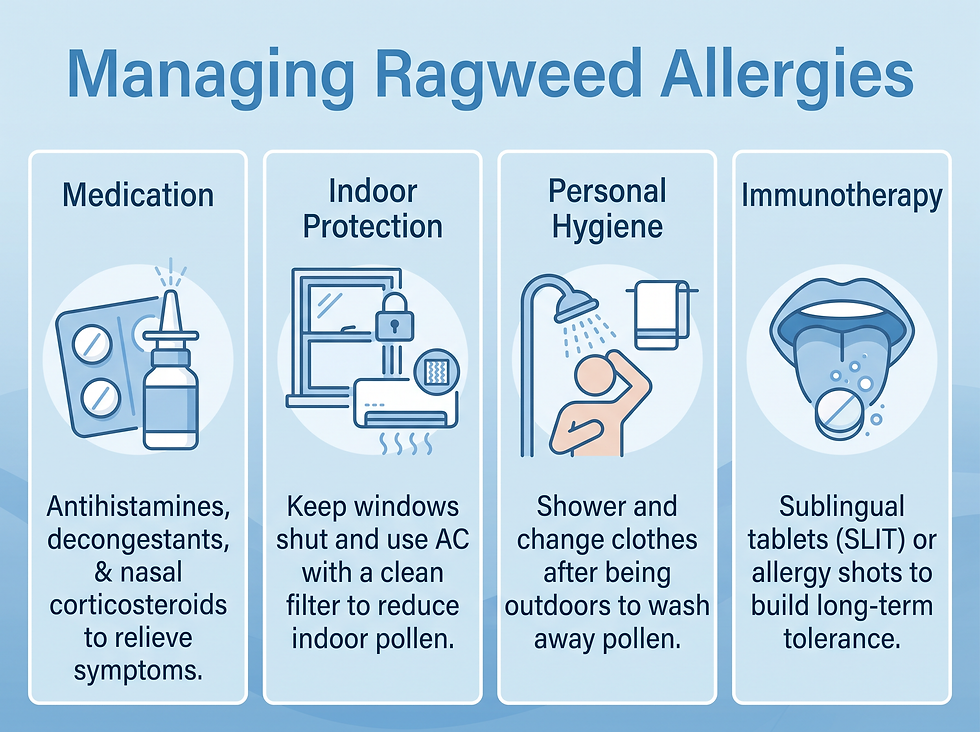
Medications: Antihistamines (Zyrtec, Allegra), nasal corticosteroids (Flonase), and decongestants (Sudafed).
Immunotherapy: Allergy shots or sublingual tablets to build long-term resistance.
Lifestyle Adjustments: Keeping windows closed, using HEPA filters, and showering after spending time outdoors.
Pollen Tracking: Monitoring local pollen counts to plan outdoor activities.
Conclusion
Ragweed allergy is a highly common condition that can significantly impact quality of life during the fall months. By understanding peak seasons, identifying food triggers, and utilizing modern allergy treatments, most people can find effective relief. If seasonal symptoms are interfering with your daily activities or worsening your asthma, consult an allergist for a personalized management plan.
Next Steps
If you are struggling with fall allergy symptoms or suspect Oral Allergy Syndrome, schedule an appointment with an allergist today to explore long-term relief options.
Frequently Asked Questions (FAQ)
Is ragweed allergy the same as hay fever?
Yes. "Hay fever" is a general term for seasonal allergic rhinitis, and ragweed is one of the most common causes of hay fever in the fall.
Can ragweed pollen travel to states where it doesn't grow?
Yes. Ragweed pollen is extremely light and has been found up to two miles high in the air and hundreds of miles away from the source plant.
Why do my lips itch when I eat bananas in the fall?
This is likely Oral Allergy Syndrome (OAS). Your body confuses the proteins in bananas with the proteins in ragweed pollen, causing a localized allergic reaction in your mouth.
What is the best time of day to go outside during ragweed season?
Pollen counts are usually lowest in the early morning or late evening. The peak hours are typically between 10 a.m. and 3 p.m.
Are there any states where ragweed doesn't grow?
Ragweed grows in every U.S. state except Alaska.
Can I develop a ragweed allergy as an adult?
Yes. While many allergies start in childhood, it is possible to develop new allergies at any age.
How do I tell a ragweed allergy apart from a cold?
Allergies usually cause itchy eyes and throat and last as long as the allergen is present. A cold often includes a fever or body aches and typically resolves in 7-10 days.
What are allergy shots?
Allergy shots (immunotherapy) involve regular injections of tiny amounts of the allergen to gradually train your immune system not to overreact to it.
Does rain help with ragweed allergies?
Rain can temporarily wash pollen out of the air, providing relief. However, heavy rain can also break up pollen grains and spread them further once the ground dries.
Should I use a face mask outdoors?
Yes. Wearing a mask while gardening or doing yard work can significantly reduce the amount of pollen you inhale.
Is chamomile tea safe for people with ragweed allergies?
Some people with severe ragweed allergies may react to chamomile because it is in the same plant family as ragweed.
How long does a skin scratch test take?
The test itself takes a few minutes, and results are usually visible within 15 to 20 minutes.
Do air purifiers help with pollen?
Yes, air purifiers with HEPA filters are very effective at removing tiny pollen grains from the air inside your home.
Can pets bring ragweed pollen into the house?
Yes. Pollen can stick to a pet's fur. Wiping down your pet after they come inside can help reduce indoor pollen levels.
When should I see an allergist?
You should see an allergist if over-the-counter medications aren't providing enough relief or if your allergies are triggering asthma symptoms.
Helpful Resources
American Academy of Allergy, Asthma & Immunology (AAAAI): National Allergy Bureau pollen counts.
Asthma and Allergy Foundation of America (AAFA): Patient resources and advocacy.
Medical Disclaimer: The information provided in this article is for educational purposes only and is not intended as medical advice. Always seek the advice of your physician or other qualified health provider with any questions you may have regarding a medical condition. Never disregard professional medical advice or delay in seeking it because of something you have read here. If you think you may have a medical emergency, call your doctor or 911 immediately.
Comments