Radiofrequency Ablation (RFA): A Guide to Long-Term Pain Management

Updated: 2 days ago
Medically reviewed by Dr. Baraa Alnahhal, MD · Last reviewed: September 2026
Last updated: September 2026 | Source content date: March 14, 2022
TL;DR
Radiofrequency ablation (RFA) is a minimally invasive procedure that uses heat to disable nerves responsible for sending pain signals to the brain. It is primarily used for chronic back, neck, and joint pain when other treatments have failed. By creating a small lesion on the targeted nerve, RFA provides long-lasting relief, often ranging from six months to over a year, with minimal recovery time.
Quick Answer
Radiofrequency ablation, or RFA, is a medical procedure that utilizes radio waves to heat and destroy a small area of nerve tissue. This heat creates a lesion that blocks the nerve's ability to transmit pain signals to the brain. It is a highly effective option for individuals suffering from chronic pain in the spine or joints, offering an alternative to surgery and a reduction in the need for daily pain medications.
Understanding the RFA Procedure
The core mechanism of radiofrequency ablation involves the precise application of thermal energy to specific nerves. By damaging the nerve tissue, the treatment effectively "mutes" the pain signals originating from areas like the facet joints in the spine or arthritic joints in the knees. This procedure is often referred to as radiofrequency neurotomy and is considered a long-term solution for chronic conditions.
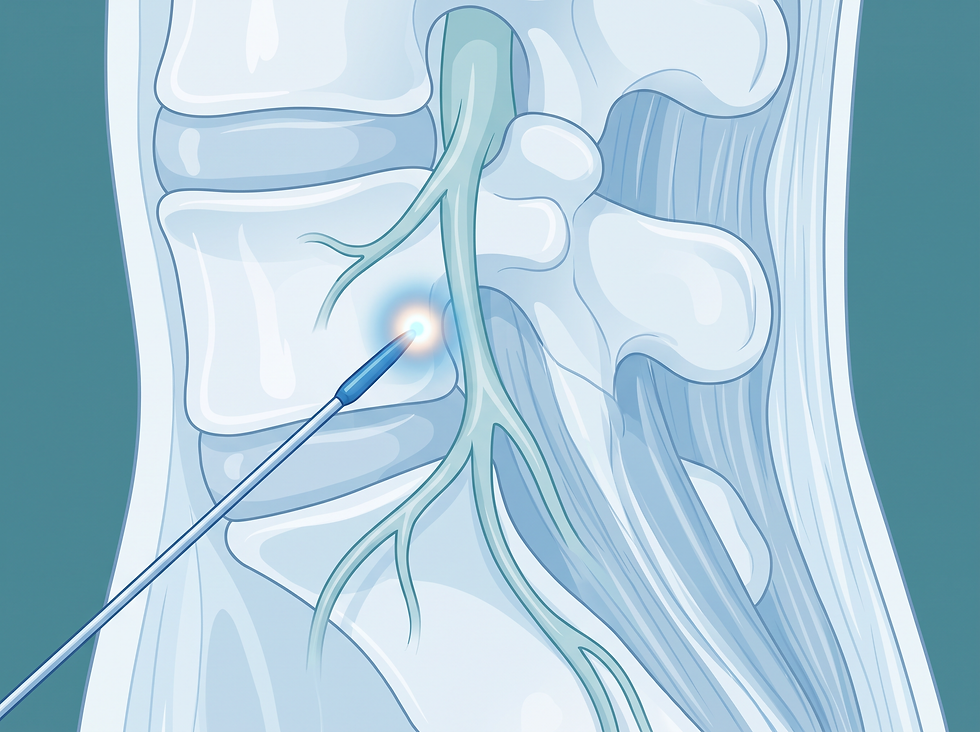
The radiofrequency ablation process targeting nerve tissue.
Conditions Treated with RFA
RFA is versatile and can be applied to various types of chronic pain. The following table outlines the common conditions and locations where RFA is frequently utilized.
Condition Category | Specific Examples | Common Locations |
|---|---|---|
Spinal Pain | Spondylosis (arthritis of the spine), SI joint pain. | Neck, lower back (lumbar). |
Joint Pain | Osteoarthritis, chronic inflammation. | Knees, sacroiliac joints. |
Nerve Conditions | Trigeminal neuralgia, peripheral nerve pain. | Face, extremities. |
Other Uses | Cancer-related pain, heart rhythm issues, tumors. | Various body systems. |
The Treatment Journey
The journey begins with a diagnostic block, where a local anesthetic is injected near the suspected pain source (learn more in our guide to nerve blocks). If this provides significant temporary relief, the patient is considered a good candidate for RFA. During the actual procedure, which lasts between 15 minutes and two hours, a thin needle is guided by real-time X-ray (fluoroscopy) to the exact nerve location. A microelectrode then delivers the radiofrequency current to heat the nerve.
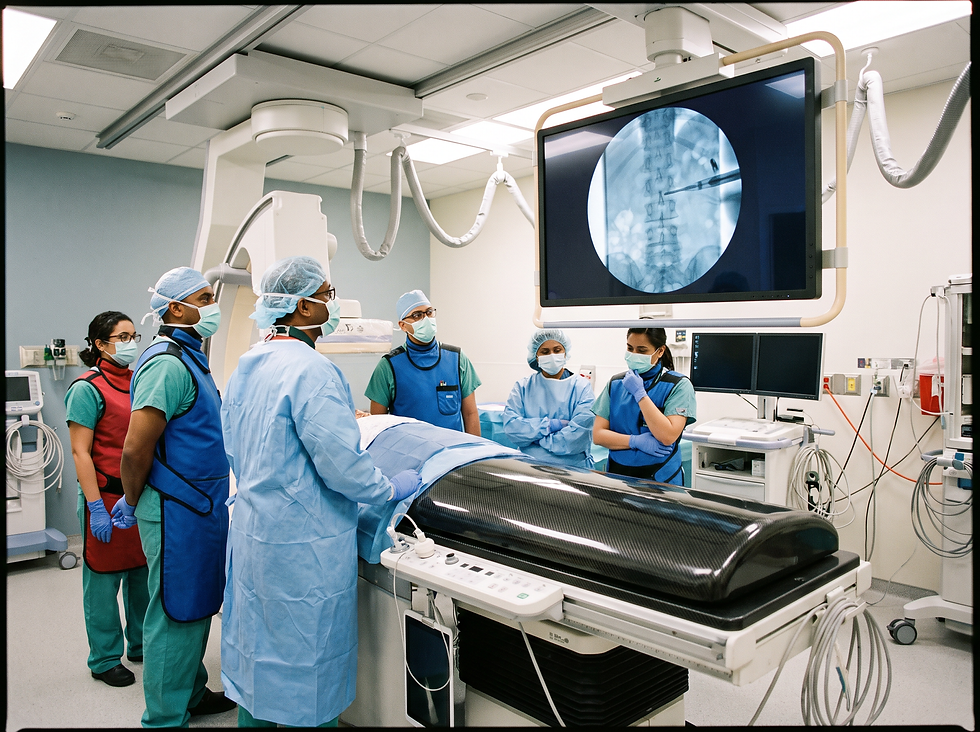
The medical team monitors the RFA procedure using real-time imaging.
Recovery and Long-Term Outlook
Post-procedure recovery is typically swift. Patients are advised to rest for the first 24 hours and can usually return to normal activities within a day or two. While some soreness or muscle spasms may occur at the treatment site, these are temporary and can be managed with ice packs or mild medication.
Recovery Milestone | Timeline | Expected Experience |
|---|---|---|
Initial Rest | First 24 hours | No driving or strenuous activity. |
Activity Resumption | 1 to 2 days | Return to work and normal routines. |
Pain Relief Onset | Immediate to 3 weeks | Gradual reduction in original pain levels. |
Relief Duration | 6 to 12 months | Nerves may regrow, allowing for repeat treatment. |

Enjoying an active lifestyle following successful pain management.
Conclusion
Radiofrequency ablation stands as a powerful, non-surgical tool in the fight against chronic pain. By targeting the source of pain signals with precision, it allows patients to reclaim their mobility and reduce their reliance on pain medications. While the treated nerves may eventually regrow, the significant period of relief provided by RFA offers a valuable window for improved quality of life and physical rehabilitation.
Next Steps
Consultation: Discuss your chronic pain history with a specialist to see if RFA is appropriate.
Diagnostic Block: Schedule a test injection to confirm the source of your pain.
Pre-Procedure Prep: Follow instructions regarding blood-thinning medications.
Post-Care Planning: Arrange for a ride home and clear your schedule for 24 hours after the procedure.
Follow-Up: Attend your scheduled progress check to discuss the effectiveness of the treatment.
Frequently Asked Questions
How does RFA actually stop the pain?
It uses heat to create a small lesion on a nerve, which prevents it from sending pain signals to your brain.
Is the procedure painful?
You will receive a local anesthetic to numb the area, though you may feel some pressure or a tingling sensation during the test phase.
How long does the relief last?
Typically between 6 and 12 months, though it can last for years in some individuals.
Can the procedure be repeated?
Yes, if the nerve regrows and the pain returns, the procedure can be performed again.
Will I be awake during the treatment?
Yes, patients usually remain awake to provide feedback, though a mild sedative can be used for relaxation.
What is a diagnostic block?
It is a "test" injection of anesthetic to confirm that a specific nerve is indeed the source of your pain.
How soon can I go back to work?
Most patients can return to their normal routine within 24 to 48 hours.
Are there any restrictions after the procedure?
You should not drive or perform strenuous activities for the first 24 hours.
Can RFA treat neck pain?
Yes, it is commonly used for chronic neck pain originating from the facet joints.
What are the most common side effects?
Temporary soreness, swelling, or numbness at the injection site are the most frequent side effects.
Does RFA involve surgery?
No, it is a minimally invasive procedure performed through a needle, requiring no surgical incisions.
What if the diagnostic block doesn't work?
If the block doesn't provide relief, RFA is unlikely to be effective for that specific area.
Is RFA used for cancer pain?
Yes, it can be used to target nerves transmitting pain from tumors or other cancer-related issues.
How long does the appointment take?
The procedure itself takes 15 minutes to 2 hours, depending on how many nerves are being treated.
What is fluoroscopy?
It is a type of real-time, continuous X-ray that allows the doctor to see exactly where the needle is moving.
Related Reading
Further Reading
Spine-health: RFA guide
Arthritis Foundation: treatment options
Medical Disclaimer: This content is for informational purposes only and does not constitute medical advice. Always seek the advice of a qualified healthcare provider with any questions regarding a medical condition or treatment.
Comments