Preterm Labor: Recognizing Early Signs and Seeking Care

Updated: 2 days ago
Medically reviewed by Dr. Baraa Alnahhal, MD · Last reviewed: September 2026
Preterm labor occurs when the body begins preparing for childbirth before the 37th week of pregnancy. Recognizing symptoms like regular contractions, pelvic pressure, or leaking fluid is critical for early intervention. While some risk factors are lifestyle-related, many are medical or history-based. Medical management focuses on delaying labor to allow the fetus more time to develop.
Quick answer: Preterm labor is the onset of labor before 37 weeks of pregnancy. It is characterized by regular contractions, cervical changes, or the rupture of membranes. If identified early, healthcare providers may use medications like tocolytics or corticosteroids to delay birth or prepare the fetus's organs for delivery. Immediate medical attention is required if signs like persistent back pain, vaginal bleeding, or frequent contractions occur, as early intervention can significantly improve neonatal outcomes.
Understanding Preterm Labor
Preterm labor is defined as the physiological process of labor beginning before a pregnancy reaches 37 weeks. In a standard pregnancy, fetal development typically spans approximately 40 weeks, and reaching the 37-week mark is considered "at term." When labor starts prematurely, the body begins the complex process of preparing for delivery, which involves uterine contractions and changes to the cervix, such as effacement and dilation.
While premature birth is a possible outcome of preterm labor, it is not always inevitable. Medical professionals often aim to stop or delay the process to provide the fetus with additional time to grow within the uterus. This time is vital for the development of critical organs, particularly the lungs. Treatment strategies may include bed rest, hydration through intravenous fluids, and specific medications designed to relax the uterine muscles.
Recognizing the Signs of Early Labor
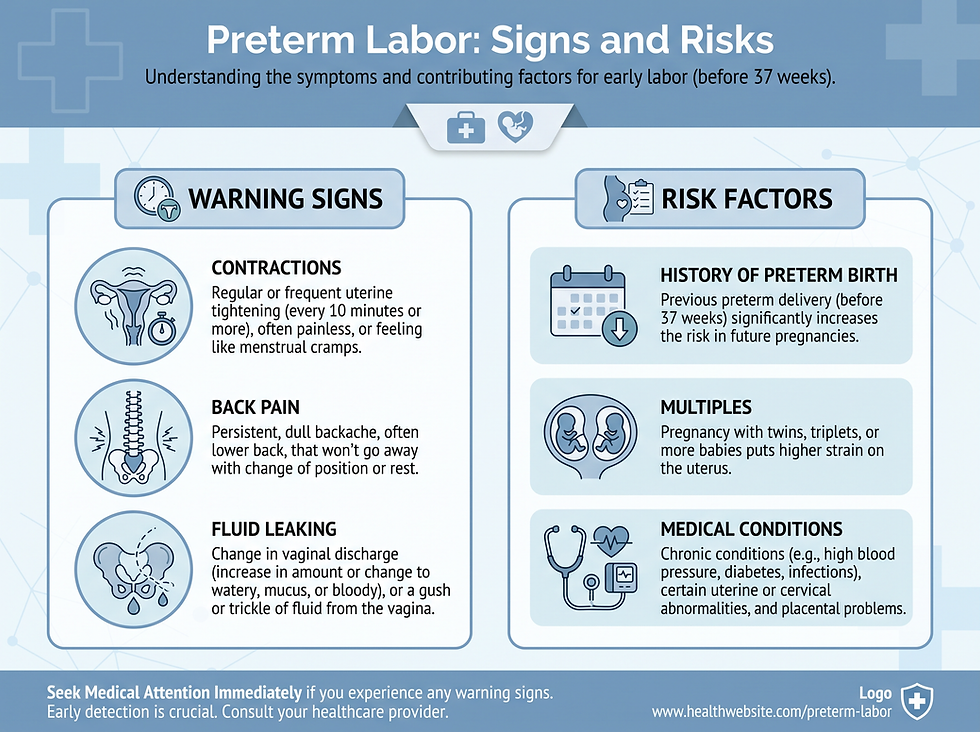
It is essential for pregnant individuals to monitor their bodies for signs that labor may be starting too soon. Symptoms of preterm labor can sometimes be subtle or mistaken for normal pregnancy discomforts, but persistent or severe pain requires immediate consultation with a healthcare provider.
Symptom Category | Specific Signs to Monitor |
Contractions | Four or more contractions in one hour that do not subside with rest or position changes. |
Pain & Pressure | Persistent dull back pain, lower abdominal cramping (with or without diarrhea), or increased pelvic pressure. |
Discharge & Fluid | Leaking of amniotic fluid, vaginal bleeding, or mucus-like discharge that may be pink-tinged. |
Fetal Movement | A noticeable decrease in activity, specifically fewer than six movements in one hour. |
Risk Factors and Triggers
There is no single trigger for preterm labor; rather, it is often the result of a combination of medical history, pregnancy-specific factors, and lifestyle elements. Interestingly, some individuals go into preterm labor without any identifiable risk factors. However, clinical data points to three primary risk factors: a history of previous premature births, carrying multiples (such as twins or triplets), and existing structural issues with the uterus or cervix.
Risk Category | Common Factors |
Medical History | Past premature births, uterine surgeries, or connective tissue disorders like Ehlers-Danlos syndrome. |
Current Pregnancy | IVF conception, vaginal bleeding, or issues with amniotic fluid levels (polyhydramnios or oligohydramnios). |
Lifestyle & Environment | High stress, physically demanding work, smoking, alcohol use, or lack of regular prenatal care. |
Demographics | Maternal age younger than 17 or older than 35, and a higher statistical prevalence among Black individuals. |
Diagnosis and Clinical Evaluation
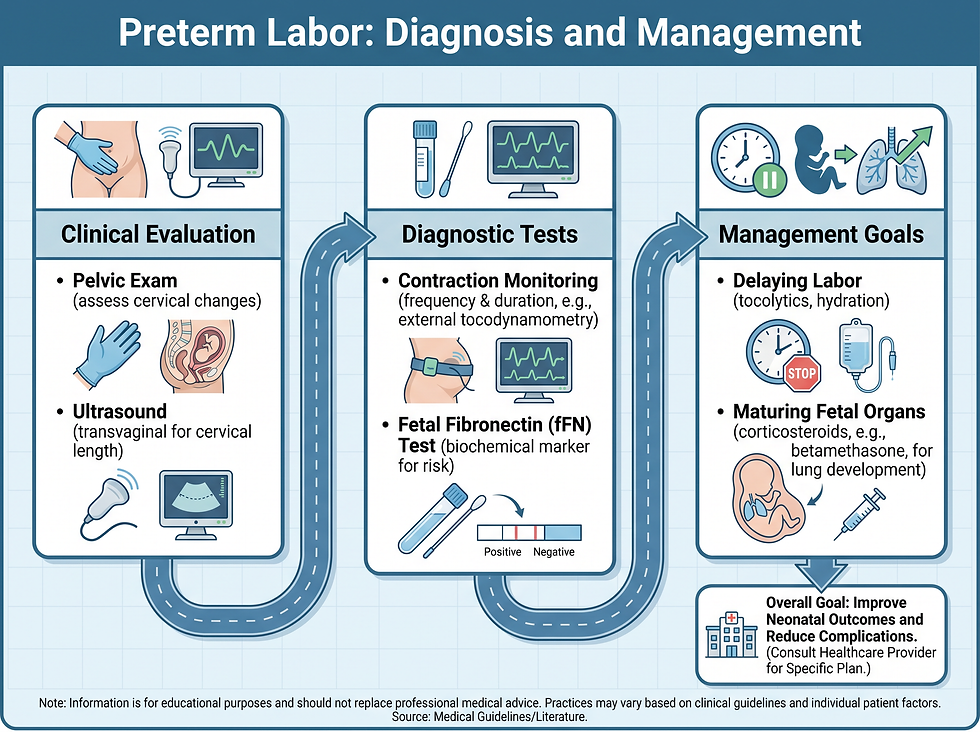
If preterm labor is suspected, healthcare providers perform a series of evaluations to confirm the diagnosis and assess the status of the pregnancy. The primary diagnostic tool is a pelvic examination to check if the cervix has begun to thin (efface) or open (dilate). An ultrasound is frequently utilized to determine the position and size of the fetus, as well as to inspect the placenta and amniotic fluid levels.
Additional tests may include electronic contraction monitoring and a fetal fibronectin (fFN) test. The fFN test involves checking vaginal discharge for a specific protein that acts as a biological "glue" between the amniotic sac and the uterine lining. The presence of this protein can be a strong indicator that the body is preparing for labor.
Medical Management and Treatment
The primary goal of managing preterm labor is to delay delivery as long as safely possible. If labor cannot be stopped entirely, the focus shifts to preparing the fetus for an early arrival. Tocolytics are medications often used to temporarily halt contractions for up to 48 hours, providing a window for other critical treatments to take effect.
During this delay, providers may administer corticosteroids to accelerate the maturation of the fetus's lungs and other organs. For pregnancies under 32 weeks, magnesium sulfate may be given intravenously to reduce the risk of neurological complications like cerebral palsy. In cases where the health of the mother or fetus is at risk—such as with preeclampsia or placental abruption—delivery may be necessary despite the prematurity.
Conclusion
Preterm labor is a serious clinical situation that requires prompt recognition and professional medical intervention. While not all cases of early labor lead to immediate delivery, the potential for complications necessitates a proactive approach to management. By understanding the risk factors and remaining vigilant for early warning signs, expectant parents can work closely with their healthcare teams to optimize outcomes for both themselves and their babies.
When to See a Doctor
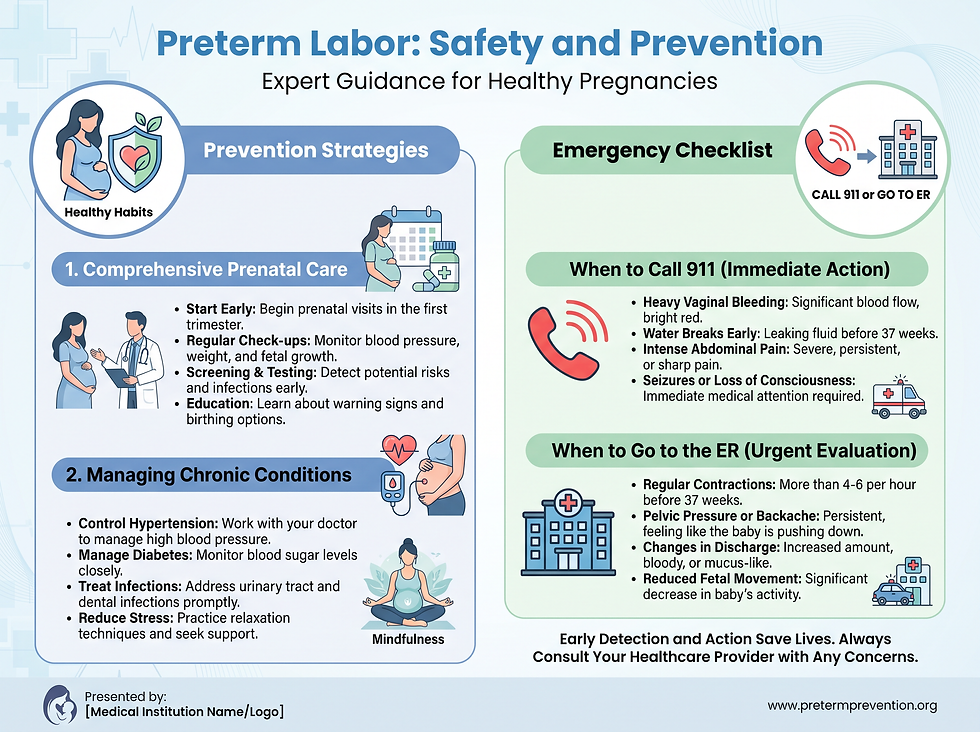
If you experience regular contractions, leaking fluid, or a significant decrease in fetal movement before your 37th week of pregnancy, contact your healthcare provider or visit an emergency department immediately. Early intervention is the most effective way to manage preterm labor and support your baby's development.
Frequently Asked Questions
What exactly defines labor as "preterm"?
Labor is considered preterm if it begins any time before the completion of 37 weeks of pregnancy.
Can Braxton Hicks contractions be mistaken for preterm labor?
Yes, these "practice" contractions are common, but unlike real labor, they usually stop with rest or position changes and do not become more painful over time.
How many contractions in an hour should trigger a call to a doctor?
If you experience four or more contractions in a single hour that do not go away, you should seek medical advice.
Is bed rest still used to treat preterm labor?
Yes, bed rest is one of the traditional supportive measures used to help slow or stop labor progression.
What is the purpose of tocolytic medications?
Tocolytics are used to temporarily stop uterine contractions, usually for about 48 hours, to allow for other treatments like steroids.
How do steroids help a premature baby?
Corticosteroids help speed up the development of the fetus's lungs and other vital organs before an early birth.
Why is magnesium sulfate administered during preterm labor?
It is given to help protect the baby's brain and reduce the risk of physical movement problems like cerebral palsy.
Can a previous premature birth affect current pregnancies?
Yes, having a history of premature birth is one of the most significant risk factors for experiencing it again.
Does stress play a role in starting labor early?
High levels of stress and anxiety are recognized lifestyle risk factors that can contribute to preterm labor.
What is a fetal fibronectin test?
It is a test that checks for a specific protein in vaginal discharge that indicates if the amniotic sac is beginning to detach from the uterus.
Are there specific infections that trigger early labor?
Untreated urinary tract infections (UTIs) and sexually transmitted infections (STIs) are known medical triggers.
Can carrying twins increase the risk of preterm labor?
Yes, carrying multiples (twins, triplets, or more) is a primary risk factor for labor beginning early.
Is vaginal bleeding always a sign of labor?
While it can be a sign of preterm labor, it may also indicate other issues like placental problems; it always requires immediate medical evaluation.
How does a short cervix affect pregnancy?
A short or irregularly shaped cervix can increase the likelihood of the cervix opening too early.
Can preterm labor be prevented?
While not always preventable, regular prenatal care, managing chronic conditions, and avoiding substances like tobacco and alcohol can reduce the risk.
Related Reading and Resources
Medical Disclaimer: This content is for informational purposes only and does not constitute medical advice. Always seek the advice of a qualified healthcare professional regarding any medical condition or treatment.
Comments