Pott's Puffy Tumor: Clinical Overview, Risks, and Emergency Management

Updated: 2 days ago
Medically reviewed by Dr. Baraa Alnahhal, MD · Last reviewed: September 2026
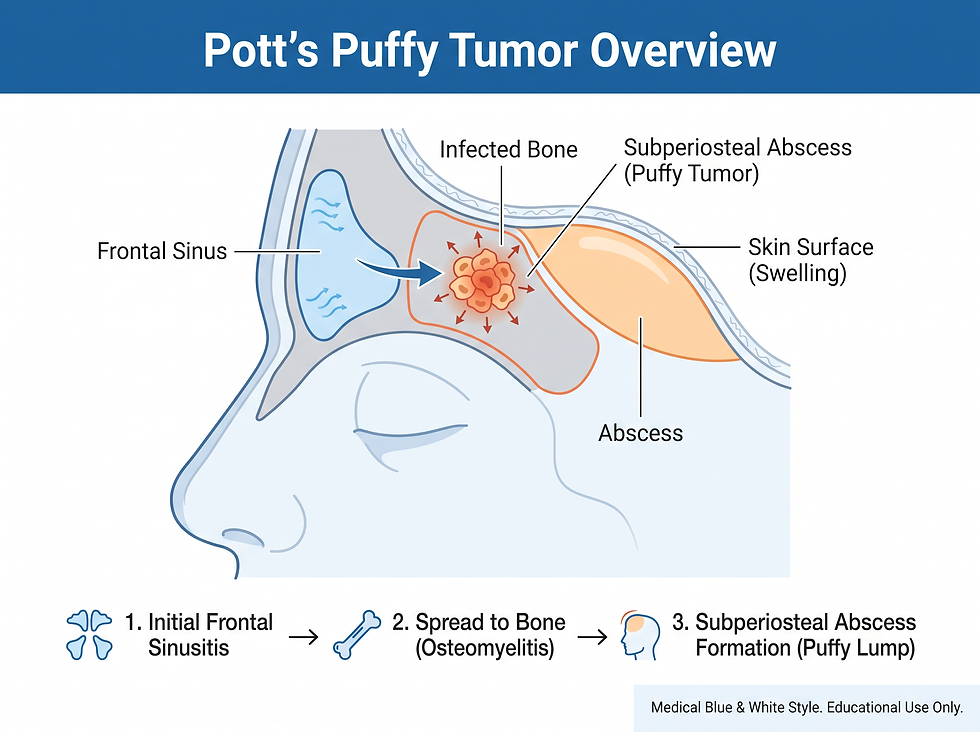
Pott's puffy tumor is not a true tumor but a rare, life-threatening infection of the frontal bone and a forehead abscess. Most commonly arising as a complication of sinusitis or head trauma, it requires immediate emergency surgery and intravenous antibiotics to prevent fatal complications like sepsis or brain infection.
Quick answer: Pott's puffy tumor is a rare medical emergency involving an infection of the frontal bone (forehead) and a subperiosteal abscess. Despite its name, it is not cancerous. It typically results from untreated sinusitis or head trauma and is most common in adolescents. Symptoms include a fluid-filled forehead lump, fever, and severe headaches. Treatment requires immediate emergency surgery to drain the infection and 4-6 weeks of IV antibiotics. Prompt care is critical to prevent fatal brain complications.
Pott’s puffy tumor describes a serious clinical condition characterized by osteomyelitis (bone infection) of the frontal bone and an associated abscess. First described by Sir Percivall Pott in the 18th century, the condition involves a collection of infected fluid that presents as a noticeable lump on the forehead. While the name suggests a neoplastic growth, it is purely an infectious process that demands rapid intervention.
Etiology and Risk Factors
The development of this condition is primarily linked to the spread of infection from the frontal sinuses. Adolescents are particularly vulnerable due to physiological changes in the skull's vascular system during development.
Primary Causes | Description |
Sinusitis | The most frequent cause, involving the spread of infection from the frontal sinuses. |
Head Trauma | Injuries such as falling or being hit in the head, which can introduce infection. |
Other Triggers | Dental infections, insect bites, or the intranasal use of cocaine. |
Individuals with compromised immune systems are at a higher risk for this complication. Specific risk factors include chronic conditions such as diabetes, kidney failure, and aplastic anemia, which can hinder the body's ability to localize and fight the initial infection.
Clinical Presentation and Complications
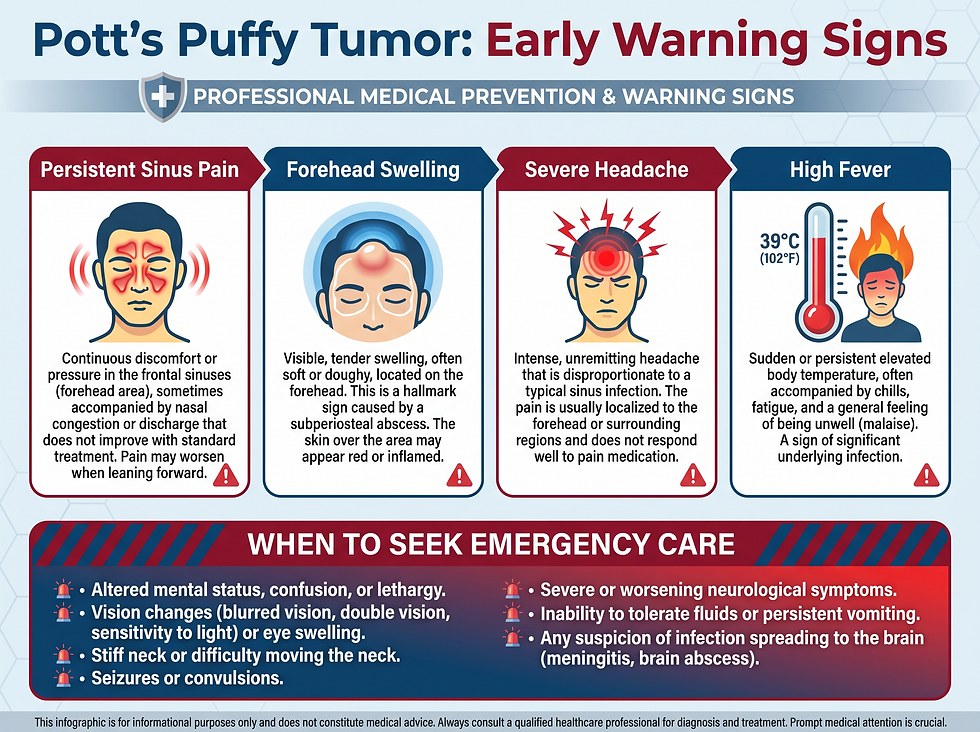
Recognition of the characteristic forehead swelling is vital for timely treatment. The infection often presents with systemic signs of illness alongside localized forehead symptoms.
“Pott’s puffy tumor isn’t a tumor at all. It’s a fluid-filled forehead lump that requires immediate medical care. Untreated, this rare condition can lead to sepsis, brain bleed and other complications.” [1]
In addition to the visible lump, patients may experience high fever, severe headaches, and light sensitivity. If the infection spreads toward the eyes, it can cause proptosis (bulging eyes) and orbital cellulitis. Without emergency care, the infection can penetrate the skull, leading to meningitis, brain abscesses, or life-threatening blood clots in the brain's major vessels.
Diagnostic and Treatment Pathways
Diagnosis is typically managed by an otolaryngologist (ENT) through a combination of physical examination and advanced imaging to determine the extent of the infection.
Diagnostic Tool | Clinical Purpose |
CT Scan | Visualizing bone infection and the size of the abscess. |
Nasal Endoscopy | Evaluating the sinuses for signs of underlying infection. |
Physical Exam | Assessing tenderness, swelling, and eye involvement. |
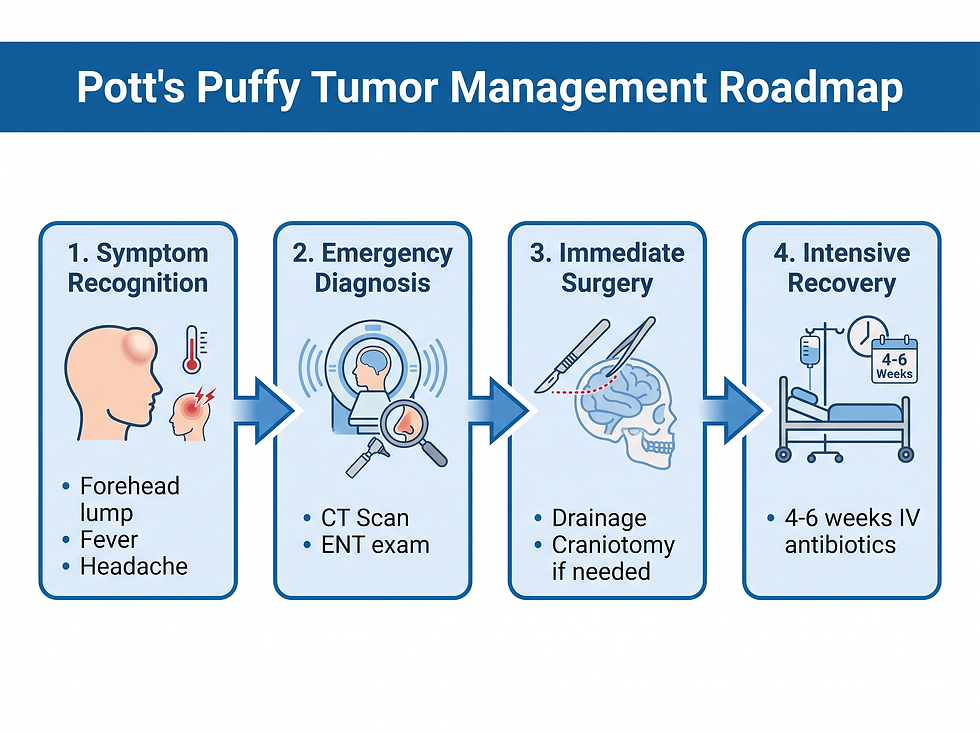
Treatment is an emergency and always involves a combination of surgical drainage and intensive antibiotic therapy. The surgical approach depends on the severity and location of the infection.
Surgical Interventions
Surgeons may utilize minimally invasive techniques or more extensive procedures to ensure all infected fluid is removed and pressure is relieved from the brain.
Functional Endoscopic Sinus Surgery (FESS): A minimally invasive procedure to clear the sinus pathways.
Craniotomy or Trephination: Creating openings in the skull to drain abscesses located near the brain.
Frontal Sinus Obliteration: Removing the sinus cavity entirely to prevent the infection from returning.
Following surgery, patients typically require four to six weeks of broad-spectrum intravenous (IV) antibiotics to fully eradicate the bacteria.
Outlook and Prevention
The prognosis for Pott's puffy tumor is directly tied to the speed of medical intervention. When caught early and treated aggressively, the outlook is generally positive. However, delays can lead to permanent neurological damage or death, with a mortality rate of approximately 12% in adolescents.
Prevention focuses on the aggressive management of the underlying causes. Individuals with persistent sinus infections should be monitored closely for new symptoms such as forehead swelling or worsening headaches, especially following a head injury.
Conclusion
Pott's puffy tumor is a rare but extremely dangerous complication of common infections and injuries. By recognizing that a “puffy” forehead lump is a surgical emergency rather than a minor swelling, patients and caregivers can ensure that life-saving treatment is administered promptly. Modern surgical techniques and potent antibiotics have significantly improved the survival rate, but awareness of the early symptoms remains the most critical factor in a successful recovery.
If you or your child develops a new lump on the forehead accompanied by fever or severe headaches, seek emergency medical care immediately. Do not wait for symptoms to resolve on their own, as early surgical drainage is essential to prevent permanent brain complications.
Frequently Asked Questions
Is Pott's puffy tumor actually a cancer?
No, despite the name, it is an infection-related abscess and not a cancerous growth.
Why is it more common in teenagers?
Changes in the blood vessels of the skull during adolescence allow infections to spread more rapidly to the bone.
Can a simple sinus infection lead to this?
Yes, untreated or severe sinusitis is the most common cause of Pott's puffy tumor.
What does the forehead lump feel like?
It is typically a fluid-filled, tender swelling that may be painful when pressed.
How is it different from a normal bump on the head?
A normal bump from an injury usually resolves; this lump is accompanied by infection symptoms like fever and severe headache.
Is surgery always required?
Yes, emergency surgery is necessary to drain the infected fluid and prevent it from spreading to the brain.
How long is the hospital stay?
Patients often require several weeks of intravenous antibiotics, which may start in the hospital.
Can it cause vision loss?
Yes, if the infection spreads to the eye sockets (orbital cellulitis), it can threaten vision.
What are the signs of sepsis?
Sepsis is a life-threatening response to infection characterized by high fever, confusion, and rapid heart rate.
Is it contagious?
No, the condition itself is a complication of an individual's own infection or injury.
What imaging is best for diagnosis?
A CT scan is the standard tool for visualizing the bone and fluid collection.
Can antibiotics alone cure it?
No, the abscess must be surgically drained for antibiotics to be effective.
What is a craniotomy?
It is a surgical procedure where a piece of the skull is temporarily removed to access the brain area.
Can it come back after surgery?
Recurrence is possible, which is why a full course of IV antibiotics is essential.
What is the survival rate?
With prompt treatment, most patients recover, but there is a 12% mortality rate if complications occur.
Medical Disclaimer: The information provided in this article is for educational purposes only and should not be considered medical advice. Always seek the guidance of a qualified healthcare professional regarding any medical condition or treatment.
Comments