Poison Ivy Rash Guide: Symptoms, Causes, Treatment and Prevention

Updated: 2 days ago
Medically reviewed by Dr. Baraa Alnahhal, MD · Last reviewed: September 2026
Poison ivy rash shows up in warm months when people spend more time outdoors, and the itching can last for weeks. This guide explains exactly what causes the rash, what to expect, and how to treat it at home based on current clinical guidance.
TL;DR
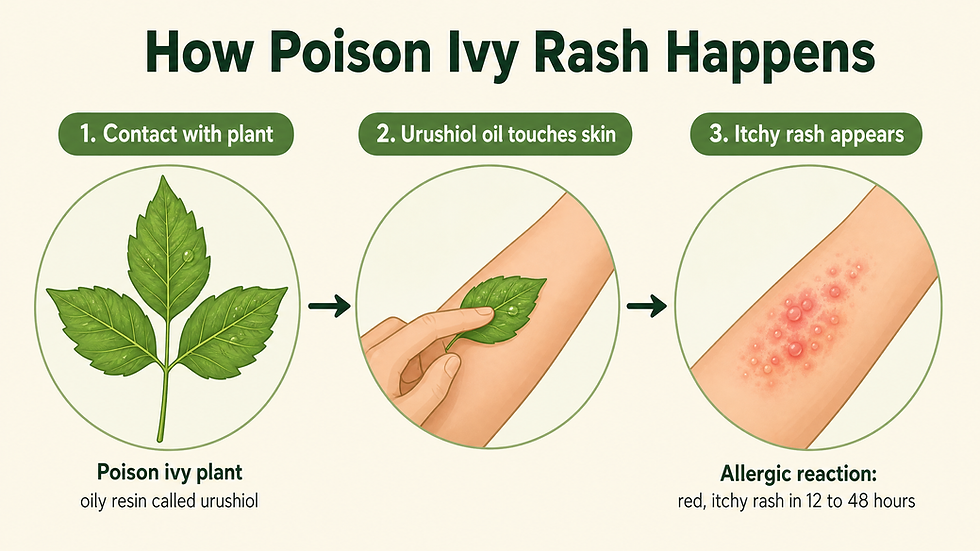
Poison ivy rash is an allergic reaction to urushiol, the oily resin in poison ivy, poison oak and poison sumac. The rash appears 12 to 48 hours after exposure, is extremely itchy, and typically heals on its own in two to three weeks. Most cases can be treated at home with calamine lotion, cool compresses, baking soda or oatmeal baths, and antihistamines. See a doctor if the rash is widespread, affects your face or genitals, or if you inhaled smoke from burning plants and have trouble breathing.
Quick Answer
What it is: An allergic contact dermatitis caused by urushiol oil from poison ivy, oak or sumac.
When it appears: 12 to 48 hours after exposure; lasts two to three weeks.
What it feels like: Intense itching, redness, swelling and blisters, often in straight lines where the plant brushed your skin.
How to treat it: Cool compresses, calamine lotion, cortisone cream, cool baths with baking soda or oatmeal, and oral antihistamines.
When to see a doctor: Severe or widespread rash, rash on eyes, mouth or genitals, oozing pus, fever over 100 F (37.8 C), or breathing trouble after inhaling smoke.
What This Guide Is Based On
All facts in this article come from peer-reviewed clinical sources published between 2017 and 2024, including hospital-based clinical guidance and FDA consumer safety resources, each linked directly below. This content is for education only; consult a qualified healthcare professional for your own care.
What Is Poison Ivy Rash?
Poison ivy rash is an allergic skin reaction to an oily resin called urushiol (pronounced u-ROO-she-ol). This oil runs through the leaves, stems and roots of poison ivy, poison oak and poison sumac.
The reaction itself is a form of contact dermatitis. It happens when urushiol sticks to your skin and your immune system responds to it. The same oil is in all three plants, which is why poison oak and poison sumac cause identical rashes.
Not everyone reacts to urushiol, but most people do, and sensitivity can develop over time. The severity of the rash depends on how much oil reaches your skin, not on how strong your allergy is.
Urushiol is "very sticky, so it easily attaches to your skin, clothing, tools, equipment and pet's fur." Washing the oil off quickly can reduce your chances of getting a rash.
How Do You Get Poison Ivy Rash?
You get poison ivy rash through exposure to urushiol, and there are three main exposure routes:
Exposure route | How it happens | Key risk |
|---|---|---|
Touching the plant | Direct contact with leaves, stems, roots or berries | Most common; rash often forms in a line |
Touching contaminated objects | Oil on clothing, tools, shoes, garden gear or pet fur | Oil stays potent for years if not washed |
Inhaling smoke | Burning poison ivy, oak or sumac carries oil into the air | Can damage nasal passages and lungs |
Because the oil is sticky and long-lasting, you can react to plants you brushed past hours or even days earlier. Oil on unwashed clothing or gear can cause a rash a year later.
One common myth deserves clearing up: fluid oozing from broken blisters does not contain urushiol and will not spread the rash to other people or to other body parts. What does spread the rash is oil that is still on your hands, clothes or objects, which then touches clean skin.

What Does a Poison Ivy Rash Look and Feel Like?
Poison ivy rash typically shows these signs and symptoms:
Redness
Itching, often intense
Swelling
Blisters, which may ooze clear fluid
Difficulty breathing, if you inhaled smoke from burning plants
The rash frequently appears in a straight line, matching the way the plant brushes against your skin. If the oil came from contaminated clothing or pet fur instead, the rash tends to be more spread out. You can also transfer oil to other body parts with your fingers.
The reaction usually develops 12 to 48 hours after exposure and lasts two to three weeks. Some people notice only mild redness, while others develop extensive blistering, depending on how much urushiol reached their skin.
Who Is at Highest Risk of Poison Ivy Rash?
Your risk rises with outdoor activities that put you near these plants. Clinical guidance lists the following higher-exposure activities and occupations:
Risk category | Examples |
|---|---|
Yard work | Gardening, landscaping, removing plants |
Outdoor recreation | Camping, hiking, hunting, fishing from the shoreline |
Outdoor trades | Cable or telephone line installation, construction, forestry |
Agriculture | Farming |
Emergency response | Firefighting, including smoke inhalation risk |
Pets are a hidden risk factor too. Urushiol on fur does not bother animals, but they can carry the oil indoors, where it transfers to hands, furniture and rugs. Keeping pets out of wooded areas and bathing a possibly contaminated pet (with gloves on) reduces this risk.
How Is Poison Ivy Rash Treated?
Most poison ivy rashes need no doctor at all. Diagnosis is usually visual: a clinician identifies the rash by looking at it, and further testing is rarely needed. The rash typically goes away on its own in two to three weeks.
Home treatment focuses on controlling the intense itching while the rash runs its course.

Lifestyle and Home Remedies
The following self-care steps are recommended for controlling the itch:
Cool, wet compresses: Apply to the affected area for 15 to 30 minutes, several times a day.
Cool baths: Soak in cool water with about a half cup (100 grams) of baking soda or an oatmeal-based bath product.
Calamine lotion or menthol creams: Apply to calm the itch.
Over-the-counter cortisone cream or ointment: Use during the first few days.
Oral antihistamines: Diphenhydramine can help with itch and sleep; loratadine is a less drowsy option.
If scratching breaks open blisters, bacteria under your fingernails can infect the skin. Keeping nails short and resisting the scratch reflex protects against this common complication.
When Prescription Treatment Is Needed
Some cases need more than home care. A doctor may prescribe an oral corticosteroid such as prednisone for a rash that is widespread or heavily blistered, and an oral antibiotic if a bacterial infection has developed at the rash site. Rashes on the face or genitals, or severe and widespread reactions, are the main situations where prescription medication is used.
When Should You See a Doctor About Poison Ivy?
Seek emergency medical attention immediately if you inhaled smoke from burning poison ivy and have difficulty breathing. Smoke can cause serious airway irritation and inflammation of the lung lining.
See your doctor (non-emergency) if any of the following apply:
The reaction is severe or widespread
Your skin keeps swelling
The rash affects your eyes, mouth or genitals
Blisters are oozing pus, suggesting infection
You develop a fever greater than 100 F (37.8 C)
The rash does not improve within a few weeks
These warning signs matter because infected rashes need antibiotics, and airway exposure to smoke-borne urushiol is a genuine medical emergency rather than a skin problem.
How Can You Prevent Poison Ivy Rash?
Prevention works on two fronts: avoiding the plants and removing the oil quickly if contact happens. The recommended prevention steps are:
Prevention step | What to do |
|---|---|
Avoid the plants | Learn to identify poison ivy, oak and sumac in every season; stay on cleared paths; keep pets out of wooded areas |
Wear protective clothing | Socks, boots, pants, long sleeves and heavy gloves outdoors |
Remove the plants | Pull plants out with roots included (with gloves) or use herbicide; never burn them |
Wash skin promptly | Use soap and water within 30 minutes of exposure; scrub under fingernails |
Clean contaminated objects | Wash clothing in warm soapy water; clean tools, shoes, jewelry and gear, including shoelaces |
Apply a barrier cream | Use over-the-counter products designed to block the oil |
The 30-minute window matters. Washing within 30 minutes of exposure is the most reliable way to remove urushiol before it triggers a reaction, though even washing after an hour can reduce rash severity.
Remember the limits of "leaves of three, let it be." Poison ivy leaves vary in shape, edge texture and color, and they turn yellow, orange or red in the fall. Poison sumac does not follow the three-leaf pattern at all, growing as a bush or tree with smooth-edged leaves. Identification must work across seasons and plant types.
Summary: Key Facts at a Glance
Question | Answer |
|---|---|
Cause | Allergic reaction to urushiol oil in poison ivy, oak and sumac |
Rash onset | 12 to 48 hours after exposure |
Duration | Two to three weeks, usually heals on its own |
Main symptoms | Redness, intense itching, swelling, blisters |
Rash pattern | Often a straight line where the plant brushed skin |
Is blister fluid contagious? | No; oil on hands, clothes and objects spreads the rash |
Home treatment | Cool compresses, calamine, cortisone cream, baking soda or oatmeal baths, antihistamines |
Prescription treatment | Oral corticosteroids (prednisone) or antibiotics when needed |
Emergency sign | Breathing difficulty after inhaling burning-plant smoke |
Conclusion
Poison ivy rash is uncomfortable but manageable. The oil causes an allergic reaction that peaks in the first week and clears within two to three weeks for most people. Washing skin within 30 minutes of exposure, avoiding scratching, and using cool compresses, calamine lotion and antihistamines cover the large majority of cases. The real exceptions are smoke inhalation, which needs emergency care, and severe or spreading rashes, which need a doctor's prescription.
Want more practical health guidance like this? Explore our related guides on Heat Rash (Prickly Heat), Pityriasis Rosea, and Granuloma Annulare for more step-by-step guides on other rashes and skin reactions.
*This content is for educational purposes only; consult a qualified healthcare professional for diagnosis and treatment of your own condition.*
Frequently Asked Questions
What causes a poison ivy rash?
A poison ivy rash is an allergic reaction to urushiol, an oily resin found in the leaves, stems and roots of poison ivy, poison oak and poison sumac. The oil is sticky and binds to skin, clothing, tools and pet fur on contact.
How long does a poison ivy rash last?
The rash typically appears 12 to 48 hours after exposure and lasts two to three weeks. It usually goes away on its own with home care such as calamine lotion, cool compresses and antihistamines.
Can you catch poison ivy from another person?
Not directly. The fluid oozing from blisters does not contain urushiol and will not spread the rash. However, if urushiol oil remains on a person's skin, hair, clothing or objects, touching it can transfer the oil and cause a reaction.
Why does poison ivy rash sometimes appear in a line?
The rash often forms a straight line because that traces where the plant brushed against the skin. Rashes from contaminated objects or pet fur tend to be more spread out.
Does popping a blister spread poison ivy?
No. Popping blisters does not spread the rash because blister fluid contains no urushiol. But scratching or opening blisters can introduce bacteria and cause a skin infection, so avoid it.
When is poison ivy an emergency?
Inhaling smoke from burning poison ivy, oak or sumac can irritate the airways and lungs. Seek emergency care if you inhaled this smoke and have difficulty breathing.
How do you stop poison ivy from spreading on your body?
Wash exposed skin with soap and water within 30 minutes of contact, including under your fingernails. Then wash all clothing, shoes and gear that may carry the oil, since urushiol stays potent for years on unwashed items.
What is the fastest way to stop poison ivy itching?
Cool, wet compresses applied for 15 to 30 minutes several times a day provide quick relief. Calamine lotion, menthol creams and over-the-counter cortisone cream in the first few days also help, and an oral antihistamine such as diphenhydramine can reduce itch and improve sleep.
References
Poison ivy rash: Symptoms & causes — Mayo Clinic, published May 15, 2024.
Poison ivy rash: Diagnosis & treatment — Mayo Clinic, published May 15, 2024.
*This article reflects clinical guidance published between 2017 and 2024. Medical knowledge evolves, so check current sources for the latest recommendations. This content is for education only and is not a substitute for professional medical advice.*
Comments