PLIF Surgery: A Complete Guide to Posterior Lumbar Interbody Fusion

Updated: 2 days ago
Medically reviewed by Dr. Baraa Alnahhal, MD · Last reviewed: September 2026
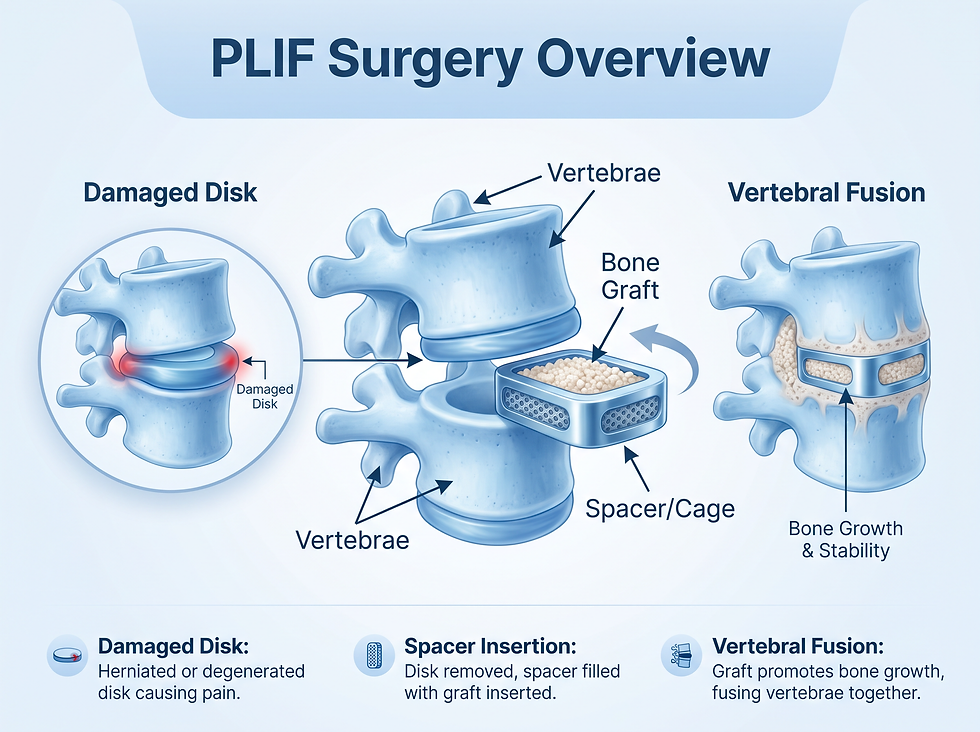
Posterior Lumbar Interbody Fusion (PLIF) is a common spinal surgery used to treat chronic lower back and leg pain when a damaged disk is pressing on spinal nerves. The surgeon removes the damaged disk and fuses two vertebrae together with a bone graft. Here's what the surgery involves, how to prepare, and what recovery really looks like.
What Does PLIF Treat?
PLIF is used when severe lower back and leg pain comes from a damaged or worn intervertebral disk — the soft cushion between two vertebrae. By removing the damaged disk and letting new bone grow between the vertebrae, PLIF stabilizes that part of the spine and takes pressure off the nerves.
It can be done as open surgery through a single incision, or with minimally invasive techniques, depending on the condition and the patient's overall health.
Condition treated | What it is |
Degenerative disk disease | Wear and tear on spinal disks causing pain and instability |
Spondylolisthesis | A vertebra slipping forward over the one below it |
Spinal stenosis | Narrowing of the spinal canal that puts pressure on nerves |
Herniated disks | Recurring disk problems that haven't improved with nonsurgical care |
Scoliosis | A structural spinal curve that needs stabilizing |
Preparing for PLIF Surgery
Success starts before the operating room. One of the most important steps is stopping all tobacco and nicotine use — nicotine significantly slows bone graft growth and wound healing, which raises the risk of infection and of the fusion not taking. In the week before surgery, patients also need to stop NSAIDs (like ibuprofen) and blood-thinning medications to lower the risk of bleeding during the procedure.
Preparation step | Timeline | What to do |
Medication review | 7 days before | Stop NSAIDs and blood-thinning medications |
Lifestyle changes | 7 days before | Limit alcohol and stop all nicotine and tobacco use |
Logistics planning | 7 days before | Arrange a hospital stay and home help for the first days of recovery |
Fasting | 8–12 hours before | Stop eating and drinking to prepare for anesthesia |
What Happens During the Surgery
A PLIF procedure usually takes two to three hours. The patient lies face down, and the surgeon makes an incision in the lower back to reach the spine. A small piece of bone (the lamina) is removed to access the spinal canal, and the damaged disk material is carefully removed.
Once the disk is out, the surgeon fills a spacer — often called a "cage" — with bone graft material and places it in the gap between the vertebrae. The spacer keeps the spine at the correct height and alignment while the bone graft fuses the two vertebrae into one solid piece of bone. Screws typically hold everything in place while healing happens.
Recovery and Long-Term Outlook
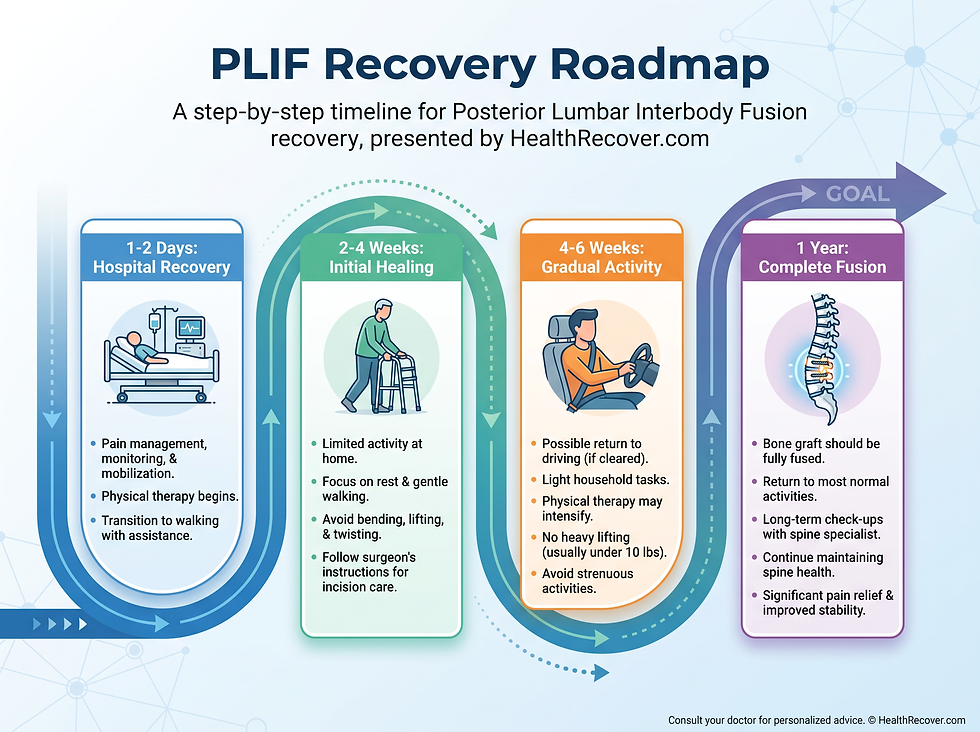
Recovery takes patience. While many people feel nerve pain relief fairly quickly, the biological process of spinal fusion — the bone graft fully filling in and fusing the vertebrae — can take up to a full year.
In the first few weeks, patients need to avoid bending at the waist, twisting the torso, and lifting anything heavy (even a gallon of milk). Short daily walks are encouraged to support circulation and healing, but driving or more strenuous activity needs specific clearance from a provider.
The Care Team Behind PLIF Surgery
PLIF involves a team working together for the safest possible outcome: a spine surgeon who plans and performs the procedure, an anesthesiologist who manages anesthesia during surgery, a physical therapist who guides safe movement and strength-building afterward, and a primary healthcare provider who coordinates overall care and support.

Frequently Asked Questions
What is the primary goal of PLIF surgery?
To relieve severe leg and lower back pain by removing damaged disks and fusing vertebrae to stabilize the spine.
How long does the PLIF procedure take?
The surgery generally takes between two and three hours.
Why do I need to stop smoking before PLIF surgery?
Nicotine interferes with bone graft growth and wound healing, significantly raising the risk of infection and fusion failure.
What is a "cage" in spinal surgery?
A cage is an interbody spacer, made of metal, plastic, or bone, that holds the bone graft and maintains disk height.
How long is the typical hospital stay after PLIF?
Most patients spend one to two days in the hospital for monitoring and initial recovery.
When can I start walking after surgery?
Most patients are encouraged to take short walks starting very soon after the procedure.
Can I drive myself home from the hospital?
No — you'll need someone to drive you home and stay with you for the first day or two.
How long should I avoid lifting heavy objects?
Typically anything over 10 pounds for at least four to six weeks, or as your provider directs.
Is PLIF always open surgery?
No — it can be done as open surgery or with minimally invasive techniques, depending on your needs.
What are the main risks of PLIF surgery?
Risks include infection, excessive bleeding, nerve damage, and possible damage to back muscles.
How long does full spinal fusion take?
It can take up to a full year for the bone graft to completely fuse the vertebrae.
When should I call my doctor during recovery?
Call for a fever over 103°F, chills, redness at the incision site, or unexpectedly severe pain.
Can I take ibuprofen after surgery?
Avoid NSAIDs like ibuprofen for at least seven days before surgery, and follow your provider's specific post-op instructions.
What conditions does PLIF treat besides disk disease?
Spondylolisthesis, spinal stenosis, scoliosis, and recurring herniated disks.
Will I need physical therapy after PLIF?
Physical therapy is a common part of recovery, helping restore strength and mobility safely.
Related Reading on Rinnit
Trusted Sources
This article is for general educational purposes and is not a substitute for professional medical advice, diagnosis, or treatment. Always talk to your doctor or a qualified healthcare provider about your specific condition and treatment options.
Comments