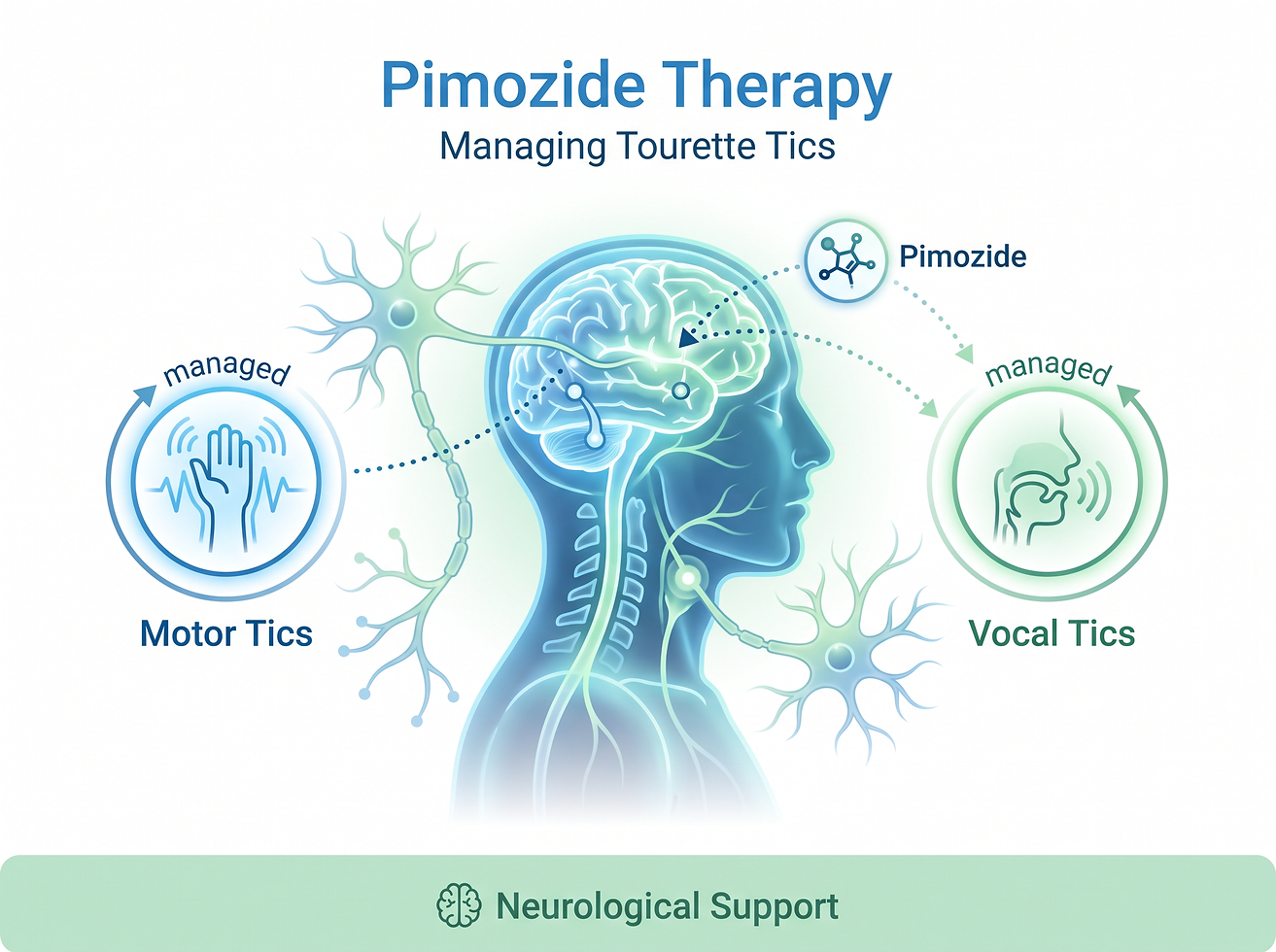
Pimozide: Managing Vocal and Motor Tics in Tourette Disorder

Updated: 1 hour ago
Medically reviewed by Dr. Baraa Alnahhal, MD · Last reviewed: September 2026
TL;DR
Pimozide is an antipsychotic medication specifically prescribed to manage the vocal and motor tics associated with Tourette disorder. It is typically used when other treatments have proven ineffective or are poorly tolerated. By reducing the frequency and severity of tics, it helps individuals better engage in daily activities. Success with this medication requires careful monitoring for side effects, adherence to dietary restrictions, and awareness of numerous potential drug interactions.
Quick Answer
Pimozide is an antipsychotic medication primarily used to manage vocal and motor tics in individuals with Tourette disorder. It is typically reserved for cases where other medications have failed. Taken orally at regular intervals, it works by regulating brain chemicals to reduce involuntary movements and sounds. Patients must avoid grapefruit juice and alcohol while on this therapy. Due to risks such as heart rhythm changes and temperature regulation issues, regular medical monitoring is essential for all patients, including children aged 12 and older.
What is Pimozide?
Pimozide is a specialized medication belonging to the antipsychotic class. Its primary clinical application is the management of Tourette disorder, a condition characterized by involuntary vocal and motor tics. By effectively reducing these symptoms, the medication improves a person's ability to participate in school, work, and social activities.
Because of its specific pharmacological profile and potential for side effects, pimozide is generally prescribed only after other therapeutic options have been exhausted or if a patient cannot tolerate alternative medications. While it is an antipsychotic, its use in this context is strictly focused on neurological tic management.
How to Use Pimozide
Adherence to the prescribed dosage and timing is critical for the effectiveness of pimozide. The medication is taken orally in tablet form and should be swallowed with a full glass of water.
Administration Rule | Instruction |
|---|---|
Consistency | Take doses at regular intervals as directed by your care team. |
Dietary Restriction | Do NOT consume grapefruit juice while taking this medication. |
Alcohol | Avoid alcoholic beverages, as they increase dizziness and drowsiness. |
Missed Dose | Take as soon as remembered, but skip if the next dose is almost due. |
Patients should never stop taking pimozide abruptly. Discontinuation must be managed under the strict supervision of a healthcare provider to avoid adverse reactions or a sudden increase in symptoms.
Medical Precautions and History
Before starting pimozide, a comprehensive medical history must be shared with your healthcare team. Numerous conditions can impact the safety and efficacy of the medication.
Heart and Blood Health: History of irregular heartbeat, heart disease, low blood pressure, or low blood cell counts.
Neurological Conditions: Seizures, Parkinson's disease, or dementia.
Organ Function: Known liver or kidney disease.
Metabolic Factors: Diabetes (the medication may increase blood sugar) and low magnesium or potassium levels.
Daily Functions: Difficulty swallowing or trouble passing urine.
Pregnancy: If you are pregnant, planning to become pregnant, or breastfeeding.
Drug Interactions
Pimozide has an extensive list of potential drug interactions, some of which can be life-threatening. It is particularly dangerous when combined with medications that affect heart rhythm.
Category | Substances to Avoid or Monitor |
|---|---|
Strict Contraindications | Specific antibiotics (azithromycin, erythromycin), certain antidepressants (fluoxetine, sertraline), and antifungals. |
Heart Rhythm Risks | Amiodarone, sotalol, and other drugs that prolong the QT interval. |
Neurological Meds | Levodopa (for Parkinson's), seizure medications, and stimulants for ADHD. |
Other Substances | Opioids for pain, anxiety medications, and certain bladder or stomach drugs. |
Always provide your healthcare provider with a complete list of all medications, herbs, and supplements you are currently using.
Side Effects and Safety Monitoring
Monitoring for side effects is a vital part of pimozide therapy. While some side effects are manageable, others require immediate emergency medical attention.
Urgent Symptoms to Report
Contact your healthcare provider or seek emergency care immediately for:
Extrapyramidal Symptoms (EPS): Uncontrolled body movements, muscle spasms, tremors, or a shuffling walk.
Heart Rhythm Changes: Fast or irregular heartbeat, chest pain, or feeling faint.
Neuroleptic Malignant Syndrome: High fever, stiff muscles, confusion, and excessive sweating.
Allergic Reactions: Rash, hives, or swelling of the face, lips, and throat.
Infection Signs: Fever, chills, or a persistent sore throat.
Common Side Effects
These may occur but should be reported if they become bothersome:
Drowsiness or dizziness.
Dry mouth.
Constipation.
Temperature and Daily Safety
Pimozide can interfere with the body's ability to regulate temperature. It may lower the body's response to both extreme heat and extreme cold. Patients should stay indoors during extreme weather, wear appropriate clothing, and maintain high hydration levels.
Additionally, because the medication can cause drowsiness, patients should avoid driving or operating heavy machinery until they understand how the drug affects their mental alertness. To prevent fainting spells, especially in older adults, it is recommended to sit or stand up slowly.
Conclusion
Pimozide offers a targeted solution for individuals struggling with the debilitating effects of Tourette disorder tics. While it requires diligent monitoring and adherence to safety guidelines, it can significantly improve daily functioning when other treatments have failed. Open communication with a healthcare team is the most effective way to navigate the complexities of this medication and ensure a safe therapeutic experience.
Are vocal or motor tics impacting your quality of life? Consult with a specialist to determine if pimozide is a suitable option for your management plan.
Frequently Asked Questions
What is pimozide used for?
It is used to manage vocal and motor tics in people with Tourette disorder.
Is pimozide a first-choice treatment?
No, it is typically used when other medications have not worked or cannot be tolerated.
Can children take pimozide?
Yes, it can be prescribed for children as young as 12, with specific medical precautions.
Why can't I drink grapefruit juice with pimozide?
Grapefruit juice can interfere with how the body processes the medication, increasing the risk of side effects.
Does pimozide cause drowsiness?
Yes, it can cause significant drowsiness and dizziness.
Can I drive while taking this medication?
You should avoid driving until you know how the medication affects your alertness.
What is Neuroleptic Malignant Syndrome?
It is a rare but serious reaction involving high fever, muscle stiffness, and confusion.
Are there heart risks with pimozide?
Yes, it can cause dangerous changes in heart rhythm.
Can I stop taking it if my tics go away?
No, you must never stop taking it without consulting your healthcare provider.
Does pimozide affect blood sugar?
Yes, it can increase blood sugar levels, which is especially important for patients with diabetes.
How should I store the tablets?
Store them at room temperature (59-86°F) and keep them out of reach of children.
What should I do if I miss a dose?
Take it as soon as possible, but do not double the next dose.
Can I drink alcohol with pimozide?
No, alcohol increases the risk of dizziness and should be avoided.
What are Extrapyramidal Symptoms (EPS)?
These are movement-related side effects like tremors, muscle spasms, or loss of balance.
What happens if I take too much?
Contact a poison control center or go to the emergency room immediately.
References
Medical Disclaimer: This content is for informational purposes only and does not constitute medical advice. Always seek the advice of your physician or other qualified health provider with any questions you may have regarding a medical condition.
Comments