Phytophotodermatitis: Symptoms, Causes, and Skin Care

Updated: 2 days ago
Medically reviewed by Dr. Baraa Alnahhal, MD · Last reviewed: September 2026
Quick Answer
Phytophotodermatitis is a non-contagious skin reaction that occurs when plant chemicals called furanocoumarins mix with sunlight on your skin. It is a type of contact dermatitis, not an allergy, and it often resembles a chemical burn, causing red streaks, blisters, or dark spots. Common triggers include limes, celery, and figs, which is why the condition is nicknamed the "margarita burn." While the rash usually heals on its own within two to four weeks, immediate care involves washing the area and protecting it from further sun exposure to prevent worsening discoloration or infection.
What is Phytophotodermatitis?
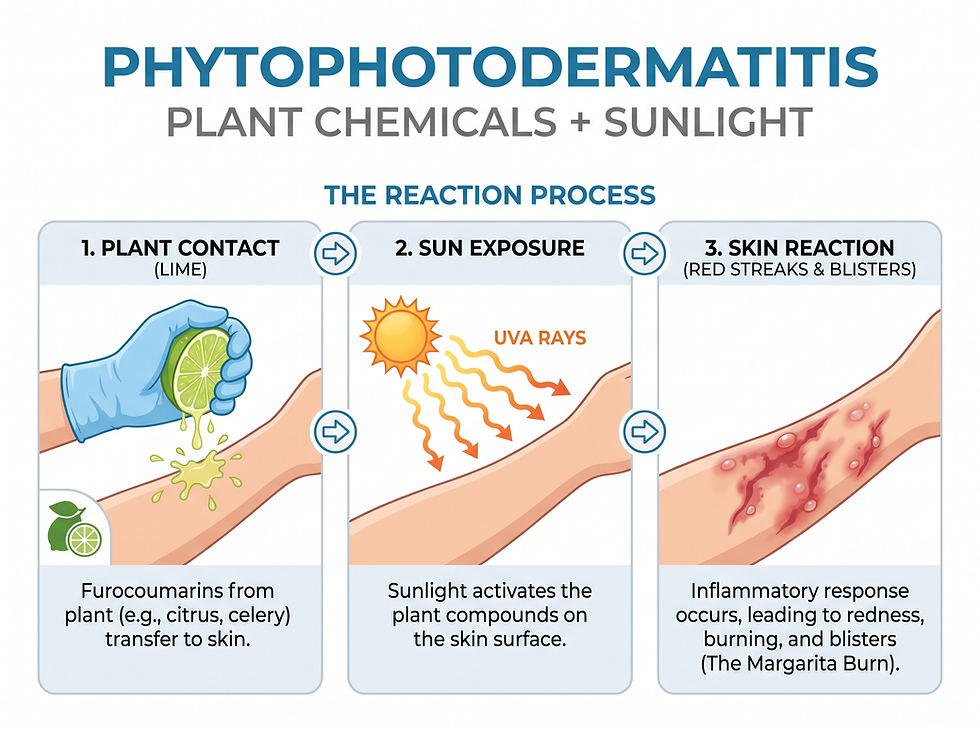
Phytophotodermatitis is a specific skin reaction triggered by the combination of certain plant oils and ultraviolet (UVA) rays from the sun. It is a form of contact dermatitis, meaning it occurs after something touches the skin, rather than being an internal allergy or a contagious infection. The reaction is caused by natural chemicals called furanocoumarins, which plants produce to protect themselves from insects and germs. When these chemicals are transferred to human skin and exposed to sunlight, they become active and irritate or burn the tissue.
This condition is often referred to as a "margarita burn" because it frequently occurs after handling limes while outdoors. The reaction only affects the specific areas of the skin that came into contact with the plant oils, though it can spread if the oils are moved to other body parts by the hands or clothing.
Symptoms and Identification
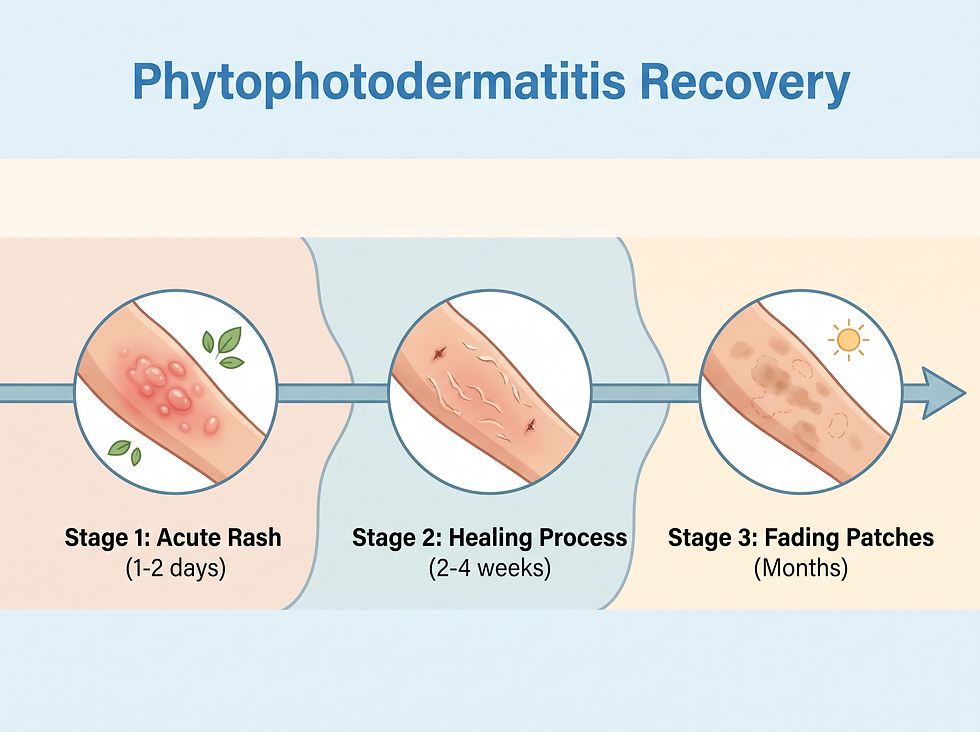
Symptoms typically appear one to two days after the initial exposure to the plant and sunlight. The appearance of the rash can vary significantly between individuals but often follows a distinct pattern that reflects how the plant oil was applied to the skin.
Symptom Category | Common Clinical Signs |
Skin Appearance | Red, purple, or dark streaks; round spots resembling drops or splashes. |
Physical Sensations | Itchy or irritated skin; mild pain and localized swelling. |
Blistering | Small blisters may form in the affected area. |
Discoloration | Temporary dark or light patches that may persist for months after healing. |
Common Plant Triggers and Risk Factors
Many common fruits, vegetables, and herbs contain the furanocoumarins responsible for this reaction. Understanding these triggers is the first step in prevention, especially for those who work or play in environments where these plants are prevalent.
Plants Known to Cause Reactions
Citrus Fruits: Limes are the most common trigger, but other citrus fruits can also cause reactions.
Vegetables and Herbs: Celery, dill, fennel, parsley, parsnips, and carrots.
Other Plants: Figs (especially the sap), anise, bergamot, and wild plants like hogweed.
Who is at Risk?
Anyone can develop phytophotodermatitis if they have the right combination of plant contact and sun exposure. However, certain activities and professions carry a higher risk. This includes restaurant and bar staff who handle citrus, agricultural workers who pick produce, and individuals who engage in gardening, hiking, or camping.

Diagnosis and Professional Evaluation
A healthcare provider can typically diagnose phytophotodermatitis through a physical examination and a review of the patient's recent activities. If a patient reports handling certain plants or fruits followed by sun exposure approximately 24 hours before the rash appeared, the diagnosis is usually clear. In rare or complex cases, a dermatologist might perform a skin biopsy, removing a small sample of skin for microscopic analysis, to confirm the diagnosis and rule out other conditions.
Treatment and Management
Most cases of phytophotodermatitis are mild and can be managed effectively at home. The primary goals of treatment are to soothe the irritation, protect the skin from further damage, and prevent secondary infections.
At-Home Care Tips
Cool Compresses: Apply a cool, wet cloth to the rash for 10 to 15 minutes to reduce pain and swelling.
Gentle Cleansing: Wash the affected area with mild soap and warm water, then pat dry carefully.
Protective Layers: Apply a thin layer of plain petroleum ointment and cover with a clean bandage to protect the skin.
Sun Protection: Keep the area completely out of the sun. Use clothing or high-SPF sunscreen if you must go outdoors.
Over-the-Counter Options
Hydrocortisone Cream (1%): Can reduce itching and discoloration.
Antihistamines: Oral options can help if the rash is particularly itchy.
Calamine Lotion: Provides a cooling effect to irritated skin.
Pain Relievers: Standard OTC options can manage mild discomfort.
For general first-aid guidance on caring for burn-like skin injuries, see our complete guide to burns.
Outlook and Prevention
The skin typically heals on its own within two to four weeks. While the initial rash and blisters fade relatively quickly, the resulting skin discoloration, which may appear as dark or light patches, can last for several months. This discoloration is temporary and will eventually return to the skin's natural tone. It is crucial to avoid picking at the rash or popping blisters, as this can lead to scarring or infection.
Prevention is the most effective way to manage phytophotodermatitis. Simple steps can significantly lower your risk:
Hygiene: Wash your hands and any exposed skin thoroughly with soap and water after handling citrus fruits or gardening.
Protective Clothing: Wear long sleeves, pants, and gloves when trimming weeds, picking produce, or working in a garden.
Sunscreen: Apply sunscreen before going outdoors to provide a barrier against UVA rays.
Conclusion
Phytophotodermatitis is a common but often surprising reaction to everyday plants and sunlight. While the resulting rash can look serious, it is generally manageable with basic care and time. By staying aware of the plants in your environment and practicing good hygiene after handling produce or gardening, you can enjoy the outdoors without the risk of these painful skin reactions.
Are you experiencing a persistent or painful skin rash after spending time outdoors? Contact a healthcare provider or dermatologist today for a professional evaluation and personalized care plan.
Frequently Asked Questions
What is phytophotodermatitis?
It is a skin reaction caused by the combination of specific plant chemicals and sunlight.
Is it an allergy?
No, it is a type of contact dermatitis caused by a chemical reaction, not an allergic response.
Is the rash contagious?
No, the rash cannot be spread from person to person through touch.
Why is it called a "margarita burn"?
It earned this nickname because it often happens to people who get lime juice on their skin while making drinks in the sun.
What are the most common plant triggers?
Limes, celery, figs, parsley, and parsnips are among the most common triggers.
How soon do symptoms appear?
Symptoms usually develop 24 to 48 hours after exposure to the plant and sunlight.
What does the rash look like?
It often appears as red or dark streaks, spots, or blisters that follow the pattern of the plant oil contact.
How long does it take to heal?
The initial reaction usually heals within two to four weeks.
Will the dark spots go away?
Yes, the resulting skin discoloration is temporary but can take several months to fade completely.
Can I pop the blisters?
No, you should avoid popping blisters or scratching the rash to prevent infection and scarring.
How is it diagnosed?
A doctor can usually diagnose it by looking at the rash and asking about your recent plant and sun exposure.
Do I need a prescription for treatment?
Most cases can be treated with home care and OTC products, but a doctor may prescribe stronger steroids for severe cases.
When should I see a doctor?
Seek medical help if the rash is very painful, looks infected, or does not improve with home care.
Can sunscreen prevent it?
Sunscreen can help by blocking the UVA rays that trigger the reaction, but washing the skin is more effective.
What is the best way to prevent it?
The best prevention is washing your skin with soap and water immediately after touching known trigger plants.
This content is for informational purposes only and does not constitute medical advice. Always seek the advice of your physician or other qualified health provider with any questions you may have regarding a medical condition.
Comments