Parsonage-Turner Syndrome: Symptoms, Causes, and Recovery

Updated: 2 days ago
Medically reviewed by Dr. Baraa Alnahhal, MD · Last reviewed: September 2026
TL;DR: Parsonage-Turner syndrome (PTS), also known as brachial neuritis, is a rare neurological disorder characterized by sudden, intense shoulder and arm pain followed by muscle weakness and atrophy. Often triggered by viral infections or immune responses, the condition progresses through three distinct phases: acute pain, muscle weakness, and eventual functional recovery. While no specific cure exists, early diagnosis and supportive therapies like physical therapy and pain management are essential for improving long-term outcomes.
Quick Answer: What Is Parsonage-Turner Syndrome?
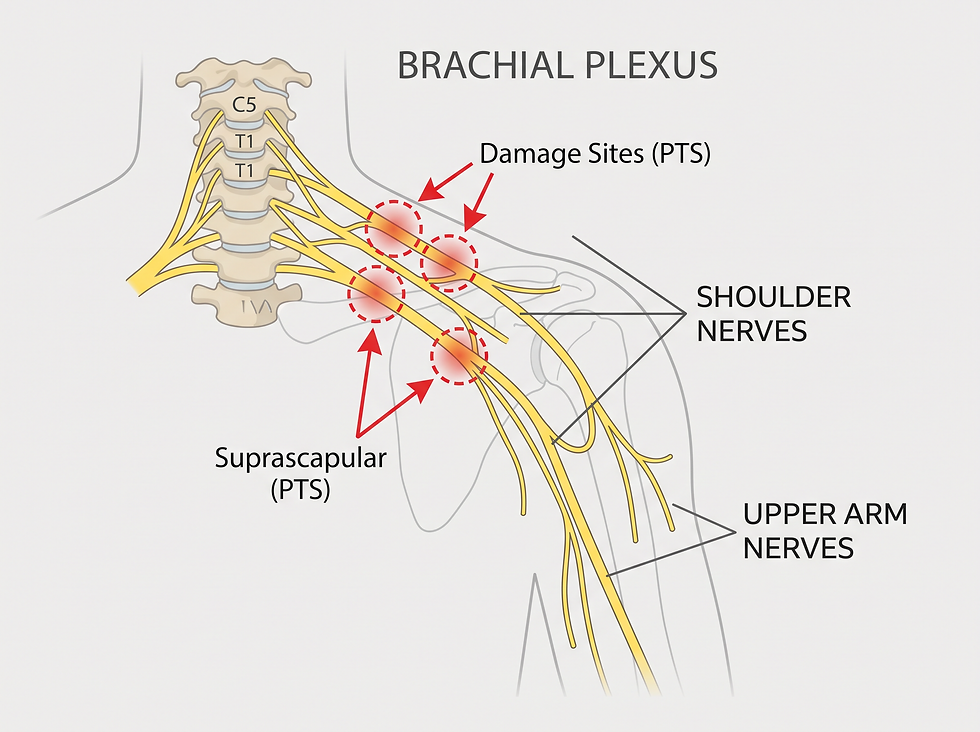
Parsonage-Turner syndrome (PTS) is a rare neurological condition causing sudden, severe shoulder and upper arm pain, followed by muscle weakness and atrophy. It occurs due to damage to the brachial plexus, a network of nerves controlling arm movement. Often triggered by viral infections or immune-mediated responses, PTS primarily affects motor nerves. While typically resolving on its own over several months or years, early diagnosis and supportive care are critical for managing pain and regaining full muscle functionality.
Overview of Parsonage-Turner Syndrome
Parsonage-Turner syndrome is a rare condition affecting approximately 3 per 100,000 people annually. It is most common in men, with an average onset age of 41. The condition involves damage to the brachial plexus, the complex nerve network extending from the spine through the neck and into the arms.
Phase | Characteristics | Duration |
Phase 1: Acute Pain | Sudden, intense pain usually affecting one shoulder; worse at night. | Days to weeks |
Phase 2: Weakness | Pain subsides; muscle weakness and atrophy (loss) develop. | 6 to 18+ months |
Phase 3: Recovery | Muscles gradually regain strength and functionality. | Varies by individual |
Symptoms and Clinical Signs
The primary symptoms of PTS are sudden, sharp pain and subsequent muscle weakness. In approximately 80% of cases, the condition is unilateral, affecting only one arm, most frequently the dominant hand.
Common clinical signs include:
Sudden Intense Pain: Sharp, severe pain in the shoulder or upper arm that may worsen at night.
Muscle Atrophy: Visible loss of muscle tissue following the acute pain phase.
Winged Scapula: A condition where the shoulder blade sticks out abnormally.
Paresthesia: Sensations of prickling, burning, or numbness in the affected limb.
Poor Circulation: Hands may appear red, purple, or spotted due to circulatory changes.
Causes and Triggers
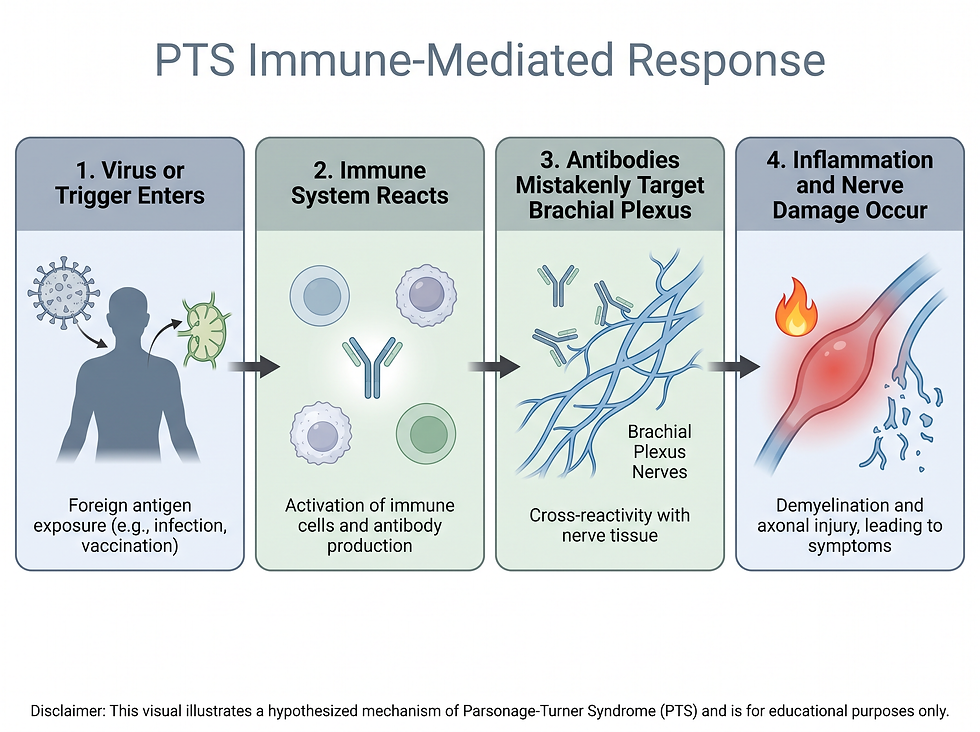
While the exact cause remains unknown, researchers believe Parsonage-Turner syndrome is primarily driven by an abnormal immune system response. This may involve a direct infection of the brachial plexus or an indirect immune attack following a trigger.
Trigger Category | Examples |
Viral Infections | HIV, Mumps, Coxsackie B virus, Fifth disease, Smallpox. |
Physical Stress | Recent surgery, traumatic shoulder injury, strenuous exercise. |
Medical Events | Vaccines, radiation therapy, lumbar puncture, pregnancy/childbirth. |
Systemic Conditions | Lupus, Ehlers-Danlos syndrome, temporal arteritis. |
Diagnosis and Medical Testing
Due to its rarity, PTS is frequently misdiagnosed as more common conditions like a pinched nerve (cervical radiculopathy). Accurate diagnosis typically involves a physical exam followed by specialized neurological testing.
Electromyography (EMG): The primary test used to evaluate the health and function of skeletal muscles and their controlling nerves.
Imaging Tests: MRI scans, nerve ultrasounds, and CT scans are used to confirm the diagnosis and rule out structural issues.
Physical Examination: Testing for muscle strength, reflexes, and sensory perception in the affected arm.
Management and Recovery Path
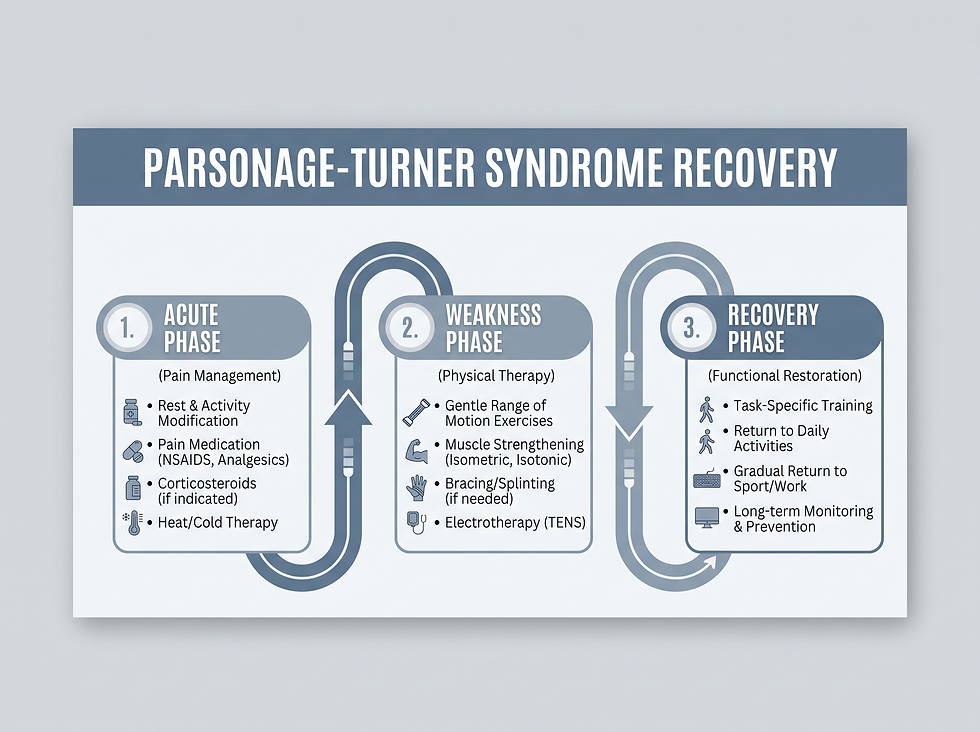
There is no specific cure for Parsonage-Turner syndrome; the condition typically resolves on its own. However, supportive treatments are vital for managing symptoms and facilitating recovery.
Treatment Strategies Include:
Pain Management: Using medications to control the intense pain during the acute phase.
Physical Therapy: Essential for maintaining joint range of motion and strengthening muscles as they recover.
Occupational Therapy: Helping patients adapt to muscle weakness during daily activities.
Specialist Care: A team of neurologists and physical medicine specialists often collaborates on a recovery plan.
Long-Term Outlook
The prognosis for Parsonage-Turner syndrome varies. While most patients eventually regain significant function, the recovery process is often slow, spanning several months to years. Generally, a shorter acute pain phase is associated with a faster and more complete recovery.
Conclusion
Parsonage-Turner syndrome is a challenging condition due to its sudden onset and the prolonged recovery period that follows. While the initial pain can be overwhelming, the majority of individuals see significant improvement in muscle strength and function over time with proper supportive care and rehabilitation.
If you experience sudden, severe shoulder pain followed by weakness, consult a healthcare provider immediately for an evaluation.
Frequently Asked Questions
1. What is the most common name for Parsonage-Turner syndrome? It is also frequently referred to as brachial neuritis or brachial plexus neuropathy.
2. Does PTS always affect both arms? No. In about 80% of cases, it only affects one arm, usually the dominant one.
3. Can a viral infection cause this syndrome? Yes, a recent viral infection is considered the most common trigger for the immune response that causes PTS.
4. How long does the severe pain phase last? The acute pain phase typically lasts from a few days to several weeks.
5. Is Parsonage-Turner syndrome permanent? Most people regain strength and functionality, though the recovery process can take 6 to 18 months or longer.
6. Why is it often misdiagnosed? Because it is rare, providers often mistake it for more common issues like a pinched nerve or cervical spondylosis.
7. Can vaccines trigger PTS? In rare cases, immunizations have been identified as a potential trigger for the immune-mediated response.
8. What is a "winged scapula"? It is a condition where the shoulder blade sticks out from the back, often seen in PTS due to muscle weakness.
9. Who is most likely to get PTS? While it can affect anyone, it is more common in men, with an average age of 41 at onset.
10. Is there a specific cure for PTS? There is no specific cure; the condition usually resolves on its own with supportive treatment.
11. What test is most important for diagnosis? An EMG (electromyography) is the key test for evaluating nerve and muscle function in PTS.
12. Can PTS affect breathing? In rare cases, the weakness can affect the diaphragm, leading to shortness of breath (dyspnea).
13. Should I rest my arm during the pain phase? Pain management is the priority initially; your doctor will advise when to begin physical therapy.
14. Does the pain come back after Phase 1? Typically, the intense pain subsides before the muscle weakness phase begins.
15. Is Parsonage-Turner syndrome hereditary? Most cases are not, but a rare form called hereditary neuralgic amyotrophy is inherited.
Further Reading
Medical disclaimer: This content is for informational purposes only and does not constitute medical advice. Always seek the advice of your physician or other qualified health provider with any questions you may have regarding a medical condition.
Source date: August 3, 2023.
Comments