Pancytopenia: Symptoms, Causes, and Management

Updated: 2 days ago
Medically reviewed by Dr. Baraa Alnahhal, MD · Last reviewed: September 2026
What Is Pancytopenia?
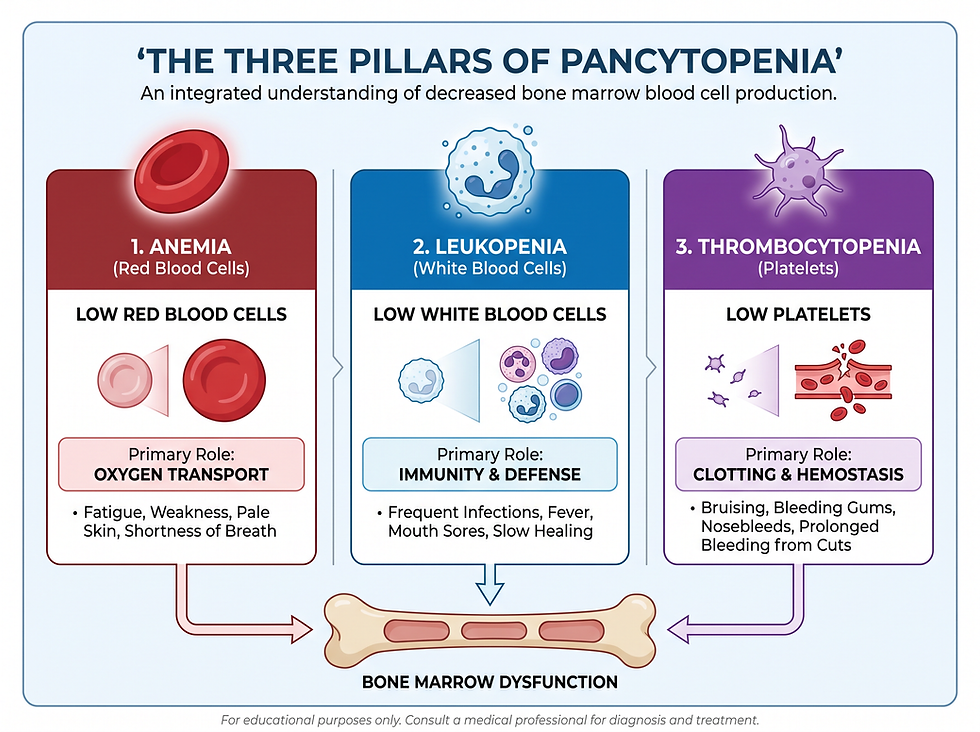
Pancytopenia is a condition defined by the simultaneous deficiency of all three types of blood cells produced by the bone marrow. The term itself is derived from "pan" (meaning all), "cyto" (meaning cell), and "penia" (meaning lack). When a blood test indicates pancytopenia, it means an individual is experiencing three distinct conditions at once: anemia, leukopenia, and thrombocytopenia.
This triple deficiency suggests that either the bone marrow is unable to produce enough healthy blood cells or an underlying condition is destroying the cells faster than they can be replaced. Because red cells carry oxygen, white cells fight infection, and platelets enable clotting, a lack of all three significantly impacts overall health and requires prompt medical evaluation.
Symptoms and Warning Signs
The symptoms of pancytopenia vary depending on which cell count is most severely affected and the underlying cause of the deficiency. Some individuals may experience only mild discomfort, while others may face life-threatening emergencies.
Blood Cell Deficiency Symptoms
Cell Type Affected | Condition Name | Common Symptoms |
Red Blood Cells | Anemia | Extreme tiredness, dizziness, headache, pale skin, and rapid heartbeat. |
White Blood Cells | Leukopenia | Frequent infections, fever, chills, cough, sore throat, and mouth sores. |
Platelets | Thrombocytopenia | Easy bruising, prolonged bleeding, heavy periods, and red/purple skin spots. |
In severe cases, signs of internal bleeding—such as blood in the stool, urine, or vomit—may occur, necessitating immediate medical intervention.
Common Causes of Low Blood Counts
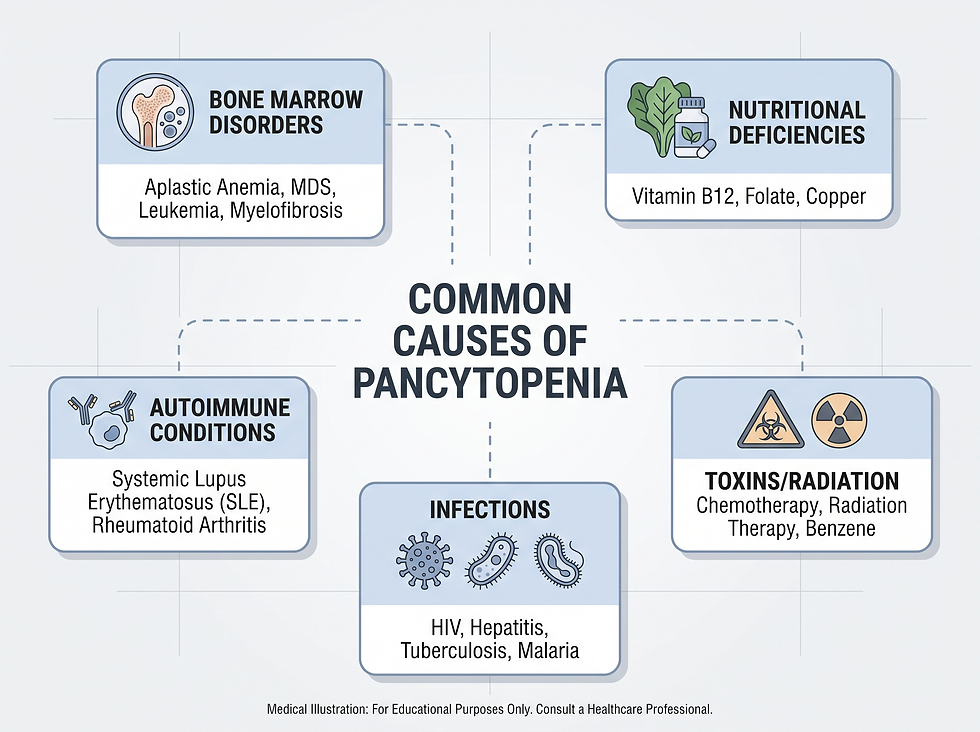
Pancytopenia is typically a symptom of an underlying disorder rather than a standalone disease. The most frequent causes involve problems with how the bone marrow functions, though environmental and lifestyle factors also play a significant role.
Primary Causes of Pancytopenia
Category | Examples and Descriptions |
Bone Marrow Disorders | Cancerous conditions like leukemia or noncancerous disorders like myelodysplastic syndrome. |
Nutritional Deficiencies | A lack of essential vitamins, specifically vitamin B12 and folate, needed for cell production. |
Autoimmune Conditions | Situations where the immune system mistakenly attacks and destroys healthy blood cells. |
Infections and Toxins | Viral infections or exposure to environmental poisons like arsenic, benzene, or radiation. |
Medical Treatments | Side effects from chemotherapy or radiation therapy used to treat various cancers. |
Diagnosis and Testing
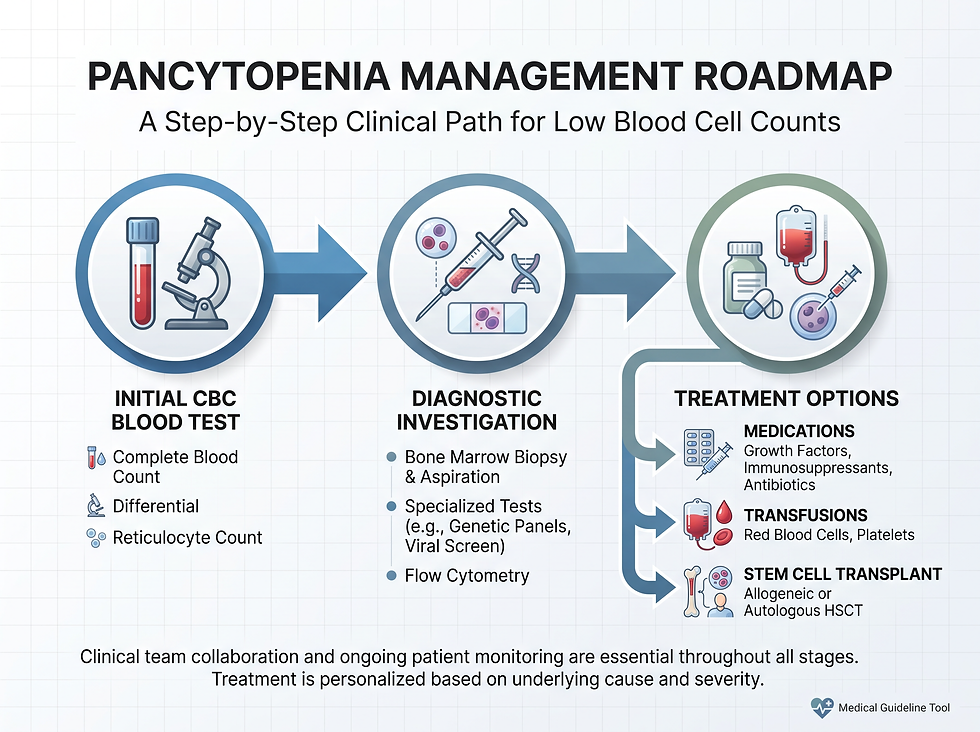
Healthcare providers typically identify pancytopenia through a Complete Blood Count (CBC). While specific values can vary based on age and race, general diagnostic thresholds include hemoglobin levels below 12–13 g/dL, white blood cell counts under 4,000 per microliter, and platelet counts below 150,000 per microliter.
Once pancytopenia is confirmed, further testing is required to identify the root cause. This often involves specialized blood work, imaging, or a bone marrow biopsy. Patients are frequently referred to a hematologist—a specialist in blood disorders—to coordinate these diagnostic efforts and develop a targeted treatment plan.
Management and Treatment Options
Treatment for pancytopenia is highly individualized, focusing primarily on resolving the underlying cause. While diagnostic work continues, providers may use supportive therapies to boost blood cell levels and prevent complications like severe infection or hemorrhage.
Common Treatment Approaches
Medications: Certain drugs can stimulate the bone marrow to increase the production of healthy blood cells.
Blood Transfusions: Dangerously low levels of red blood cells or platelets may be addressed through direct infusions.
Stem Cell Transplant: In cases of severe bone marrow failure, unhealthy stem cells may be replaced with healthy donor cells.
Antibiotics: Broad-spectrum antibiotics are often used preventatively for patients with critically low white blood cell counts.
Conclusion
Pancytopenia is a serious finding that requires a thorough medical investigation. While the outlook depends largely on the underlying cause, early diagnosis and supportive care are essential for managing symptoms and preventing complications. If you experience persistent fatigue, unusual bruising, or frequent infections, consult a healthcare provider to evaluate your blood health and determine the best course of action.
Call to Action: If you have received blood test results indicating low cell counts, schedule a follow-up appointment with a hematologist to discuss a comprehensive diagnostic and treatment plan.
Frequently Asked Questions
What is the literal meaning of pancytopenia?
The name comes from "pan" (all), "cyto" (cell), and "penia" (lack), meaning a lack of all types of blood cells.
Is pancytopenia a type of cancer?
No, it is a medical finding of low blood counts. However, it can be a sign of cancers like leukemia.
What are the three conditions involved in pancytopenia?
It involves having anemia (low red cells), leukopenia (low white cells), and thrombocytopenia (low platelets) simultaneously.
Can nutritional deficiencies cause this?
Yes, a lack of vitamin B12 and folate can prevent the bone marrow from producing enough healthy cells.
What is the most common symptom of low red blood cells?
Extreme tiredness or exhaustion is the most frequently reported symptom of anemia.
How does low platelet count affect the body?
It makes it harder for blood to clot, leading to easy bruising and prolonged bleeding.
What are the signs of low white blood cells?
Signs include frequent infections, fever, chills, sore throat, and mouth sores.
Can environmental toxins cause pancytopenia?
Yes, exposure to poisons like benzene, arsenic, or radiation can damage blood cells and bone marrow.
How is the condition diagnosed?
It is primarily identified through a Complete Blood Count (CBC) test.
What specialist treats pancytopenia?
A hematologist, who specializes in blood and bone marrow disorders, typically manages the condition.
Is a bone marrow biopsy always necessary?
It is often required to determine if the bone marrow is producing cells correctly or if cancer is present.
Can chemotherapy cause pancytopenia?
Yes, pancytopenia is a common side effect of chemotherapy and radiation treatments for cancer.
What is a stem cell transplant?
It is a procedure that replaces unhealthy bone marrow cells with healthy ones to restore blood cell production.
Is pancytopenia always serious?
It can be a sign of a serious chronic condition, but it may also be a short-term issue that resolves once the cause is treated.
Can liver disease lead to low blood counts?
Yes, conditions like alcohol-related liver disease can cause blood cells to become trapped in an enlarged spleen.
Medical Disclaimer: This content is for informational purposes only and does not constitute medical advice, diagnosis, or treatment. Always seek the advice of your physician or other qualified health provider with any questions you may have regarding a medical condition. Never disregard professional medical advice or delay in seeking it because of something you have read here.
Comments