Os Trigonum Syndrome (Posterior Ankle Impingement): Symptoms, Causes, Diagnosis, and Treatment — What You Need to Know

Updated: 2 days ago
Medically reviewed by Dr. Baraa Alnahhal, MD · Last reviewed: September 2026
TL;DR
Os trigonum syndrome, also known as posterior ankle impingement, is a condition characterized by pain and stiffness in the back of the ankle. It occurs in individuals who have an extra congenital bone called the os trigonum located behind the talus (ankle bone). While 15% to 30% of the population has this extra bone, most remain asymptomatic. The syndrome is typically triggered by trauma or repetitive stress, such as the downward toe-pointing required in ballet, soccer, or downhill running. Treatment usually begins with non-surgical methods like rest, physical therapy, and anti-inflammatory medication, though surgical removal of the bone is an option for persistent cases.
Quick Answer: What Is Os Trigonum Syndrome?
Os trigonum syndrome is a clinical condition where an extra bone in the back of the ankle, the os trigonum, becomes a source of pain due to impingement (pinching) or injury. This extra bone is congenital and is attached to the talus bone by a layer of cartilage.
The syndrome is often nicknamed "nutcracker-type impingement" because the pain occurs when the os trigonum is compressed between the ankle and the heel bone, similar to a nut in a nutcracker, specifically when the foot is pointed downward. It is a common issue for athletes and performers whose activities involve frequent extreme ankle flexion.
Clinical Overview and Terminology
The condition is known by several medical names depending on the specific mechanism of the pain.
Term | Description |
|---|---|
Os Trigonum Syndrome | Named after the extra bone causing the irritation. |
Posterior Ankle Impingement | Describes the pinching of tissue in the back of the ankle. |
Nutcracker-Type Impingement | Refers to the compression of the bone when pointing toes down. |
Hindfoot Impingement | A general term for pressure in the rear portion of the foot. |
Congenital Status | A person is born with the extra bone; it may affect one or both feet. |

Causes and Risk Factors
Os trigonum syndrome is not caused by the mere presence of the extra bone, but by its irritation or injury.
Common Triggers
Repetitive Stress: Frequently pointing the toes down (plantarflexion), common in ballet dancers (en pointe) and soccer players (kicking).
Trauma: Sudden injuries, such as a severe ankle sprain, can pull the bone away from its attachment point or tear surrounding tissue.
Physical Activity: Running or walking downhill frequently increases the pressure on the posterior ankle.
Overuse: Pushing off the back of the ankle, a common motion for runners, can lead to chronic inflammation.
Symptoms and Behavioral Signs
Most individuals with an os trigonum are unaware of it until symptoms develop.
Symptom | Description |
|---|---|
Posterior Pain | Deep pain in the back of the ankle, especially when pointing toes. |
Tenderness | Sensitivity to touch in the area behind the ankle bone. |
Reduced Mobility | Decreased range of motion when trying to move the foot. |
Swelling | Inflammation in the hindfoot area. |
Walking Adjustments | Subconscious changes in gait to avoid pain, which may lead to hip or knee discomfort. |

Diagnosis and Imaging
Because the symptoms can mimic other injuries like Achilles tendonitis or talus fractures, a professional diagnosis is essential.
Physical Examination: A healthcare provider will rotate and flex the foot to identify the specific source of pain.
Medical History: Discussion of recent injuries and athletic activities.
Imaging Tests: X-rays to confirm the presence of the os trigonum; MRI or CT scans to assess inflammation and rule out fractures or tendon tears; and ultrasound to view the tissue surrounding the extra bone.
Management and Treatment Pathways
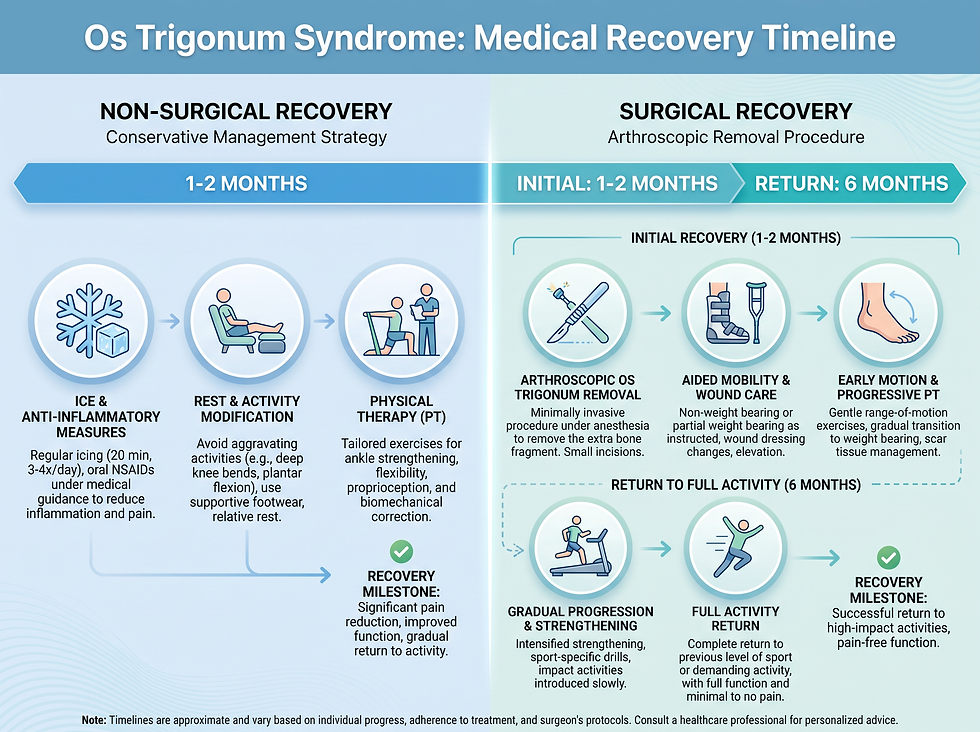
Treatment typically follows a conservative-first approach.
Non-Surgical Strategies
Rest and Ice: Pausing the triggering activity and applying ice to reduce swelling.
Medication: Nonsteroidal anti-inflammatory drugs (NSAIDs) to manage pain.
Immobilization: Using a walking boot to restrict movement and allow the tissue to heal.
Steroid Injections: To provide localized relief from intense inflammation.
Physical Therapy: Exercises to strengthen foot muscles and correct ankle alignment.
Surgical Intervention
If conservative treatments fail after several months, surgery to remove (resect) the os trigonum may be recommended. This can be performed arthroscopically (minimally invasive) or through an open incision. Most athletes return to full activity within six months post-surgery.
Frequently Asked Questions
Is an os trigonum a bone spur?
No. An os trigonum is a congenital extra bone you are born with, whereas a bone spur (osteophyte) is a growth that develops over time due to stress or arthritis.
Can I prevent os trigonum syndrome?
You cannot prevent being born with the bone, but you can reduce the risk of the syndrome by wearing proper footwear, warming up, and avoiding sudden increases in exercise intensity.
Why does it hurt more when I point my toes?
When you point your toes down, the space in the back of your ankle narrows, compressing the os trigonum between your heel and your shin bone.
Is surgery the only way to fix it?
No. Most people recover well with rest, ice, and physical therapy. Surgery is typically reserved for those who do not respond to conservative care.
How common is this extra bone?
Between 15% and 30% of people have an os trigonum, though the vast majority never experience symptoms.
What is the difference between anterior and posterior impingement?
Posterior impingement occurs in the back of the ankle (often due to an os trigonum), while anterior impingement occurs in the front, usually due to bone spurs.
Can children have this syndrome?
Yes, especially active adolescents involved in sports like soccer or dance.
How long does recovery take after surgery?
Initial recovery takes one to two months, with a return to full athletic activity typically occurring within six months.
Does it affect both feet?
It can occur in one or both feet, as it is a congenital trait.
Should I see a specialist?
If you have persistent ankle pain, you should see a healthcare provider, who may refer you to an orthopedic surgeon or podiatrist.
Can a sprained ankle cause this?
Yes. An injury like a sprain can pull the os trigonum away from its attachment, triggering the syndrome.
Is the pain deep or on the surface?
The pain is usually described as a deep ache in the back of the ankle.
Can I still dance with this condition?
Many dancers continue with modified techniques, but if the pain is severe, rest or medical intervention is necessary.
Does it cause long-term damage?
If left untreated, changing your gait to avoid pain can cause secondary issues in your knees, hips, or toes.
What kind of doctor treats this?
Orthopedic specialists, podiatrists, and sports medicine doctors are the primary providers for this condition.
References
Medical Disclaimer: The information provided in this article is for educational purposes only and should not be considered medical advice. Always seek the advice of a qualified healthcare provider with any questions you may have regarding a medical condition. If you are experiencing a medical emergency, call 911 immediately.
Comments