Morgellons Disease: Symptoms, Causes, and Management Strategies

Updated: 1 hour ago
Medically reviewed by Dr. Baraa Alnahhal, MD · Last reviewed: September 2026
TL;DR: Morgellons disease is a chronic condition characterized by uncomfortable skin sensations like crawling and stinging, often accompanied by the belief that fibers are present under the skin. It is considered a psychodermopathy, requiring a combined approach of dermatology and mental health support to manage symptoms and improve quality of life.
Quick answer: Morgellons disease causes persistent sensations of crawling, biting, or stinging under the skin, which may lead to scratching and open sores. While patients often report seeing colored fibers, research indicates these are typically skin proteins or environmental materials rather than parasites. Treatment focuses on a multidisciplinary approach involving skin care, medications, and cognitive behavioral therapy to address the disconnect between brain signals and physical sensations.
Overview of Morgellons Disease
Morgellons disease is a complex and often distressing condition where individuals experience intense sensations on or under their skin. These feelings are frequently described as crawling, burning, stinging, or even biting. A hallmark of the condition is the perception that small, threadlike fibers or particles are emerging from the skin. While these sensations are very real to the person experiencing them, extensive medical research has not found an underlying infection, toxin, or parasite that explains the symptoms.
Medical experts often classify Morgellons as a "psychodermopathy," meaning it involves a significant interaction between the mind and the skin. It is believed that a signaling disconnect occurs between the brain and the body, leading to physical discomfort without a clear external cause. Because of this dual nature, effective management requires addressing both the physical skin changes and the neurological or psychological factors involved.

Common Symptoms and Fiber Characteristics
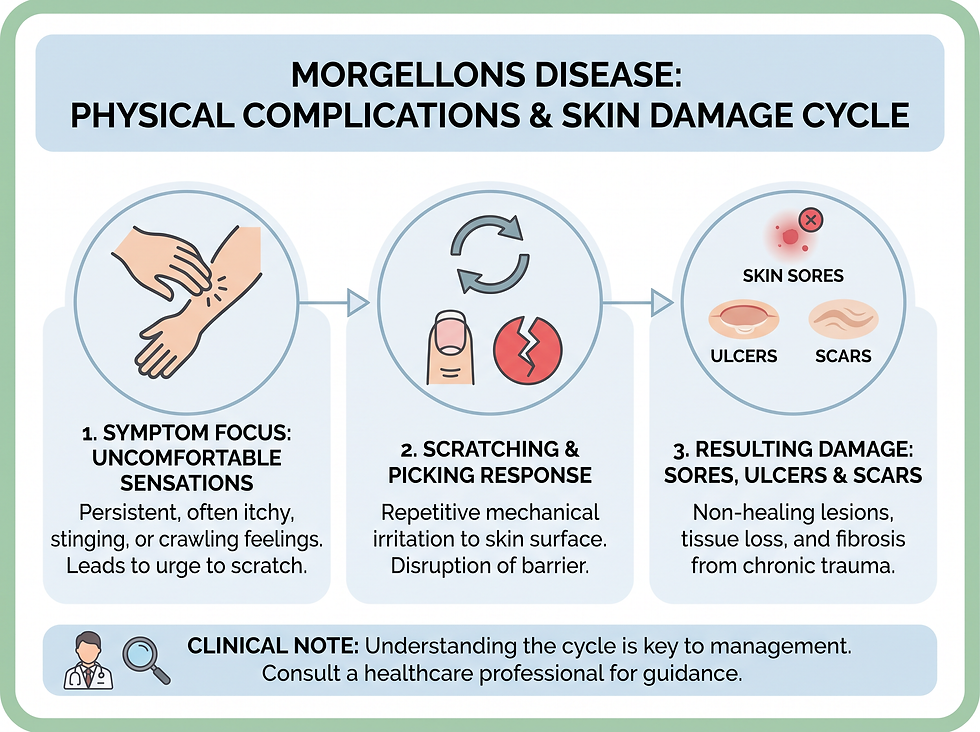
The primary symptom of Morgellons disease is the uncomfortable feeling that something is moving under the skin. This can lead to an overwhelming urge to scratch or pick at the area, which often results in physical damage to the skin surface. Common sensations include:
Crawling: The feeling of insects or organisms moving beneath the skin.
Stinging or biting: Sharp, sudden pains that feel like a physical sting.
Burning: A persistent heat or irritation in specific skin areas.
Tingling: A "pins and needles" sensation often linked to nerve signaling.
In addition to these sensations, many individuals report seeing fibers. These are often described as thin, threadlike strands that can be white, black, blue, or red. Research into these materials has shown that they are typically composed of skin proteins like keratin or collagen, or sometimes tiny pieces of fabric or hair that have become trapped in irritated skin.
Potential Causes and Risk Factors
The exact cause of Morgellons disease remains unknown, but it is widely understood to be related to how the brain processes physical signals from the body. It is not a contagious condition, nor is it caused by environmental toxins. Instead, it appears to be a disconnect in communication within the nervous system.
Certain factors may increase the likelihood of developing Morgellons or worsening its symptoms. These risk factors are often tied to overall mental and emotional well-being:
Pre-existing mental health conditions: Anxiety and depression are commonly observed in individuals with Morgellons.
Substance use: History of substance use disorder may be a contributing factor in some cases.
Chronic stress: High levels of stress can exacerbate the brain-skin signaling issues.
Diagnosis and Medical Evaluation
Diagnosing Morgellons disease involves a thorough examination by a healthcare provider, often a dermatologist. The goal is to rule out other medical conditions, such as allergies, infections, or systemic diseases, that could cause similar skin irritation.
Physical examination: A doctor will inspect the skin for sores, fibers, and signs of infection.
Skin biopsy: A small sample of skin may be taken to look for parasites or other abnormalities under a microscope.
Laboratory tests: Blood work may be ordered to check for underlying health issues or nutritional deficiencies.
Photography: Patients are encouraged to take clear photos of any fibers they see rather than picking at their skin, as picking can lead to further injury and infection.
Management and Treatment Strategies
Because Morgellons involves both the skin and the mind, the most successful treatment plans involve a team of specialists, including dermatologists, psychiatrists, and psychologists. The focus is on reducing discomfort and helping the individual regain a sense of control over their symptoms.

Medications: Antipsychotic drugs are sometimes used to reduce the intensity of skin sensations.
Psychotherapy: Cognitive Behavioral Therapy (CBT) helps manage the urge to pick and reduces stress.
Skin care: Topical treatments and proper wound care prevent infections and promote healing.
Support systems: Addressing underlying anxiety or depression is vital for long-term recovery.
Outlook and Long-Term Recovery
Morgellons disease is typically a chronic condition, meaning it may last for a long time. Symptoms can fluctuate, sometimes improving significantly before flaring up again during periods of high stress. While there is no single "cure," many people find relief through a consistent, multidisciplinary management plan. The goal of treatment is to minimize the impact on daily life, improve sleep quality, and support overall emotional health.
Take Action
If you are experiencing persistent, uncomfortable skin sensations or feel a strong urge to pick at your skin, it is important to seek professional help. Early intervention can prevent skin infections and help you develop effective coping strategies. Consult a primary care provider or a dermatologist to begin a comprehensive evaluation and start your journey toward relief.
Frequently Asked Questions
Is Morgellons disease contagious?
No, research indicates that Morgellons is not caused by an infection or parasite and cannot be passed from person to person.
Are the fibers real?
The sensations and the fibers are real; however, they are usually made of skin proteins or hair rather than external organisms.
Can children get Morgellons?
While it is more commonly reported in adults, anyone can experience the signaling disconnect associated with the condition.
Does scratching help?
No, scratching or picking usually makes the condition worse by causing open sores and potential infections.
What kind of doctor should I see?
A dermatologist is a good starting point, but a team including a psychiatrist or psychologist is often most effective.
Is there a cure for Morgellons?
There is no single cure, but the symptoms can be successfully managed with the right treatment plan.
What are the fibers made of?
Studies show they are typically composed of keratin and collagen, which are natural proteins found in human skin.
Why do I feel crawling sensations?
This is believed to be a result of a signaling error between your brain and the nerves in your skin.
Can stress make Morgellons worse?
Yes, high levels of stress and anxiety can increase the intensity of the skin sensations.
What medications are used?
Doctors may prescribe antipsychotic medications or drugs that target nerve signals to reduce discomfort.
How is it different from delusional parasitosis?
Many experts consider Morgellons to be a form of delusional parasitosis, as both involve the belief in an infestation despite a lack of physical evidence.
Can Morgellons cause scars?
Yes, repeated picking and scratching can lead to permanent scarring and skin discoloration.
Is Morgellons a new disease?
While the name is relatively recent, the symptoms have been described in medical literature for many years.
How long does treatment take?
Improvement is usually gradual and varies for each individual; consistency with the care plan is key.
Can diet affect Morgellons?
While not a direct cause, maintaining a healthy lifestyle can support overall well-being and stress management.
Medical disclaimer: The information provided in this article is for educational purposes only and is not intended as a substitute for professional medical advice, diagnosis, or treatment. Always seek the advice of your physician or other qualified health provider with any questions you may have regarding a medical condition.
Source date: February 11, 2026. This article is current based on the most recent available data from the primary source.
Comments