Monoplegia: Understanding Single-Limb Paralysis

Updated: 2 days ago
Medically reviewed by Dr. Baraa Alnahhal, MD · Last reviewed: September 2026
Editorial note: This article is provided for educational purposes only. It is not medical advice. Always consult a qualified healthcare professional for diagnosis and treatment of any condition.
TL;DR
Monoplegia is a form of paralysis that affects only one limb, either an arm or a leg. While it is most commonly associated with cerebral palsy, it can also result from injuries or strokes. Treatment focuses on managing symptoms through therapy and assistive devices to improve daily functioning and quality of life.
Quick Answer
Monoplegia is a neurological condition characterized by the complete loss of voluntary muscle movement in a single arm or leg. It occurs when nerve signals between the brain and the affected limb are disrupted due to injury, infection, or developmental issues. Unlike partial weakness (monoparesis), monoplegia involves total paralysis of the limb. Management typically involves physical and occupational therapy to maximize mobility and independence.

Overview of Monoplegia
Monoplegia is a specific type of paralysis where voluntary movement is lost in exactly one limb. This condition arises from disruptions within the nervous system, which serves as the body's primary communication network. For a limb to move, signals must travel successfully from the brain through the spinal cord and nerve roots to the muscles. Damage at any point along this pathway can prevent these messages from being delivered, resulting in paralysis.
The condition varies in its duration and impact; for some individuals, monoplegia may be a temporary hurdle following an injury, while for others, it represents a permanent change in physical capability. Understanding the specific nature of the paralysis is essential for developing an effective long-term management plan.
Symptoms and Clinical Presentation
The primary indicator of monoplegia is the inability to move a specific arm or leg. However, the condition often presents with additional physical signs that affect the limb's function and appearance. These symptoms can appear suddenly, as is common with traumatic injuries, or develop gradually over time in cases of underlying neurological diseases.
Symptom Type | Common Manifestations |
Motor Loss | Complete inability to initiate voluntary movement in the arm or leg. |
Muscle Tone Changes | Significant loss of muscle tone or, conversely, excessive stiffness and increased tone. |
Involuntary Actions | Muscle spasms or the curling of fingers and toes in the affected limb. |
Sensory Issues | Potential numbness or tingling accompanying the loss of movement. |
Common Causes of Single-Limb Paralysis
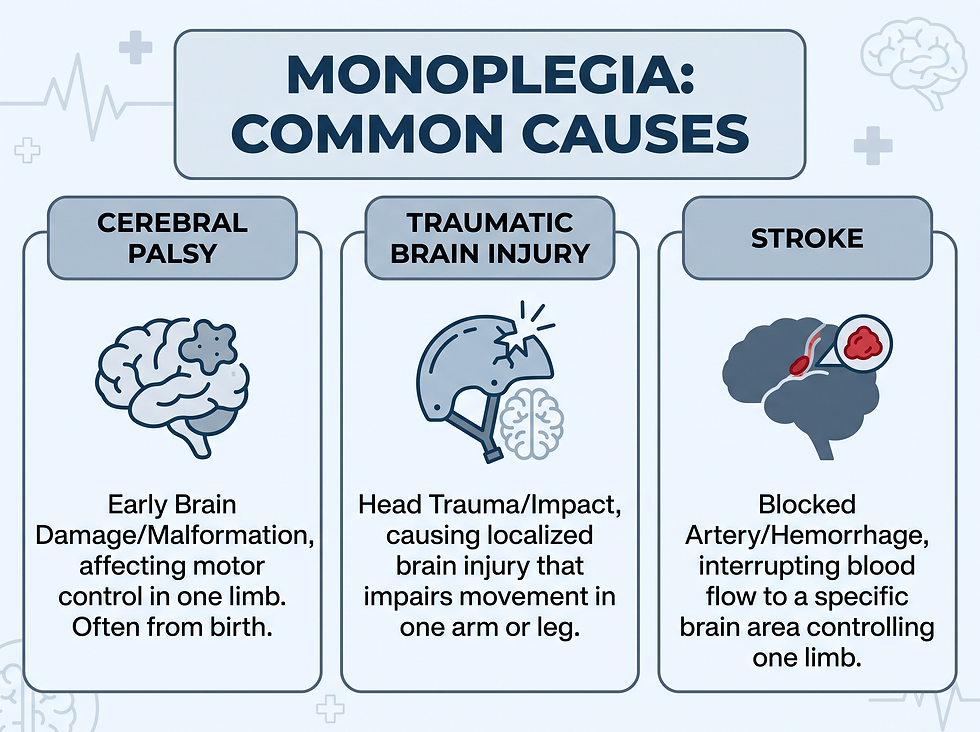
Cerebral palsy is the most frequent cause of monoplegia, typically occurring when the brain areas responsible for muscle control do not develop correctly before or during birth. Beyond congenital factors, various acquired conditions and injuries can damage the nervous system enough to cause localized paralysis.
Traumatic Injuries: Severe damage to the brain or spinal cord, as well as direct injuries to the affected limb, can sever communication pathways.
Vascular Events: Strokes and ruptured aneurysms can deprive brain tissue of oxygen, leading to the loss of limb control.
Infections: Conditions such as polio or infections affecting the brain and spinal cord can lead to temporary or permanent paralysis.
Growths: Tumors located in the brain or along the spinal cord may compress nerves, obstructing the flow of motor signals.
Diagnostic Procedures
Diagnosing monoplegia involves a comprehensive evaluation to identify the extent of the paralysis and its underlying trigger. Healthcare providers typically begin with a physical examination and a detailed review of the patient's medical history, focusing on recent injuries or the timing of symptom onset. To pinpoint the exact location of the nerve disruption, several diagnostic tests may be utilized:
Imaging Scans: MRI and CT scans provide detailed views of the brain and spinal cord to check for tumors, strokes, or structural damage.
X-rays: These are used primarily to assess bone health and identify injuries to the affected limb.
Electromyogram (EMG): This test evaluates the electrical activity of muscles and the nerves that control them, helping to distinguish between nerve and muscle disorders.
Management and Treatment Strategies
While there is currently no cure for monoplegia, medical intervention focuses on symptom relief and enhancing the patient's independence. The treatment approach is highly individualized, addressing the specific cause of the paralysis and the patient's unique functional needs.
Treatment Category | Primary Objective |
Physical Therapy | Enhancing strength, flexibility, and overall mobility in the body. |
Occupational Therapy | Improving the ability to perform daily tasks and self-care activities. |
Psychotherapy | Supporting mental health and helping patients cope with the challenges of disability. |
Assistive Devices | Utilizing wheelchairs, crutches, or scooters to maintain independence in movement. |
Medications such as muscle relaxants or pain relievers may be prescribed to manage discomfort and spasms. In specific cases involving severe muscle curling, botulinum toxin injections can provide relief. Surgical options may also be considered if anatomical corrections are necessary to improve function.

Prevention and Complications
Living with monoplegia requires proactive management to prevent secondary health issues. The lack of movement in a limb can lead to circulatory problems, most notably deep vein thrombosis (DVT) or blood clots. Regular movement through therapy and monitoring for swelling or color changes in the limb are critical preventive measures.
Furthermore, the life-changing nature of paralysis can significantly impact mental health. It is common for individuals to experience anxiety or depression as they adjust to new physical limitations. Accessing psychological support and social resources is a vital component of a holistic care plan.
Conclusion
Monoplegia is a complex condition that requires a multidisciplinary approach to care. By combining physical rehabilitation, assistive technology, and emotional support, individuals can navigate the challenges of single-limb paralysis. Early diagnosis and a consistent management strategy are key to maximizing mobility and maintaining a high quality of life.
Take action today: If you experience a sudden loss of movement, numbness, or persistent weakness in a limb, seek medical attention immediately. Early intervention is crucial, especially in cases where paralysis may be a sign of an underlying emergency like a stroke or spinal injury.
Related reading: Stroke: Symptoms, Causes, Diagnosis, and Treatment - A Complete Guide | Spinal Cord Injury Guide: Symptoms, Causes, Diagnosis, and Treatment
Frequently Asked Questions
1. Is monoplegia the same as having a weak limb?
No, monoplegia refers to the complete loss of voluntary movement. Partial loss of function or weakness is known as monoparesis.
2. Can monoplegia be temporary?
Yes, depending on the cause, such as certain injuries or infections, movement may return over time with proper treatment.
3. What is the most common cause of monoplegia?
Cerebral palsy is the most frequent cause, often resulting from developmental issues or brain damage occurring early in life.
4. Does monoplegia only affect the arm?
No, it can affect either one arm or one leg.
5. Can a stroke cause monoplegia?
Yes, a stroke can damage the specific area of the brain that controls a single limb, leading to paralysis.
6. Are there assistive devices for monoplegia?
Yes, devices like wheelchairs, scooters, and crutches are commonly used to help individuals stay mobile.
7. Is surgery always required for monoplegia?
No, surgery is only recommended in specific cases to correct anatomical issues that may be hindering movement or causing complications.
8. Can monoplegia lead to blood clots?
Yes, the lack of muscle movement can slow circulation, increasing the risk of deep vein thrombosis (DVT).
9. How is monoplegia diagnosed?
Doctors use physical exams, imaging like MRIs and CT scans, and nerve tests such as EMGs to diagnose the condition.
10. Does physical therapy help?
Yes, it is a cornerstone of treatment, focusing on maintaining muscle health and improving overall mobility.
11. Can monoplegia affect mental health?
Yes, adjusting to paralysis can be challenging and may lead to feelings of anxiety or depression.
12. Are muscle spasms common in monoplegia?
Yes, many individuals experience involuntary spasms or stiffness in the paralyzed limb.
13. Is monoplegia a congenital condition?
It can be, as with cerebral palsy, but it can also be acquired later in life due to injury or disease.
14. What is the difference between monoplegia and hemiplegia?
Monoplegia affects one limb, while hemiplegia affects an entire side of the body, including the arm, leg, and sometimes the face.
15. When should I see a doctor for limb weakness?
You should see a doctor immediately if you experience sudden paralysis, persistent weakness, or numbness.
Medical Disclaimer: The information provided in this article is for educational purposes only and should not be used as a substitute for professional medical advice, diagnosis, or treatment. Always seek the advice of a qualified healthcare provider with any questions you may have regarding a medical condition.
Comments