Middle Ear Myoclonus: Symptoms, Causes, and Treatment Options

Updated: 2 days ago
Medically reviewed by Dr. Baraa Alnahhal, MD · Last reviewed: September 2026
TL;DR: Middle ear myoclonus (MEM) is a rare form of tinnitus caused by involuntary muscle contractions within the ear. Unlike typical tinnitus, these sounds, such as clicking or buzzing, originate from internal muscle spasms rather than the environment. While the exact cause is unknown, it may be linked to noise exposure or anatomical variations. Diagnosis involves physical exams and specialized hearing tests. Fortunately, most people find relief through personalized treatment plans that include medications, Botox injections, or, in severe cases, surgical intervention.
Quick answer: Middle ear myoclonus is a condition where tiny muscles in the middle ear, the stapedius or tensor tympani, spasm involuntarily, creating rhythmic clicking, buzzing, or fluttering sounds. It is a form of objective tinnitus, meaning the sounds can sometimes be heard by others. Management typically begins with muscle-relaxing medications or Botox, with surgery reserved as a highly effective last resort. Most patients achieve significant symptom relief and return to normal auditory comfort with proper care.
What Is Middle Ear Myoclonus?
Middle ear myoclonus (MEM) represents a rare and often misunderstood form of tinnitus. While most tinnitus is subjective, meaning only the individual can hear the phantom sounds, MEM is caused by actual physical movements within the ear. Specifically, it involves the involuntary contraction, or myoclonus, of two tiny muscles: the stapedius and the tensor tympani. These spasms create a variety of internal noises that can range from a mild nuisance to a significant disruption of daily life and sleep.
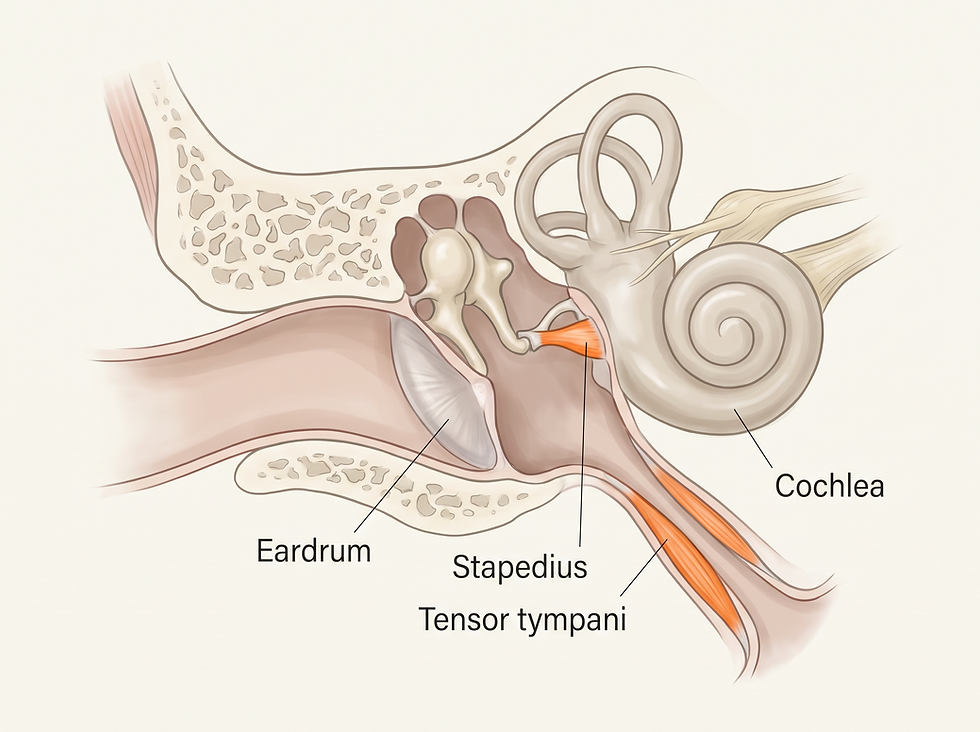
The condition is so uncommon that the medical community is still researching its exact origins. However, current evidence suggests that anatomical factors, such as longer-than-normal middle ear muscles, may play a role. Additionally, long-term exposure to loud noise has been identified as a potential trigger for symptom flare-ups. Because the sounds are generated internally, they are often described as clicking, buzzing, or even thumping, appearing rhythmically but typically not in synchronization with the person's heartbeat.
Identifying the Sounds of MEM
The experience of middle ear myoclonus varies significantly between individuals. The nature of the sound often depends on which muscle is spasming and the frequency of the contractions.
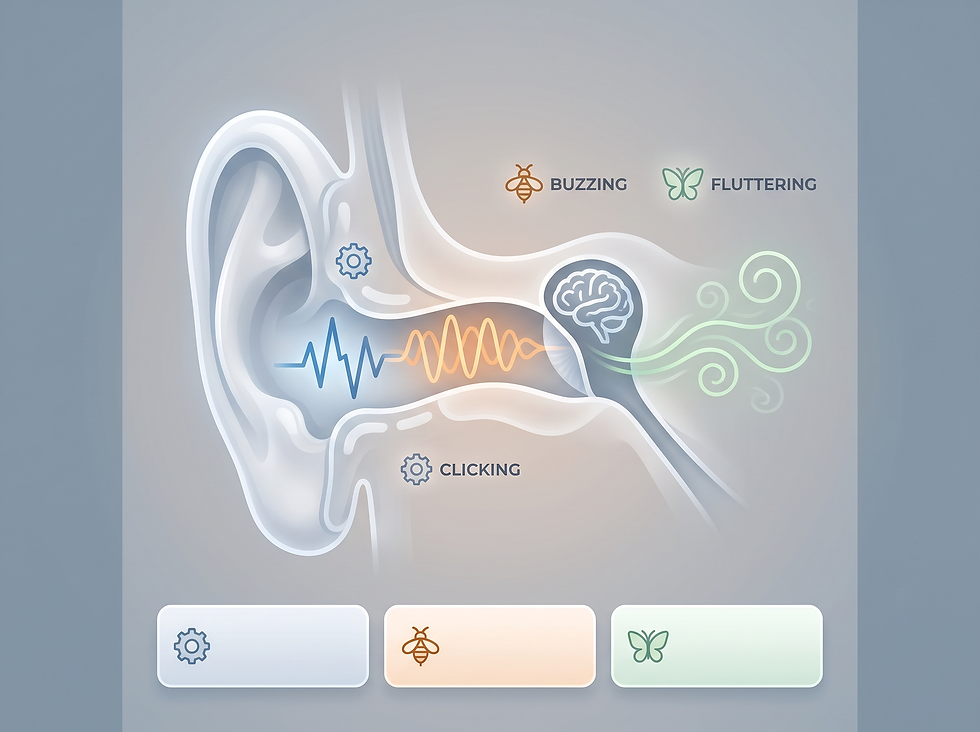
Clicking or buzzing: sharp, mechanical, or electrical sounds that are often rhythmic but irregular.
Fluttering or thumping: sensations similar to a wing beat or a dull drum, which can be persistent or come in bursts.
Crackling or rumbling: similar to the sound of static or distant thunder, and may be triggered by external noise.
Objective tinnitus: sounds audible to people nearby, which occurs when spasms are strong enough to vibrate the eardrum.
For many, these spasms come and go without warning. In some cases, a healthcare provider or even a partner lying nearby may be able to hear the sounds, confirming that the condition is rooted in physical muscle activity rather than psychological perception.
The Path to Diagnosis
Diagnosing middle ear myoclonus requires a careful evaluation of a patient's medical history and a detailed physical examination. Because the condition is rare, it may take time to distinguish it from more common forms of tinnitus or other auditory disorders. Common diagnostic steps include:
Otoscopy: A provider uses a lighted tool to inspect the ear canal and eardrum. In some instances, the eardrum can be seen visibly moving in time with the clicks or buzzes.
Tympanometry: This test measures the movement of the eardrum in response to air pressure, helping to identify irregular muscle contractions.
Hearing and imaging tests: Audiograms, CT scans, or MRIs may be used to rule out other underlying conditions that could be affecting hearing or causing internal noise.
Personalized Treatment and Management
There is no "one-size-fits-all" approach to treating middle ear myoclonus. Instead, healthcare providers tailor management plans to the severity of the symptoms and the patient's response to initial therapies. Management options include:
Oral medications: Providers often start with conservative treatments, such as muscle relaxers, antiseizure medications, or anxiolytics, to help calm the overactive ear muscles.
Botox® injections: A relatively new but promising treatment involves injecting botulinum toxin through the eardrum. This temporarily paralyzes the nerves responsible for the twitching, providing relief from the sounds.
Surgical intervention: When other treatments fail, surgery is considered a highly effective last resort. The procedure involves cutting the tendons of the middle ear muscles to permanently stop the spasms.
Therapeutic support: Cognitive behavioral therapy (CBT) can help patients identify environmental triggers, such as loud noise, and develop coping strategies for managing the stress associated with the condition.

Outlook and Prognosis
The prognosis for individuals with middle ear myoclonus is generally very positive. Most patients experience significant improvement or complete resolution of their symptoms once the right treatment is identified. While surgery carries rare risks, such as increased sensitivity to sound (hyperacusis) or the potential for tendons to reattach, these complications are infrequent. For the vast majority, the unwelcome internal noises are successfully silenced, allowing for a return to normal well-being.
Conclusion
Middle ear myoclonus is a real, physical condition that can be unsettling for those who experience it. However, it is important to remember that it is not something one simply has to "live with." Through a combination of modern medical treatments and personalized care, the involuntary muscle contractions that cause these disruptive sounds can be managed effectively. If you are hearing clicking or buzzing that originates from within your ear, seeking an evaluation from an ear, nose, and throat specialist is the first step toward reclaiming your auditory peace.
When to Seek Care
If you are experiencing persistent or rhythmic sounds in your ear that interfere with your sleep or daily activities, do not dismiss them. Contact a healthcare provider for a comprehensive ear evaluation. Early diagnosis and a tailored treatment plan can help you find the relief you deserve. Prioritize your hearing health today by speaking with a specialist about your symptoms.
Frequently Asked Questions
What is middle ear myoclonus?
It is a rare type of tinnitus caused by involuntary muscle twitches in the middle ear.
What muscles are involved in MEM?
The two muscles involved are the stapedius and the tensor tympani.
How does it differ from regular tinnitus?
Regular tinnitus is often subjective, while MEM is caused by physical muscle spasms and can sometimes be heard by others.
What do the sounds feel like?
Patients often describe clicking, buzzing, crackling, fluttering, or thumping sounds.
Is the sound rhythmic?
Yes, the sounds are usually rhythmic, but they are typically not in time with the person's pulse.
Can other people hear the clicking?
In some cases, yes. This is known as objective tinnitus.
What causes these muscle spasms?
The exact cause is unknown, but it may be linked to noise exposure or anatomical variations.
How is MEM diagnosed?
Diagnosis involves a physical exam with an otoscope, hearing tests, and sometimes imaging like a CT or MRI.
What is tympanometry?
It is a test that measures eardrum movement and can help detect irregular muscle contractions in the middle ear.
Can medications help?
Yes, muscle relaxers, antiseizure drugs, and anxiolytics are often used to reduce spasms.
How does Botox work for MEM?
Botox is injected into the middle ear to temporarily paralyze the nerves causing the muscle twitches.
When is surgery recommended?
Surgery is usually a last resort if medications and other conservative treatments do not provide enough relief.
What happens during surgery?
A surgeon cuts the tendons of the middle ear muscles to stop them from spasming.
What are the risks of surgery?
Rare risks include sound sensitivity (hyperacusis) or the muscles spasming again if the tendons reattach.
Does the condition go away on its own?
Spasms can come and go, but most people require treatment to achieve long-term relief.
Medical disclaimer: The information provided in this article is for educational purposes only and is not intended as a substitute for professional medical advice, diagnosis, or treatment. Always seek the advice of your physician or other qualified health provider with any questions you may have regarding a medical condition.
Source date: January 29, 2026. This article is current based on the most recent available data from the primary source.
Comments