Meralgia Paresthetica: Symptoms, Causes, and Management Strategies

Updated: 58 minutes ago
Medically reviewed by Dr. Baraa Alnahhal, MD · Last reviewed: September 2026
TL;DR
Meralgia paresthetica is a common condition caused by the compression of the lateral femoral cutaneous nerve, leading to burning, tingling, or numbness in the outer thigh. While it can be uncomfortable, most cases resolve with conservative lifestyle changes like wearing loose clothing and managing weight.
Quick Answer
Meralgia paresthetica is a neurological condition caused by pressure on the lateral femoral cutaneous nerve, leading to pain, tingling, or numbness in the outer thigh. Management focuses on relieving nerve compression through lifestyle changes like wearing loose clothing and weight management. Most individuals recover with conservative care. Because the nerve is purely sensory, it does not affect muscle strength or leg movement.
Overview of Meralgia Paresthetica
Meralgia paresthetica, often referred to as lateral femoral cutaneous nerve entrapment, occurs when the sensory nerve extending from the spine through the pelvis to the thigh becomes compressed or inflamed. The name is derived from the Greek words "meralgia," meaning thigh pain, and "paresthetica," describing sensations like burning or tingling. This condition is purely sensory and does not affect the muscles or the ability to move the leg.
Feature | Clinical Detail |
|---|---|
Affected Nerve | Lateral Femoral Cutaneous Nerve (LFCN) |
Primary Symptoms | Pain, burning, numbness in outer thigh |
Prevalence | 3 to 4 people per 10,000 annually |
Typical Outlook | Good; most resolve with conservative care |
Symptoms and Physical Indicators
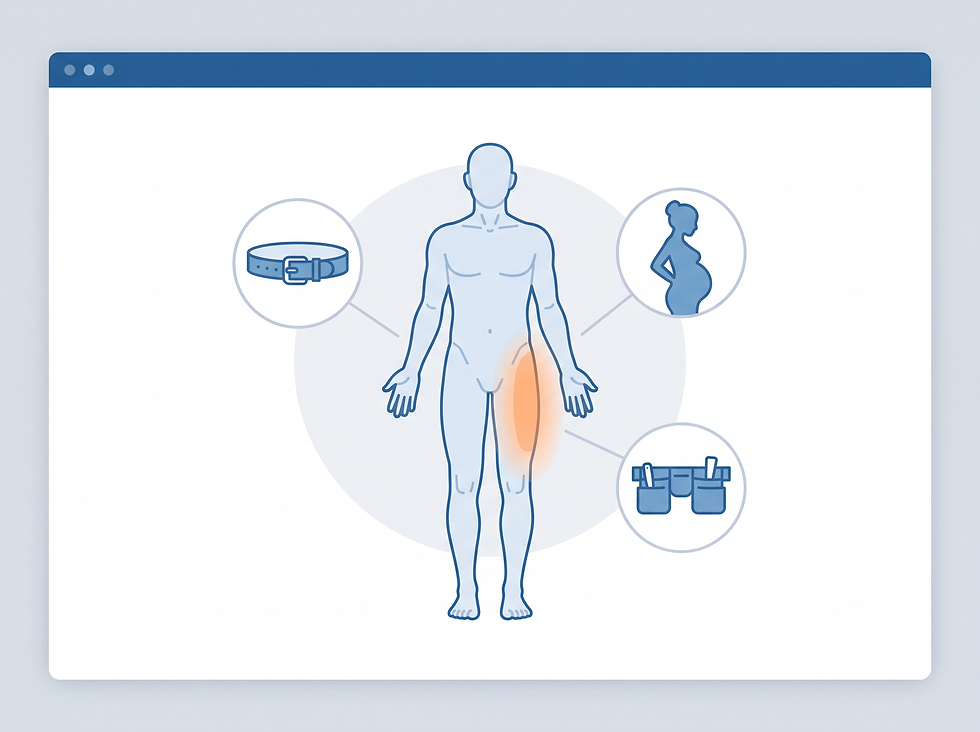
Symptoms of meralgia paresthetica are usually unilateral, meaning they occur on only one side of the body. These sensations are localized to the front and outer side of the upper thigh and may extend down to the outer knee. Physical indicators often include:
Sensory Changes: Aching, burning, tingling, or stabbing sensations.
Hypersensitivity: Gently touching the affected thigh may cause pain, a condition known as allodynia.
Aggravating Factors: Symptoms often worsen after walking or standing for long periods.
Causes and Risk Factors
The compression of the lateral femoral cutaneous nerve can be triggered by a variety of internal and external factors. Anything that increases pressure on the groin or hip area where the nerve passes can lead to the development of the condition.
Internal Risk Factors
Medical conditions that increase internal pressure or cause nerve inflammation are common contributors. Obesity and pregnancy are primary factors due to the added weight and pressure in the pelvic region. Metabolic conditions such as diabetes and hypothyroidism, as well as alcohol use disorder, can also increase susceptibility to nerve issues.
External and Traumatic Factors
Lifestyle choices and environmental pressures frequently cause nerve entrapment. Wearing tight clothing, such as girdles or restrictive waistbands, and using heavy tool belts are common external causes. Direct trauma, such as a seatbelt injury from a car accident or recent hip surgery, can also lead to nerve inflammation and compression.
Risk Category | Common Examples |
|---|---|
Lifestyle/External | Tight clothing, heavy utility belts, seatbelt injuries |
Internal/Medical | Obesity, pregnancy, diabetes, hypothyroidism |
Anatomical/Other | Leg length discrepancy, scoliosis, lead poisoning |

Diagnosis and Clinical Evaluation
Healthcare providers typically diagnose meralgia paresthetica through a physical exam and a review of symptoms and lifestyle history. A common diagnostic tool is the pelvic compression test, where pressure is applied to the thigh to rule out other causes. If the diagnosis is unclear, providers may order blood tests to check for diabetes, thyroid issues, or vitamin deficiencies. Imaging tests, such as X-rays, CT scans, or MRIs, may also be used to rule out bone tumors or spinal issues like herniated discs.
Management and Treatment Options
The majority of cases (approximately 85%) improve with conservative treatment aimed at relieving nerve pressure.
Conservative Management
Initial treatment focuses on lifestyle adjustments. These include losing weight, wearing loose clothing, and avoiding restrictive items like tight belts. Temporary symptom relief can be achieved through icing the area and using over-the-counter anti-inflammatory medications or topical treatments like lidocaine.
Advanced Medical Interventions
For persistent symptoms, healthcare providers may recommend neuropathic pain medications such as gabapentin or pregabalin. Other options include nerve blocks to provide localized anesthesia or radiofrequency nerve ablation to stop pain signals. Surgery is a rare intervention reserved only for severe cases that do not respond to other treatments.

Conclusion
Meralgia paresthetica is a manageable neurological condition that, while uncomfortable, does not pose a threat to overall health. By identifying the source of nerve compression and implementing lifestyle changes, most individuals can achieve significant relief and return to their daily activities without long-term complications.
Call to Action
If you are experiencing persistent burning, tingling, or numbness in your outer thigh, consult with a healthcare professional for a proper evaluation. Early intervention and simple lifestyle changes can help alleviate symptoms and prevent the condition from interfering with your mobility.
Frequently Asked Questions
1. What is meralgia paresthetica?
It is a condition caused by the compression of the lateral femoral cutaneous nerve, resulting in pain or numbness in the outer thigh.
2. Does meralgia paresthetica affect both legs?
No, it typically occurs on only one side of the body.
3. Can tight clothing cause this condition?
Yes, tight jeans, girdles, and restrictive belts are common external causes of nerve compression.
4. Is muscle weakness a symptom?
No, the affected nerve is purely sensory, so muscle strength and movement are not impacted.
5. How common is this condition?
It affects approximately 3 to 4 people out of every 10,000 annually but is often misdiagnosed.
6. Can weight loss help?
Yes, losing excess weight is a primary conservative treatment that reduces pressure on the nerve.
7. Is meralgia paresthetica dangerous?
While bothersome, the condition is not life-threatening or dangerous to your overall health.
8. What is a pelvic compression test?
It is a hands-on diagnostic test where a provider applies pressure to the thigh to evaluate nerve sensitivity.
9. Can pregnancy trigger symptoms?
Yes, the increased pressure in the pelvic region during pregnancy is a known risk factor.
10. Do symptoms go away after pregnancy?
In most cases, pregnancy-associated symptoms resolve on their own after delivery.
11. What medications are used for treatment?
Providers may prescribe neuropathic medications like gabapentin or pregabalin for severe pain.
12. Is surgery necessary?
Surgery is rarely needed and is only recommended for severe cases that do not respond to conservative care.
13. Can diabetes cause this?
Yes, diabetes-related nerve damage is an internal risk factor for developing the condition.
14. How long does recovery take?
Most individuals recover within a few months through conservative management.
15. Can a car accident cause it?
Yes, direct trauma from a seatbelt during a car accident can compress or injure the nerve.
References
Medical Disclaimer: The information provided in this article is for educational purposes only and should not be used as a substitute for professional medical advice, diagnosis, or treatment. Always seek the advice of a qualified healthcare provider with any questions you may have regarding a medical condition.
Comments