Megalencephaly: Understanding Abnormally Large Brain Size in Children

Updated: 2 days ago
Medically reviewed by Dr. Baraa Alnahhal, MD · Last reviewed: September 2026
TL;DR
Megalencephaly, also known as macrencephaly, is a rare condition where a child's brain is abnormally large and heavy for their age. It results from errors in brain cell production and can occur on its own or as part of a genetic syndrome. While there is no cure, various therapies and medications can help manage symptoms like seizures and developmental delays.
Quick Answer
Megalencephaly is a birth condition characterized by an abnormally large brain that weighs more than expected for a child's age. It is often first signaled by a large head (macrocephaly). While primary megalencephaly may not cause neurological issues, other types linked to genetic or metabolic conditions can lead to seizures and developmental delays. Treatment focuses on managing specific symptoms through medication and supportive therapies.
What is Megalencephaly?
Megalencephaly, frequently referred to as macrencephaly, is a neurological condition present at birth in which a child's brain is abnormally large. In these cases, the brain itself is too heavy, weighing significantly more than expected when compared to the average for the child's age and overall body size. This condition is distinct from macrocephaly, which refers generally to a large head, although a large head is often the first visible sign of megalencephaly.
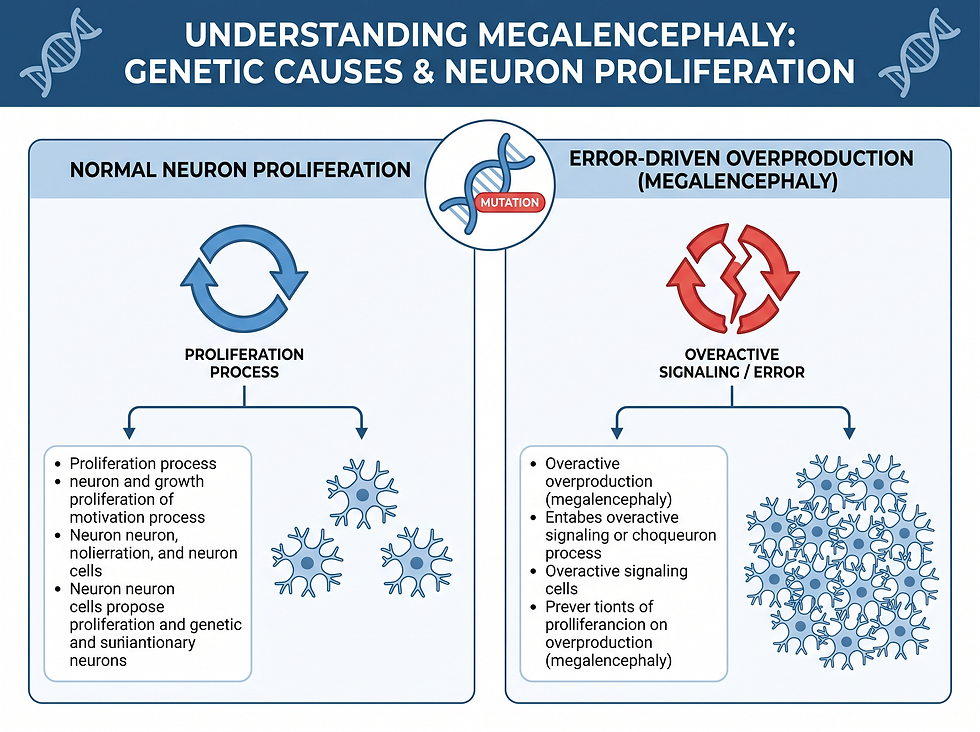
The condition arises due to an error in neuron proliferation, the process by which the body makes new nerve cells. In a child with megalencephaly, the body produces too many brain cells, or the cells do not migrate to their proper locations during development. This excess of brain tissue leads to the increased weight and size characteristic of the condition.
The Three Main Types of Megalencephaly
Megalencephaly is categorized based on its underlying cause and whether it is associated with other health issues. Understanding the specific type is essential for determining the child's long-term care needs.
Primary (Idiopathic): The child has a large brain but no other neurological symptoms. Often, one or both parents also have large heads.
Metabolic: Caused by inborn errors of metabolism, which are genetic conditions that affect how the body processes energy.
Anatomic: Resulting from a gene mutation affecting the nervous system. This type is usually a symptom of an underlying syndrome.
Additionally, providers may classify the condition as hemimegalencephaly if only one side of the brain is enlarged, or bilateral megalencephaly if both sides are affected.

Signs and Symptoms
The symptoms of megalencephaly vary widely depending on the type and whether an underlying genetic condition is present. In some cases, a child may have a large head but experience no other symptoms. However, for many children, the condition is associated with neurological challenges.
Common signs and symptoms include:
Developmental Delays: It may take longer for a child to reach milestones such as saying their first words, crawling, or walking.
Seizures: Many children with megalencephaly develop epilepsy or recurring seizures.
Physical Challenges: Difficulty with movement, balance, and changes in muscle tone (either too strong or too weak) are common.
Intellectual Disability: Some children may face challenges with learning and cognitive development.
Causes and Risk Factors
Megalencephaly is primarily caused by genetic variations that disrupt the normal regulation of brain cell production. While the condition can affect any child, it is observed more frequently in males. The condition can be inherited from a biological family member or occur sporadically, meaning it happens randomly without a family history.
Anatomic megalencephaly is often a symptom of other syndromes, such as Sotos syndrome, Weaver syndrome, or achondroplasia. Similarly, metabolic megalencephaly is linked to conditions like Tay-Sachs disease or Canavan disease, which interfere with the body's chemical processes.
Diagnosis and Management
Diagnosis typically begins with a physical exam where a pediatrician measures the child's head circumference and compares it to growth charts. If the measurement is unusually high, imaging tests like an MRI are used to visualize the brain and check for structural abnormalities.
Treatment Options
While there is no cure for megalencephaly, a robust care team can help manage symptoms and improve the child's quality of life. Treatment is tailored to the specific challenges the child faces:
Medication and Surgery: Antiseizure medications are used to manage epilepsy, and in some cases, surgery may be considered for severe seizures.
Therapeutic Support: Physical, occupational, and speech therapy are vital for addressing developmental and movement challenges.
Educational Support: Early intervention and special education programs can help children reach their full potential.

Outlook and Prognosis
The outlook for a child with megalencephaly is highly variable. For children with primary megalencephaly, the head size usually stabilizes by 18 months, and they may lead a life free of neurological issues. For those with secondary types, the prognosis depends on the severity of the underlying condition and how well symptoms like seizures are controlled. Early diagnosis and a consistent care plan are the most effective ways to support a child's development.
Frequently Asked Questions
1. What is megalencephaly?
It is a condition where a child is born with an abnormally large and heavy brain due to an overproduction of brain cells.
2. Is megalencephaly the same as macrocephaly?
No. Macrocephaly means a large head, which can be caused by many things. Megalencephaly specifically refers to the brain itself being too large.
3. What is the most common sign of the condition?
An unusually large head circumference is often the first sign noticed by parents or healthcare providers.
4. Can megalencephaly be detected before birth?
In some cases, such as hemimegalencephaly, the condition can be detected during a pregnancy ultrasound.
5. What are the main causes?
It is usually caused by genetic mutations that affect how the brain produces and organizes its cells.
6. Are there different types of megalencephaly?
Yes, the three main types are primary (idiopathic), metabolic (linked to energy processing), and anatomic (linked to other syndromes).
7. Does every child with a large brain have symptoms?
No. Children with primary megalencephaly often have a large brain but no other neurological problems or symptoms.
8. What kind of developmental delays are common?
Delays in speech, crawling, and walking are frequently observed in children with symptomatic megalencephaly.
9. How is the condition diagnosed?
Diagnosis involves head measurements, physical exams, and imaging tests like an MRI to look for brain abnormalities.
10. Is there a cure for megalencephaly?
There is no cure for the condition itself, but the symptoms can be managed with various treatments.
11. How are seizures managed?
Seizures are typically managed with antiseizure medications, though surgery is an option for some severe cases.
12. What role does therapy play in treatment?
Speech, physical, and occupational therapies help children improve their movement, communication, and daily living skills.
13. Is megalencephaly hereditary?
It can be inherited from family members, but it also occurs sporadically in children with no family history of the condition.
14. Who is on a child's care team?
A care team often includes pediatricians, neurologists, neurosurgeons, and developmental specialists.
15. What is the long-term outlook?
The outlook varies. Some children have no issues, while others require lifelong support for neurological or developmental challenges.
Medical Disclaimer: The information provided in this article is for educational purposes only and should not be used as a substitute for professional medical advice, diagnosis, or treatment. Always seek the advice of a qualified healthcare provider with any questions you may have regarding a medical condition.
Comments