Lyme Carditis: Symptoms, Causes, and Recovery

Updated: 1 hour ago
Medically reviewed by Dr. Baraa Alnahhal, MD · Last reviewed: September 2026
TL;DR
Lyme carditis is a rare but serious complication of Lyme disease where bacteria infect the heart tissue, causing inflammation. This often leads to heart block, a disruption of the heart's electrical signals. Symptoms include chest pain, dizziness, and fainting, typically appearing one to two months after a tick bite. While the condition can be life-threatening if untreated, a standard course of antibiotics usually restores normal heart function within weeks.
Quick Answer
Lyme carditis is heart inflammation caused by the Borrelia burgdorferi bacteria following an infected tick bite. It occurs in up to 10% of Lyme disease cases, primarily causing heart block—a disruption of the heart's electrical rhythm. Symptoms like chest pain and fainting require immediate medical attention. Most patients achieve a full recovery with a 14-to-21-day course of antibiotics, which clears the infection and reverses heart function issues.
What Is Lyme Carditis?
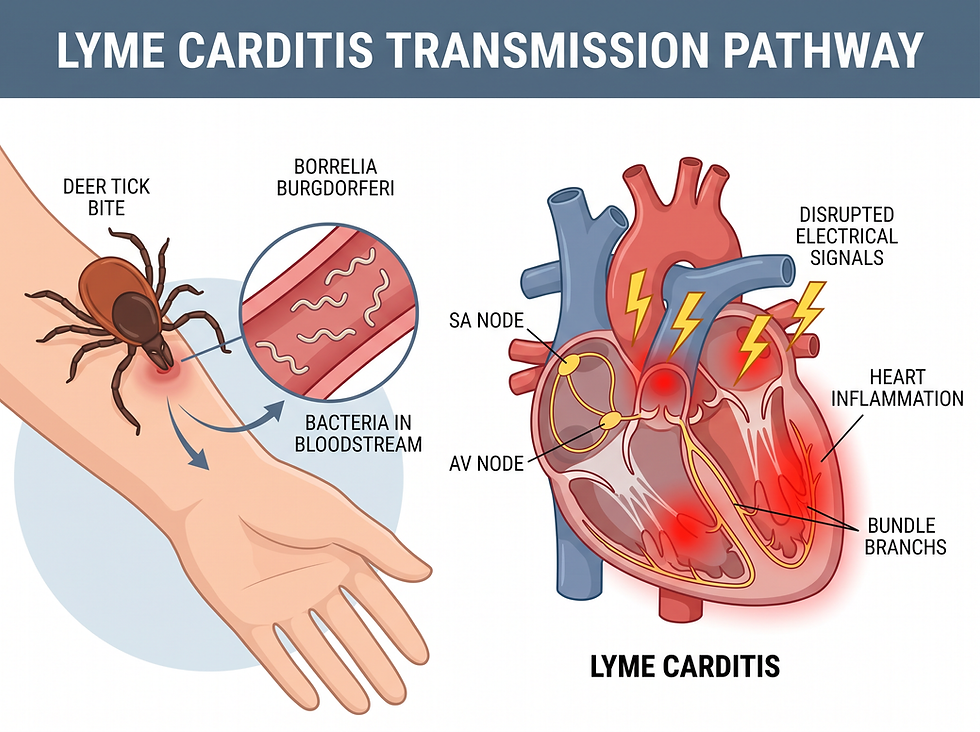
Lyme carditis represents a significant clinical stage of Lyme disease where the infection spreads beyond the initial bite site to the heart. This condition occurs when the Borrelia burgdorferi bacteria enter the heart tissue, triggering an intense inflammatory response from the immune system. This inflammation primarily affects the heart's electrical system, which is responsible for coordinating the heartbeat.
The most common manifestation of this condition is heart block, a serious disruption where electrical signals cannot travel normally through the heart's chambers. While relatively rare, affecting approximately one out of every ten individuals with Lyme disease, the increasing prevalence of tick-borne illnesses makes awareness of this complication essential for early intervention.
Symptoms and Clinical Presentation
Symptoms of Lyme carditis typically emerge during the "early disseminated stage" of the infection, usually one to two months after the initial tick bite. Patients may experience sudden cardiac symptoms such as chest pain, heart palpitations, and shortness of breath. Dizziness and fainting (syncope) are also common, often indicating that the heart's electrical signals are being significantly disrupted.
In many cases, these cardiac symptoms are preceded by more generalized signs of Lyme disease. Recognizing the combination of heart-related issues with systemic symptoms is crucial for a timely diagnosis, especially for individuals who may not recall a specific tick bite or the characteristic "bullseye" rash.
Symptom Category | Clinical Features |
Cardiac Symptoms | Chest pain, palpitations, and shortness of breath. |
Neurological Signs | Fainting, dizziness, and lightheadedness. |
Systemic Lyme Signs | Bullseye rash, fever, fatigue, and body aches. |
Onset Timing | Typically 1 to 2 months after the tick bite. |
Primary Complication | Heart block (disrupted electrical signaling). |
Diagnostic Pathway
Healthcare providers utilize a combination of clinical history and specialized testing to diagnose Lyme carditis. The process begins with a physical exam and a discussion of recent outdoor activities or travel to regions where deer ticks are prevalent. Because cardiac symptoms can mimic other conditions, diagnostic accuracy is paramount.
The primary tool for identifying electrical disruptions is the electrocardiogram (EKG), which maps the heart's rhythm. If initial tests are inconclusive but symptoms persist, a Holter monitor may be used to track heart activity over a 24-to-48-hour period. Blood tests are also essential to confirm the presence of the causative bacteria and guide the treatment plan.

Management and Treatment
The cornerstone of Lyme carditis management is a targeted course of antibiotics, typically lasting 14 to 21 days. These medications are highly effective at clearing the bacterial infection and reversing the associated heart inflammation. Depending on the severity of the heart block, treatment may be administered orally at home or via an IV in a hospital setting for closer monitoring.
In severe cases where the heart's rhythm is dangerously slow, a temporary pacemaker may be required to maintain a stable heartbeat while the antibiotics take effect. Once the inflammation subsides and the heart's electrical system recovers, the device is removed. Permanent pacemakers are rarely necessary, as most patients restore normal heart function through antibiotic therapy alone.
Treatment Modality | Clinical Application |
Antibiotics (Oral/IV) | Primary treatment to clear infection and inflammation. |
Hospitalization | Required for severe heart block or IV monitoring. |
Temporary Pacemaker | Supports heart rhythm during acute inflammation. |
Follow-up EKGs | Ensures the electrical system has fully recovered. |
Prevention | Tick checks and protective clothing in wooded areas. |

Conclusion
Lyme carditis is a serious but highly treatable complication of Lyme disease. With early detection and the appropriate use of antibiotics, the vast majority of patients achieve a full recovery without long-term cardiac damage. Maintaining vigilance for both systemic and cardiac symptoms following potential tick exposure is the most effective way to ensure a positive clinical outcome.
Next Steps
If you experience unexplained dizziness, chest pain, or fainting, especially after spending time in wooded or grassy areas, seek medical attention immediately. Early diagnosis and starting antibiotics promptly are critical for protecting your heart and ensuring a full recovery from Lyme carditis.
Frequently Asked Questions
Can a bug bite really cause heart problems?
Yes, bacteria from a deer tick bite can travel to the heart, causing inflammation that disrupts its normal electrical rhythm.
What is heart block in Lyme carditis?
Heart block is a condition where the electrical signals that coordinate your heartbeat are slowed or blocked as they travel through the heart.
How soon after a tick bite do heart symptoms appear?
Cardiac symptoms typically develop one to two months after the initial bite during the early disseminated stage of the infection.
Is Lyme carditis the same as "cardiac Lyme disease"?
Yes, both terms are used to describe the heart inflammation and electrical issues caused by a Lyme disease infection.
What are the "early disseminated" symptoms of Lyme?
These include the spread of the infection to other areas, often manifesting as heart issues, multiple rashes, or joint pain.
Can I have Lyme carditis without a bullseye rash?
Yes, many people with Lyme carditis do not recall a tick bite or the appearance of a bullseye rash.
How do antibiotics fix my heart?
Antibiotics clear the Borrelia burgdorferi bacteria, which allows the immune system to stop overreacting and the heart inflammation to subside.
Why do some people need a temporary pacemaker?
A temporary pacemaker is used in severe cases to keep the heart beating at a safe rate while the antibiotics work to reduce inflammation.
Will I need a permanent pacemaker for life?
Rarely. Most heart block caused by Lyme disease is reversible with antibiotics, meaning a permanent device is seldom required.
Is Lyme carditis fatal?
With modern antibiotic treatment, death from Lyme carditis is extremely rare. Early diagnosis is the key to a safe recovery.
How is Lyme carditis diagnosed if an EKG is normal?
Providers may use a Holter monitor to record the heart's rhythm over a longer period or perform an echocardiogram to check heart structure.
Why are men more likely to get Lyme carditis?
While the exact reason is unknown, clinical data shows that males are significantly more likely to develop this specific complication.
What should I do if I find a tick on my skin?
Remove the tick immediately with tweezers and contact a healthcare provider, especially if you develop a fever or rash.
Can Lyme carditis be reversed?
Yes, in the vast majority of cases, the heart inflammation and electrical disruptions are fully reversed following antibiotic treatment.
How long is the recovery period for heart function?
Most patients see significant improvement in heart rhythm within one to two weeks of starting the appropriate antibiotic therapy.
References
Medical Disclaimer
The information provided in this article is for educational purposes only and should not be considered medical advice. Always seek the counsel of a qualified healthcare professional regarding any cardiac concerns or potential Lyme disease symptoms.
Comments