Liver Fibrosis: Symptoms, Causes, and How Treatment Can Slow or Improve Scarring

Updated: 2 days ago
Medically reviewed by Dr. Baraa Alnahhal, MD · Last reviewed: September 2026
TL;DR
Liver fibrosis is the gradual buildup of scar tissue in the liver caused by repeated injury over time — most often from metabolic conditions, heavy alcohol use, or chronic viral hepatitis. It usually causes no symptoms in early stages and is often found on routine blood tests. The encouraging news is that early-stage fibrosis can stabilize or even improve when the underlying cause is found and treated. This guide covers the symptoms, causes, risk factors, diagnosis, treatment options, and lifestyle steps that protect your liver.
Quick Answer
What is liver fibrosis? A gradual, even buildup of scar tissue throughout the liver caused by repeated injury — not a lump, spot, or tumor.
Does liver fibrosis cause symptoms? Usually no, especially early on. Many people feel well and only find out through blood tests or imaging done for another reason.
What causes it? Most often metabolic conditions (obesity, type 2 diabetes, insulin resistance), heavy or long-term alcohol use, or chronic viral hepatitis B or C.
Can liver fibrosis be reversed? Early-stage scarring may stabilize or improve when the cause is found and treated; advanced scarring (cirrhosis) causes lasting changes.
How is it diagnosed? Blood tests, blood-based scoring tools, and liver stiffness scans (elastography); biopsy is rarely needed.
How is it treated? There is no single treatment — care focuses on treating the underlying cause: weight management, stopping alcohol, antivirals for hepatitis, or immune medicines.
Is it an emergency? Fibrosis itself is not an emergency, but yellowing skin/eyes, abdominal fluid, confusion, or severe swelling mean you should see a healthcare professional right away.
What Is Liver Fibrosis?
Liver fibrosis is a condition in which the liver is damaged again and again over time, causing a gradual buildup of scar tissue. Most often, it is caused by metabolic (steatotic) liver disease, heavy alcohol use, or chronic viral hepatitis.
As scar tissue replaces healthy liver tissue, the liver becomes less flexible and its function may slowly decline. Over time, fibrosis can progress to cirrhosis — a more advanced stage where extensive scarring causes lasting changes to the liver's structure and function, raising the risk of liver failure and liver cancer.
One important distinction: liver fibrosis is not a tumor, lump, or cancer. The scarring develops evenly throughout the whole liver rather than appearing as a single mass or spot.
"Although fibrosis reflects liver damage over time, it does not always mean the damage is permanent. Evidence shows that early stages of fibrosis may stabilize or improve when the underlying cause of liver injury is found and treated."
This hopeful framing matters. A fibrosis diagnosis signals liver injury — but it is also a window to act, because treating the cause early can change the trajectory.

Liver Fibrosis Symptoms: What to Watch For
Here is the tricky part about liver fibrosis: it usually causes no symptoms, especially in early stages. Many people feel completely well and don't know they have liver scarring until it is found on blood tests or imaging done for another reason.
When symptoms do appear, they typically reflect the underlying cause of the liver injury — such as metabolic steatotic liver disease, alcohol-related liver disease, or chronic viral hepatitis — rather than the scarring itself.
Symptoms tend to show up when liver function has declined substantially, usually in more advanced disease:
Symptom | What it looks like | What it means |
Jaundice | Yellowing of the skin or eyes | Liver cannot clear bilirubin properly |
Ascites | Fluid buildup in the abdomen | Advanced liver damage affecting fluid balance |
Edema | Swelling in legs, feet, or ankles | Fluid retention from declining liver function |
Hepatic encephalopathy | Confusion, trouble concentrating, changes in alertness | Liver can no longer clear toxins from the blood |
When to See a Doctor
Make an appointment with a healthcare professional if you notice any of the four symptoms above. They can signal a large amount of liver damage and are worth checking right away.
If you have liver risk factors — excess body weight, type 2 diabetes, regular heavy drinking, or known hepatitis — it is also sensible to ask for routine liver blood tests even if you feel fine. That is often how fibrosis is found before symptoms ever appear.
What Causes Liver Fibrosis?
Fibrosis results from ongoing inflammation and injury. Each round of damage activates the body's wound-healing response, and over time scar tissue slowly replaces healthy tissue. It is driven by chronic liver disease — not a single episode of injury.
In developed countries, the most common causes are metabolic-health conditions. Metabolic dysfunction-associated steatotic liver disease (linked to obesity, type 2 diabetes, and insulin resistance) is now the leading driver. Heavy or long-term alcohol use is another leading cause.
Chronic viral hepatitis remains a major cause worldwide. Hepatitis B is especially common where infection happens early in life. Hepatitis C was once a leading cause — but it is now almost universally curable with modern antiviral treatment when found and treated early.
Less common causes include autoimmune liver diseases, inherited liver conditions, and diseases that damage or block the bile ducts.
Cause category | Examples | Why it leads to scarring |
Metabolic conditions | Obesity, type 2 diabetes, insulin resistance → steatotic liver disease | Fat buildup and metabolic stress inflame the liver over years |
Heavy or long-term alcohol use | Ongoing drinking | Repeated chemical injury to liver cells |
Chronic viral hepatitis | Hepatitis B; hepatitis C | The immune response to the virus damages liver tissue |
Autoimmune liver disease | Autoimmune hepatitis | The immune system attacks the liver |
Bile duct disease | Primary biliary cholangitis, primary sclerosing cholangitis | Blocked or damaged bile ducts injure the liver |
Inherited conditions | Hemochromatosis, Wilson's disease, alpha-1 antitrypsin deficiency | Abnormal iron/copper/protein handling damages the liver |
If the cause is not treated or controlled, scar tissue continues to build up and fibrosis worsens. That is why finding the cause early is the single most important step.

Risk Factors: Who Is Most Likely to Develop Liver Fibrosis?
Having more than one risk factor increases the likelihood that fibrosis develops or worsens. The seven recognized risk factors are:
Risk factor | How it raises risk |
Excess body weight / metabolic conditions | Obesity, insulin resistance, and type 2 diabetes strongly link to steatotic liver disease |
Heavy or long-term alcohol use | Ongoing liver inflammation and injury |
Chronic viral hepatitis | Hepatitis B or C infection |
Autoimmune liver diseases | The immune system attacks liver tissue (e.g., autoimmune hepatitis) |
Bile duct disease | Conditions such as primary biliary cholangitis damage or block the ducts |
Inherited liver diseases | Hemochromatosis, Wilson's disease, alpha-1 antitrypsin deficiency |
Age and sex | Men older than 50 and postmenopausal women carry higher risk of progressive fibrosis |
Complications: When Fibrosis Progresses to Cirrhosis
Untreated fibrosis raises the chance of progressing to cirrhosis, which can lead to serious complications. This is why early detection and ongoing monitoring matter so much.
Complication | What happens |
Portal hypertension | Scarred tissue restricts blood flow, raising pressure in the portal vein |
Ascites | Fluid builds up in the abdomen |
Bleeding | Enlarged veins (varices) can burst |
Hepatic encephalopathy | Toxins the liver can no longer clear affect the brain |
Liver failure | The liver cannot carry out vital functions |
Liver cancer | Risk rises once cirrhosis develops |
Even in earlier stages, declining liver function can be hard to notice. It can affect how your body processes medicines, regulates blood components, and clears toxins — often showing up in blood tests long before symptoms do.
How Is Liver Fibrosis Diagnosed?
Because early fibrosis causes no symptoms, diagnosis is based on your medical history, a physical exam, and tests that look for signs of liver damage and scarring — not on symptoms alone. Testing is typically triggered by risk factors or out-of-range results on routine blood work.
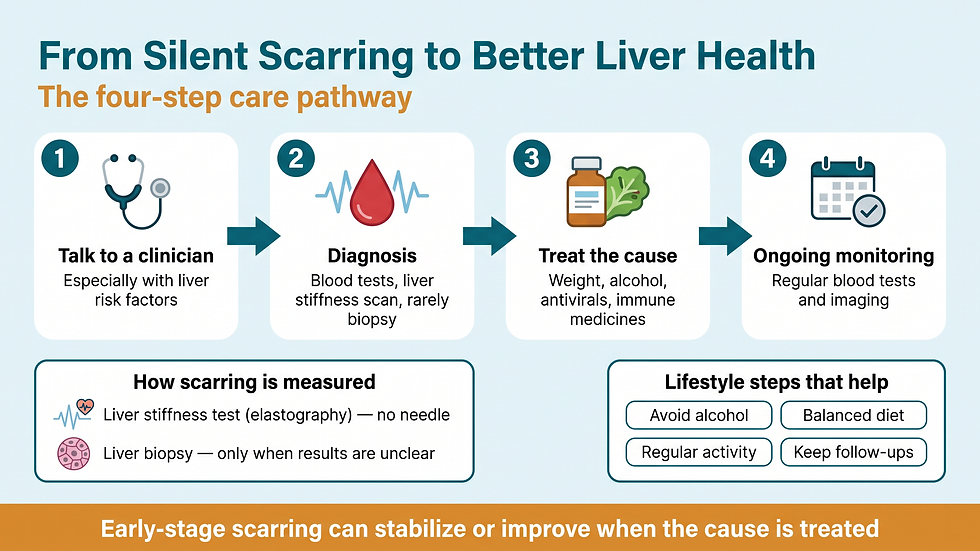
Tests Used to Detect and Stage Fibrosis
Test | What it does | Notes |
Blood tests | Find signs of liver injury and inflammation; help identify the cause; screen for viral hepatitis | The usual starting point |
Blood-based scoring tools | Combine lab results to estimate the likelihood and severity of scarring | Noninvasive way to gauge fibrosis |
Liver stiffness imaging (elastography) | Measures how stiff liver tissue is — MRE (magnetic resonance elastography) or ultrasound-based elastography | Noninvasive alternative to biopsy |
Standard imaging (MRI, CT, ultrasound) | Examines the liver's structure | Less accurate for early fibrosis |
Liver biopsy | Takes a small tissue sample | Not routinely needed anymore; used when other results are unclear |
Two details worth knowing about imaging. First, because fibrosis affects tissue evenly rather than forming a lump or spot, it usually does not appear as a specific scar, mass, or lesion on standard imaging. Second, noninvasive tests now work well enough that biopsy is rarely required.
Liver Fibrosis Treatment: Treating the Cause Is the Cure
There is no single treatment for liver fibrosis. Care focuses on two goals: treating the underlying cause and reducing ongoing damage. What that looks like depends entirely on what is driving the scarring.
Underlying cause | Primary treatment | Expected effect |
Metabolic conditions (steatotic liver disease) | Weight loss, improved nutrition, regular physical activity; treating high cholesterol and blood pressure; sometimes weight-loss medicines or surgery | Reduces inflammation; may slow or improve fibrosis |
Alcohol-related liver disease | Stopping alcohol — the single most important step; counseling, support programs, and medical treatment as needed | Halts the injury; continued drinking raises cirrhosis risk |
Chronic viral hepatitis | Antiviral medicines for hepatitis B and C | Lessens inflammation; hepatitis C is often curable with modern antivirals when treated early |
Autoimmune / bile duct disease | Medicines that modulate immune system activity to control inflammation | Individualized plans guided by specialists |
For some people with metabolic steatotic liver disease, weight-loss medicines or weight-loss surgery may be part of a comprehensive weight-management plan — decided with a clinician.
Potential Future Treatments (Not Yet Standard Care)
Researchers are actively studying ways to slow, stop, or possibly reverse scarring by targeting the fibrosis process itself — including medicines and cell-based therapies that reduce inflammation, limit scar formation, and support liver repair. Work is also underway on how liver cells, the immune system, and gut bacteria interact. These approaches are still being studied and are not part of standard care today.
Lifestyle and Home Strategies That Protect the Liver
Alongside medical treatment, seven lifestyle steps consistently appear in clinical guidance:
# | Strategy | Why it helps |
1 | Avoid alcohol | Even small amounts can worsen liver damage; ask about support programs if stopping is hard |
2 | Follow a balanced diet | Fruits, vegetables, whole grains, lean protein; limit fatty and fried foods; supports weight and metabolic health |
3 | Be physically active as tolerated | Helps manage weight and metabolic conditions |
4 | Manage long-term conditions | Take prescribed medicines; keep up with diabetes and cholesterol control |
5 | Avoid liver-stressing medicines and supplements | Check with a healthcare professional before starting any new one |
6 | Prevent infections | Stay up to date on vaccinations (including hepatitis B); reduce hepatitis exposure |
7 | Keep follow-up appointments | Blood tests and imaging track liver health over time |
One practical note on supplements and over-the-counter medicines: many are processed by the liver, so it is always worth confirming with a clinician or pharmacist before adding anything new.
Living With Liver Fibrosis: Prognosis and Monitoring
The outlook for liver fibrosis varies widely — it depends on the cause, the amount of scarring, and how early treatment begins.
Fibrosis often worsens slowly and may remain stable for years. When the cause is found and treated early, fibrosis may stop worsening — and in some people, it can partially improve. This is most likely when risk factors such as excess weight, type 2 diabetes, or alcohol use are effectively managed.
Advanced fibrosis carries a higher risk of worsening to cirrhosis and its complications. Once cirrhosis develops, changes are lasting, and the risks of liver failure and liver cancer rise. Even when you feel well, ongoing monitoring with blood tests and imaging is important.
Reassuringly, most people with liver fibrosis do not need a liver transplant. Transplant is considered only in end-stage liver disease with advanced failure despite treatment.
Preparing for Your Appointment
People with liver fibrosis typically see a gastroenterologist (a digestive system doctor) or a hepatologist (a liver specialist).
What you can do beforehand
Step | Detail |
Check requirements | Ask about fasting before blood or imaging tests |
Record symptoms | When they started, how they have changed |
List medicines | Include nonprescription drugs, vitamins, and supplements with doses |
Gather medical history | Note other conditions such as diabetes or viral hepatitis |
Bring test results | Copies of recent blood tests, ultrasound, CT, or MRI reports |
Note personal context | Major life changes or stresses |
Bring support | Consider a family member or friend |
Prepare questions | Write them down in advance |
Questions to ask your doctor
What is most likely causing my liver fibrosis?
How advanced is my liver scarring?
Can liver fibrosis be slowed or improved in my case?
What treatment or monitoring do you recommend?
Are there medicines or supplements that could worsen liver damage?
How often will I need follow-up tests?
What symptoms should prompt me to seek medical care?
How can I best manage other health conditions along with liver disease?
What to expect your doctor to ask
Do you have any symptoms, and when did they start?
Do you drink alcohol, and how often?
What prescription or nonprescription medicines, supplements, or herbal products do you take?
Have you ever been diagnosed with viral hepatitis?
Do you have other conditions, such as diabetes or obesity?
Is there a family history of liver disease or inherited liver conditions?
Have you ever had liver blood tests or imaging results outside the standard range?
Conclusion: Finding the Cause Early Changes the Outcome
Liver fibrosis is one of those conditions that hides in plain sight — often silent for years, usually discovered on routine tests, and driven by causes that are frequently within reach of treatment.
The single most important takeaway is this: early-stage scarring can stabilize or improve when the cause is found and treated. Whether that means managing weight and diabetes, stopping alcohol, taking antivirals for hepatitis, or controlling an autoimmune condition, acting early gives your liver its best chance to recover function.
If you have liver risk factors — excess body weight, type 2 diabetes, regular heavy drinking, or known hepatitis — ask your doctor about liver blood tests at your next visit. Feeling well does not always mean the liver is.
Read next on Rinnit.com: fatty liver disease (MASLD) · hepatitis B · liver cancer
Frequently Asked Questions
What are the early symptoms of liver fibrosis?
Usually none. Liver fibrosis typically causes no symptoms in early stages, and many people feel completely well. It is often discovered on routine blood tests or imaging done for another reason. Later-stage symptoms include yellowing skin or eyes (jaundice), abdominal fluid (ascites), leg swelling (edema), and confusion.
Can liver fibrosis be reversed or cured?
There is no single cure, but early-stage fibrosis may stabilize or partially improve when the underlying cause is found and treated. Advanced scarring (cirrhosis) causes lasting changes. The best outcomes come from treating the cause — weight management, stopping alcohol, or antivirals — as early as possible.
What causes liver fibrosis in most people?
In developed countries, metabolic conditions — obesity, type 2 diabetes, and insulin resistance leading to steatotic liver disease — are the most common driver. Heavy or long-term alcohol use and chronic viral hepatitis B or C are the other leading causes.
Is liver fibrosis the same as cirrhosis?
No. Fibrosis is the earlier buildup of scar tissue throughout the liver. Cirrhosis is the advanced stage, where extensive scarring causes lasting changes to liver structure and function. Fibrosis may still stabilize or improve with treatment; cirrhosis carries higher risks of liver failure and liver cancer.
How do doctors measure how much scarring you have?
Doctors use blood tests and blood-based scoring tools, plus imaging that measures liver stiffness (elastography — either MRI-based or ultrasound-based). These noninvasive tests usually work well; a liver biopsy is only used when results are unclear.
Do I need to see a specialist for liver fibrosis?
Typically a gastroenterologist (digestive system doctor) or hepatologist (liver expert) guides diagnosis and treatment. Your primary care clinician can order initial blood tests and make the referral.
What should I avoid if I have liver fibrosis?
Avoid alcohol entirely — even small amounts can worsen damage. Avoid starting new medicines or supplements without checking with a healthcare professional, since many are processed by the liver. Keep vaccinations up to date and stay on top of conditions like diabetes and high cholesterol.
How often should I be monitored after a liver fibrosis diagnosis?
Ongoing monitoring matters even when you feel well. Your clinician will set the schedule, but it generally involves periodic blood tests and imaging to track liver health and confirm the scarring is stable or improving.
References
Liver fibrosis — Symptoms & causes — Mayo Clinic, last reviewed March 19, 2026
Liver fibrosis — Diagnosis & treatment — Mayo Clinic, last reviewed March 19, 2026
This article is for general information only and is not a substitute for professional medical advice. Always consult a qualified healthcare professional for diagnosis and treatment decisions.
Comments