Lisfranc Injury: Understanding Midfoot Damage, Symptoms, and Recovery

Updated: 2 days ago
Medically reviewed by Dr. Baraa Alnahhal, MD · Last reviewed: September 2026
TL;DR
A Lisfranc injury involves damage to the critical joint where the metatarsal bones meet the midfoot. These injuries, ranging from ligament sprains to complex fractures, often occur due to twisting falls or direct trauma. While minor cases may heal with immobilization, severe instability typically requires surgical intervention and a dedicated recovery period to prevent long-term complications like arthritis.
Quick Answer
A Lisfranc injury is damage to the midfoot joint where the long metatarsal bones connect to the rest of the foot. It can manifest as a ligament sprain, a bone fracture, or a joint dislocation. Common symptoms include swelling and pain on the top of the foot, often accompanied by bruising on the sole. Treatment ranges from casting to surgery, with recovery typically spanning six weeks to several months depending on severity.
What Is a Lisfranc Injury?
Lisfranc injuries represent a significant clinical finding affecting the midfoot complex. The Lisfranc joint serves as a critical intersection in the foot's anatomy, functioning much like a main highway interchange that maintains the structural integrity and stability of the entire foot. Because this small area facilitates essential movement and weight-bearing, even minor damage can have a profound impact on mobility.
Anatomy and Types of Injury
The Lisfranc joint encompasses the bones, ligaments, and tendons at the top of the foot. Specifically, it is the location where the five metatarsal bones—the bridges leading to the toes—connect to the tarsal bones. Damage in this region is classified based on the specific structures affected and the nature of the trauma.
Injury Type | Description | Primary Structures Affected |
Dislocation | The bones of the midfoot joint are forced out of their normal alignment. | Bones and supporting ligaments |
Fracture | One or more bones within the Lisfranc joint complex are broken. | Metatarsal or tarsal bones |
The ligaments that hold the midfoot bones together are stretched or torn. | Lisfranc ligaments and tendons |

Symptoms and Clinical Presentation
The primary hallmark of a Lisfranc injury is sudden pain and swelling localized to the top of the foot. This pain typically intensifies when an individual attempts to stand, walk, or move the foot. A unique and highly diagnostic sign is the appearance of bruising on the bottom of the foot, which often indicates significant internal damage to the midfoot structures.
Understanding Causes and Triggers
Lisfranc injuries are almost always the result of acute trauma, such as falls, slips, or sports-related incidents. Any mechanism that causes the heel to twist or spin unexpectedly while the individual is stepping with weight on the ball of the foot can compromise the joint. While athletes are at higher risk, a simple stumble or missing a step on a stair can be sufficient to cause damage.
Trigger Category | Examples of Mechanisms | Risk Level |
Low-Energy Trauma | Stumbling, missing a step, or slipping off a curb. | Moderate |
High-Energy Trauma | Car accidents or falling from a significant height like a ladder. | High |
Direct Impact | A heavy object falling directly onto the top of the foot. | High |
Sports Activity | Competitive or contact sports involving rapid changes in direction. | Moderate to High |
Diagnosis and Management Pathways
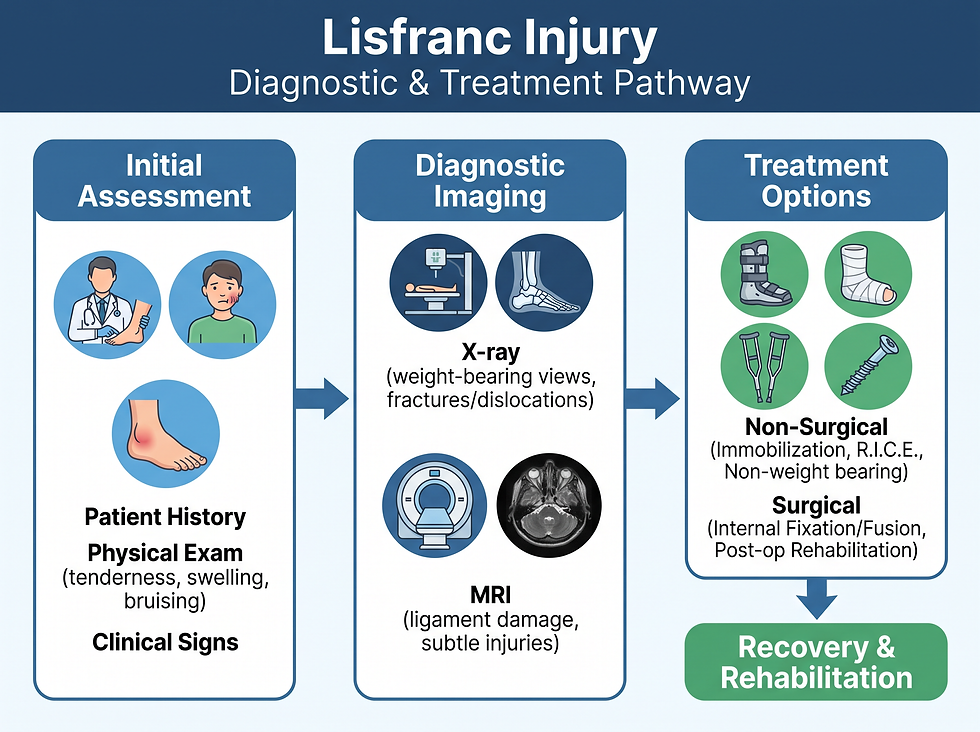
Diagnosing a Lisfranc injury requires a thorough physical examination to assess the shape and stability of the foot. Because these injuries can be subtle, healthcare providers rely heavily on imaging tests to confirm the diagnosis and determine the extent of the damage. Common diagnostic tools include X-rays, MRIs, and CT scans to visualize bone alignment and soft tissue integrity.
Management Strategies
Treatment for a Lisfranc injury is determined by the stability of the joint. The primary goal is to restore proper alignment and allow the damaged tissues to heal completely.
Immediate Care: Initial management focuses on reducing inflammation through ice application and elevation. Keeping the foot above the heart level helps minimize swelling.
Immobilization: Stable injuries are typically treated with a boot or cast for six to eight weeks. This reduces stress on the joint and prevents weight-bearing during the initial healing phase.
Surgical Intervention: If the joint is unstable, surgery is necessary. Surgeons use plates and screws to hold the bones in place while the ligaments and bones heal.
Medication: Over-the-counter pain relievers like acetaminophen or NSAIDs are used to manage discomfort and reduce systemic swelling.
Recovery and Outlook
The recovery timeline for a Lisfranc injury varies significantly based on the severity of the damage. Individuals treated nonsurgically can often return to activity after six to eight weeks of immobilization followed by physical therapy. Surgical recovery is more extensive, often requiring up to three months in a boot or cast before transitioning to rehabilitation.

Conclusion
Lisfranc injuries are serious conditions that require prompt medical attention to prevent long-term complications such as chronic pain, collapsed arches, or post-traumatic arthritis. While the recovery process can be lengthy, adhering to a structured treatment and rehabilitation plan is essential for restoring full function and ensuring the long-term health of the foot.
Next Steps
If you experience sudden pain, swelling, or bruising on the top or bottom of your foot after a fall or injury, consult a healthcare professional immediately. Early diagnosis and proper immobilization are the most effective ways to ensure a full recovery and prevent permanent foot deformities.
Frequently Asked Questions
What is a Lisfranc injury?
It is damage to the joint at the top of the foot where the metatarsal bones connect to the midfoot.
How does a Lisfranc injury happen?
It usually occurs from a twisting fall, a stumble, or direct trauma like a car accident.
What are the signs of a Lisfranc injury?
Common signs include pain on top of the foot, swelling, and bruising on the bottom of the foot.
Is a Lisfranc injury the same as a sprain?
It can include a sprain (ligament tear), but it may also involve bone fractures or dislocations.
Can I walk with a Lisfranc injury?
You might be able to, but doing so can worsen the injury. It is best to avoid weight-bearing until examined.
How is it diagnosed?
Diagnosis involves a physical exam and imaging tests like X-rays, CT scans, or MRIs.
Does every Lisfranc injury need surgery?
No, stable injuries may only require a cast or boot, but unstable injuries typically need surgery.
What happens during Lisfranc surgery?
A surgeon uses plates and screws to stabilize the joint and allow the bones and ligaments to heal.
How long is the recovery?
Recovery ranges from six weeks for minor injuries to several months if surgery is required.
What are the risks of not treating it?
Untreated injuries can lead to chronic pain, collapsed arches, and permanent arthritis.
Do the plates and screws stay in forever?
Not always; a surgeon may remove them once the joint has fully healed.
What is the "bottom-of-the-foot" bruise?
Bruising on the sole is a classic sign of a Lisfranc injury and indicates significant internal damage.
Can diabetes affect recovery?
Yes, diabetes-related neuropathy can make it harder to feel the injury, potentially delaying treatment.
When can I return to sports?
You must wait until a healthcare provider confirms the joint is stable and you have completed physical therapy.
What is the most important part of recovery?
Adhering to non-weight-bearing instructions and completing physical therapy to regain strength and balance.
Medical Disclaimer: This content is for informational purposes only and does not constitute medical advice. Always seek the advice of your physician or other qualified health provider with any questions you may have regarding a medical condition.
Comments