Lipschütz Ulcer: Understanding Rare, Non-Sexually Transmitted Genital Lesions

Updated: 2 days ago
Medically reviewed by Dr. Baraa Alnahhal, MD · Last reviewed: September 2026
TL;DR
Lipschütz ulcers are rare, painful genital lesions that are not transmitted through sexual contact. Primarily affecting young females, these ulcers often appear suddenly alongside flu-like symptoms. While the condition can cause significant discomfort, it is self-limiting and typically heals within two to six weeks with appropriate supportive care and pain management.
Quick Answer
A Lipschütz ulcer is a rare, non-sexually transmitted genital lesion that typically appears on the vulva. It is characterized by the sudden onset of painful, deep ulcers, often accompanied by fever and fatigue. This condition is most common in females under 20 who are not sexually active. Diagnosis focuses on ruling out other infections, and recovery usually occurs naturally within six weeks through symptom management.
What Is a Lipschütz Ulcer?
Lipschütz ulcers, also medically referred to as non-sexually acquired genital ulcerations or ulcus vulvae acutum, represent a rare and often distressing clinical finding. Unlike many other genital conditions, these ulcers are not acquired through sexual contact and are not contagious. They primarily manifest as sudden, painful lesions on the vulvar surface, most frequently affecting the labia minora. The condition is named after Benjamin Lipschütz, the physician who first documented these specific ulcerations.
Symptoms and Clinical Presentation
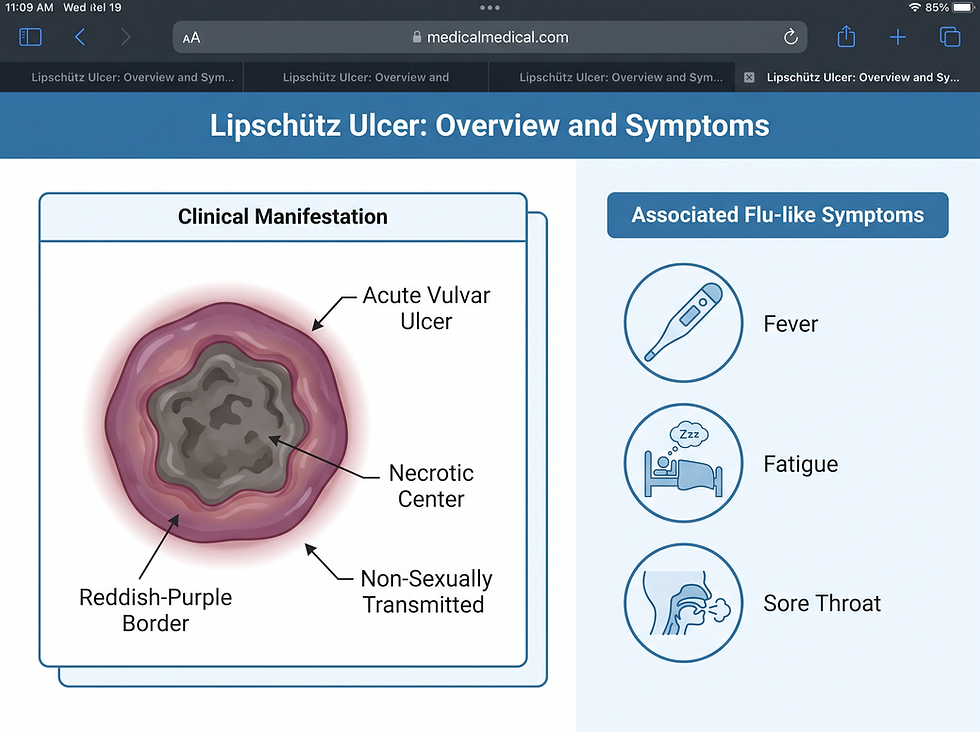
The primary hallmark of this condition is the rapid development of one or more large, deep, and painful ulcers. These lesions often exhibit a necrotic center that appears gray or black, surrounded by a distinct reddish-purple border. A unique feature frequently observed is the presence of "kissing lesions," where symmetrical ulcers form on opposing sides of the labia due to direct contact.
In addition to the physical lesions, individuals often experience systemic flu-like symptoms that can precede or accompany the ulcers. These symptoms contribute to a general feeling of being unwell and are a key part of the clinical picture.
Symptom Category | Common Manifestations |
Systemic Symptoms | Fever, fatigue, body aches, and joint pain |
Respiratory Issues | Sore throat, cough, and chest congestion |
Physical Findings | Swollen lymph nodes in the neck or armpits |
Localized Pain | Intense vulvar pain and painful urination (dysuria) |
Understanding Causes and Triggers
While the exact cause remains unknown, medical professionals believe Lipschütz ulcers result from a severe immune system reaction to an underlying infection. They are not sexually transmitted infections (STIs) and cannot be passed from person to person through physical contact. The condition is most prevalent in females under the age of 20, particularly those who have not been recently sexually active.
Several viral and bacterial triggers have been associated with the development of these ulcers. These infections may provoke the immune response that leads to the sudden appearance of vulvar lesions.
Potential Triggers | Examples of Associated Infections |
Viral Triggers | Epstein-Barr virus (EBV), Cytomegalovirus (CMV), Influenza A/B, and COVID-19 |
Bacterial Triggers | Salmonella, Mycoplasma, and Group A Streptococcus |
Other Factors | Recent history of mumps or general immune system stress |
Diagnosis and Management Pathways
Diagnosing a Lipschütz ulcer involves a thorough visual examination and a review of the patient's medical history. The primary goal of the diagnostic process is a differential diagnosis to rule out more common causes of genital ulcers, such as herpes, syphilis, or Behçet’s disease. Because the condition is rare, it can sometimes be misidentified as an STI, which may lead to unnecessary emotional distress for the patient.

Management Strategies
Since Lipschütz ulcers are self-healing, treatment focuses primarily on managing pain and discomfort until the lesions resolve naturally. Most ulcers heal completely within two to six weeks without long-term complications.
Pain Relief: Utilizing over-the-counter medications like acetaminophen or ibuprofen to manage systemic pain and fever.
Topical Care: Applying anesthetic creams, such as lidocaine, to the affected area to numb the pain.
Supportive Measures: Taking warm sitz baths and wearing loose-fitting clothing to reduce irritation.
Medical Intervention: In severe cases, healthcare providers may prescribe corticosteroids or antibiotics if an underlying bacterial infection is confirmed.

Conclusion
Lipschütz ulcers are a rare but manageable condition that can cause significant temporary distress. By understanding that these lesions are non-contagious and not related to sexual activity, patients can find relief from both physical pain and emotional anxiety. With proper supportive care, most individuals experience a full recovery within a few weeks, returning to their normal quality of life without lasting effects.
Next Steps
If you or someone you know is experiencing sudden, painful genital ulcers accompanied by flu-like symptoms, consult a healthcare professional immediately for an accurate diagnosis. Early management of symptoms is essential for comfort and peace of mind during the recovery process.
Frequently Asked Questions
What is a Lipschütz ulcer?
It is a rare, non-sexually transmitted genital ulcer that typically appears on the vulva and is often accompanied by flu-like symptoms.
Is it a sexually transmitted infection (STI)?
No, Lipschütz ulcers are not STIs and are not acquired through sexual contact.
Who is most likely to get these ulcers?
They primarily affect females under the age of 20, particularly those who are not sexually active.
What does the ulcer look like?
It is usually a round, painful lesion with a gray or black necrotic center and a reddish-purple border.
What are "kissing lesions"?
These are symmetrical ulcers that form on both sides of the labia where the skin surfaces touch.
What causes Lipschütz ulcers?
The exact cause is unknown, but they are believed to be an immune response to viral or bacterial infections like EBV or the flu.
Are they contagious?
No, the ulcers cannot be passed to another person through physical or bodily contact.
How are they diagnosed?
A healthcare provider performs a visual exam and rules out other conditions like herpes or syphilis through medical history and testing.
How long do they take to heal?
Most Lipschütz ulcers heal on their own within two to six weeks.
What treatments are available?
Treatment focuses on pain relief through sitz baths, OTC pain meds, topical anesthetics, and sometimes corticosteroids.
Can males get Lipschütz ulcers?
While extremely rare, there have been cases in males where the ulcers appear on the scrotum.
Do they leave scars?
Scarring is rare, but deep or large ulcers may occasionally leave a spot of discoloration.
Can the ulcers come back?
It is very rare for Lipschütz ulcers to recur after they have healed.
What are the complications?
Complications are rare but can include emotional distress, minor scarring, or temporary difficulty urinating.
When should I see a doctor?
You should see a healthcare provider immediately if you notice painful genital ulcers to ensure an accurate diagnosis and appropriate pain management.
Medical Disclaimer: This content is for informational purposes only and does not constitute medical advice. Always seek the advice of your physician or other qualified health provider with any questions you may have regarding a medical condition.
Comments