Lipodystrophy: Understanding Abnormal Fat Distribution and Metabolic Impact

Updated: 2 days ago
Medically reviewed by Dr. Baraa Alnahhal, MD · Last reviewed: September 2026
TL;DR: Lipodystrophy is a rare group of conditions characterized by the abnormal distribution or complete loss of adipose (fat) tissue. Whether inherited through genetic mutations or acquired via autoimmune responses and infections, the condition disrupts vital metabolic functions, often leading to insulin resistance, diabetes, and organ complications. While no cure exists, management focuses on hormonal replacement, metabolic control, and cosmetic interventions to improve quality of life.
Quick Answer: Lipodystrophy is a medical condition where the body loses fat tissue in certain areas or distributes it abnormally. This loss of adipose tissue often leads to a deficiency in leptin, a hormone that regulates hunger and metabolism. Consequently, fat may be improperly stored in organs like the liver and pancreas, increasing the risk of severe metabolic disorders such as diabetes, fatty liver disease, and high triglyceride levels.
Lipodystrophy represents a complex spectrum of disorders defined by the partial or total absence of adipose tissue, commonly known as body fat. This condition is not merely a cosmetic concern; it fundamentally alters how the body stores energy and regulates metabolic processes. Adipose tissue serves critical roles beyond simple energy storage, providing essential cushioning for internal organs, thermal insulation, and the production of vital hormones like leptin. When this tissue is lost or redistributed, the body struggles to manage lipids and glucose, often resulting in systemic health challenges. To learn more about the biology of body fat, read our guide to Adipose Tissue: Understanding the Vital Role of Body Fat.
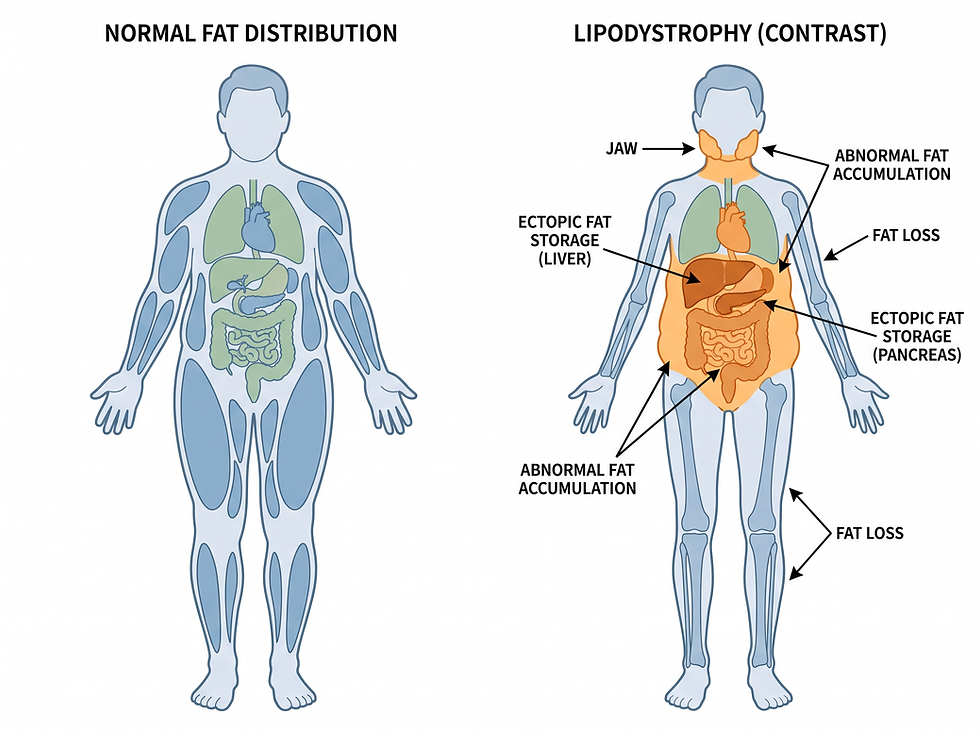
The impact of lipodystrophy is primarily driven by the body's inability to store fats, or triglycerides, within specialized cells called adipocytes. In a healthy state, these cells expand to accommodate energy reserves. However, in individuals with lipodystrophy, these storage sites are damaged or missing, forcing the body to deposit fat in inappropriate locations such as the liver, skeletal muscle, and pancreas. This ectopic fat storage is a primary driver of insulin resistance and other metabolic syndromes that can lead to long-term cardiovascular and organ damage.
Categorizing the Types of Lipodystrophy
Medical professionals generally classify lipodystrophy into two primary categories based on their origin: genetic and acquired. Genetic forms are present from birth or early childhood and result from specific DNA mutations that affect how fat cells develop and function. Acquired forms, conversely, develop later in life and are typically triggered by external factors such as viral infections, autoimmune reactions, or specific medical treatments.
Genetic Forms of Lipodystrophy
Genetic lipodystrophies are rare and often manifest early in life. Congenital Generalized Lipodystrophy, also known as Berardinelli-Seip syndrome, is characterized by a near-total absence of body fat from infancy. Familial Partial Lipodystrophy is another inherited form where fat loss typically affects the limbs, while excess fat may accumulate in the face and neck area. These conditions are linked to mutations in genes such as LMNA, AGPAT2, and BSCL2, which are essential for adipocyte structural integrity.
Acquired Forms of Lipodystrophy
Acquired lipodystrophies can occur at any age and often follow a significant medical event. Acquired Generalized Lipodystrophy, or Lawrence syndrome, involves widespread fat loss and is frequently associated with prior infections like measles or chickenpox. Acquired Partial Lipodystrophy, known as Barraquer-Simons syndrome, typically begins in childhood with fat loss starting in the face and moving downward. Other forms include localized lipodystrophy, often seen at repeated injection sites, and HAART-induced lipodystrophy, a side effect formerly common with certain HIV medications.
Type of Lipodystrophy | Primary Cause | Typical Distribution of Fat Loss |
Congenital Generalized (CGL) | Genetic Mutation (e.g., AGPAT2) | Near-total loss across the entire body |
Familial Partial (FPLD) | Genetic Mutation (e.g., LMNA) | Arms and legs; gain in face and neck |
Acquired Generalized (AGL) | Post-infection or Autoimmune | Face, neck, arms, and legs |
Acquired Partial (APL) | Autoimmune / Low Complement 3 | Face, neck, arms, and chest |
HAART-Induced (LD-HIV) | Antiretroviral Medications | Face and limbs; gain in waist and neck |
Localized | Repeated Injections | Small, specific areas (dimples/craters) |
Symptoms and Metabolic Complications
The most visible symptom of lipodystrophy is the physical change in body composition, characterized by a lack of fat under the skin in affected regions. However, the internal symptoms are often more severe. Because adipose tissue produces leptin, the hormone responsible for signaling fullness, individuals with lipodystrophy often experience extreme hunger, or hyperphagia. This hormonal imbalance further complicates the management of blood sugar and lipid levels.
Metabolic Complication | Description of Impact |
Insulin Resistance | Reduced ability to process glucose, leading to high insulin levels. |
Diabetes Mellitus | Chronic high blood sugar resulting from metabolic dysfunction. |
Fatty Liver Disease | Ectopic fat storage in the liver, potentially leading to cirrhosis. |
Hypertriglyceridemia | Dangerously high levels of fats in the blood, increasing pancreatitis risk. |
Coronary Artery Disease | Increased risk of heart disease due to irregular cholesterol levels. |
Fat stored in the liver is a major concern in this condition. Read more about it in our guide to Fatty Liver Disease (MASLD): The Silent Liver Condition Linked to Weight, Diabetes, and Metabolic Health — Causes, Testing, and Treatment.
Diagnostic Pathways and Testing
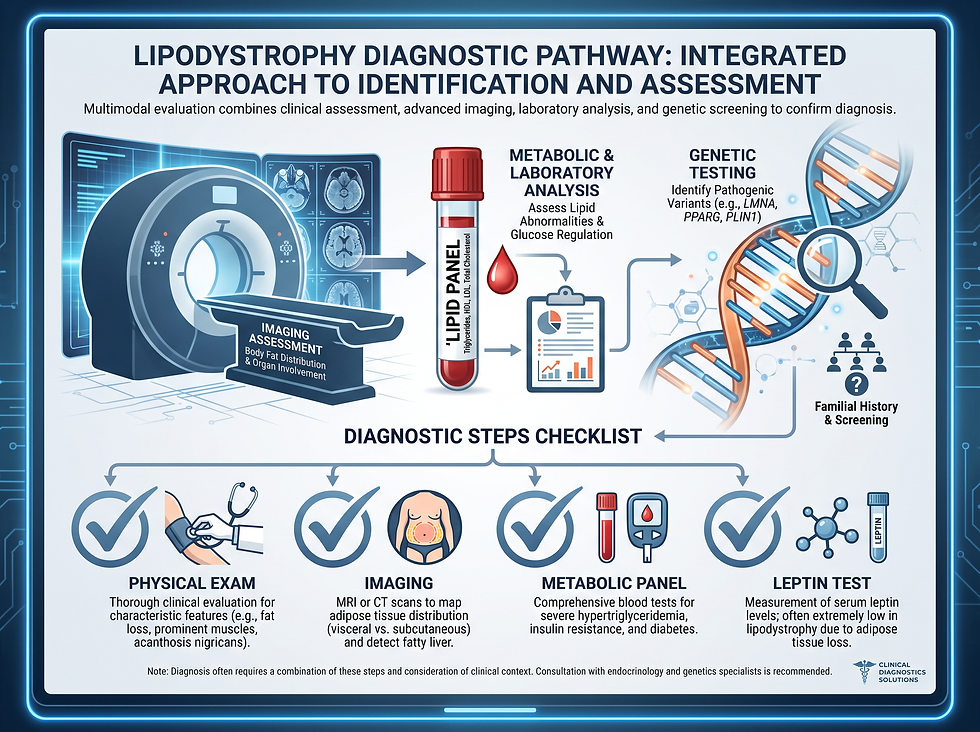
Diagnosing lipodystrophy requires a comprehensive clinical evaluation. Healthcare providers typically begin with a thorough physical examination to assess fat distribution and review the patient's medical and family history. Because the condition is rare, a combination of imaging and laboratory tests is necessary to confirm the diagnosis and assess the extent of metabolic involvement.
Whole-Body MRI: Used to map fat composition and identify areas of abnormal distribution or total loss.
Comprehensive Metabolic Panel: Measures blood glucose and liver enzymes to evaluate metabolic health.
Lipid Panel: Assesses cholesterol and triglyceride levels, which are frequently elevated in these patients.
Leptin Testing: Measures circulating leptin levels to determine the severity of hormonal deficiency.
Genetic Testing: Identifies specific mutations in cases where an inherited form is suspected.
Renal Biopsy: Performed if there is evidence that the condition is affecting kidney function.
Management and Treatment Strategies
While there is currently no cure for lipodystrophy, a multi-faceted approach to management can significantly reduce the risk of complications and improve daily functioning. Treatment plans are highly individualized, focusing on hormonal balance, metabolic control, and, in some cases, physical reconstruction of affected areas.
Hormonal replacement therapy using metreleptin, a synthetic form of leptin, is a cornerstone of treatment for many with generalized forms of the condition. This medication helps regulate appetite and improves metabolic markers. For managing associated conditions, providers may prescribe metformin or insulin for diabetes, and statins for high cholesterol. Dietary modifications, including the use of fish oils or specialized medications for high triglycerides, are also common. For an overview of another class of diabetes medications, see our guide to GLP-1 Agonists: A Comprehensive Guide to Diabetes and Obesity Management.
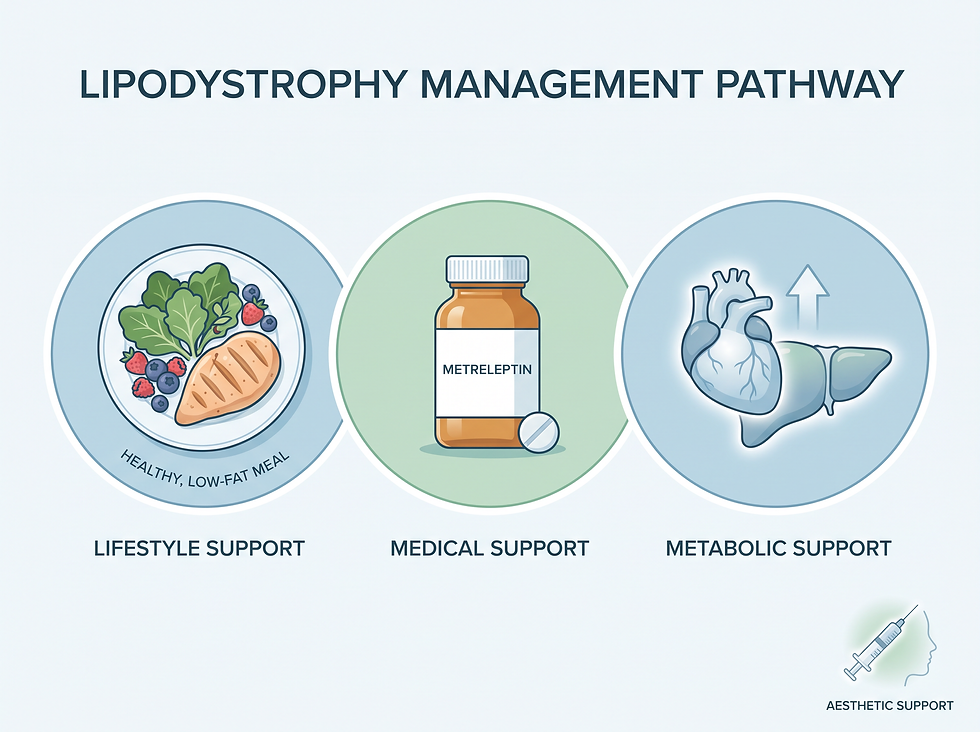
Cosmetic interventions can also play a vital role in patient well-being. Procedures such as autologous fat transplantation or the use of silicone implants can restore volume to areas of fat loss, particularly the face. Conversely, liposuction may be used to remove excess fat deposits in areas like the back of the neck, often referred to as a "buffalo hump," to improve both physical comfort and self-confidence.
Conclusion
Lipodystrophy is a challenging condition that requires lifelong management and a deep understanding of metabolic health. By recognizing the differences between genetic and acquired forms and proactively managing the associated risks of diabetes and organ damage, individuals can maintain a high quality of life. Ongoing research into metabolic processes continues to expand the range of available therapies, offering hope for more effective long-term solutions.
Take the next step: If you or a loved one are experiencing unexplained changes in body fat distribution or persistent metabolic issues such as high triglycerides despite dietary efforts, consult a healthcare professional. Early diagnosis and a tailored management plan are essential for preventing long-term complications and ensuring metabolic stability.
Frequently Asked Questions
What is the main cause of lipodystrophy?
The cause depends on the type. Genetic forms are caused by inherited DNA mutations, while acquired forms are often triggered by infections, autoimmune diseases, or specific medications.
Can lipodystrophy be cured?
Currently, there is no cure for lipodystrophy. However, the symptoms and associated metabolic conditions can be effectively managed with medical treatment and lifestyle adjustments.
How does lipodystrophy affect hunger?
Many people with the condition have low levels of leptin, a hormone that signals fullness. This deficiency can lead to extreme, persistent hunger known as hyperphagia.
Is lipodystrophy the same as weight loss?
No. Unlike general weight loss, lipodystrophy involves the loss of specific fat tissue (adipose tissue) or its abnormal redistribution, often while other metabolic markers remain high.
What are the most common metabolic complications?
The most frequent complications include insulin resistance, type 2 diabetes, high triglycerides, and fatty liver disease.
Who is most at risk for acquired lipodystrophy?
Acquired forms more commonly affect women and are often linked to autoimmune conditions or prior viral infections like measles.
What is localized lipodystrophy?
This is a form that affects only small, specific areas of the body, often occurring at sites where medications like insulin are frequently injected.
How is the condition diagnosed?
Diagnosis typically involves physical exams, blood tests (lipid and metabolic panels), MRI scans, and sometimes genetic testing or biopsies.
What is metreleptin?
Metreleptin is a synthetic version of the hormone leptin used to treat the hormonal deficiencies associated with generalized lipodystrophy.
Can cosmetic surgery help?
Yes, plastic surgery can restore fat in areas of loss using transplants or implants, and remove excess fat deposits through liposuction.
Does lipodystrophy affect the internal organs?
Yes, when the body cannot store fat in adipose tissue, it may deposit it in the liver, pancreas, and muscles, leading to organ dysfunction.
Are there specific diets for lipodystrophy?
Management often includes a diet low in fats and simple sugars to help control blood sugar and triglyceride levels.
Is lipodystrophy a rare condition?
Yes, most forms of lipodystrophy are considered rare, though some acquired forms have become more recognized as side effects of medications.
Can children have lipodystrophy?
Yes, many forms, especially genetic ones, are diagnosed in infancy or early childhood.
What should I do if I suspect I have this condition?
You should see a healthcare provider, specifically an endocrinologist, who specializes in hormonal and metabolic disorders for a full evaluation.
Related Reading
Explore more of our guides on fat, metabolism, and body contouring:
Medical Disclaimer: This content is for informational purposes only and does not constitute medical advice. Always seek the advice of your physician or other qualified health provider with any questions you may have regarding a medical condition.
Comments