Understanding the Left Anterior Descending (LAD) Artery: The Heart's Largest Supplier

Updated: 6 minutes ago
Medically reviewed by Dr. Baraa Alnahhal, MD · Last reviewed: September 2026
Anatomical Significance and Blood Supply
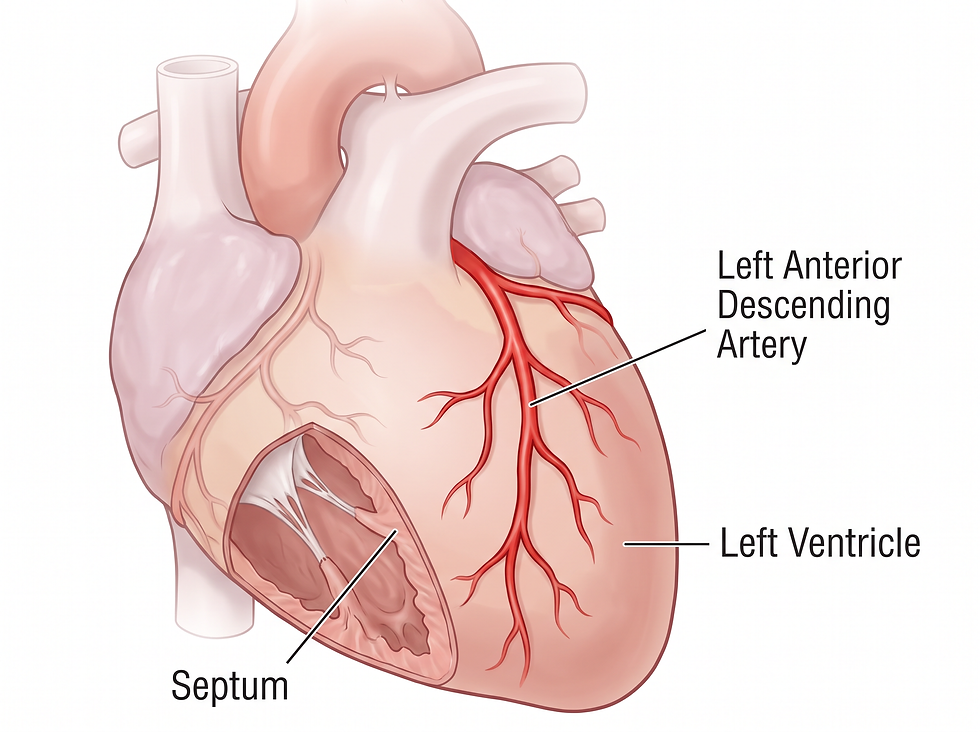
The left anterior descending (LAD) artery, often referred to by medical professionals as the anterior interventricular branch, holds the distinction of being the largest coronary artery in the human body. It originates from the left main coronary artery and descends along the epicardium, the heart's outer protective layer. Specifically, it travels within a groove along the septum, extending from the base of the heart down to its apex. This strategic positioning allows it to serve as a critical conduit for oxygenated blood.
The LAD artery's primary responsibility is to provide blood to the heart's lower left pumping chamber, known as the left ventricle, and the septum, which is the muscular tissue separating the heart's internal walls. Given its extensive reach, it circulates nearly half of the total blood supply required by the heart to function effectively.
Branch Type | Primary Function and Supply Area |
Diagonal Branches | Supply blood to the front and bottom regions of the left ventricle. |
Septal Branches | Deliver oxygenated blood to the anterior two-thirds of the septum. |
Clinical Conditions and the "Widowmaker" Risk
Due to its size and the volume of blood it carries, any condition affecting the LAD artery can have profound implications for overall health. The most common issue is atherosclerosis, where fatty deposits of plaque build up inside the arterial walls, leading to hardening and narrowing of the vessel. Over time, this buildup can severely restrict blood flow, resulting in stable or unstable angina, characterized by chest pain and pressure.
A critical clinical event occurs when the LAD artery becomes completely blocked. This results in a specific type of heart attack frequently called a "widowmaker." Despite the gendered name, this condition is equally dangerous for both males and females and is often fatal without immediate intervention. Furthermore, some individuals may be born with a hypoplastic LAD artery, which is abnormally narrow or short, increasing the baseline risk for arrhythmias and sudden cardiac death.
Condition | Potential Impact on Cardiac Health |
Atherosclerosis | Gradual hardening and narrowing of the artery due to plaque. |
Widowmaker Attack | Complete blockage of the LAD artery, leading to a major heart attack. |
Hypoplastic LAD | Congenital narrowness that increases the risk of sudden cardiac arrest. |

Diagnostic Approaches and Treatment Options
Healthcare providers utilize a variety of advanced imaging and measurement techniques to assess the health of the LAD artery. If coronary artery disease is suspected, cardiac catheterization is often the first line of evaluation. This may be supplemented by a coronary computed tomography angiogram (CCTA), which produces detailed 3D images of the blood flow. Other high-definition tools include intravascular ultrasound (IVUS) and fractional flow reserve (FFR), which measures the specific blood pressure inside the artery.
When a blockage or significant narrowing is identified, interventional procedures are typically required to restore blood flow. Angioplasty is a common treatment where the artery is physically expanded. To ensure the vessel remains open, a tiny wire mesh tube known as a stent is often permanently placed within the artery. These interventions are crucial for lowering the long-term risk of a fatal heart attack.

Proactive Heart Health and Prevention
Protecting the LAD artery and the broader circulatory system involves a combination of dietary choices and lifestyle habits. A heart-healthy diet focused on lowering cholesterol and reducing unhealthy fats is foundational. Regular physical activity and maintaining a healthy weight further reduce the strain on the heart. Additionally, managing underlying conditions such as diabetes and high blood pressure—often through sodium reduction—is essential for long-term arterial health.
Related reading: Coronary Artery Disease: Symptoms, Causes, Diagnosis, Treatment and Prevention · Heart Attack Symptoms and Treatment: A Complete Guide
Frequently Asked Questions
1. What is the LAD artery?
The left anterior descending (LAD) artery is the largest coronary artery, supplying nearly half of the heart's blood.
2. Why is it called the "widowmaker"?
A complete blockage of this artery causes a major heart attack that is often fatal, earning it this serious nickname.
3. Where is the LAD artery located?
It runs along the front of the heart, from the base to the apex, within the outer protective layer of the heart.
4. What part of the heart does it supply?
It primarily supplies the left ventricle (the main pumping chamber) and the septum.
5. What are the symptoms of an LAD blockage?
Symptoms include chest pain (angina), shortness of breath, cold sweats, dizziness, and pain in the shoulder or arm.
6. What causes plaque buildup in this artery?
Atherosclerosis is caused by fatty deposits, cholesterol, and other substances forming plaque on the arterial walls.
7. Can females have a "widowmaker" heart attack?
Yes, despite the name, this type of heart attack affects both males and females equally.
8. What is a hypoplastic LAD artery?
It is a congenital condition where the artery is naturally too narrow or short, increasing heart risks.
9. How do doctors check for LAD artery health?
Common tests include cardiac catheterization, CT angiograms (CCTA), and intravascular ultrasound (IVUS).
10. What is an angioplasty?
It is a procedure to open a narrowed or blocked artery using a small balloon.
11. What does a stent do?
A stent is a tiny mesh tube placed in the artery to keep it open after an angioplasty.
12. Can diet affect the health of the LAD artery?
Yes, a heart-healthy diet low in cholesterol and unhealthy fats helps prevent plaque buildup.
13. Is exercise important for this artery?
Regular exercise helps maintain a healthy weight and lowers blood pressure, protecting the circulatory system.
14. What are diagonal branches?
These are smaller vessels that branch off the LAD to supply the front and bottom of the left ventricle.
15. When should I seek emergency help?
Seek immediate help if you experience sudden chest pressure, nausea, lightheadedness, or unexplained fatigue.
References
Medical Disclaimer
This content is for informational purposes only and does not constitute medical advice. Always seek the guidance of a qualified healthcare professional regarding any medical condition or treatment.
Comments